No Amount of Alcohol or Drugs Is Safe in Pregnancy, Study
By Adebowale Bello. B.Tech Microbiology, Freelance Health Writer. Medically reviewed by the DLHA team.
November 19, 2025
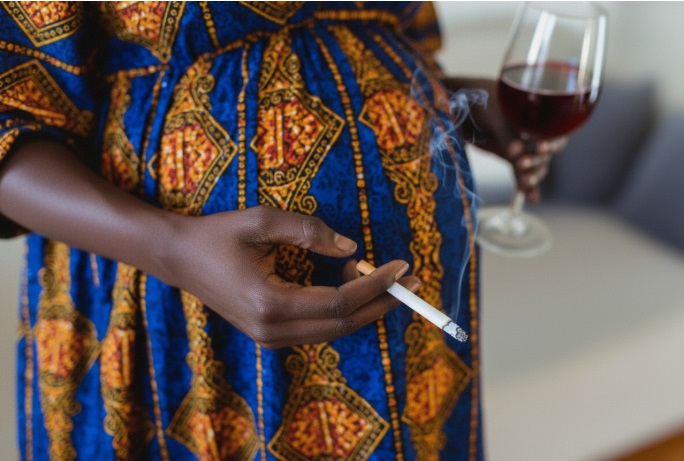
A pregnant African woman in colourful dress holding a lighted cigarette and glass of wine. Image Credit: Gemini AI
Across the world many women still drink alcohol, smoke tobacco or use other illicit substances even when they are pregnant. In some cases, it is because they do not know the risks but sometimes it is because of stress, addiction or pressure from their environment.
A recent expert review highlights that there is no safe amount of alcohol, tobacco or illicit drugs that can be used during pregnancy. Even small amounts can affect how a baby develops in the womb and may cause problems that show up at birth or later in life.
In African communities where there is a rise in alcohol consumption and a growing presence of other harmful substances, it is important to understand the harm that alcohol poses in pregnancy so that women and their partners can make informed decisions and protect their future children.
About the Study
A group of researchers from the West Virginia University School of Medicine carried out a behavioural medicine and psychiatry review study focusing on how substances affect pregnant women and their babies. The study drew attention to national data in the United States which shows that many pregnant women still use these substances, even though the risks are well documented.
The review also combines existing research, medical evidence and clinical experience from specialists who treat pregnant women living with substance use disorders. It explains how different substances affect the unborn child and why stopping substance use early in pregnancy is one of the most effective ways to reduce harm.
What the Study Found
The data shows that:
Although these numbers are from the United States, similar patterns and trends in the general population are reported in several African countries where alcohol and tobacco use even during pregnancy remains a public health challenge.
Alcohol can damage the baby’s developing brain and central nervous system. This may lead to learning difficulties and behavioural challenges later in childhood. In severe cases it can cause foetal alcohol syndrome which is linked to poor growth and lifelong cognitive difficulties.
Tobacco and nicotine, whether from cigarettes or vaping products, reduce the amount of oxygen reaching the baby. This increases the chance of low birth weight, premature birth and problems with lung development. Nicotine also affects the baby’s growing brain which may influence behaviour in early childhood.
Illicit drugs such as cocaine, opiates and strong stimulants can interfere with blood flow to the baby. Cocaine is linked to miscarriage and, in extreme cases, foetal death. Opiates can lead to neonatal withdrawal where the baby is born dependent and must be treated in hospital. These babies may cry more, sleep poorly, struggle to feed or have breathing difficulties.
Related: Common Causes of Miscarriage in Nigerian Women
One of the strongest messages from the expert review is that there is no known safe level of substance use during pregnancy. Even small amounts can cause harm because the baby’s organs are still forming. The placenta cannot fully filter these substances so whatever the mother consumes may reach the baby in some form.
The review also explains that many pregnant women who use substances face other challenges such as depression, trauma or stress. Good treatment must address both the addiction and the underlying emotional issues. For tobacco, nicotine replacement therapy may be recommended because it reduces the harm linked to smoking, although quitting completely is the best option.
Related: Strategies for Reducing Tobacco-Related Public Health Burden in Africa
What the Study Means for Africans
Although the data come from an American context, the message is highly relevant for African communities.
In some African settings alcohol is part of social events, celebrations and even traditional ceremonies. Pregnant women may feel pressured to drink or may believe that small amounts are harmless. This study reinforces that any amount carries risk and families should support pregnant women in avoiding alcohol.
While traditional cigarette smoking may be declining in some cities, vaping and shisha use are rising among young people because many believe vaping is safer. However, nicotine still affects the developing baby and pregnant women should avoid all forms of smoking and vaping.
Substances such as codeine-containing syrups, tramadol and cannabis are now widely available in many African countries. Some young mothers use these drugs for stress relief or to manage pain. The evidence warns that these substances can harm the baby’s growth, lead to early birth and cause withdrawal symptoms.
Related: Top 5 Abused Substances by Nigerian Youths
Many African countries do not have enough specialised addiction services for pregnant women. This makes it difficult for mothers to get help early. Community education, antenatal counselling and supportive family involvement can make a big difference.
The expert findings serve as a reminder for healthcare providers and community health workers to screen for substance use and offer confidential help during antenatal visits, to women who use substances during pregnancy.
No amount of alcohol, tobacco or illicit drugs is safe during pregnancy. The evidence is clear that these substances can affect a baby’s growth, brain development and long-term health. For African communities, where cultural practices and rising substance use may increase risk, understanding the science is essential. Supporting pregnant women to stay substance-free protects not only the health of the baby but also the well-being of families and future generations.
Source: West Virginia University News Release
Published: November 19, 2025
© 2025. Datelinehealth Africa Inc. All rights reserved.
Permission is given to copy, use and share content for non-commercial purposes without alteration or modification and subject to source attribution.
DATELINEHEALTH AFRICA INC., is a digital publisher for informational and educational purposes and does not offer personal medical care and advice. If you have a medical problem needing routine or emergency attention, call your doctor or local emergency services immediately, or visit the nearest emergency room or the nearest hospital. You should consult your professional healthcare provider before starting any nutrition, diet, exercise, fitness, medical or wellness program mentioned or referenced in the DatelinehealthAfrica website. Click here for more disclaimer notice.