What African Women Need to Know Before Breast Augmentation Surgery
By: Favour Okere. BNSc. RN. Freelance Health Writer. Medically reviewed by A. Odutola, MB.BS, PhD., FRCSEd.
.jpg)
Partial portrait of an African lady wearing a maroon coloured top tank.
Breast augmentation surgery has become more popular in Africa due to social media, celebrity influence, and greater access to medical tourism [1].
According to data from the International Society of Aesthetic and Plastic Surgery (ISAPS) in 2024, breast augmentation surgery (also known as augmentation mammoplasty) is the third most commonly performed aesthetic operations worldwide (9.5%), with Tunisia and South Africa on the African continent, ranking 23rd and 25th respectively among the countries in the world for this surgery [2].
The decision to undergo breast augmentation is personal, but it is influenced many factors including, cultural norms, personal appreciation of beauty (aesthetics) or individual circumstances. For many women, it is a path to greater confidence or alignment with personal ideals of beauty. But just like any surgery, it carries risks, costs, and long-term responsibilities [3].
If you are considering this procedure, it is important you learn a lot about cosmetic surgery in Africa so you can make an informed choice. Read on to find out key questions African women ask about breast augmentation, from motivations and safety concerns to finding qualified providers and exploring alternatives.
Whether you are in Johannesburg, Lagos, Nairobi, or Cairo, the information you’re about to read will empower you to make decisions that are right for you.
Breast augmentation is a cosmetic surgical procedure designed to enhance the size, shape, or volume of the breasts, either through the use of implants or by transferring your own body fat. It is commonly chosen by women who want fuller breasts or a more balanced body shape.
The main objective of breast augmentation is to improve breast appearance by increasing fullness, correcting asymmetry, or restoring volume that may have been lost after weight loss, pregnancy, ageing, or breast surgery. Some women also choose it to rebuild confidence following mastectomy or injury.
There are two main methods used: Implant-based and Fat transfer augmentation.
Implant-based augmentation involves placing either saline or silicone (also known as cohesive gel “gummy bear”) implants )see fig. 1) under the breast tissue or chest muscle.
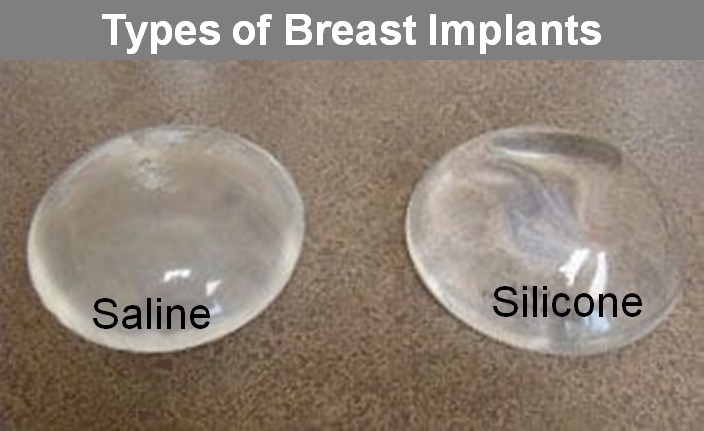
Fig. 1: Showing saline vs siicone implants. Click on image to enlarge
Implants come in different types, shapes and sizes. They may be round to give a fuller upper breast look or teardrop-shaped to create a more natural slope. "Siicone implants hold their shape well.
Fat transfer however, involves removing fat from areas such as the abdomen or thighs, purifying it, and injecting it into the breasts for a more natural enhancement.
This growth is driven by rising incomes, social media visibility of idealised body forms, and a desire for self-expression or body confidence [3]. Recently, more African women travel across borders for “medical tourism” to countries with more developed cosmetic surgery markets.
Women need to be aware however, that rapid market growth also brings challenges.
The demand for cosmetic surgeries has sometimes outpaced the development of regulatory frameworks. Sadly, this has created opportunities for unqualified practitioners.
Professor Chrysis Sofianos, a leading plastic surgeon, notes that filtered photos and persuasive marketing tactics hide the very real risks of procedures performed by non-specialists. “Only specialists in plastic and reconstructive surgery are trained and recognised to perform complex operations safely. Anything else puts patients at risk of life-long complications,” Sofianos says [6].
Why Are African Women Considering Breast Augmentation?

Info poster showing common reasons why African women undertake breast augmentation surgery. Ai generated from ChatGPT. Clik on image to enlarge.
Women across Africa seek breast augmentation for various reasons. It is important to recognize that these motivations are valid and personal.
Common reasons include:
1. Post-pregnancy changes: Many women seek breast augmentation after breastfeeding has altered their breast shape or volume. Pregnancy and nursing can lead to deflation, sagging, or asymmetry that some women wish to address.
2. Congenital asymmetry or underdevelopment: Some women are born with naturally asymmetrical breasts or breasts that don't develop fully during puberty. Augmentation can create balance and proportion.
3. Reconstructive needs: Women who have undergone mastectomy due to breast cancer or other medical conditions often choose augmentation as part of their reconstruction journey to reclaim their sense of self and femininity.
4. Personal confidence and body image: For many women, breast augmentation is about feeling more comfortable and confident in their own skin. In cultures where certain body proportions are celebrated, women may feel empowered by adjusting their appearance with their personal aesthetic goals.
5. Professional considerations: In certain industries like entertainment, modeling, and hospitality, some women feel that augmentation enhances their professional opportunities. [7, 8, 9].
It is vital to reflect on your motivation before considering cosmetic surgery. Is it internal (for your own comfort) or external (responding to social pressure)? Your decision should be from a place of self-determination rather than external pressure.
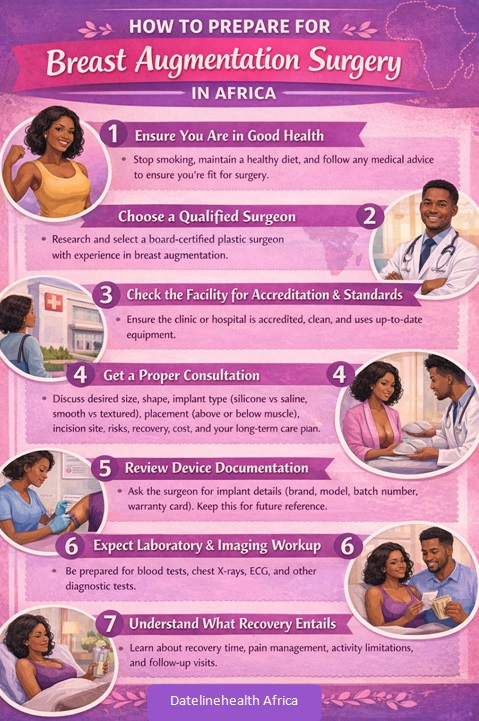
Info poster showing prepaations for breast augmentation surgery. AI generated from ChatGPT. Click on image to enlarge.
If you decide to proceed, your journey begins with proper preparation. This is important for achieving the best possible outcome and minimizing complications.
1. Ensure you are in good health
The ideal candidate is a non-smoker, with stable weight, no active illnesses or uncontrolled medical conditions (e.g. diabetes, hypertension).
2. Choose a qualified surgeon
Look for board-certified plastic or aesthetic surgeons with recognized credentials (e.g. member of national or international plastic surgery associations). Ask about their experience specifically with breast augmentation, complication rates, and revision surgeries.
3. Check the facility
The clinic or hospital should have operating room standards, accreditation, emergency support, anaesthesia services, sterile protocols, and ICU backup if needed.
4. Get a proper consultation.
You should discuss desired size, shape, implant type (silicone vs saline, smooth vs textured), placement (above or below muscle), incision site, risks, recovery, cost, and your long-term care plan.
5. Review device documentation
The surgeon should provide implant details (brand, model, batch number, warranty card). Keep this for future reference.
6. Consider laboratory and imaging workup
You may need breast imaging (mammogram or ultrasound), baseline labs, ECG, etc., depending on age and health status.
7. Understand what recovery will entail.
You will need rest, wound care, limited physical activity (especially upper body), pain management, and close follow-up.
8. Plan finances and logistics.
Be ready to cover the full cost (including revisions) and arrange transportation, lodging, and caregiving support.
Breast augmentation is performed by placing implants to enhance the size and shape of the breasts.
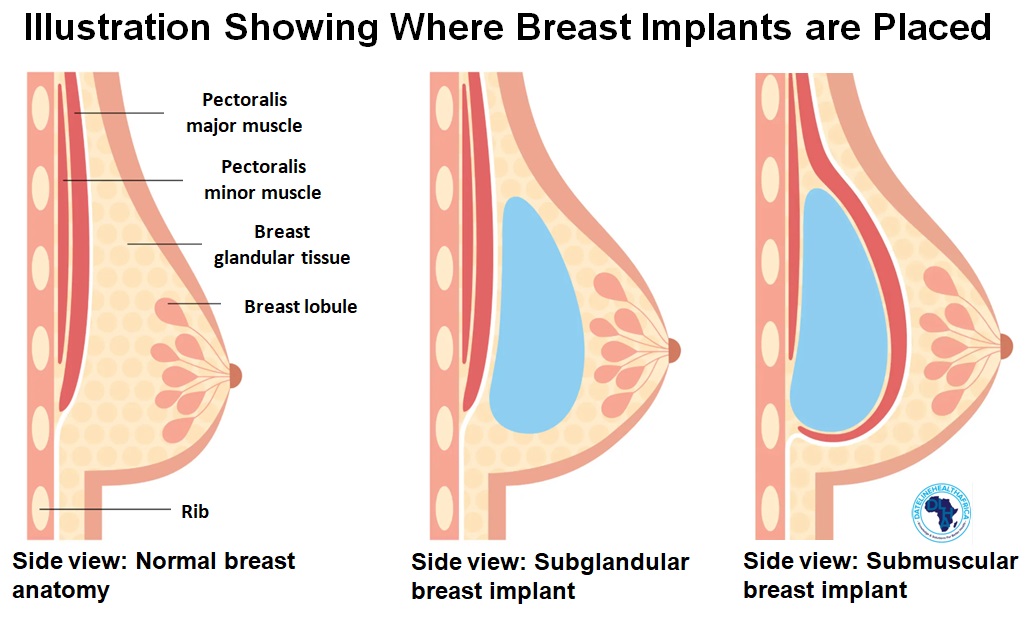
Fig. 2: Showing locations for insertion of breast implants in the chect
Watch the video below to learn more:
When performed by qualified, board-certified plastic surgeons in accredited medical facilities, breast augmentation can be relatively safe. Basically, the safety depends on the surgeon, the facility, follow-up care, and patient health. However, like any surgery, breast augmentation carries risks that you should understand thoroughly.
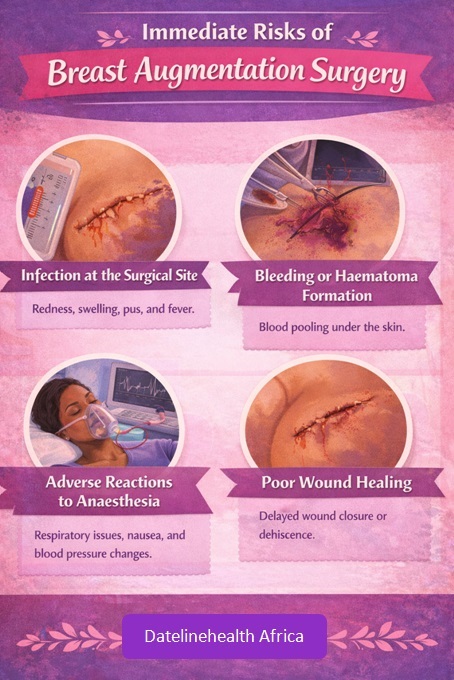
Info poster showing immediate risks of breast augmentation surgery. AI generated from CjatGPT. Click on image to enlarge.
Immediate surgical risks include:
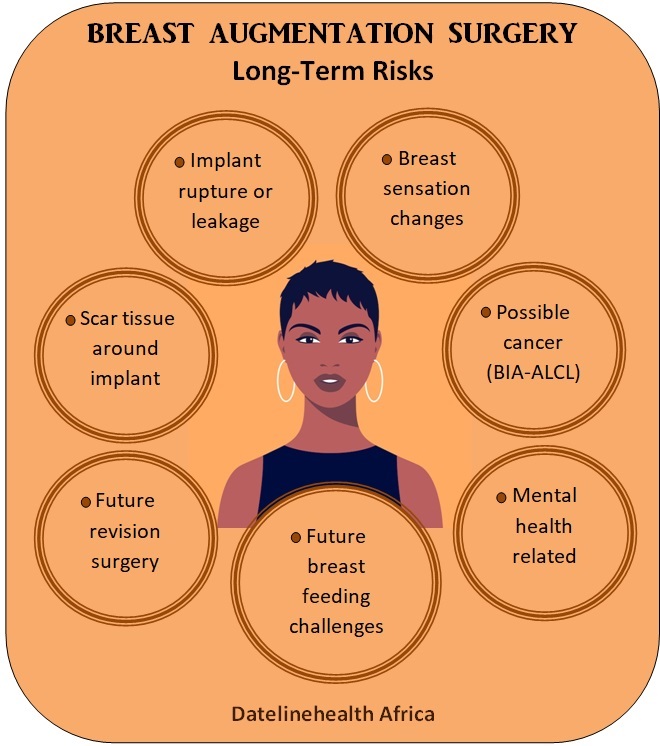
Info poster showing ilong-term risks of breast augmentation surgery. AI generated from CjatGPT. Click on image to enlarge.
Long-term considerations include:
One of the biggest safety considerations in Africa is the prevalence of unregulated and illegal cosmetic procedures. Unregulated procedures often involve:
Warning signs of unsafe providers include:
Some regulatory authorities have issued warnings about illegal injectable silicone being marketed for body contouring by unlicensed providers. These products may cause serious adverse effects. No cosmetic result is worth risking your life or long-term health. If a price seems too good to be true, or if a provider cannot show proper credentials and operates outside of a licensed medical facility, walk away immediately [12].
Finding a qualified surgeon and appropriate facility is the most important decision you will make. Here is how to identify safe, reputable providers across Africa.
Primary health care provider are a good starting point to tap for recommendations on safe and reutable breast augmentation surgery providers in your locaity and beyond. Be sure to use them and then due your own due diligence on the recommendtions..
In doing due diligence in the case of recommended surgeons and or facilities, enquire and verify:
It is important to note that some of the verification information may not be easy to obtain in many African countries as access to personal professional and facility data may be restricted by regulatory (governmental) authorities.
III. Questions to Ask Potential Surgeons
Be confident to ask the following direct questions:
A reputable surgeon should welcome these questions and provide clear, detailed answers. Although, local cultural doctor-patient relations may not readily support this process, but it is your responsibility to request without sounding confrontational that your surgeon respond to your enquiry about the process and his skills.
Avoid providers who:
Before committing to surgery, you may consider exploring both non-surgical options and the path of self-acceptance. Breast augmentation with implants is not the only path to feeling more comfortable in your body. Other alternatives include:
1. Padded and push-up bras: Modern shapewear technology offers impressive enhancement without any medical intervention. These options are risk-free, reversible, and cost-effective.
2. Fat transfer breast augmentation: Also called natural breast augmentation, this procedure uses liposuction to harvest fat from other parts of your body and inject it into your breasts. While still surgical, it avoids implants. However, results are typically more modest, and not all transferred fat survives.
3. Breast enhancement exercises: Even though exercises can't increase breast size (breasts are primarily fat and glandular tissue, not muscle), strengthening the pectoral muscles beneath can improve posture and create a lifted appearance.
4. Psychological support and body acceptance programs: Many women benefit from counseling around body image, societal pressures, and self-esteem before making irreversible decisions.
Considering breast augmentation surgery is a big decision especially in African settings where regulation, facility standards, and follow-up support vary widely [13]. For African women considering this procedure, education and caution are your greatest tools. Augmentation should be a choice for your comfort and expression, not an obligation to conform.
It is important to acknowledge that all bodies are worthy of love and respect as they are. If you're considering augmentation primarily due to negative self-talk or external pressure, counseling or therapy might be a valuable first step. Many women find that addressing underlying body image issues leads to greater contentment than surgical changes. The key is ensuring your choice comes from a place of self-empowerment rather than shame or inadequacy.
Disclaimer: This article is for informational purposes only and does not constitute medical advice. Always consult with qualified healthcare professionals before making decisions about cosmetic procedures.
1. Zahedi S, Hancock E, Hameed S, Phillips LG, Moliver CL. Social Media's Influence on Breast Augmentation. Aesthet Surg J. 2020 Jul 13;40(8):917-925. doi: 10.1093/asj/sjz253. Available from here.
2. ISAPS. 2024 Global Survey Results on Cosmetics/Aesthetic Procedures. [Internet]. June 20, 2025. [Cited Dec. 28, 2025]. Available from here.
3. Asiri M, Shaheen R & Mohammed O, Altamimi I, Alanazi R, et al., Understanding the Factors that Influence Woman's Decision- Making regarding Breast Augmentation. Surgery. 2024; 42-62. Available from here.
4. Horizon Grandview Research. South Africa Aesthetic Surgery Procedures Market Size & Outlook. [Internet, n.d.] Cited Dec. 28, 2025. Available from here.
5. Data Bridge Market Research. Middle East and Africa Breast Implants Market Size, Trends, Growth Report 2033. [Internet] October 2021. [Cited Dec. 28, 2025]. Available from here.
6. Blom, M. “Unqualified Cosmetic Surgery Risks.” Joburg Style. [Internet]. 29 Sept. 2025. [Cited Dec. 28, 2025. Available from here.
7. Orji N, Inyang J, Akpan J, Bassey F, Edodi H. Nigerian Tourists' Concerns Towards Medical Risks and Social Challenges. African Journal of Hospitality, Tourism and Leisure, 2020;9,612-625. doi: 10.46222/ajhtl.19770720-40. Available from here.
8. Arian H, Alroudan D, Alkandari Q, Shuaib A. Cosmetic Surgery and the Diversity of Cultural and Ethnic Perceptions of Facial, Breast, and Gluteal Aesthetics in Women: A Comprehensive Review. Clin Cosmet Investig Dermatol. 2023;16:1443-1456. doi:10.2147/CCID.S41062. Available from here.
9. Didie E, Sarwer D. Factors That Influence the Decision to Undergo Cosmetic Breast Augmentation Surgery. Journal of Women's Health, 2023;12(3),241-53. doi: 10.1089/154099903321667582. Available from here.
10. American Society of Plastic Surgeons. Breast Augmentation Risks and Safety. [Internet, n.d.]. Cited Dec. 28, 2025. Available from here.
11. Gerk A, Telles L, Carroll M, Nascimento MEFMD, Bispo RG, Oliveira BFS, Mendes S, Guerreiro SNF, Naus A, Camargo CP. Use of industrial liquid silicone: a scoping review. Acta Cir Bras. 2024 Oct 7;39:e395624. doi: 10.1590/acb395624. Available from here.
12. Schenone G, Riera D, Fontbona M, Triana L. US FDA Safety Communication on Illegal use of Injectable Silicone for Body Contouring and Associated Health Risks. Aesthetic plastic surgery. 2023. doi: 10.1007/s00266-023-03308-z. Available from here.
13. Mugisha, N. et al. Access to specialist plastic surgery in rural vs. Urban areas of Africa. BMC Surg, 2024;24(1),418. doi: 10.1186/s12893-024-02735-2. Available from here
Published: March 16, 2026
© 2026. Datelinehealth Africa Inc. All rights reserved.
Permission is given to copy, use and share content for non-commercial purposes without alteration or modification and subject to source attribution.
DATELINEHEALTH AFRICA INC., is a digital publisher for informational and educational purposes and does not offer personal medical care and advice. If you have a medical problem needing routine or emergency attention, call your doctor or local emergency services immediately, or visit the nearest emergency room or the nearest hospital. You should consult your professional healthcare provider before starting any nutrition, diet, exercise, fitness, medical or wellness program mentioned or referenced in the DatelinehealthAfrica website. Click here for more disclaimer notice.