Measles Cases Rise as Deaths Fall, Says WHO
By Adebowale Bello. B.Tech Microbiology, Freelance Health Writer. Medically reviewed by the DLHA Team.
December 13, 2025.
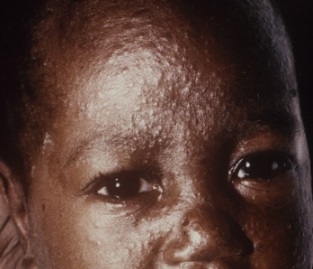
An African child with typical measles rash in the face
For many people, measles feels like an old disease, yet measles is still very much with us. It remains one of the most contagious viral diseases known to humans and it continues to affect millions of children every year.
A new report from the World Health Organization (WHO) paints a mixed picture. On one hand, measles deaths worldwide have dropped sharply over the past two decades. On the other hand, measles cases are rising again in many parts of the world.
This contrast raises important questions, especially for Africans. How can deaths be falling while infections are increasing? What is driving this trend? What does it mean for children and families across the continent? This article breaks down the report in simple terms and explains why the findings matter for Africa.
The WHO report, released in collaboration with global health partners looks at global measles data from 2000 - 2024. The analysis draws on surveillance reports from countries, vaccination coverage data and modelling estimates where reporting is incomplete.
The aim of the report was to track long term trends in measles cases and deaths and to assess how well vaccination programmes are protecting children. It also highlighted gaps in immunisation and identifies regions where measles is making a comeback.
Measles is preventable with a safe and effective vaccine. To stop the virus from spreading in communities, at least 95 percent of children need to receive two doses of the measles vaccine. The report measures how close or how far countries and regions are from this target.
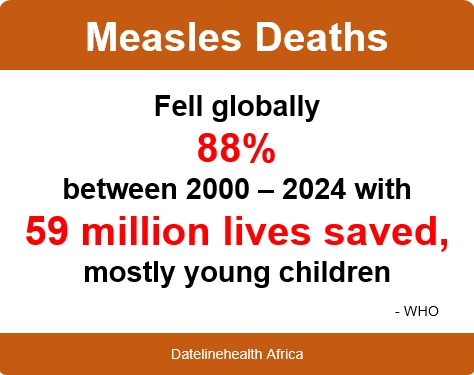
Infographic: Showing fall in measles:death rate and lives saved 2000 – 2024 (Source: WHO)
One of the most striking findings is the massive reduction in measles deaths since 2000. Globally, measles deaths have fallen by about 88 percent over this period. This translates to an estimated 59 million lives saved, mostly young children. This success is largely due to increased access to routine childhood immunisation and mass vaccination campaigns.
However, the report also shows a worrying rise in measles cases. In 2024 alone, an estimated 11 million people were infected worldwide. This is higher than pre-pandemic levels. In simple terms, more people are catching measles even though fewer are dying from it.
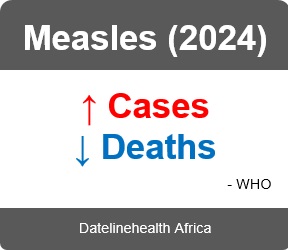
Infographic: Trends in measles cases and deaths in 2024 (Source: WHO)
The report further highlights strong regional differences. Several regions have seen sharp increases in cases, including parts of Europe, the Eastern Mediterranean and South East Asia while many countries that had previously controlled measles are now experiencing outbreaks again.
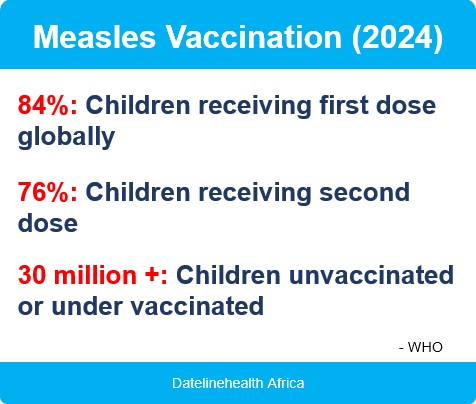
Infographic: Global measles vaccination coverage in 2024 (Source: WHO)
Vaccination coverage also remains a major concern. In 2024, only about 84 percent of children globally received the first dose of the measles vaccine and around 76 percent received the second dose. This is well below the level needed to stop transmission. As a result, more than 30 million children were either unvaccinated or under vaccinated in a single year.
The report also notes that nearly 60 countries experienced large or disruptive measles outbreaks in 2024. This is almost three times the number seen just a few years earlier.
For Africa, the findings carry both encouraging news and serious warnings. The report suggests that some African countries such as Cabo Verde, Mauritius and Seychelles have made progress in reducing measles cases and deaths compared to earlier years. Expanded immunisation programmes, outreach campaigns and support from global partners have played an important role.
However, Africa remains home to a large share of unvaccinated children. Weak health systems, conflict, poverty and hard to reach communities continue to limit access to routine immunisation in many countries. When vaccination coverage drops even slightly, measles spreads fast.
Measles is not a mild illness. In African settings where malnutrition is common and access to healthcare is limited, the disease can be deadly. Complications include severe diarrhoea, pneumonia, blindness and brain inflammation (swelling). Even children who survive can suffer long term health problems. Most measles-related deaths are caused by complications.
Another key issue for Africa is funding. The report warns that cuts to immunisation and disease surveillance budgets could reverse hard won gains. Without strong monitoring systems, outbreaks may be detected late, when they are harder and more expensive to control.
The rise in global measles cases also increases the risk of cross border spread and no country is truly safe when outbreaks are happening elsewhere. Population movement, trade and travel mean that immunity gaps in one region can quickly become a problem in another.
However, the report shows that measles vaccination works and the dramatic fall in deaths since 2000 is proof of this. Where coverage is high and consistent, measles struggles to survive.
For African parents, vaccinating children on time is one of the most powerful ways to protect them. For governments, investing in routine immunisation is far cheaper than responding to large outbreaks.
For communities, high coverage protects everyone, including babies who are too young to be vaccinated and people with weak immune systems.
The report also highlights the importance of the second dose of the measles vaccine. Many children receive the first dose but miss the second. Without both doses, protection is incomplete and outbreaks can still occur.
The WHO report tells a story of progress mixed with risk.
The world has made huge gains in reducing measles deaths, saving millions of young lives, yet the rise in cases shows that these gains are fragile. Measles is quick to return when vaccination coverage slips. For Africa, the message is clear. Continued investment in routine immunisation, strong surveillance and community education is essential. Measles may be preventable but it has not disappeared. Protecting children today requires sustained effort, political commitment and trust in vaccines.
If the lessons from this report are taken seriously, Africa can continue to reduce measles deaths and prevent a new generation from suffering a disease we already know how to stop.
Sources:
Related:
Childhood Vaccines and Routine Immunization In Nigeria
Published: December 13, 2025
© 2025. Datelinehealth Africa Inc. All rights reserved.
Permission is given to copy, use and share content for non-commercial purposes without alteration or modification and subject to source attribution.
DATELINEHEALTH AFRICA INC., is a digital publisher for informational and educational purposes and does not offer personal medical care and advice. If you have a medical problem needing routine or emergency attention, call your doctor or local emergency services immediately, or visit the nearest emergency room or the nearest hospital. You should consult your professional healthcare provider before starting any nutrition, diet, exercise, fitness, medical or wellness program mentioned or referenced in the DatelinehealthAfrica website. Click here for more disclaimer notice.