Health Benefits of Ube (African Pear)
By: Kelechi Nwaowu, Freelance Health and Wellness Writer and Datelinehealth Africa Volunteer. Medically reviewed by the DLHA Team.
December 2, 2025
.jpg)
Fresh ube (African pears) displayed in baskets in the open market.
When the rainy season arrives in Nigeria, street vendors display purple-black fruits that many people eagerly wait for all year. This fruit is Ube, also called African pear or bush pear. Beyond its sweet, buttery taste, Ube offers impressive health benefits supported by scientific research. This article explores what makes Ube nutritious and why you should consider adding it to your diet.
Ube is a tropical fruit that grows on tall trees in West and Central Africa. Its scientific name is Dacryodes edulis, and it belongs to the Burseraceae family (1). Nigerians, particularly in the southeastern region, know it as Ube, while other parts of Africa call it Safou, Atanga, or Bush butter fruit.
This fruit has dark purple or blue-black skin when ripe, with pale to light green flesh inside that tastes rich and buttery. Unlike the purple yam also called ube in the Philippines, the African pear is a completely different fruit with unique nutritional properties.
Ube trees can grow up to 18 to 40 metres tall in forests but typically reach only 12 metres when cultivated in plantations. The trees thrive in humid tropical climates and produce fruit mainly during the rainy season, from April to September.
There are two main varieties of Dacryodes edulis: Dacryodes edulis var. edulis and Dacryodes edulis var. parvicarpa. The first variety produces larger fruits and has stout, ascending branches, while the second has smaller fruits and slender, drooping branches.
The taste is buttery and slightly sweet with a creamy texture when ripe. Some people describe it as similar to avocado but with a distinct flavour profile. The flesh softens easily with heat, which is why it is often placed in hot water or roasted before eating.
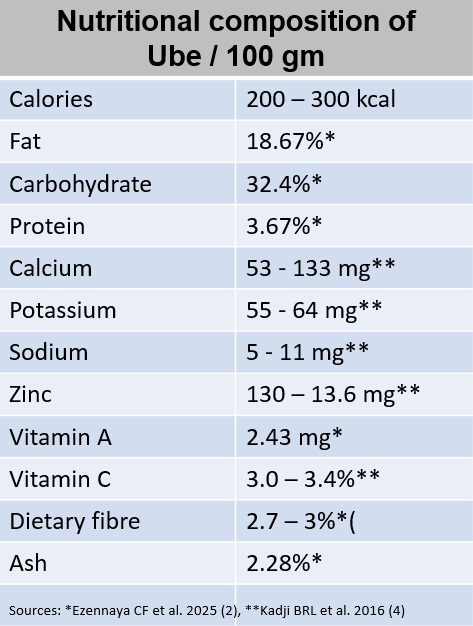
Table showing nutritional composition of ube (African pear). Click on image to enlarge.
Ube is packed with nutrients that support good health. Research shows that 100 grams of fresh ube pulp provides approximately 200 to 300 kilocalories, making it an energy-dense food (3). The fruit contains a remarkable balance of macronutrients and micronutrients that contribute to its health benefits.
Recent analysis of boiled African pear revealed it contains 18.67% fat, 32.44% carbohydrate, 3.67% protein, and 2.28% ash (2). The fruit's high energy content comes primarily from its exceptional oil content.
Ube provides several important vitamins that support body functions. A 2025 study found that boiled ube contains 2.43 milligrams per 100 grams of vitamin A, making it one of the most abundant vitamins in the fruit (2). Vitamin A is essential for vision, immune function, and cell growth.
The fruit also contains B-complex vitamins including thiamine, riboflavin, niacin, and vitamin B6. These vitamins help your body convert food into energy and support nervous system function. Additionally, ube provides vitamin E, a powerful antioxidant that protects cells from damage and supports skin health.
Related: African foods that are rich in vitamins
Ube delivers essential minerals your body needs for various functions. The fruit contains appreciable amounts of potassium, calcium, magnesium, and phosphorus. Potassium is particularly important as it helps regulate blood pressure and supports heart function.
Nutritional analysis showed that ube contains significant levels of potassium (552.39-646.05mg/kg) and calcium (531.31-1337.02mg/kg) (4). Calcium is crucial for building strong bones and teeth, while iron helps carry oxygen throughout your body and prevents anemia. The fruit also provides smaller amounts of magnesium, iron, and manganese (4).
Yes, ube contains vitamin C, though the amount varies depending on which part of the plant is analysed. Research on the fruit found contains 3.06-3.36% of ascorbic acid (vitamin C) (4). Multiple sources confirm that ube provides this important antioxidant vitamin.
Vitamin C in ube helps boost your immune system, supports wound healing, and acts as an antioxidant to protect your body from harmful free radicals.
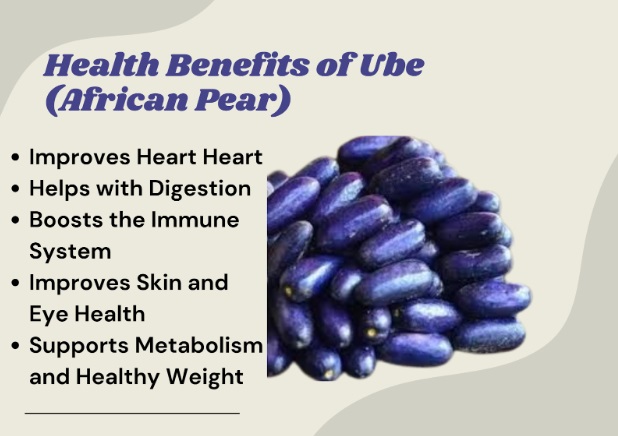
Info poster listing the health benefits of ube (African Pear). Click on image to enlarge.
The nutrients in ube work together to support your health in several important ways. Scientific research has documented multiple health benefits associated with consuming this nutrient-dense fruit.
Ube contains compounds that contribute to cardiovascular health. The fruit provides potassium, which helps regulate blood pressure levels and reduces the risk of hypertension. Research confirms that ube has anti-oxidative properties (5).
The healthy unsaturated fats in ube, particularly oleic and linoleic acids, help reduce bad cholesterol levels in your blood. One study found that the fatty acid composition of ube oil includes 49% oleic acid, 33% Palmitic acid, and 12.0% linoleic acid (6). These unsaturated fats support heart health and may lower the risk of cardiovascular disease.
Related: Best African foods to lower your blood pressure
The dietary fiber in ube promotes healthy digestion. The fruit pulp contains 2.70-3.13% of crude fibre, which aids in preventing constipation and maintaining regular bowel movements (4). Fibre adds bulk to stool and helps food move smoothly through your digestive system.
The oil content in ube may also help lubricate your digestive tract, making digestion easier. Regular consumption of fibre-rich foods like ube supports a balanced gut microbiome, which plays an important role in overall health and immunity.
Ube strengthens your immune system through multiple nutrients. The vitamin C in ube stimulates the production of white blood cells, which fight infections. Vitamin A supports the health of your skin and mucous membranes, which serve as your body's first line of defence against germs.
The antioxidants in ube, including vitamins C and E, protect immune cells from damage caused by free radicals. Research has shown that ube extracts exhibit strong antioxidant activity, with studies reporting 62 to 93% DPPH radical scavenging capacity (1). This antioxidant power helps your body combat oxidative stress and may reduce the risk of chronic diseases.
Related: Healthy African Foods for People with Autoimmune Disorders
The vitamin A content in ube is essential for maintaining healthy skin and good vision. Vitamin A helps your skin produce new cells and repair damage from environmental factors. It also keeps your skin moisturised and elastic, contributing to a youthful appearance.
For eye health, vitamin A helps you see in low light and protects against age-related vision problems. The carotenoids in ube provide additional support for eye health by protecting against oxidative damage that can affect vision. The vitamin E in ube offers further protection for your skin by fighting damage from pollution and sunlight.
Related: Best African Foods for Eye Health
Ube gives your body energy, healthy fats, dietary fiber, vitamins, minerals, and antioxidants. Research shows that 100 grams of fresh ube provides 200 to 300 kilocalories, primarily from lipids that account for a great proportion of the fruit's dry weight (3). The fruit supplies 43.02-46.80% of moisture, 18.66-20.20% of protein, and 48.39-52.66% of lipid (4).
Beyond basic nutrition, ube provides bioactive compounds with antimicrobial, anti-inflammatory, and antioxidant properties. These substances help your body fight infections, reduce inflammation, and protect cells from damage.
Related: Anti-Inflammatory Foods Can Lower Dementia Risk, Study
Although ube is energy-dense and high in fat, it can be part of a healthy diet when consumed in appropriate portions. The nutrients in ube support metabolic function and provide satiety.
The combination of dietary fiber and healthy fats in ube helps you feel full longer after eating. Research indicates that the fruit contains 2.70-3.13% of crude fibre, which promotes satiety without excessive sugar content (4). When you feel satisfied after a meal, you are less likely to overeat or snack on unhealthy foods.
The healthy fats in ube also support hormone production and help your body absorb fat-soluble vitamins like vitamins A and E. These fats provide sustained energy throughout the day. However, because ube is calorie-dense, portion control is important if you are managing your weight.
Ube is easy to prepare either by boiling for a few minutes in water or through roasting or panfrying. Click the video below to watch how to cook ube at home.
Ube is enjoyed in different ways. Most people eat the fruit after softening it with heat, as the raw fruit can be quite firm.
The traditional Nigerian way to eat ube is with roasted or boiled corn. Recent research specifically examined this food combination and found it provides a complementary nutritional profile, with corn supplying carbohydrates and ube providing fats and additional vitamins (2).
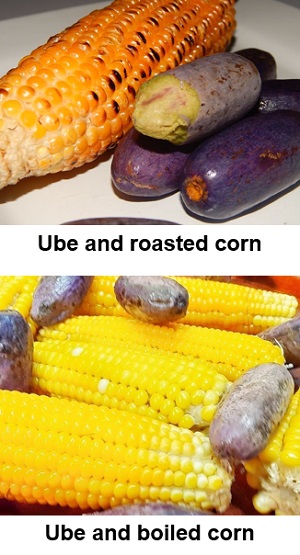
Photo of ube as commonly consumed locally in Nigeria, paired with boiled or roasted corn.
To enjoy this classic pairing, roast or boil fresh corn until tender. Meanwhile, place whole ube fruits in hot water for a few minutes to soften them, or roast them directly. Once soft, cut the ube open, remove the seed, and eat the creamy flesh alongside bites of corn. This combination makes a satisfying and nutritious snack.
You can also enjoy ube on its own. Choose fruits that are dark purple or blue-black and yield slightly to gentle pressure. Wash the fruit, then either place it in hot water for 5 to 10 minutes or roast it briefly over a flame or in an oven.
Once softened, cut the fruit lengthwise and remove the hard seed in the centre. Scoop out the soft, buttery flesh with a spoon. The texture becomes creamy when warm, making it easy and pleasant to eat. Some people also use the soft pulp as a butter substitute on bread.
Ube is generally safe for most people to eat. However, there are a few considerations to keep in mind to enjoy the fruit without problems.
Because ube is energy-dense and high in fat content, eating excessive amounts may contribute to unwanted weight gain over time. Research shows the fruit contains 35 to 65% lipids in its dry weight (1). While these are healthy fats, they still provide significant calories.
One or two medium-sized fruits at a time is typically a reasonable portion. If you are following a calorie-controlled diet, consider ube as an occasional treat rather than a daily staple, and balance it with lower-calorie fruits and vegetables.
People with certain digestive conditions who have been advised to follow a low-fat diet should speak with their healthcare provider before consuming ube regularly due to its high fat content. The fruit's oil content, while generally healthy, may not be suitable for everyone.
Those managing diabetes should be mindful of portion sizes, as ube contains carbohydrates that affect blood sugar levels. However, interestingly, some research has shown that hexane extracts of ube fruit possess anti-diabetic and hypolipidaemic properties in animal studies (7). Always monitor your blood sugar response and consult with a healthcare professional about including ube in your meal plan.
Ube, or African pear, is more than a delicious seasonal fruit. Scientific research confirms it provides valuable nutrients including healthy fats, dietary fibre, vitamins A, C, and E, and essential minerals like potassium, calcium, and iron. These nutrients work together to support heart health, digestion, immune function, and skin health.
While ube does contain vitamin C, its main nutritional strengths lie in its minerals, Calcium, Potassium and healthy unsaturated fatty acid content. The fruit's high energy density makes it an excellent food for providing sustained energy, though portion control is important.
Whether you enjoy ube with roasted corn following Nigerian tradition or on its own as a creamy snack, this fruit can be a nutritious addition to your diet. The next time you see ube at a market stall during the rainy season, you will know exactly what this purple treasure does for your body.
1. Tee LH, Yang B, Nagendra KP, Ramanan RN, Sun J, Chan ES, Tey BT, Azlan A, Ismail A, Lau CY, Jiang Y. Nutritional compositions and bioactivities of Dacryodes species: a review. Food Chem. 2014;165:247-55. Abstract available from here.
2. Ezennaya CF, Nwobodo AM, Ezeigwe OC, Ogunwa SC, Okoro CO, David EE, Igwenyi IO. Nutritional efficiency of corn and African pear consumed as complementary snacks. Asian J Biochem Genet Mol Biol. 2025;17(11):39-48. Abstract available from here/
3. Onuegbu NC. Dacryodes edulis: Composition and physico-chemical properties. In: Mariod A, editor. Wild Fruits: Composition, Nutritional Value and Products. Cham: Springer; 2019. Abstract available from here.
4. Kadji, B. R. L., Kone, F. M. T., Sika, A. E., & Dabonne, S. Physico-chemical properties of Safou (Dacryodes edulis) fruits grown in Côte d’Ivoire. Journal of Applied Biosciences, 2016;105(1), 10103–10110. Abstract available from here.
5. Ajibesin KK. Dacryodes edulis (G. Don) H.J. Lam: A review on its medicinal, phytochemical and economical properties. Res J Med Plant. 2011;5(1):32-41. Abstract available from here.
6. Nwachukwu CA, Okoronkwo TO, Arukwe DC. Assessment of Physicochemical and Fatty Acid Properties of Oils Extracted from Avocado Pear (Persea americana) and African Black Pear (Dacryodes edulis). IPS J Agric Food Tech Sec. 2024;7(1):20–5. Abstract available from here.
7. Okolo CA, Ejere VC, Chukwuka CO, Ezeigbo II, Nwibo DD, Okorie AN. Hexane extract of Dacryodes edulis fruits possesses anti-diabetic and hypolipidaemic potentials in alloxan diabetes of rats. Afr J Tradit Complement Altern Med. 2016;13(4):132-44. Available from here
Related Articles
Vitamin-Rich African Foods: Veggies, Fruits, Spices & More
African Foods That Promote Brain Health
Study: Fruits and Vegetables Help Lower Blood Pressure and Heart Risks
Best African Foods for Eye Health
Published: December 2, 2025
© 2025. Datelinehealth Africa Inc. All rights reserved.
Permission is given to copy, use and share content for non-commercial purpose without alteration or modification and subject to source attribution.
DATELINEHEALTH AFRICA INC., is a digital publisher for informational and educational purposes and does not offer personal medical care and advice. If you have a medical problem needing routine or emergency attention, call your doctor or local emergency services immediately, or visit the nearest emergency room or the nearest hospital. You should consult your professional healthcare provider before starting any nutrition, diet, exercise, fitness, medical or wellness program mentioned or referenced in the DatelinehealthAfrica website. Click here for more disclaimer notice.