Birth Planning in African Women with Diabetes
By Chinonso Cynthia Ukah, BNSc, RN, RM, RPHN. Freelance Health Writer. Medically reviewed by: Azuka Ezeike, MBBS, FWACS (Obstetrics and Gynaecology), FMCOG, MSc. (Public Health).
March 12, 2026
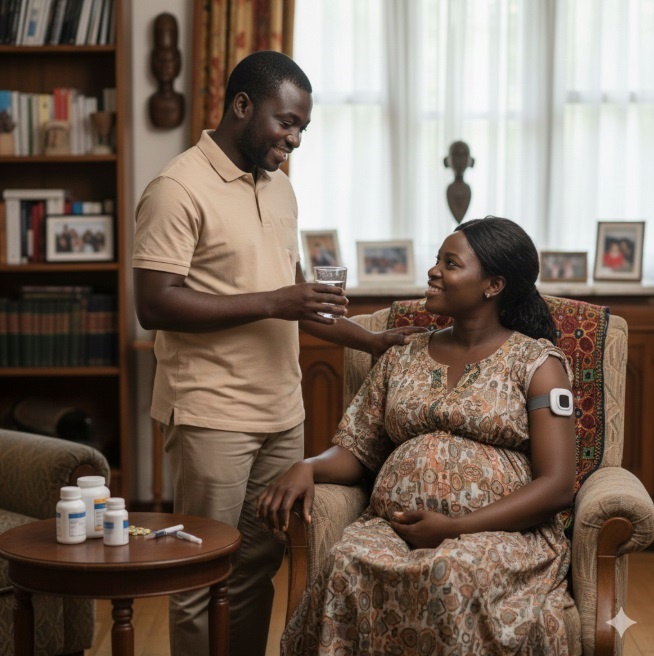
A pregnant woman is sitting in an armchair, wearing a continuous glucose monitor on her left arm and smiling up at a man who is offering her a glass of water. On a nearby table are three medication containers and two insulin syringes. Generated with Gemini AI.
Every pregnancy benefits from careful birth planning. For women living in Africa who also have a chronic condition such as diabetes, this planning becomes even more important.
Diabetes in pregnancy is defined as a condition in which a woman has high blood sugar levels during pregnancy. It occurs in two main forms:
Approximately 7.2% of women of reproductive age in Africa are living with type 2 diabetes, and for most of them, daily life involves regular medication, dietary control, and frequent hospital visits. Having diabetes while pregnant increases the risk of complications for both the mother and the baby, and this makes proper birth planning very important.
This article discusses birth planning among African women living with diabetes, explains what it involves, and highlights why it is essential for safe motherhood.
Birth preparedness (birth planning) is the process of getting ready for delivery. It involves making plans before and during pregnancy to ensure a smooth pregnancy, safe delivery, and a healthy postpartum (post elivery) period for both the mother and the baby [1].
Related: Essential Guide to Labour for African Women and Men
Diabetes, also known as high blood sugar, negatively affects pregnancy, labour, and delivery.
It can lead to [2]:
Because of these, decisions about where to deliver, when to seek care, and how to prepare for emergencies become much more important than in pregnancies without diabetes.
Related: Diabetes in Pregnancy in Sub-Saharan Africa: An Overview
Preparing for birth with diabetes involves careful planning and attention to both medical and social issues. This is best done with the advice of your healthcare provider as well as knowing your expected date of delivery (EDD), the most appropriate route of delivery, and practical arrangements for a safe delivery.
You must look out for the following warning signs and contact your healthcare provider immediately [3]:
It is advisable to give birth in the same facility where you are already booked and receiving antenatal care, as your medical records and pregnancy history are already there. However, it is also important to identify a good hospital or maternity centre that is close to where you live. This is especially useful in case of an emergency. When choosing a place to give birth, ensure that the facility:
Keeping your blood sugar in a normal range as you get close to delivery is one of the most important things to focus on if you have pre-existing or gestational diabetes. Good control helps keep both you and your baby safe during labour and after birth. The World Health Organization recommends monitoring fasting blood sugar levels in pregnant women with diabetes. Fasting blood sugar should generally be maintained below 5.3 mmol/L, with typical target values around 3.8–5.2 mmol/L to ensure good glycaemic control during pregnancy. To help stay in this range, you might need to:
Your care provider may put you on insulin injections or oral diabetes medications if you are diagnosed with gestational diabetes. If you already had diabetes before pregnancy, your drugs and doses may be reviewed to make sure they are safe for your baby. It is important that you follow your prescription carefully, and keep checking your blood sugar to make sure it stays in the normal pre-prandial or fasting range of 3.8–5.2 mmol/L for gestational diabetes and 3.3–5.4 mmol/L for pre-existing diabetes). [4] This will help you avoid your sugar dropping too low (hypoglycemia) or going too high.
Sometimes delivery may be scheduled a little earlier than your due date if there are concerns about your health or your baby’s health. Whether you have a vaginal birth or a cesarean section depends on:
Preparing for birth does not mean emergencies cannot happen. A complication can become serious if you delay seeking care after noticing a warning sign, wait too long to contact a care provider, or get held up at the hospital because it is busy. [1] It is therefore important to plan for emergencies in advance (complication readiness). To plan properly,
After your baby is born, your blood sugar may return to normal or stay high, so it is important to keep monitoring it. Your doctor may adjust your medication if needed. You will be advised to start breastfeeding early and attend all postnatal check-ups. Some post-delivery warning signs you may need to watch out for and contact your care provider immediately are:
Related: Complications of Diabetes in Pregnancy: What Africans Need to Know
Social:
It is important to plan ahead for money and transport before your baby arrives. Make sure you have enough money saved for hospital bills, medications, and any emergencies. Decide how you will get to the hospital when labour starts, whether by car, taxi, or public transport, and have a backup plan in case of delays.
Having support from your family can make a big difference during pregnancy and birth. Discuss your birth plan with your partner or family members so they know what to do if labour starts or if there is an emergency. Make sure someone you trust can help you with transport, hospital stay, and looking after other children if needed.
Birth planning is especially important for women living with diabetes in Africa. Because diabetes increases the risk of complications during pregnancy and delivery, careful preparation helps protect both the mother and the baby. Paying attention to warning signs, choosing the right place to give birth, controlling your blood sugar, and planning for emergencies can greatly improve pregnancy outcomes. With early planning, regular antenatal care, and support from family and healthcare providers, women with diabetes can have safer pregnancies and healthier births.
1. Alamrew A, Sisay A, Ayele M, Shitie Lake E, Kumie G, Hailu Mossie H, Emagneneh T, Mulugeta C. Determinants of birth preparedness and complication readiness practice among reproductive-age women in Africa a systematic review and meta-analysis. BMC Public Health. 2024 Nov 13;24(1):3154. doi: 10.1186/s12889-024-20654-y. Available from here.
2. Centers for Disease Control and Prevention. Diabetes during pregnancy [Internet]. Atlanta (GA): Centers for Disease Control and Prevention; 2024 May 15 [Cited 2026 Jan 17]. Available from here
3. National Health Service. Signs that labour has begun [Internet]. London: National Health Service. Last reviewed: Nov. 9, 2023. [Cited 2026 Jan 17]. Available from here
4. American Diabetes Association. 12. Management of diabetes in pregnancy. Diabetes Care. 2015;38(Suppl 1):S77–S79. doi:10.2337/dc15-S015. Available from here
Related Resources:
Published: March 12, 2026
© 2026. Datelineheallh Africa Inc. All rights reserved.
Permission is given to copy, use and share content freely for non-commercial purposes without alteration or modification and subject to source attribution.
DATELINEHEALTH AFRICA INC., is a digital publisher for informational and educational purposes and does not offer personal medical care and advice. If you have a medical problem needing routine or emergency attention, call your doctor or local emergency services immediately, or visit the nearest emergency room or the nearest hospital. You should consult your professional healthcare provider before starting any nutrition, diet, exercise, fitness, medical or wellness program mentioned or referenced in the DatelinehealthAfrica website. Click here for more disclaimer notice.