Driving Sleepy is as Risky as Driving Drunk, Experts Warn
By Adebowale Bello. B.Tech Microbiology, Freelance Health Writer. Medically reviewed by the DLHA team.
December 17, 2025.
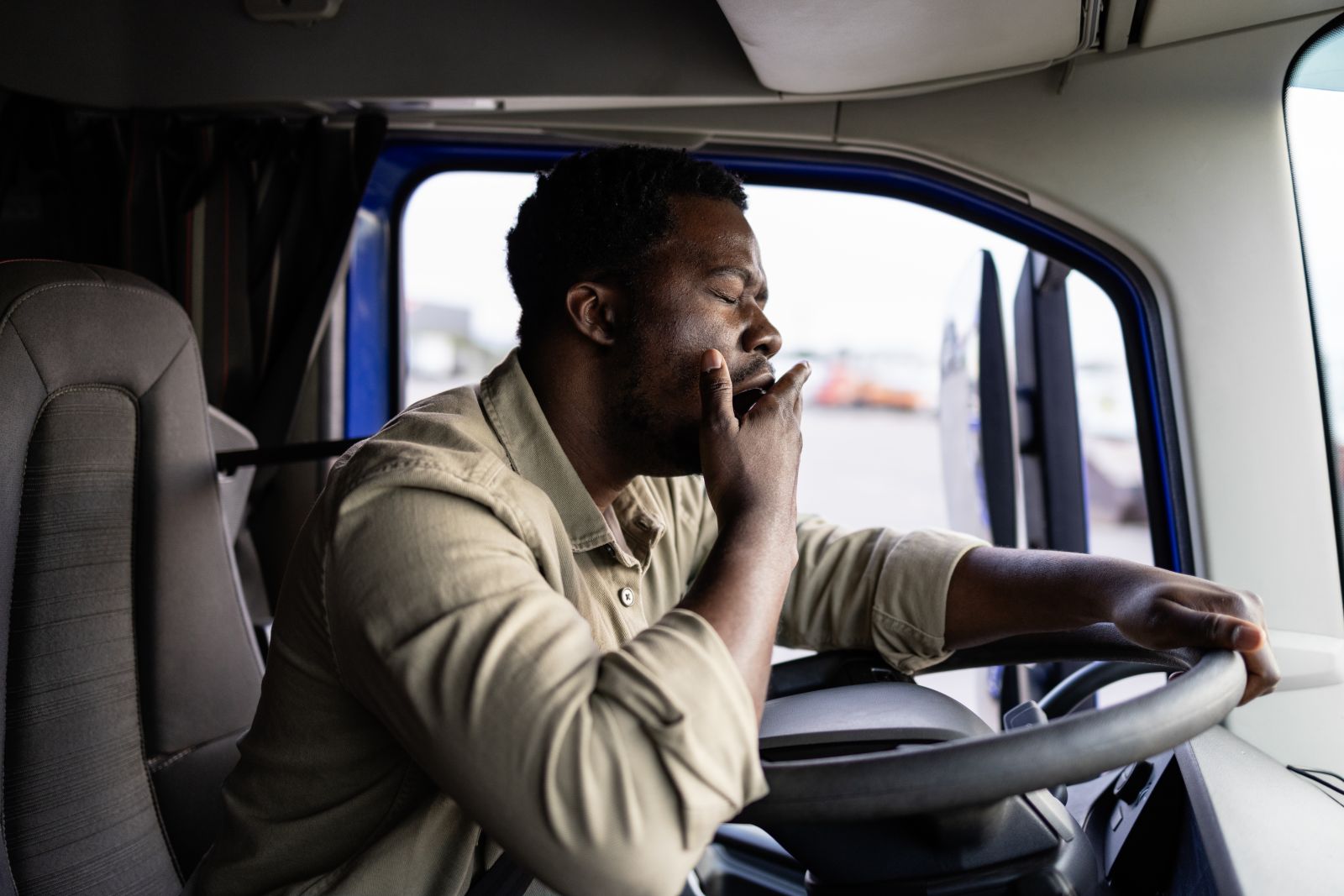
A black truck driver yawning while driving sleepy. Image credit: Freepik.
Sleep is often treated as a luxury rather than a basic need. Many people proudly say they can function on four or five hours of sleep, especially in busy cities where work, traffic and family responsibilities compete for time. When sleep is cut short, the effects show up in dangerous ways and one of the most overlooked is driving while sleepy.
Driving while sleepy does not always look dramatic. It starts with heavy eyelids, slow reactions or briefly drifting out of your lane, yet these small moments can lead to serious road crashes.
A recent survey by the American Academy of Sleep Medicine shows how common this problem is and why it should concern everyone. The findings carry important lessons for African countries where long commutes, night travel and poor sleep habits are common.
The survey was conducted in June 2025 and involved 2,007 adults across the United States. This was an online survey and the results were self-reported. The margin of error was plus or minus two percentage points.
Participants were asked about their sleep habits and whether they had ever felt so sleepy while driving that it affected their ability to drive safely. While the survey does not measure actual crashes or injuries, it gives a clear picture of how many people recognise that sleepiness has affected their driving at some point.
The findings suggest that men in their most productive years are more likely to experience sleepiness while driving or take more risks driving sleepy.
Related: Why Men Die Earlier Than Women: An African Perspective
Across many African countries, long hours on the road are common. In urban centres, workers often wake up very early to beat traffic or travel late at night to avoid it. Commercial drivers may drive for many hours without proper rest. Ride hailing drivers and motorcycle riders often work long shifts to earn enough income. All of these increase the risk of sleepy driving.
In many African settings, the importance of sleep to health is not commonly recognised. Lack of electricity, noise, heat and overcrowded living conditions are common place and make good sleep difficult. Some people see sleeping less as a sign of hard work or resilience. The survey challenges this mindset by showing that poor sleep has real and dangerous effects.
According to global health data, road traffic injuries are one of the leading causes of death among young adults on the African continent with a reported rate of 19.4 deaths per 100,000 population.
When driving sleepy is added to factors like speeding, poor road conditions and limited enforcement of traffic laws, the risk becomes even higher. Preventing road crashes is not only about fixing roads or enforcing laws, it is also about health and personal choices.
The conditions that occur while driving sleepy are similar to driving drunk under the influence of alcohol. Reaction time slows down, attention drops, decision making becomes poor. In some cases, drivers actually fall asleep briefly without realising it. These short sleep episodes can last just a few seconds but at high speed, that is enough to cause a fatal crash.
Unlike alcohol, sleepiness is harder to measure and easier to ignore. Many drivers believe they can fight it with loud music, cold air or strong coffee. These tricks may help for a short time but they do not replace real sleep. The survey shows that many people only recognise the danger after they have already driven while impaired and this highlights the need for more awareness before accidents happen.
Wrap Up
With four out of ten adults in a survey admitting to driving while sleepy, it is evident that the condition is common and justifies being of public health concern. For Africans battling with growing traffic, long commutes and demanding work schedules, sleep should not be seen as a luxury or a weakness; it is a basic need that protects health and saves lives. By taking sleep seriously and spreading the word about the dangers of driving while sleepy, individuals, employers, road safety officers and policymakers can help make roads safer for everyone.
Source: American Academy of Sleep Medicine Newsroom
Related:
Normal sleep: What Africans should know
Quality Sleep Helps Boost Imagination and Critical Thinking
Getting Good Sleep May Add Years to Your Life
Published: December 17, 2025
© 2025. Datelinehealth Africa Inc. All rights reserved.
Permission is given to copy, use and share content for non-commercial purposes without alteration or modification and subject to source attribution.
DATELINEHEALTH AFRICA INC., is a digital publisher for informational and educational purposes and does not offer personal medical care and advice. If you have a medical problem needing routine or emergency attention, call your doctor or local emergency services immediately, or visit the nearest emergency room or the nearest hospital. You should consult your professional healthcare provider before starting any nutrition, diet, exercise, fitness, medical or wellness program mentioned or referenced in the DatelinehealthAfrica website. Click here for more disclaimer notice.