Babies’ Brain Development is Poor in Households with Social and Financial Challenges, Study says
By: Elizabeth Obigwe, B.Sc. Anatomy. Freelance Health Writer. Medically reviewed by A. Odutola, MBBS, PhD, FRCSEd.
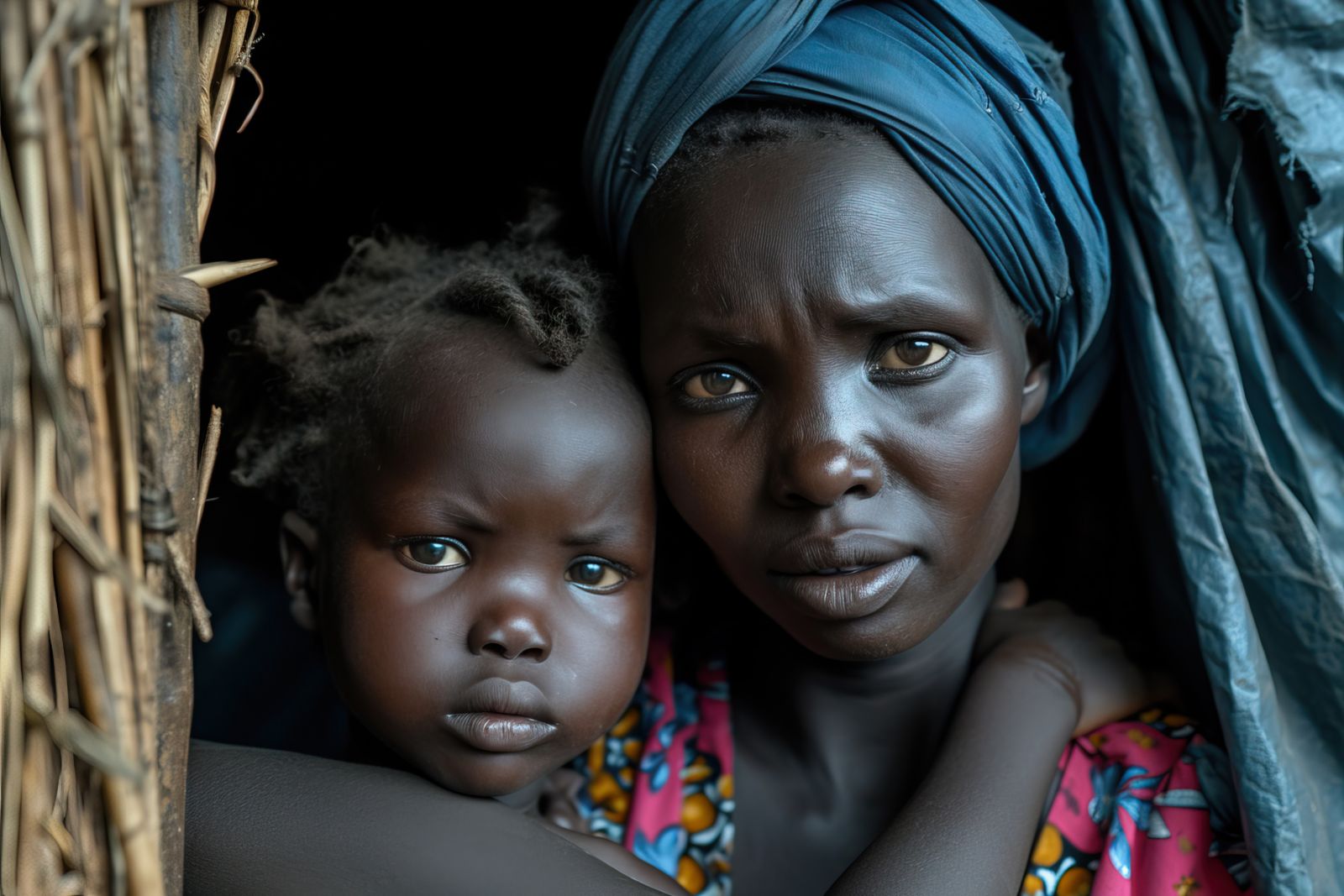
A close-up image of a poor African mother carrying her baby inside a modest, dimly lit shelter, both looking directly at the camera. Image credit: Freepik.
Babies’ brains grow very fast from birth until about five years of age. During this period, the foundation for learning, behaviour, and emotional health is being built. While genetics play an important role in how a child’s brain develops, the environment the child grows up in is just as important. Things like nutrition, caregiving, safety, and the financial stability of the household all shape early brain development.
Many studies have shown that growing up in poverty can negatively affect a child’s development. However, poverty is not just about low income. It often comes with other challenges such as stress, food insecurity, unstable housing, and limited access to healthcare. Because these challenges are closely connected, it can be difficult to identify which children are most at risk early in life and to design interventions that directly address the most harmful factors.
A recent study tried to untangle these overlapping challenges by focusing on one key factor within poverty: income insufficiency—that is, when parents feel their income is not enough to meet basic household needs. This blog will discuss this study, its findings, and implications for Africans.
About the study
The study was conducted using data from the Baby Steps Study, a longitudinal study carried out in a primary care clinic that mainly serves low-income families in Boston, United States. It followed 293 infants, collecting a total of 667 brain recordings using electroencephalography (EEG) when the infants were approximately 4, 9, and 12 months old.
Alongside these brain measurements, parents completed detailed questionnaires about their income sufficiency, education, stress levels, exposure to difficult life events, and other socioeconomic factors.
To analyse the data, the researchers used a network-based approach. This means they did not look at income, stress, or education in isolation. Instead, they examined how these factors are interconnected and how, together, they relate to changes in infants’ brain activity over time.
This approach allowed them to identify which factors were most strongly linked to early brain development within a complex web of social and psychological influences.
What the study found
The study found that income insufficiency was one of the strongest and most consistent factors associated with differences in infant brain development across the first year of life.
Infants whose parents reported that they rarely or never had enough money to meet their needs showed slower developmental changes in key brain activity patterns measured by EEG.
These brain patterns, particularly alpha and beta brain wave activity, are widely understood as markers of how the brain matures and organises itself during early life.
When compared with infants whose parents sometimes or always had enough income, those in “income insufficient” households had:
Another important finding was that income insufficiency sat at the centre of a network of adversity. It was strongly connected to higher parental stress, lower educational attainment, and other socioeconomic challenges.
This suggests that income insufficiency may act as a key pathway through which broader social and psychological stressors affect early brain development.
The study has the following limitations that are likely to influence its validity and generalisation:
What the study means for Africans
Notwithstanding the study limitations described, its findings, though preliminary, are worthy of further research. They are also worthy of consideration by many African countries where a large proportion of families live with chronic income insufficiency, unstable employment, rising living costs, and limited social protection. The study suggests that these conditions can begin to affect children’s brain development as early as the first year of life.
One key takeaway is that poverty is not only a social or economic issue, but also a biological issue. When parents are constantly worried that they are not able to meet basic needs such as food, housing, and healthcare, this stress and financial strain may shape their infants’ brain development at a very early stage, potentially influencing later learning, behaviour, and mental health.
This presents an important opportunity for African healthcare systems. Healthcare providers can prioritise simple screening questions, such as whether caregivers feel their income is sufficient to meet household needs. This screening can be integrated into health programs like antenatal visits, postnatal visits, routine immunisation services, and community health outreach programs, helping to identify infants who may be at higher risk of developmental challenges.
Beyond gathering this data, early intervention is crucial. Implementing policies and programs that reduce financial strain on families, such as food support, affordable childcare, and parental support programs, may have meaningful benefits for early brain development in African children.
Findings from this study reveals that how parents experience their financial situation, that is whether or not they feel able to meet daily needs, matters greatly for infants’ brain development, beyond objective income measures alone.
It therefore reinforces the importance of investing in early childhood development in Africa. Supporting families during pregnancy and infancy, when the brain is developing most rapidly, may help break cycles of poverty and developmental disadvantage over the long term.
Source:
Chung H, Wilkinson CL, Liu A, Said AJ, Francis B, Cañaveral G, Conroy K, Tager-Flusberg H, Nelson CA. Income insufficiency impacts early brain development in infants facing increased psychosocial adversity: a network-based approach. Proc Natl Acad Sci U S A. 2026;123(2):e2513598123. doi:10.1073/pnas.2513598123. Available from here.
Related: Child Developmental Milestones for African Parents: Birth to 12 Months
Published: January 31, 2026
© 2026. Datelinehealth Africa Inc. All rights reserved.
Permission is given to copy, use and share content freely for non-commercial purposes without alteration or modification and subject to attribution as to source.
DATELINEHEALTH AFRICA INC., is a digital publisher for informational and educational purposes and does not offer personal medical care and advice. If you have a medical problem needing routine or emergency attention, call your doctor or local emergency services immediately, or visit the nearest emergency room or the nearest hospital. You should consult your professional healthcare provider before starting any nutrition, diet, exercise, fitness, medical or wellness program mentioned or referenced in the DatelinehealthAfrica website. Click here for more disclaimer notice.