Birth Companionship in Africa: Why It Matters
By: Amarachi Maduwuba. B.NSc, RN, RM. Health and Wellness Writer and DLHA Volunteer. Reviewed by the DLHA Team.
December 9, 2025
Portrait of two African women; one a smiley new African mother wearing a pink blouse sitting beside an elderly birth companion who wears a dark blouse with white headtie. The birth companion is carrying a newborn baby wrapped in a white sheet. Both women are sitting in a hospital setting. Image credit: Lwala. Click on image to enlarge.
Highlights
Introduction
There are few human experiences that can compare with the physical, psychological and social intensity of labor and child birth. It is one of the most powerful and vulnerable moments in a woman’s life. For many women, childbirth can be a time of fear, loneliness, and uncertainty, especially for first-time moms giving birth in busy health facilities.
In times past, women have always been taught childbirth and also been supported by other women and close relatives.
More recently, some healthcare facilities do not favor the presence of birth companions during routine deliveries for various reasons.
However, birth companions, whether a relative, friend, or trained community supporter, play a vital role in ensuring women have a better birth experience.
This blog will explain what birth companionship is, describe its benefits in maternal and neonatal health and suggest ways to strengthen it in African coountries.
Birth companionship means having a trusted person, usually not a medical personnel, present to give continuous support to a woman during labor and childbirth [1]. This person could be a husband or partner, mother, sister, friend, doula, or community health volunteer.
According to the World Health Organization (WHO), every woman has the right to be accompanied by a person of her choice during childbirth. The companions roles are emotional, physical and practical. They provide comfort through kind words, massage, holding hands, helping with breathing techniques, offering water, or simply being present.
Traditionally, African women rarely gave birth alone. Childbirth is usually a family and community affair in many communities. The woman in labour is supported by experienced women, mothers, and grandmothers with advice, songs, and words of encouragement.
With more women now delivering in hospitals and clinics, an important shift that saves lives, many of these supportive traditions have faded. Many health facilities often have strict rules that prevent companions from being present in delivery rooms, sometimes due to privacy concerns or lack of space.
In fact, a study found that few women utilise birth companions in health facilities across sub-Saharan Africa [2].
But with the modern health system and Africa's traditional spirit of community care, birth companionship could provide a better experience for African women.
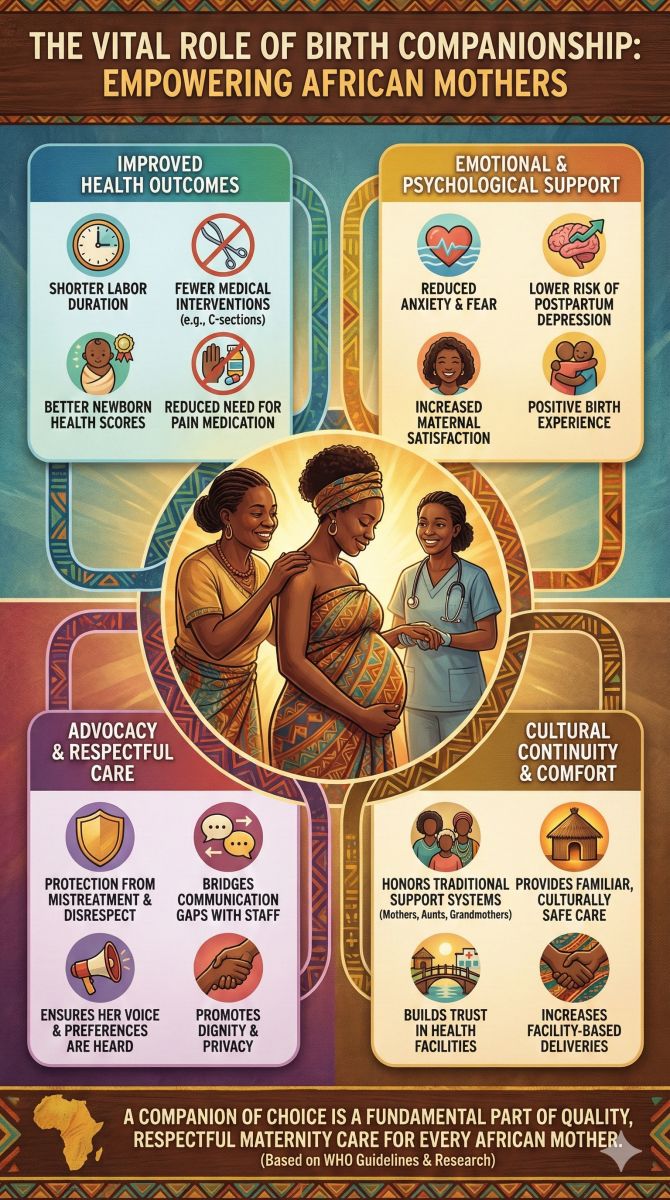
Illustration showing the benefits of birth companionship to African mothers, AI generated from Gemini
Birth companions provide essential benefits to maternal healthcare. Some of these include:
They offer emotional care like reassurance, comfort, and praise to help the person feel more confident and less anxious, which in turn may help labor progress more smoothly.
They act as advocates, helping the woman express her needs to health professionals for due respect in care. This is so important on a continent where some women still face neglect and even mistreatment during childbirth.
They provide physical support like massage to ease tension and promote circulation and also help with positioning and movement which helps ease stress.
Their presence can act as a deterrent against mistreatment by health workers. They are more likely to maintain respectful behavior when a supportive person is present.
Good experiences during childbirth often lead women to be more inclined to seek care from the health facilities in subsequent pregnancies and also recommend these facilities to other women.
The benefits of companionship do not cease at birth. Many companions continue to provide support during the early postpartum period by offering emotional comfort, assisting with newborn care, and helping the mother rest and heal.
.jpg)
Info poster detailing some benefits of birth companionship to newbon babies. Click on image to enlarge.
Companionship benefits babies, too. Some of these include:
A supportive birth companion encourages and facilitates skin-to-skin contact and early breastfeeding.
The supportive presence of a loved one allows for a serene birth environment, reducing maternal stress and consequently reducing infant stress.
Companions emotionally support mothers to better focus on their babies right after birth. This is important in the development of the infant's emotional and social well-being.
Birth companions can remind or assist the mother in following recommended newborn care practices, such as proper wrapping, delayed cord clamping, and hygiene.
These companions offer reassurance and practical help that can enhance the mother's confidence in the handling and care of the newborn. This results in better infant care.
A birth companion can assist in relaying information between the mother and healthcare providers. This will help ensure that the newborn receives timely and appropriate interventions when needed.
Despite clear benefits for mother and infant, birth companionship faces various challenges in Africa:
Facilities may not allow companions due to issues of privacy and perceived lack of expertise.
In most communities, men are actually discouraged from attending the birth.
Both health workers and families may not understand the value of companionship.
Very few programs formally train companions or instruct them on their role in hospitals.
In under-resourced settings, healthcare providers may become overwhelmed and consider companions a distraction rather than a support.
Birth companionship in Africa can be strengthened through the following ways::
Birth companionship can be added as part of national guidelines on maternity care. This way, it ensures that all women have the right to a birth companion of their choice.
Health workers can be trained to understand the companion's role and how to integrate them into the care team.
Traditional birth supporters, mothers' groups, and local leaders can advocate for the inclusion of companionship into respectful maternity care.
Small adaptations, such as curtains or special corners, can be made to facilitate the presence of companions.
Success stories shared can shape the attitude of the public, hence empowering women to request the presence of a companion during labor.
In most African countries, birth companionship is a long-standing tradition that has proven to make childbirth safer and more humane. With high maternal and newborn deaths still of high concerns in most African countries, the strengthening of birth companionship on the continent can help in making childbirth saferwhile boosting birth and postpartum experience. Also, with birth companionship, childbirth will not only feel safe but be filled with dignity, compassion, and love.
1. World Health Organization. Every woman’s right to a companion of choice during childbirth. News release, 9 September 2020. [Retrieved November 3, 2025]. Available from here.
2. Guetta MB, Assata N, Bacha YD, Tekla MG, Hussein FM, Alemayehu A, et al. Utilization of birth companionship and its associated factors among laboring mothers during facilities birth in sub-Saharan Africa. Systematic review and meta-analysis. Sage Open Medicine. 2024 Jan 1:12. Available from here.
Related:
How to Boost Positive Childbirth Experience in African Women
Published: December 9, 2025
© 2025. Datelinehealth Africa Inc. All rights reserved.
Permission is given to copy, use and share content for non-commercial purposes without alteration or modification and subject to source attribution.
DATELINEHEALTH AFRICA INC., is a digital publisher for informational and educational purposes and does not offer personal medical care and advice. If you have a medical problem needing routine or emergency attention, call your doctor or local emergency services immediately, or visit the nearest emergency room or the nearest hospital. You should consult your professional healthcare provider before starting any nutrition, diet, exercise, fitness, medical or wellness program mentioned or referenced in the DatelinehealthAfrica website. Click here for more disclaimer notice.