Colorectal Cancer Now Leading Cause of Cancer Deaths in Under 50s, Study Shows
By Adebowale Bello. B.Tech Microbiology, Freelance Health Writer. DLHA Fellow. Medically reviewed by the DLHA team
April 14, 2026
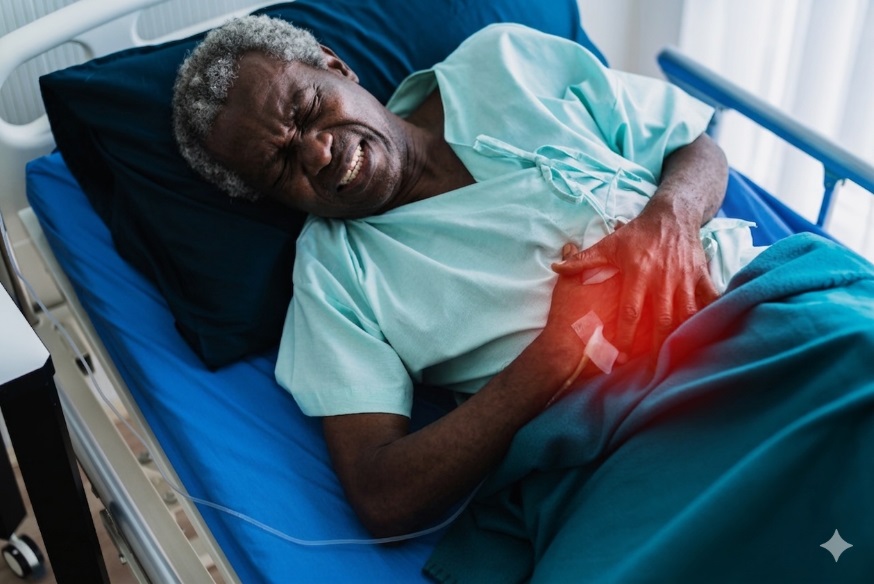
An elderly African man lies on a hospital bed and clutches his stomach in pain. Image Credit: Gemini AI.
Cancer is often seen as a disease that affects older people and many young adults believe they are not at risk, especially if they feel healthy and have no family history. However, recent research is beginning to challenge this belief and a study has revealed a worrying trend that is changing how we think about cancer in younger people.
While there is some good news about declining cancer deaths overall, one type of cancer is moving in the opposite direction. This shift is important not just for people in the United States where the study was conducted, but also for Africans, as similar lifestyle and health patterns are gradually emerging across the continent.
The study, conducted by researchers from the American Cancer Society, analysed cancer death trends among people younger than 50 years over a period of more than 30 years, from 1990 to 2023.
The researchers focused on the five leading causes of cancer-related deaths in this age group. They used national mortality data to track how death rates have changed over time. This type of data is important because it shows real outcomes, not just diagnoses.
The goal of the study was simple: to understand whether young people today are more or less likely to die from cancer compared to previous decades, and which cancers are driving these trends.
One of the most encouraging findings is that cancer deaths among people under 50 have dropped significantly over time. In fact, there has been a reduction of about 44 percent since the 1990s.
Deaths from several major cancers have gone down, including:
This improvement is likely due to better treatment, early detection and increased awareness.
Despite this progress, one cancer stands out for the wrong reasons: colorectal cancer. The study found that deaths from colorectal cancer have been increasing by about 1.1 percent every year since 2005 in people under 50.
Even more concerning is that colorectal cancer has moved from being the fifth leading cause of cancer death in the early 1990s to the number one cause in 2023. This means that while other cancers are becoming less deadly in young people, colorectal cancer is becoming more dangerous.
The study aligns with other research showing that colorectal cancer is no longer limited to older adults. Today, about 1 in 5 people diagnosed with this cancer are under the age of 55. In addition, many young patients are diagnosed at later stages of the disease, when treatment is more difficult and survival rates are lower.
The study itself does not explain the exact causes, but other research provides some clues.
Possible contributing factors include:
There are also emerging concerns about environmental exposures and changes in gut bacteria, although these areas are still being studied. It is important to note that not all cases are linked to lifestyle. Some people may develop colorectal cancer due to genetic factors or family history.
Although this study was conducted in the United States, its findings should not be ignored in African settings. Health trends often spread across regions, especially as lifestyles change.
Across many African countries, there has been a shift from traditional diets to more processed and fast foods. These diets are often low in fibre and high in unhealthy fats and additives. Research has linked such dietary patterns to an increased risk of colorectal cancer. At the same time, physical activity levels are dropping due to urbanisation, while obesity rates are rising. These changes create conditions that may increase cancer risk over time.
In many African countries, people do not seek medical care early. Symptoms like abdominal pain, blood in stool, or changes in bowel habits are often ignored or mistaken for less serious conditions. This delay can lead to late diagnosis, which is already a problem seen in younger patients globally. Late-stage cancer is harder to treat and more likely to lead to death.
Routine cancer screening is still not widely available or commonly practised in many parts of Africa. Even in places where screening exists, awareness is low. In countries like the United States, screening guidelines have already been adjusted to start earlier because of rising cases in younger people. This is something African health systems may need to consider in the future.
Many young people do not consider cancer when they experience symptoms. However, early warning signs should never be ignored. These include:
Seeking medical attention early can make a significant difference.
This study offers both hope and warning. On one hand, it shows that progress is being made in reducing cancer deaths among young people. On the other hand, it highlights a troubling rise in colorectal cancer, which is now the leading cause of cancer death in people under 50.
For Africans, this is a signal to pay attention to. As lifestyles change, health risks also evolve. Awareness, early detection, and healthier living choices will play a key role in preventing similar trends across the continent. Cancer is no longer just a disease of old age. The earlier people understand this, the better their chances of protecting their health.
Source: Siegel RL, Wagle NS, Jemal A. Leading Cancer Deaths in People Younger Than 50 Years. JAMA. 2026;335(7):632–634. Available from here
Related:
Colorectal Cancer in Africa: A Fact-sheet
4 Cancer Screening Tests You Need to Do
Best and Worst African Food and Drinks To Prevent Colon Cancer
Published: April 14, 2026.
© 2026. Datelinehealth Africa Inc. All rights reserved.
Permission is given to copy, use and share content for non-commercial purposes without alteration or modification and subject to attribution as to source.
DATELINEHEALTH AFRICA INC., is a digital publisher for informational and educational purposes and does not offer personal medical care and advice. If you have a medical problem needing routine or emergency attention, call your doctor or local emergency services immediately, or visit the nearest emergency room or the nearest hospital. You should consult your professional healthcare provider before starting any nutrition, diet, exercise, fitness, medical or wellness program mentioned or referenced in the DatelinehealthAfrica website. Click here for more disclaimer notice.