Lessons For Africa As Measles Cases Rise In The United States
By: Foluke Akinwalere, Health & Medical Writer. Medical reviewed by editorial support from the DLHA Team.
March 20, 2026
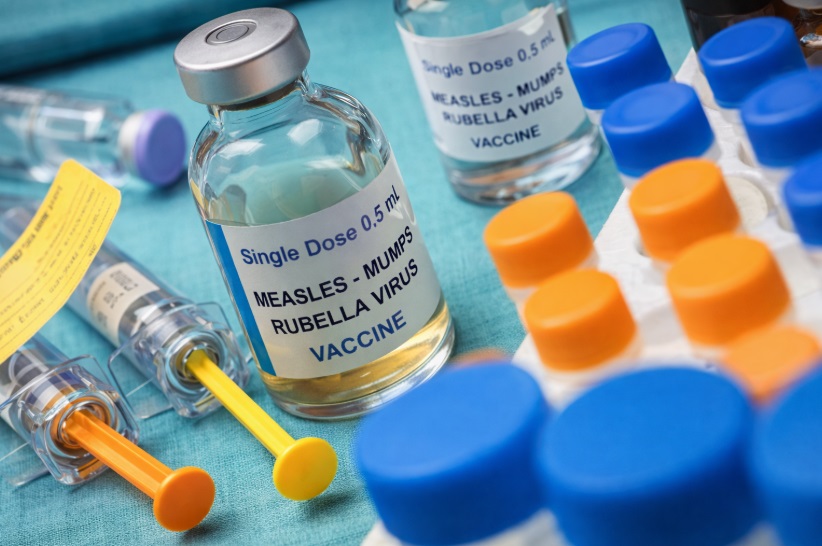
Image of syringes, measles-mumps-rubella (MMR) vaccine vials and other vaccination items arranged on a table. Image created from ChatGPT
“When more people choose not to vaccinate their children, you’re going to see more disease, more suffering, more hospitalisation, and more death.”
- Dr. Paul Offit, Director of the Vaccine Education Centre at Children’s Hospital of Philadelphia, Pennsylvania, USA.
Infectious diseases usually remind the world that progress in public health can be fragile. Diseases once thought to be under control can return if vigilance declines. A recent surge in measles cases in the United States is a powerful example of this reality.
In early 2026, the United States, one of the world’s most acclaimed health systems, reported a sharp increase in measles infections. According to the U.S. Centers for Disease Control and Prevention (CDC), more than 1,487 confirmed cases had already been recorded by mid-March 2026 across 32 states, with most cases linked to outbreaks.
This surge is particularly notable because measles was declared eliminated in the United States in 2000, meaning the disease was no longer continuously spreading within the country
Yet today, the virus is again spreading across communities.
For African countries, where measles still causes outbreaks and child deaths in some regions, the situation offers important lessons. It highlights how quickly infectious diseases can return when vaccination rates drop or when public health systems become complacent.
Understanding the reasons behind the return of measles in a country that had previously eliminated it, and the implications for global health, can help African nations avoid similar setbacks.
Measles is a highly contagious viral infection caused by the measles virus. It spreads through respiratory droplets when an infected person coughs or sneezes, or through close face-to-face contact with someone who has the virus.
Measles is so contagious that if one infected person enters a community where many people are not protected through vaccination, the virus can spread to nearly everyone who is unprotected [1].
Related: What is Measles?
Symptoms typically start to appear 10-14 days following exposure to the virus. This includes:
After 7-18 days, a distinctive brownish rash appears in dark skinned people. The rash begins on the face and spreads across the body, and usually lasts 5-6 days before fading away. While many recover, measles can lead to serious complications, including [1]:
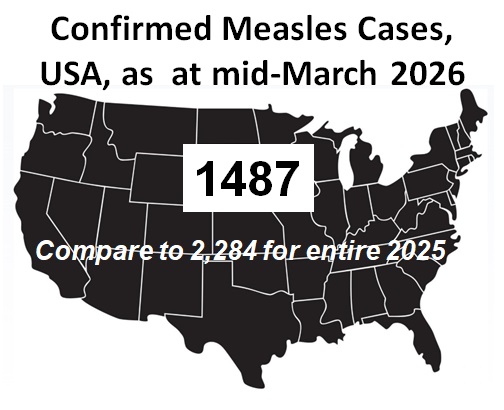
Measles Outbreak Facts USA 2026: Infographics of confirmed outbreaks as at mid-March 2026. Credit: CDC. Click on image to enlarge.
Dr. Williams Schaffner, an infectious disease specialist at Vanderbilt University Medical Center in Nashville, Tennessee, described this current trend as “disappointing and depressing and ominous,” in an interview with CNN.
The CDC notes that:
Dr. Paul Offit, Director of the Vaccine Education Centre at Children’s Hospital of Philadelphia, warned that more deaths could occur stressing the role of declining vaccination rates:
“When more people choose not to vaccinate their children, you’re going to see more disease, more suffering, more hospitalisation, and more death.”
Measles cases have now been reported in more than half of U.S. states, with several large outbreaks underway.
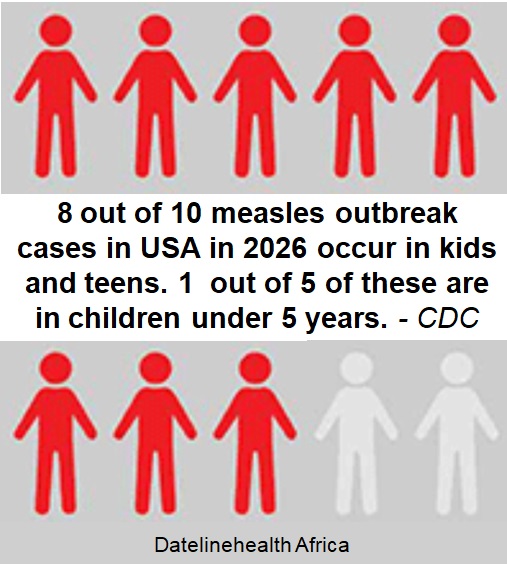
Measles Outbreak Facts USA 2026: Infographics on who is at risk. Credit: CDC, Click on image to enlarge.
Most of the recent cases are in unvaccinated individuals or people whose immunisation status is unknown. That is a key pattern in the resurgence.
Health officials say vaccination gaps are a major driver of the outbreaks. Nearly all (96%) of reported cases this year occurred in people who were not vaccinated with the measles-mumps-rubella (MMR) vaccine (which protects against measles, mumps, and rubella) or who had not received the recommended two doses [3].
Children and teenagers are the most affected because about 8 out of 10 (80%) of cases involve kids and teens, and about 1in 5 of these occur in children younger than five [2].
.jpg)
Measles Outbreak Facts USA 2026: AI generated visual poster on key drivers of the measles resurgence. Credit: ChatGPT. Click on image to enlarge.
The resurgence of measles in the United States is not due to a new virus. Instead, it reflects several the following social and public health factors:
One of the most important drivers of the current outbreak is falling vaccination coverage. For measles, communities need about 95% vaccination coverage to maintain a high level of immunity and prevent outbreaks [1]. However, vaccination rates in some parts of the United States have dropped below that level in recent years.
This lower vaccination coverage allows the virus to spread easily when introduced into the susceptible communities.
Measles is highly contagious as can be present in a room for up to 2 hours after its introduction. This makes it to spread readily especially among unvaccinated people.
Public health experts point to vaccine hesitancy and misinformation as major contributors to the current outbreak.
Some parents delay or refuse vaccination for themselves or their children due to misleading claims about vaccine safety, despite overwhelming scientific evidence demonstrating that the MMR vaccine is both safe and effective.
According to Dr. Linda Bell, South Carolina epidemiologist, the measles outbreak “is not nearly over yet. It is these pockets of undervaccinated people who remain susceptible. That ongoing susceptibility in our population may continue to fuel the ongoing spread.” [ 3]
This hesitancy has resulted in clusters of unvaccinated individuals where the virus can spread more easily once introduced.
Experts also note policy changes and gaps in public health infrastructure that may have weakened traditional safeguards against disease spread. In some states, school vaccination requirements have loosened, making it easier for unvaccinated children to attend without proof of immunisation.[3]
Additionally, national and local health systems face staffing shortages and reduced disease surveillance capacity, which hinder rapid detection and response to emerging outbreaks.[3]
Measles continues to circulate widely across parts of the world, and international travel can introduce the virus into countries where vulnerable individuals live.
Once introduced, the virus can spread among unimmunized and under-immunised groups, reinforcing the global nature of disease threats.
“Measles is a fierce infection, and we should be preventing it,” Schaffner said. “It can strike any healthy, normal child in its most severe fashion.”
Measles matters in Africa because according to the World Health Organisation (WHO), it remains a major public health challenge causing tens of thousands of preventable deaths annually; most of them in children under five [1]. This is despite the availability of a safe, effective and low cost vaccine.
The impact of measles in Africa is not just on the health system, it also causes school absenteeism in children, and economic burden on families and communities.
Some of the factors contributing to measles burden and deaths in many African countries include [1]:
The measles resurgence in the United States offers valuable lessons for African countries working to strengthen disease prevention and child health systems:
One of the most important lessons is that progress can quickly reverse if vaccination rates fall.
African countries must continue to invest in:
Maintaining high vaccination coverage is the most effective way to prevent measles outbreaks.
African countries must work to ensure that both doses of the MMR (or measles-containing vaccine) reach at least 95% of eligible children.
Misinformation about vaccines is spreading through social media and online platforms, which is causing a growing challenge globally.
African health authorities should invest in clear, evidence-based health communication and engage trusted community leaders, healthcare workers, and educators to promote accurate information about vaccine safety and effectiveness.
Community engagement and culturally appropriate messaging are key to building public trust.
Timely surveillance and rapid outbreak response are essential to limit the spread of measles once cases emerge.
African public health managers at national levels should support local health facilities with robust reporting systems, laboratory capacity, and well-trained health workers to detect and respond to outbreaks swiftly.
Links between routine immunisation, surveillance, and emergency preparedness must remain strong to stop outbreaks early before they expand.
Young children face the highest risk of severe measles complications.
African health systems must prioritise:
Protecting children from measles also reduces preventable child deaths.
Measles outbreaks often occur in underserved and marginalised communities where access to routine vaccines is limited. Promoting equitable access to vaccines, including mobile clinics, outreach programs, and targeted campaigns, can help reach hard-to-serve populations and reduce susceptibility.
Viruses do not respect national borders.
African countries should strengthen regional cooperation in disease surveillance, vaccination campaigns, and outbreak response through institutions such as the African CDC and regional health networks.
The recent rise in measles cases in the United States is a reminder that infectious diseases can return when vigilance declines.
The 1,487 cases reported as at md-March 2026 show how quickly a vaccine-preventable disease can spread when immunity gaps appear in the population.
For Africa, the lesson is clear.
Eliminating measles is not only about achieving high vaccination rates once; it is about maintaining those rates year after year, strengthening health systems, and building public trust in vaccines.
Preventing measles outbreaks requires sustained effort from governments, healthcare professionals, communities, and families.
If African countries act on these lessons, strengthening immunisation programs, improving surveillance, and combating misinformation, they can protect millions of children from a disease that the world already has the tools to prevent.
1. World Health Organisation, Measles, [Internet] 28 November 2025]. Accessed March 3, 2026. Available from here.
2. CDC Measles Cases and Outbreaks, [Internet]. Updated March 20, 2026 Accessed [March 20, 2026]. Available from here.
3. CNN Health The US surpassed 1,100 measles cases in two months. Expect more deaths next. [Internet]. February 27, 2026, Accessed March 3, 2026. Available from: here.
Related:
Measles Cases Rise as Deaths Fall, Says WHO
Childhood Vaccines and Routine Immunization In Nigeria
Published: March 20, 2026
© 2026. Datelinehealth Africa Inc. All rights reserved.
Permission is given to copy, use, and share content freely for non-commercial purposes without alteration or modification and subject to source attribution.
DATELINEHEALTH AFRICA INC., is a digital publisher for informational and educational purposes and does not offer personal medical care and advice. If you have a medical problem needing routine or emergency attention, call your doctor or local emergency services immediately, or visit the nearest emergency room or the nearest hospital. You should consult your professional healthcare provider before starting any nutrition, diet, exercise, fitness, medical or wellness program mentioned or referenced in the DatelinehealthAfrica website. Click here for more disclaimer notice.