Moderate Coffee and Tea Intake May Lower Dementia Risk, Study Suggests
By: Foluke Akinwalere, Health & Medical Writer. Medically reviewed by the DLHA Team.
February 19, 2026
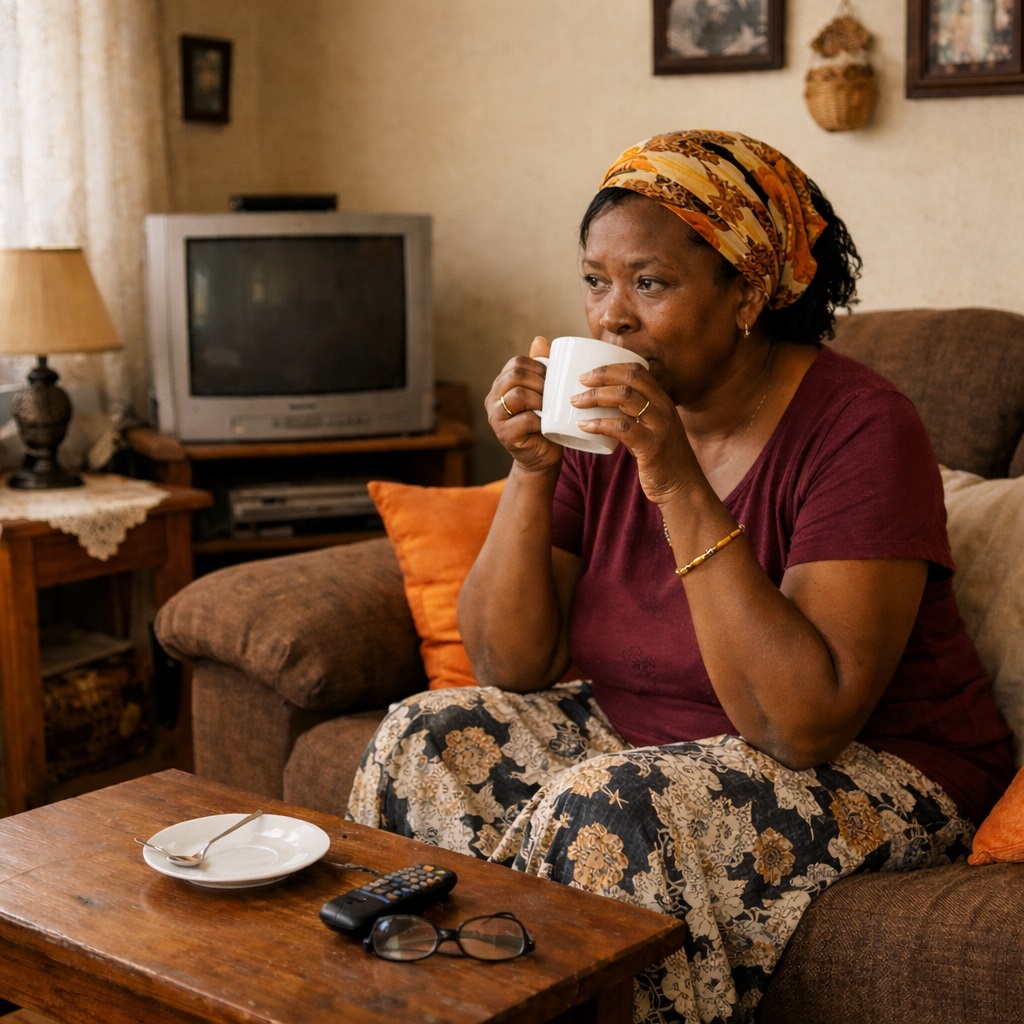
Image of an African lady, sitting in her living room enjoying a cup of coffee. Image created from ChatGPT.
Many Africans enjoy a warm cup of tea or coffee alone or with family in the morning or evening tea after a long day. But beyond comfort and culture, could these drinks have benefits for our brains as we age?
A large new study published in the Journal of the American Medical Association (JAMA) suggests a link between regularly drinking caffeinated coffee or tea and a lower risk of dementia later in life.
This finding is encouraging, especially as conditions like Alzheimer’s disease and cognitive decline affect communities globally, including in Africans who have limited access to specialist brain health care.
The research was led by scientists at Harvard University and published in the JAMA.
This kind of long-term research is called an observational cohort study; it observes patterns over time without intervening (i.e., attempting to influence the outcome) or giving people specific treatments.
The major findings were:
This suggests that caffeine or other natural compounds in coffee and tea may play a role.
Those with higher caffeinated coffee or tea intake reported fewer memory complaints and performed slightly better on cognitive tests than low-intake groups.
These results suggest a link between caffeinated drinks and brain health, but do not prove that coffee or tea causes these benefits.
It’s important to understand what this study can and cannot tell us:
Even so, researchers caution that your morning coffee alone is not enough to protect your brain health.
“While our results are encouraging, it’s important to remember that the effect size is small and there are lots of important ways to protect cognitive function as we age,” a senior researcher, Dr. Daniel Wang, said in a news release.
He added, “Our study suggests that caffeinated coffee or tea consumption can be one piece of that puzzle.”
So while the findings are encouraging, they are not definitive, and they should be interpreted with care.
As Africans, our traditions around coffee, tea, and other beverages are as rich and diverse as our cultures. Here are some thoughtful takeaways:
This large, long-term study suggests that drinking caffeinated coffee or tea regularly, in moderation, is associated with a lower risk of dementia and better cognitive function later in life. But this does not prove that these drinks prevent brain disease. It adds to growing evidence that diet and lifestyle choices, including beverage habits, are part of a healthy ageing journey.
As we think about brain health in African communities, it’s helpful to combine what research shows with cultural practices and whole-life habits that support physical, mental, and social well-being.
Source: Zhang Y, Liu Y, Li Y, et al. Coffee and Tea Intake, Dementia Risk, and Cognitive Function. JAMA. Published online February 09, 2026. doi:10.1001/jama.2025.27259 Available from: here
Related
Dementia: What Africans Need to Know
15 Modifiable Risk Factors of Dementia Africans Need to Know
African Foods That Promote Brain Health
Health Risks of Energy Drink Consumption: An Overview for Africans
Published: February 19, 2026
© 2026. Datelinehealth Africa Inc. All rights reserved.
Permission is given to copy, use, and share content freely for non-commercial purposes without alteration or modification, and subject to source attribution.
DATELINEHEALTH AFRICA INC., is a digital publisher for informational and educational purposes and does not offer personal medical care and advice. If you have a medical problem needing routine or emergency attention, call your doctor or local emergency services immediately, or visit the nearest emergency room or the nearest hospital. You should consult your professional healthcare provider before starting any nutrition, diet, exercise, fitness, medical or wellness program mentioned or referenced in the DatelinehealthAfrica website. Click here for more disclaimer notice.