Chlamydia Infection Explained for Africans With Prevention Tips
By Isma Butt, DPT. DLHA Volunteer and Freelance Medical Writer. Medically reviewed by the DLHA Team.
December 10, 2025

An image of a young black couple sitting close together discussing. They look visibly worried and distressed. .
Highlights
Chlamydia infection is among the most common sexually transmitted infections (STIs) around the globe. Often called a ‘silent epidemic’, it frequently causes no noticeable symptoms, allowing the infection to spread without people knowing they have it. According to the World Health Organisation, an estimated 128.5 million new chlamydia infections occurred globally in 2020 among people aged 15 -49 years.
In Africa, chlamydia remains a significant yet often overlooked public health concern. Limited awareness, infrequent screening, and stigma surrounding sexual health contribute to its continued spread.
This article explains what chlamydia is, how it affects the body, how it is transmitted, and the steps that can be taken to prevent, treat and control it. Improved knowledge of the condition coupled with regular testing are essential to reducing infection rates and protecting the sexual health of people.
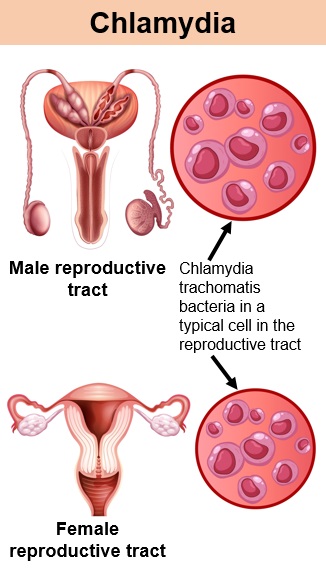
Cartoon illustration of the male and female reproductive tracts with inserts of the chlamydia bacteria (germ) shown in a typical cell of the tracts.
Chlamydia is a bacterial infection caused by a germ (organism) called Chlamydia trachomatis. It spreads mainly through sexual contact, including vaginal, anal, and oral sex. Pregnant women with the condition can also pass it to their babies during childbirth.
Unlike some STIs with obvious symptoms, chlamydia often shows no signs. Many infected individuals are unaware of their condition, which allows the disease to spread easily.
In Africa, especially in sub-Saharan regions, chlamydia is common among young adults and women of reproductive age. Most people don't realise they carry the disease, so it often goes undetected and leads to more serious health problems.
Millions of people are infected with chlamydia annually in Africa. Studies show an increasing number of infection cases in Eastern and Southern Africa, with many new cases diagnosed each year.
The highest burden is often seen in areas where HIV is also common, because the risk factors for both conditions overlap. Despite its impact, chlamydia remains underreported due to limited screening services, social stigma, and lack of awareness.
Challenges, such as weak healthcare systems, cultural barriers, and poor access to routine health check-ups, especially in rural areas, make the problem worse. Many infected individuals do not receive timely care, which exposes them to the risk of developing complications.
Chlamydia infection mainly affects sexually active people, especially young adults between the ages of 15 and 24. Women are more affected by chlamydia than men because the infection often stays hidden and can cause serious damage to the reproductive system if untreated.
These other categories of people are also affected more:
These individuals should always use protective measures during sex and undergo routine testing to prevent complications.
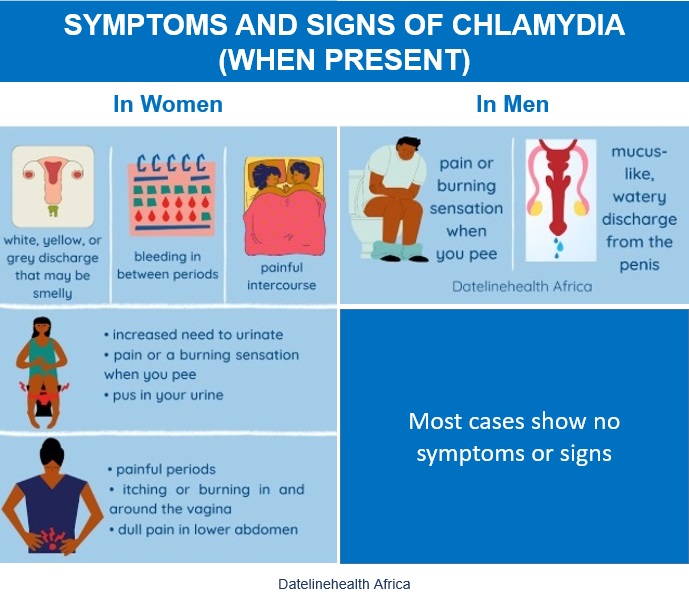
Info poster: Chowing chlamydia symptoms and signs. Click on image to enlarge.
Chlamydia infection mainly affects sexually active people, especially young adults between the ages of 15 and 24. Women are more susceptible to it than men because the infection often stays hidden and can cause serious damage to the reproductive system if untreated.
Because most cases are asymptomatic, affected individuals often do not seek care until complications arise.
As the majority of individuals infected with chlamydia do not show symptoms, regular screening is vital, especially for sexually active young people and high-risk groups such as sex workers.
Common tests include:
These samples are examined in a laboratory using methods such as Nucleic acid amplification tests (NAATs). These tests are highly accurate, detecting even small traces of the bacteria.
Screening programs in Africa are limited, but they're expanding, particularly in urban areas and HIV clinics. The screening process is confidential, and healthcare providers encourage people to undergo routine sexual health check-ups.
Chlamydia can be treated easily using antibiotics. The recommended treatment protocols are:
Treatment is effective, but it is important to:
If symptoms persist or reinfection occurs, see a healthcare provider for re-evaluation.
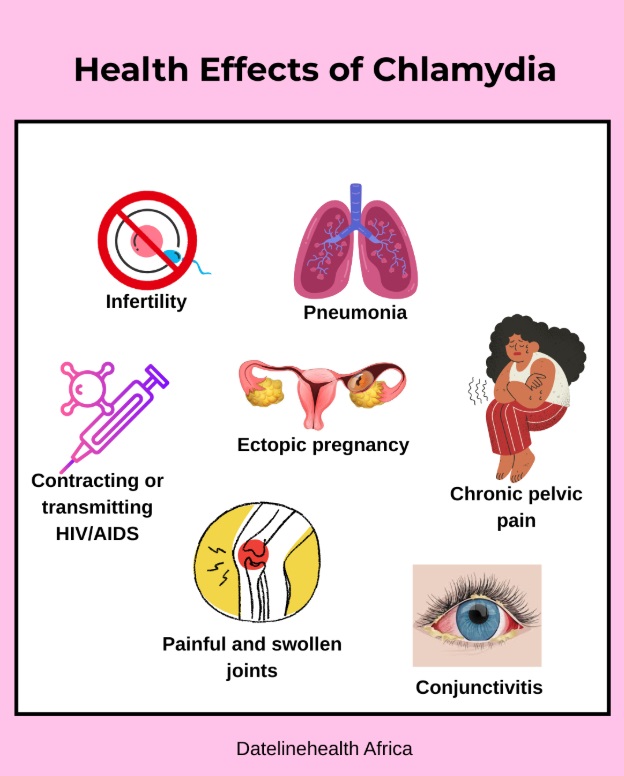
Info poster: Showing health effects of untreated Chlamydia infection. Click on image to enlarge.
If left untreated, chlamydia infection can have serious and lasting effects on health.
The infection can spread to the uterus and fallopian tubes, causing pelvic inflammatory disease (PID). PID is a serious condition of the female reproductive organs that can result in:
Other effects:
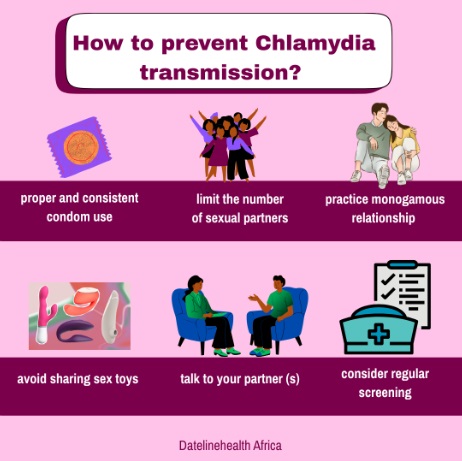
Info poster: Showing how to avoid catching chlamydia
Avoiding chlamydia means adopting safer sexual practices and having increased awareness.
Chlamydia, like many sexually transmitted infections (STIs) carries social stigma in many African communities.
These misconceptions discourage honest conversations and care.
If you're diagnosed with chlamydia, remember that:
Across Africa, multiple resources are available to support the diagnosis, treatment and prevention of sexually transmitted diseases including chlamydia.
Access to rapid diagnostic centres is increasing, making early detection more feasible in resource-limited settings and helping patients receive timely medical care.
If you suspect that you have a sexually transmitted diseases of any kind, including chlamydia, go to healthcare provider or hospital immediately to get help.
Chlamydia may often go unnoticed, but it is preventable and treatable. With the right knowledge, resources, and support, people across Africa can protect themselves and others.
Regular screening, safe sex practices, timely management, and community education can significantly reduce the burden of chlamydia. Breaking the stigma and expanding access to healthcare services are vital steps towards controlling infection and protecting reproductive health.
Take charge of your reproductive health: learn, talk, test, and protect!
1. Can chlamydia be cured?
Yes. Chlamydia infection can be cured with antibiotics such as azithromycin or doxycycline. Completing treatment and ensuring partners are also treated prevents reinfection.
2. What are the common symptoms of chlamydia?
Most people show no symptoms. When they occur, they may include unusual discharge, burning during urination, pelvic pain, or testicular swelling.
3. How is chlamydia transmitted?
Chlamydia spreads through vaginal, anal, or oral sex with an infected person. Pregnant women can also transmit it to their babies during childbirth.
4. Who should get tested for chlamydia?
Sexually active young adults (especially 15–24 years old), people with multiple partners, those with HIV, MSM, and pregnant women should undergo regular chlamydia screening.
1. World Health Organisation (WHO). Chlamydia Fact Sheet. [internet.n.d]. Cited September 8, 2025. Available from here
Related:
Gonorrhoea Explained to Africans: Causes, Symptoms, and Treatment
Syphilis Explained to Africans: Symptoms and Treatment
Common Vaginal Infections In Nigerian Women
Pelvic Inflammatory Disease in Africa: Diagnosis and Treatment
Published: December 10, 2025
© 2025. Datelinehealth Africa Inc. All rights reserved.
Permission is given to copy, use and share content for non-commercial purposes without alteration or modification and subject to source attribution.
DATELINEHEALTH AFRICA INC., is a digital publisher for informational and educational purposes and does not offer personal medical care and advice. If you have a medical problem needing routine or emergency attention, call your doctor or local emergency services immediately, or visit the nearest emergency room or the nearest hospital. You should consult your professional healthcare provider before starting any nutrition, diet, exercise, fitness, medical or wellness program mentioned or referenced in the DatelinehealthAfrica website. Click here for more disclaimer notice.