Denial of US Visa on Health Grounds is Unjust: A Better Alternative is Available
By: Foluke Akinwalere, Health & Wellness Writer. Editorially reviewed by the DLHA Team.
December 4, 2025
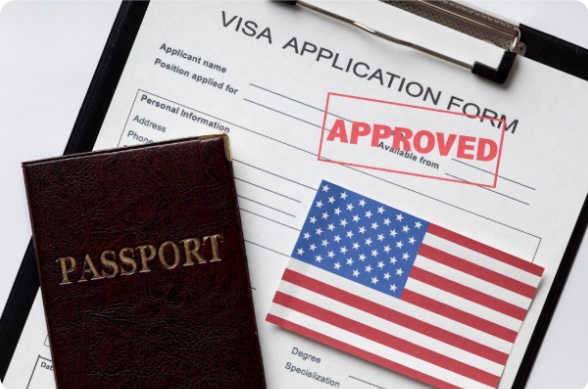
The image of a generic passport and visa application form with approved stamps and US flag. Image credit Freepik
A recent policy expansion under the Trump administration has raised serious concerns for millions of travelers worldwide, including many Africans.
The policy gives U.S. visa officers broader authority to deny visas based on common chronic illnesses such as diabetes, hypertension, obesity, cancer, and certain mental health conditions.
These are conditions that millions of Africans manage daily with medication, lifestyle adjustments, and routine medical care. They do not make a person a danger to society. Yet, under the new guideline, they may now be considered a reason to deny a U.S. visa.
For African families whose lives are often intertwined across continents, this shift could have real emotional and economic consequences. But there is a fairer, more humane approach — requiring travel health insurance instead of denying visas based on illness.
This article explains why the new policy matters, how it affects African families, and what a more just alternative could look like.
The directive was sent to U.S. embassies and consulates in a cable from Secretary of State Marco Rubio on November 6, 2025, as reviewed by The Washington Post.
The updated policy expands the scope of health checks beyond specific diseases to give visa officers the authority to reject applications if they believe an individual’s health issues may result in significant medical expenses in the U.S.
Traditionally, U.S. visa medical reviews focused on infectious diseases such as tuberculosis — illnesses that pose a public health risk. The new directive shifts attentions to non-communicable diseases (NCDs) such as:
Heart disease
Depression and anxiety disorders
Some neurological or lifelong conditions
Applicants may now be denied if officers feel their condition may result in high medical costs during their visit.
The policy does not provide clear medical criteria. Instead, consular officers — who are not medical professionals — must make decisions based on:
This creates room for inconsistency, bias, and error.
Africa is currently witnessing a steady increase in chronic conditions due to:
Hypertension and diabetes, in particular, are extremely common — even among Africans who appear physically healthy.
Under this new policy, many perfectly stable, productive individuals may face additional visa barriers.
Related: Diabetes in Africa: Social Changes Fuelling Burden Rise
Many Africans in the diaspora invite their parents or grandparents to:
However, chronic illness increases with age. Older relatives, usually the center of African family life, may now be disproportionately rejected.
African families frequently apply for visas as a household. A child with asthma or a spouse with hypertension could complicate everyone’s chances — even if the trip is short and well-funded.
The U.S. healthcare system is extremely expensive. Officers may expect applicants to demonstrate financial capacity to cover potential emergencies — sums that are unrealistic for Africans, even those who can afford international travel.
Millions of Africans with chronic conditions:
A chronic illness does not automatically translate into high healthcare burdens.
Expecting visa officers to predict medical outcomes is not medically sound. Without training, clinical judgment, or full medical history, decisions may be unfair or inaccurate.
Since chronic conditions are more common among older adults, the policy indirectly discriminates against them — undermining the right to family connection.
Some applicants may now feel pressured to hide medical conditions or alter their behavior before screening. This is dangerous and unnecessary.
If the U.S. government is concerned about healthcare costs, a more reasonable solution already exists and is used worldwide: require all visa applicants regardless of chronic illnesses status to obtain travel health insurance acceptable to US authorities.
All visa applicants would need to present:
Those who cannot meet the requirement can be validly denied visas — for lack of acceptable insurance, and not because they have a chronic illness.
Countries across Europe, Asia, and the Middle East already use mandatory travel insurance as a visa requirement. It ensures visitors:
1. Fair and Objective: Insurance coverage is a clear requirement. Applicants either meet it or do not.
2. Protects the U.S. Healthcare System: Insurance bears the cost of any unexpected care.
3. Respects Applicant Dignity: No one is punished for having high blood pressure, diabetes, or depression —which are treatable.
4. Encourages Health Responsibility: Applicants take ownership by securing coverage ahead or travel.
5. Avoids Bias: Healthy, stable individuals with chronic illnesses can travel like everyone else.
If someone cannot secure adequate insurance, a visa denial would apply - based on clear criteria, not assumptions or bias.
Especially if you have a chronic condition, prepare:
Related: An Air Travel Guide for Africans with Diabetes
2. Strengthen Financial Documentation
Show that you are able to support yourself through:
Even if not yet required, having coverage:
Visa policies can change. Follow credible sources, immigration updates, and health-policy briefings.
African governments, civil society organisations, and diaspora associations should:
This issue affects mobility, economic opportunity, and family unity — all central to African life.
Denying U.S. visas based on common chronic illnesses is unjust, discriminatory, and medically unfounded. Millions of Africans live healthy, productive lives while managing conditions like hypertension and diabetes.
A more compassionate and practical approach exists: require applicants to obtain approved travel health insurance, as many countries already do.
This protects the U.S. healthcare systems without punishing people for their health conditions, and ensures that Africans can continue to travel, study, reunite with family, and pursue opportunities abroad without unfair barriers.
Human dignity must remain at the center of immigration and public-health policy — and this is the path that achieves it.
Source: The Washington Post
Published: December 4, 2025
© 2025. Datelinehealth Africa Inc. All rights reserved.
Permission is given to copy, use, and share content freely for non-commercial purposes without alteration or modification and subject to source attribution.
DATELINEHEALTH AFRICA INC., is a digital publisher for informational and educational purposes and does not offer personal medical care and advice. If you have a medical problem needing routine or emergency attention, call your doctor or local emergency services immediately, or visit the nearest emergency room or the nearest hospital. You should consult your professional healthcare provider before starting any nutrition, diet, exercise, fitness, medical or wellness program mentioned or referenced in the DatelinehealthAfrica website. Click here for more disclaimer notice.