Looking and Feeling Your Best: Practical Ways to Build a Better Everyday Life
By: Rhonda Underhill. Guest writer. Medically reviewed by the DLHA Team
Decmeber 26, 2025

Close up photo of a black woman posing outdoors in meditation among potted plants. Image credit: Freepik.
Feeling better is a universal goal. When people say they want to look and feel their best, they’re usually talking about energy, confidence, and a sense that their life fits who they are right now. This article explores realistic, human-centered ways to support physical wellness, mental clarity, and personal fulfillment—without perfection or pressure.
Feeling better often comes down to a few of these repeatable habits rather than dramatic changes.
When these areas align, the result is not just improved appearance, but a deeper sense of well-being.
Exercise is one of the most reliable ways to improve mood, sleep, and confidence. That does not mean everyone needs a gym membership or intense routines. The key is consistency and enjoyment.
Here are a few approachable options:
The best exercise routine is the one you will actually continue. Over time, regular movement supports heart health, muscle tone, and mental resilience.
Self-care is often misunderstood as indulgence. In practice, it is maintenance. It helps you reset so you can show up better in daily life.
Simple self-care habits include:
These habits help regulate stress hormones, improve focus, and reduce burnout. Feeling better often starts with reducing what drains you.
Eating well without extremes
Nutrition does not need to be complicated. Most people feel better when they eat regularly, stay hydrated, and include a balance of nutrients.
A general approach that works for many:
When eating supports energy instead of guilt, it becomes a foundation for both physical and emotional wellness.
Use this as a flexible guide, not a rulebook.
Small, repeatable actions tend to create bigger results than dramatic overhauls.
For many adults, feeling “off” has less to do with habits and more to do with purpose. Working in an unfulfilling field can quietly drain motivation and self-worth. Exploring a career change can be a meaningful form of self-care, especially when aligned with long-term goals.
Online degree programs make it easier to earn credentials while continuing to work full-time or care for family responsibilities. For example, pursuing an online business degree can help people develop practical skills in accounting, business operations, communications, or management—skills that transfer across industries and roles.
Learning something new often restores confidence and opens doors to work that feels more aligned with personal values.
Starting a hobby can feel unnecessary when life is busy, but hobbies often restore creativity and reduce stress. They remind people that they are more than their responsibilities.
Examples include:
Hobbies create a sense of progress that is not tied to productivity or income, which can be deeply grounding.
Table 1 below summarizes common habits and the benefits they tend to support. For example, undertaking regular exercises helps to improve energy and mood while promoting better sleep among several other benefits. Also, eating a balanced and healthy diet helps to maintain stable blood sugar while promoting mental clarity through the day.
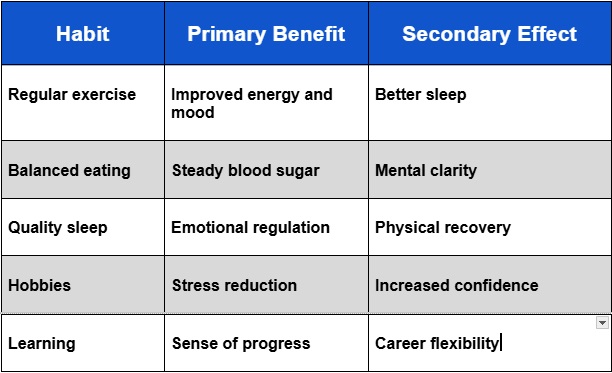
Table 1: Shows practical lifestyle habits and the areas of well-being they most commonly support, such as energy, mood, and confidence. Click on image to enlarge.
Looking and feeling your best is not about chasing an ideal version of yourself. It is about building habits, routines, and choices that support who you are right now. With small steps in movement, self-care, nutrition, and personal growth, feeling better becomes sustainable rather than overwhelming. Over time, those small choices add up to real confidence and well-being.
If mental well-being feels like the hardest piece, the National Alliance on Mental Illness (NAMI) offers practical education and free resources for stress, anxiety, and emotional health. Their guides are written for everyday people and focus on support rather than diagnosis.
Related: Simple Health Strategies for Families to Boost Mental Wellness
Published: December 26, 2025
© 2025. Datelinehealth Africa Inc. All rights reserved.
Permission is given to copy, use and share content for non-commercial purposes without alteration or modification and subject to source attribution.
DATELINEHEALTH AFRICA INC., is a digital publisher for informational and educational purposes and does not offer personal medical care and advice. If you have a medical problem needing routine or emergency attention, call your doctor or local emergency services immediately, or visit the nearest emergency room or the nearest hospital. You should consult your professional healthcare provider before starting any nutrition, diet, exercise, fitness, medical or wellness program mentioned or referenced in the DatelinehealthAfrica website. Click here for more disclaimer notice.