Overcoming the Three Delays: A Framework for Reducing Maternal Mortality in Nigeria
By Helen Ohunene Otailku, B.Sc. Ed, Health Education, Freelance Health Writer.Reviewed by: The DLHA Editorial Team.
August 3, 2026
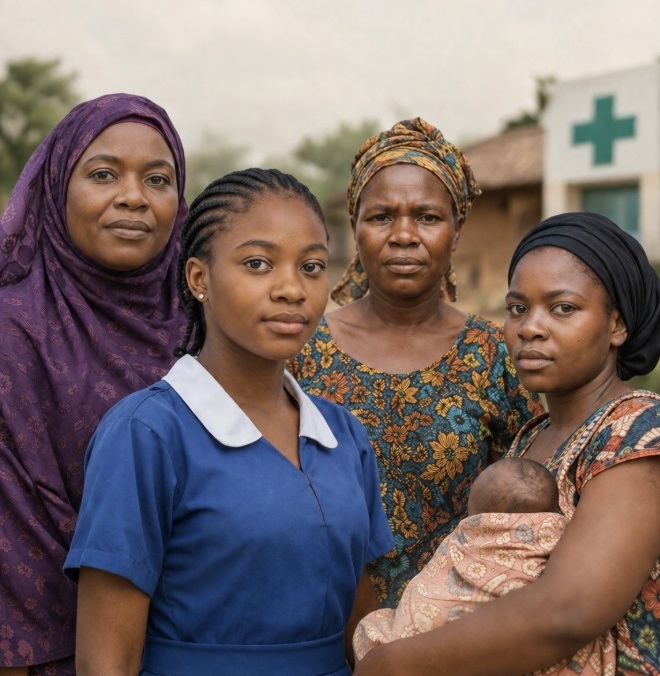
An image illustrating the different groups of Nigerian Women - Northern, Adolescents, Rural, and Low-income largely affected by the 3 delays killing Nigerian Mothers. AI generated: ChatGPT.

Executive Summary:
Overcoming the Three Delays: A Framework for Reducing Maternal Mortality in Nigeria
The Challenge and Root Causes
Nigeria remains one of the global epicenters of maternal mortality, a crisis driven by structural, financial, and clinical systemic failures. The crisis is sustained by the "Three Delays" framework: delays in seeking care due to deep-seated cultural myths and financial barriers; delays in reaching facilities caused by poor rural transport and geographic isolation; and delays in receiving care due to severely under-equipped facilities. These issues are worsened by a severe shortage of skilled midwives in rural areas and the heat degradation of life-saving medications like oxytocin in off-grid environments.
Current Interventions and Institutional Efforts
Current domestic and international efforts are organized under the Nigeria Health Sector Renewal Investment Initiative (NHSRII), which implements an integrated Sector-Wide Approach (SWAp). Key active strategies of the initiative include:
- Targeted Interventions: The Maternal and Neonatal Mortality Reduction Innovation Initiative (MAMII) concentrates personnel and $200,000 in specialized equipment per state across 172 high-burden Local Government Areas (LGAs).
- Emergency Logistics: The Rural Emergency Medical and Maternal Transport scheme (RESMAT) has deployed nearly 79,000 emergency medical transports across 32 states.
- Workforce Reform: The Strategic Directions for Nursing and Midwifery (2025–2030) expands student intake and optimizes rural midwife deployment.
- International Financing: A $1.07 billion World Bank allocation (via the HOPE GOV and HOPE PHC programs) funds primary healthcare overhauls, while USAID and the Bill & Melinda Gates Foundation fund local manufacturing partnerships for essential maternal supplements.
Strategic Bottlenecks
Despite these massive programs, significant execution gaps remain:
- The Funding Gap: The 2025 National Annual Operational Plan faces a ?720 billion (19.5%) financing deficit.
- Budgetary Shortfall: The federal health budget comprises just 3.67% of the total national budget, failing to meet the 15% pledge of the Abuja Declaration.
- Facility Deficiencies: Audits show that 49.6% of primary health centers still lack dedicated nurses or midwives, and only 13.89% possess operational ambulance services.
The Way Forward: Stakeholder Levers
To bridge these gaps, stakeholders must transition from sporadic, project-based interventions to a tightly integrated ecosystem:
- Governments: Must legally ring-fence primary healthcare budgets, implement strict subnational accountability metrics, and offer rural midwife retention incentives.
- Grassroots Organizers: Must formalize pre-paid voucher systems with local transport unions and retrain Traditional Birth Attendants (TBAs) to act as paid referral concierges/navigators rather than home-delivery providers.
- Families and Communities: Must establish household birth preparedness plans, engage men directly in antenatal care, and dismantle cultural stigmas surrounding Caesarean sections.
- International Institutions: Must pivot from short-term commodity donations to co-financing local, temperature-controlled drug manufacturing and rural solar-powered cold chains.
- Research Institutions: Must deploy implementation science to diagnose regional operational failures and engineer ultra-low-cost clinical tools for resource-poor settings.
Conclusion and Takeaway
The maternal health crisis in Nigeria is not an unresolvable tragedy, but an operational challenge requiring unbroken continuity from policy to the grassroots clinic. Maternal survival must depend on clinical need, not geographic or financial privilege. True transformation demands converting high-level political and international commitments into immediate, well-funded, and highly accountable lifelines at the community level.
.png)
Highlights
- Nigeria’s maternal mortality rate sits far above global averages, with rural women, adolescent girls, and those in conflict-affected northern regions facing the highest risk driven by low-income, distance from care, and preference for traditional birth attendants over hospitals.
- Deaths trace back to three bottlenecks: delay in deciding to seek care, delay in reaching a facility, and delay in getting treated once there, compounded by complications like hemorrhage, eclampsia, sepsis, and malaria.
- Nigeria’s health budget allocation (3.67%) falls well short of the 15% Abuja Declaration target, pushing families to cover roughly three-quarters of medical costs out of pocket.
- All factors create significant access and other structural constraints that contribute to the maternal crisis.
- Progress requires action at many levels; government (more targeted funding for maternal healthcare services including subsidised care via NHIA, staffing standards, awareness raising, etc.), grassroots organizers (advocacy: transportation funds, trained birth attendants, facility and funds monitoring), families (early antenatal care, informed husbands), and multilateral agencies/researchers (support funding, system strengthening, data gathering, data to policy, literacy campaigns).
Introduction
Nigeria's maternal mortality crisis remains a staggering national burden, with a heart-wrenching average of 993 deaths per 100,000 live births (1). Behind this chilling statistic are the real faces of our mothers, sisters, and daughters, all trapped by the structural bottleneck known as the "Three Delays": the delay in seeking care, the delay in reaching a health facility, and the delay in receiving adequate treatment upon arrival.
While recent health sector reforms have shown a promising 17% decline in facility-based maternal deaths, the reality on the ground tells a much harsher story. The federal government's health budget allocates a mere 3.67% of the national budget to healthcare which is far below the 15% committed to in the historic Abuja Declaration. This massive funding gap forces everyday families to shoulder up to 77% of their medical costs out-of-pocket. These numbers prove that maternal mortality is not an unresolvable medical mystery. It is a direct consequence of political choices and starved budgets.
Yet, this crisis is not a reason to despair; it is a powerful call to assemble. The modest progress that has occurred in recent times proves that targeted interventions work, but true systemic transformation will never simply trickle down from the halls of power. It will arise from our neighborhoods, market squares, community halls, media spaces, and from contributions from external stakeholders.
By coming together to organize at the grassroots level, people can build a unified political will that demands detailed policy changes and transparent budget execution. The collective outrage of people must become organized energy. Together, Nigerians and other communities of influence can force the system to fund safe childbirth and ensure that no Nigerian woman has to pay for the miracle of life with her own.
The Scale of Problem
According to a United Nations report, Nigeria has experienced a decrease in the past 40 years when it comes to maternal mortality but more decline needs to happen because a Nigerian woman stands to die from pregnancy-related causes five times the global rate (1).
The maternal health crisis is not spread evenly within Nigeria. Women in the North East and North West regions especially living in rural communities face more risk than women staying in the Southern parts of Nigeria (2). Insecurity and long-term conflicts in the North East have displaced millions of women and children thereby creating a barrier to receiving healthcare services including maternal health care (3).
Adolescent girls, especially those in early child marriages and unintended pregnancies contribute to the maternal death ratio. The adolescent girls are less financially, mentally, and emotionally prepared for bearing children and readily have birth complications (4).
Rural women living in the villages, small towns, and outskirts far from the specialist hospital in urban centres experience more maternal death compared to urban women in the city with hospitals within reach. This is a result of inaccessibility, high modern medical care cost, and preference for traditional birth attendants (5).
Low-income women are further affected by maternal death due to the inability to afford transport, private health facilities, and emergency operations such as cesarean section, and blood transfusion (6).
Why Pregnancy Related Deaths Are High in Nigeria: The 3 Delays and Other Factors
Researchers, using the “3 Delays” Framework, explain the first set of barriers to maternal health (7).
They include the following:
- Delay to seek care due to ignorance of the danger or a lack of decision-making power when it comes to their own bodies.
- Delay in accessing healthcare services due to poor roads, long distances, and the cost of transportation.
- Delay in receiving healthcare services due to shortage of medical supplies and staff shortages
Underpinning the “3 delay framework” are real causes and barriers that include:
- Medical Causes
- Structural and Systemic Barriers
- Socio Economic and Cultural Factors
Primary Medical Causes
Over 75% of maternal deaths in Nigeria are caused by five direct obstetric complications (8):
- Postpartum Haemorrhage (PPH): Severe, uncontrolled bleeding after childbirth is the leading cause of maternal death.
- Hypertensive Disorders of Eclampsia: High blood pressure and seizures during pregnancy and labor.
- Obstructed Labor & Uterine Rupture: Often stemming from a lack of monitoring and delayed medical intervention.
- Sepsis: Severe infections that can occur during or after labor, frequently tied to unsanitary delivery environments.
- Unsafe Abortions: Carried out by unskilled practitioners, leading to high rates of infection and hemorrhage.
Structural & Systemic Barriers
The medical issues are compounded by deep-rooted systemic and economic challenges (9):
- Inadequate Health Funding: The Nigerian federal government traditionally allocates a disproportionately small fraction (below 15%) of its national budget to healthcare, restricting infrastructure development and medical resource availability
- Understaffing and Brain Drain: The mass emigration of trained Nigerian doctors and nurses to other countries (such as the UK, US, and Canada) leaves public hospitals chronically understaffed.
- Weak Primary Care System: Many primary health centers lack essential drugs, running water, electricity, and basic equipment.
Socioeconomic & Cultural Factors
The majority of maternal deaths in Nigeria occur outside of formal healthcare facilities (often at home or with traditional birth attendants). This is heavily influenced by:
- High Cost of Care: Out-of-pocket expenses for antenatal care, medications, and hospital deliveries are a massive deterrent, as public insurance coverage is incredibly low.
- Geographic Isolation & Poor Infrastructure: Long distances to health facilities, coupled with impassable roads and unreliable public transport, lead to fatal delays in reaching emergency obstetric care.
- Cultural and Religious Beliefs: In many rural communities particularly in Northern Nigeria cultural norms give women low decision-making power, and husbands may disapprove of facility-based deliveries or male health professionals.
- Underage Marriages, Low Literacy and High Fertility Rates: Underage marriages propel teenage pregnancy. Poor agency for women in a highly patriarchal society, coupled with poor child spacing, low contraceptive use and high overall fertility rates exacerbate risks.
Because of these barriers, many women rely on Traditional Birth Attendants (TBAs) and deliver at home rather than in a medical facility. While TBAs provide community-level support, they often lack the emergency obstetric skills required to manage life-threatening complications like postpartum hemorrhage (the leading cause of maternal death in Nigeria) or eclampsia.
Meaningful change requires a collective of stakeholders implementing a multi-tiered, localized strategy to address the root causes of the maternal crisis:
- Chronic underfunding of Primary Health Care (PHC)
- Deep-seated economic barriers
- Pervasive cultural norms that limit women’s autonomy.
Recommendations: How to Fix the Crisis
A. What Is Being Done so Far?
Governments and international institutions are addressing Nigeria’s maternal crisis through the Nigeria Health Sector Renewal Investment Initiative (NHSRII). This initiative shifts away from fragmented projects and toward an integrated, Sector-Wide Approach (SWAp) (10). The strategy prioritizes emergency services, workforce development, and major institutional financing.
Ongoing interventions include:
1. Targeted Subnational Interventions
The Maternal and Neonatal Mortality Reduction Innovation Initiative (MAMII) functions as the core operational strategy (11).
- Resource Concentration: MAMII concentrates medical supplies and personnel in 172 priority Local Government Areas (LGAs) responsible for nearly half of Nigeria’s maternal mortality burden [12].
- The "Three Delays" Framework: Interventions are designed to tackle delays in seeking care, reaching facilities, and receiving treatment.
- Infrastructure Upgrades: The Federal government recently assessed 774 Comprehensive Emergency Obstetric and Newborn Care (CEmONC) facilities and launched a nationwide rollout of specialized medical equipment valued at $200,000 per state [13].
2. Emergency Logistics and Clinical Expansion
- National Emergency Medical Services (NEMSAS): Under the Rural Emergency Medical and Maternal Transport scheme (RESMAT), the government has expanded active emergency services to 32 states. This system has delivered nearly 79,000 emergency medical transports for pregnant women [12].
- Expanded Antenatal Care: Current federal tracking shows that 2.1 million pregnant women are actively accessing antenatal services under ongoing health reforms [14].
- Basic Emergency Obstetric and Newborn Care (BEmONC): An initiative that scaled up primary healthcare centers to ensure all women can access basic medical interventions.
- Free Emergency Caesarean Section Policy: In 2024, the federal government rolled out this policy for low-income and other women on the higher scale of maternal health crisis aimed at lowering cost as one barrier to lifesaving medical procedures.
3. Healthcare Workforce Restructuring
- Midwifery Roadmap: The Ministry of Health launched the Nigeria Strategic Directions for Nursing and Midwifery (2025–2030). Qualified nurses and midwives were posted to primary health centers to provide skilled care to rural areas.
- Capacity Expansion: This national strategy increases student intake, modernises curricula, and removes bureaucratic barriers to recruitment.
- Rural Deployment: New incentives focus on the equitable distribution of skilled midwives to rural, hard-to-reach frontlines [15].
- Subsidy Reinvestment and Empowerment Programme's Maternal and Child Health (SURE-P MCH): Left a legacy of passing the baton to community health extension workers who worked to improve the primary health centre facility (PHC) in all involved states.
4. International Institutional Backing
Multilateral agencies provide substantial financial, technical, and logistical support:
- The World Bank: Backs the HOPE GOV ($500 million) and HOPE PHC ($570 million) programs. These total $1.07 billion to overhaul primary healthcare governance and facility standards [16].
- UNFPA & UNICEF: The United Nations Population Fund provides matched financing for Nigerian states. Alongside the European Union's funded programs, they co-manage regional maternal health reviews to standardize care [17.]
- USAID & Bill & Melinda Gates Foundation: These organizations back efforts to localize the production of maternal health commodities. One key initiative includes a partnership with Remington Pharmaceutical Industries to manufacture multiple micronutrient supplements within Nigeria to reduce dependency on external supply chains [18].
Remaining Strategic Bottlenecks
Despite these massive programs, international and domestic stakeholders flag critical execution gaps:
- The Funding Gap: The 2025 National Annual Operational Plan requires ?3.68 trillion, leaving a ?720 billion (19.5%) financing gap that heavily relies on donor funding.
- Abuja Declaration Shortfall: The federal health budget stands at ?2.51 trillion. This represents only 3.67% of the total budget, falling far short of the 15% pledge made in the Abuja Declaration.
- Facility Deficiencies: Independent assessments by organizations like BudgIT report that roughly 49.6% of audited primary health centers still lack dedicated nurses or midwives, and only 13.89% possess active ambulance services.
B. What More Can Be Done
I. By Governments:
- Improve Funding: Sustainable government funding for antenatal, delivery and postnatal care, specifically routed through the National Health Insurance Authority (NHIA), would remove cost as the largest barrier for low-income women, just like the free caesarean section policy.
- Enact Mandatory Fiscal Tracking: Legislate budget tracking for primary healthcare at the state level to ensure funds from the Basic Health Care Provision Fund (BHCPF) reach facilities directly rather than getting stalled in administrative bureaucracies.
- Strategic Public Health Communication: Develop and dedicate strategic public awareness campaigns to address reproductive health, birth spacing, nutrition in pregnancy, and the benefits of early antenatal care. The campaigns should go through trusted community and religious channels not just social media to reach women broadly and more particularly those at high risk of the maternal mortality scale.
- School Level Education: Age-appropriate maternal health education should be added to the school curriculum from Senior Secondary School 2 (SSS2) and above, to help address cultural barriers to early marriage, health-seeking behavior, and birth spacing before entering into parenthood.
- Launch a Midwife Retention Scheme: Provide rural hardship allowances, free housing, and fast-tracked career promotion tracks for midwives deployed to hard-to-reach Local Government Areas (LGAs).
- Enact Mandatory Minimum Staffing and Equipment Standards for PHCs: Obligatory minimum staffing and equipment standards for primary health centres with discrete supervision.
- Mandate Maternal Death Surveillance: Enforce strict, non-punitive Maternal Perinatal Death Surveillance and Response (MPDSR) audits in all state hospitals to identify clinical system failures within 24 hours of a fatality.
II. By Other Communities of Stakeholders:
A. Grassroot Organisers
- Deploy Community Transport Unions: Formalize partnerships with local transport unions (e.g., motorcycle and tricycle drivers) using pre-paid voucher systems to solve the "second delay" of physically reaching a clinic during a nocturnal obstetric emergency.
- Train Traditional Birth Attendants (TBAs) as Navigators: Transition TBAs away from delivering high-risk births at home. Instead, financially incentivise them via cash transfers to act as referral agents who escort laboring women to accredited facilities.
- Establish Village Health Committees: Functions to include:
- Engaging in regular awareness raising at markets, churches, mosques, and women’s group meetings on warning signs such as bleeding, severe headache, swelling, prolonged labour is needed and
(ii) Educating traditional birth attendants to recognise complications early and refer them to the health center, instead of trying to manage complicated cases themselves.
(iii) Forming localized accountability teams to audit primary health center hours, water availability, and staff presence, giving communities a direct mechanism to report absenteeism and other performance issues to the local government for push facility-level fixes.
(iv) Creating simple, shared maps showing the nearest functional facility and referral hospital for obstetric emergencies, so families aren’t wasting time figuring out where to go mid-crisis.
(v) Advocating against harmful health-seeking behaviors and practices.
B. Families
- Create Community Birth Preparedness Plans to:
- Establish household emergency savings funds specifically for delivery expenses
- Arrange pre-planned transport
- Learn the signs of pregnancy and postpartum complications to seek care immediately at the hospital, and
- Identify designated blood donors within the family network well before the third trimester
- Involve Husbands in Antenatal Care: Restructure clinic hours and outreach to actively educate men on obstetric danger signs (e.g., severe bleeding, swollen feet, or blurred vision), as men frequently act as the primary financial decision-makers for seeking care [19].
- De-stigmatize Caesarean Sections: Dismantle deeply ingrained cultural myths that view surgical interventions as a failure of womanhood, encouraging timely consent when surgical delivery is clinically required.
C. Multilateral Agencies
- Pivot from Commodities to Local Capacity: Move away from short-term donations of medical supplies. Instead, invest heavily in direct co-financing for domestic manufacturing plants to produce misoprostol, oxytocin, and magnesium sulfate within Nigeria.
- Enforce Unified Accountability Frameworks: Condition large-scale health loans on strict sub-national performance metrics, forcing state governments to match international grants with verifiable domestic funding allocations.
- Fund Direct Cold-Chain Logistics: Invest in solar-powered refrigeration infrastructure specifically for rural clinics to prevent the heat degradation of life-saving uterotonic drugs like oxytocin.
- Capacity Support: Agencies like the World Health Organization (WHO) and UNICEF could help to fix the crisis by promoting health literacy and equipping community health workers to identify warning signs early (6).
- Mobile Maternal Services Unit: Non-profit agencies should collaborate with state governments to create emergency transport networks and finance maternal care mobile health units.
- Funding Support: Entities like the World Bank and the Global Financing Facility (GFF) could provide multi-million dollar grants such as the $570 million Nigeria Primary Health Care provisioning project to improve Primary Health Care (PHC) centers, equip them with basic commodities, and cancel hidden fees for maternity care.
D. Academia and Local Research Bodies
- Conduct Direct Implementation Science: Shift academic focus toward operational research that analyzes exactly why proven interventions fail to scale in specific sub-regions, particularly across northern Nigeria.
- Develop Low-Resource Clinical Innovations: Design and validate ultra-low-cost clinical tools tailored for rural clinics, such as simplified, color-coded blood loss collection drapes to catch postpartum hemorrhages early.
- Publish Real-Time Subnational Dashboards: Partner with tech hubs to build open-access, localized maternal health registries that allow policymakers to see exactly which facilities are running out of essential drugs in real time.
- Conduct Community Outreach for Need Analysis: Local researchers can address the 3 delays killing Nigerian mothers by speaking to community members and families to figure out exactly the root causes of delay 1.
- Research to Policy: Researchers can collaborate with the Federal Ministry of Health on platforms like the Maternal and Perinatal Database to compile hospital data to move policymakers for action in matters relating to release funds and upgrade of under equipped health facilities.
Conclusion
The maternal health crisis in Nigeria is not an inevitable tragedy, but a systemic failure on multiple levels: infrastructure, equity, and policy execution and grassroots indifference. While deep-seated cultural norms, rural isolation, and critical funding gaps continue to drive high mortality rates, the path forward is clear. Nigeria does not lack innovative ideas, frameworks, international goodwill, or clinical blueprints. What the country lacks is durable and localized action plans, operational consistency and continuity required to bridge the translational gap between high-level policy and the rural birth clinic.
Transforming the maternal health crisis requires moving past isolated interventions. True progress must build on a unified system where federal funding directly reaches primary health centers, rural midwives are fiercely incentivized to stay, traditional birth attendants are integrated as trusted clinical concierge/navigators and community leaders and grassroots organisations engage to hold the system to account.
By treating maternal survival as a pivotal component of national development rather than an isolated healthcare issue, Nigeria can shift the maternal health crisis narrative to a model of systemic wins.
References:
- World Bank Group. Nigeria. Gender Data Portal. [Internet, n.d.]. Accessed July 21, 2026. Available from here.
- Meh C, Thind A, Ryan B, Terry A. Levels and determinants of maternal mortality in northern and southern Nigeria. BMC Pregnancy Childbirth. 2019;19(1):417. doi:10.1186/s12884-019-2471-8. Available from here.
- EQUAL Research Consortium, Institute of Human Virology Nigeria (IHVN). Nigeria: maternal & newborn health country profile [Internet]. Equitable Access to Health Services; 2023 Mar [Cited 2026 Jul 21]. Available from here.
- Bolarinwa OA, Ahinkorah BO, Okyere J, Seidu AA, Olagunju OS. A multilevel analysis of prevalence and factors associated with female child marriage in Nigeria using the 2018 Nigeria Demographic and Health Survey data. BMC Womens Health. 2022;22:158. doi:10.1186/s12905-022-01733-x. Available from here.
- Adebowale SA, Fagbamigbe FA, Bamgboye EA. Rural-urban differential in maternal mortality estimate in Nigeria, Sub-Saharan Africa. Journal of Medical and Applied Biosciences. 2010;(2),74-91. Available from here.
- Ushie BA, Udoh EE, Ajayi AI. Examining inequalities in access to delivery by caesarean section in Nigeria. PLoS One. 2019;14(8):e0221778. Available from here.
- Thaddeus S, Maine D. Too far to walk: maternal mortality in context. Soc Sci Med. 1994;38(8):1091-1110. Available from here.
- Soyemi K. Maternal mortality in sub-Saharan Africa: A call to action. [Internet]. Datelinehealth Africa. June 7, 2023. [Accessed July 21, 2026]. Available from here.
- Abuja Declaration: 24 years later, Nigeria’s health budget still below 15%. Healthwise. December 28, 2025. Accessed July 21, 2026. Available from here.
- Collateral consequences of President Tinubu’s healthcare. [Internet]. Daily Trust. July 9, 2026. [Accessed July 21, 2026]. Available from here.
- 27 years of democracy and Nigeria's health renewal (I). [Internet]. Daily Trust. June 14, 2026. [Accessed July 21, 2026]. Available from here.
- Yusuf A. Tackling funding gaps to reduce maternal deaths. [Internet]. The Nation Newspaper. July 16, 2026. [Accessed July 21, 2026]. Available from here.
- Othniel C. Nigeria launches medical equipment rollout for maternal, newborn care. [Internet]; Voice of Nigeria. May 23, 2026. [Accessed July 21, 2026]. Available from here.
- 2.1m pregnant women accessing antenatal services under health reforms – FG. [Internet]. Premium Times Nigeria. May 22, 2026. [Accessed July 21, 2026]. Available from here.
- FG strategies initiatives to enhance midwifery, maternal and new-born healthcare. [Internet]. Federal ministry of health and social welfare. May 13, 2026. [Accessed July 21, 2026]. Available from here.
- World Bank approves new financing for Nigeria to improve health outcomes, safety of dams, and irrigation services. [Internet]. World Bank Group. September 22, 2024. [Accessed July 21, 2026]. Available from here.
- UNICEF begs states to save nine million children by accessing child nutrition fund. [Internet, n.d.]. DAME. [Accessed July 21, 2026]. Available from here.
- Nigeria Moves to Localise Production of Maternal Health Supplements. [Internet, n.d.]. Channels Television. [Accessed July 21, 2026]. Available from here.
- Ezeike A. Men’s Participation in Maternal Healthcare in Africa is a Win-Win for All. [Internet]. Datelinehealth Africa. June 24, 2026. [Accessed July 21, 2026]. Available from here.
Related:
Published: July 22, 2026.
© 2026. Datelinehealth Africa Inc. All rights reserved.
Permission is given to copy, use and share content for non-commercial purposes without alteration or modification and subject to attribution as to source.