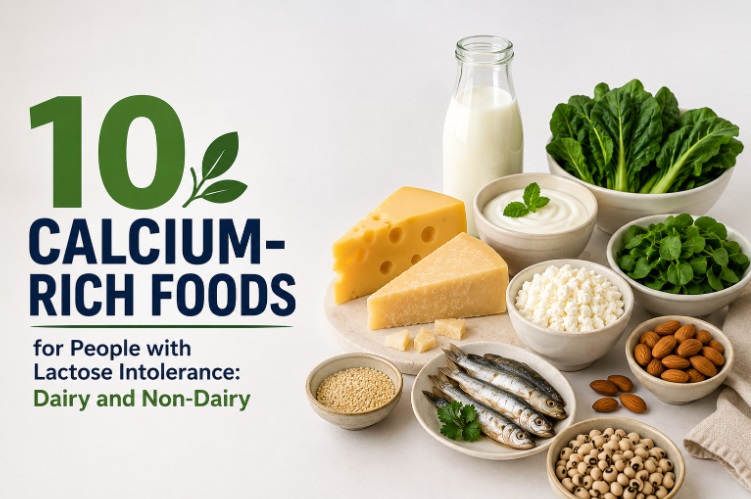
10 calcium-rich foods for people with lactose intolerance featuring both dairy and non-dairy options. Image Credit: Chat GPT.
By Zikra Akram, Final Year Medical Student, Freelance Health Writer and DLHA Volunteer. Medically reviewed by: A. Odutola, MBBS. PhD.
August 15, 2026
Do you think you can’t get enough calcium just because you are lactose intolerant? That’s not entirely true.
But if you avoid all dairy without a plan on replacing this important nutritional resource, you may struggle to get enough calcium.
There are plenty of foods that can help you meet your calcium needs without causing any stomach discomfort that you might experience after consuming lactose-rich dairy.
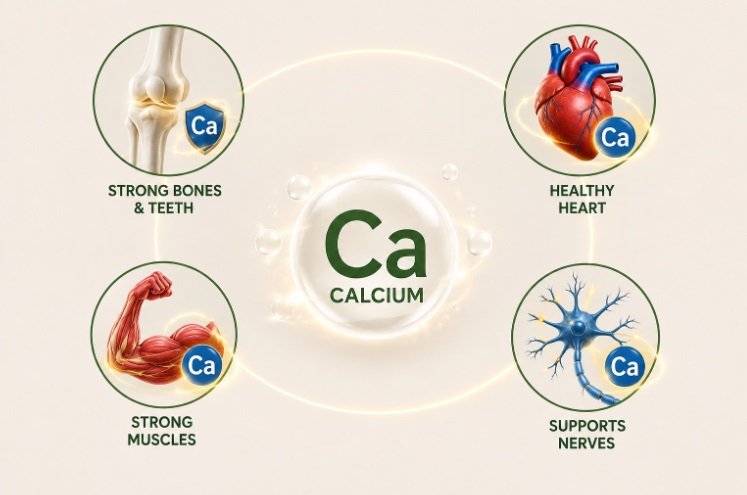
Info-poster showing the role of calcium in supporting healthy bones, muscles, heart and nerves, highlighting its role in overall health. Image Credit: Chat GPT.
Calcium is an essential mineral that is best known for keeping your bones and teeth strong; about 99% of it is stored there. It also helps your heart, muscles and nerves work properly.
Research suggests that adults in many African countries get only about 400–700 mg of calcium per day, which is below the recommended daily intake of 1,000 mg for most adults. If you’re pregnant or older, your body needs even more.
You don’t need to rely on milk to fulfil your daily calcium needs. Here are 10 dairy and non-dairy foods that can help you get enough calcium without upsetting your stomach.
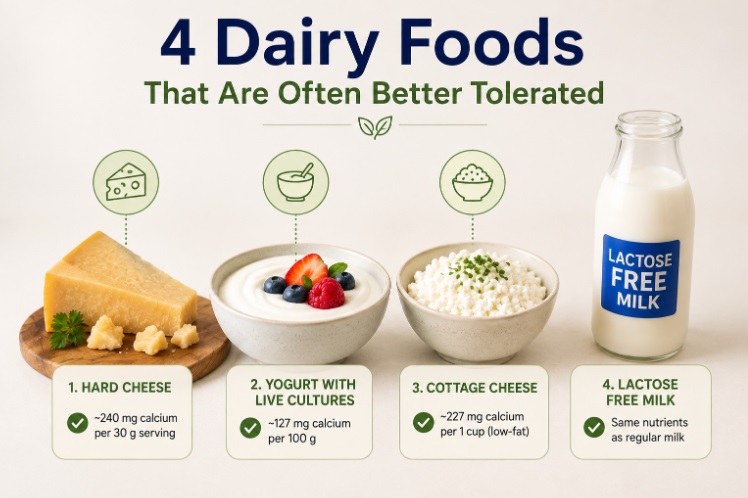
Info-poster showing four calcium-rich dairy foods suitable for people with lactose intolerance. Image Credit: Chat GPT.
"Most people with lactose intolerance don't need to avoid dairy completely. The goal is to find the amount your body can comfortably tolerate", says Dr. Edmundo Rodriguez-Frias, MD double-board-certified in gastroenterology and geriatrics.
Here are four dairy foods that are generally easier on your stomach and, therefore, can help you meet your calcium needs.
Hard cheese
A single serving (30g) of hard cheese such as parmesan, Swiss or cheddar cheese can provide you approximately 240 mg of calcium. When cheese ages, most of its lactose content is lost, that is why many people with lactose intolerance can tolerate hard cheeses better.
Yogurt with live cultures
Yogurt is an excellent source of calcium, proteins and other important nutrients. It provides approximately 127 mg of calcium per 100 grams. Look for yogurt labelled with live and active cultures. These beneficial bacteria can help break down lactose, making yogurt easier for some people to digest.
Cottage cheese
Cottage cheese contains less lactose than milk. Some people can tolerate it in small portions. It's an easy way to add calcium to salads, fruit bowls or snacks. One cup of low-fat cottage cheese provides approximately 227 mg of calcium.
Lactose free milk
“Lactose-free milk retains its nutritional benefits from regular milk in terms of calcium, protein, and vitamin D while having the lactose broken down”, says Dr. Edmundo.
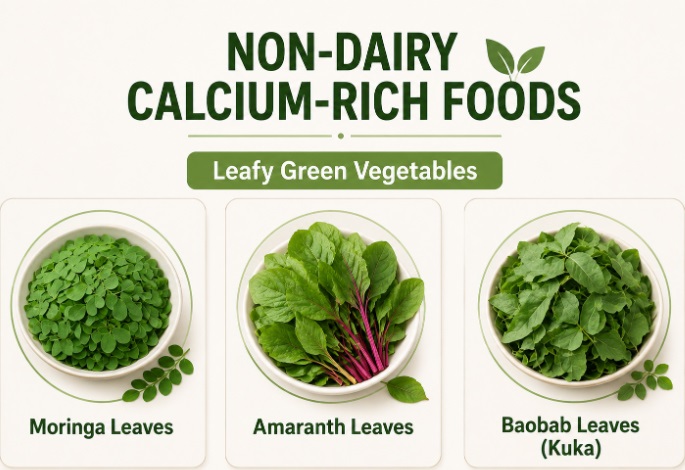
Three leafy green vegetables highlighted as non-dairy calcium-rich foods commonly used in African cuisines. Image Credit: Chat GPT.
There are many non-dairy foods that can help you get enough calcium, even if you have to skip dairy completely. And some of them might already be familiar ingredients in many African kitchens.
Moringa leaves (Zogale)
People often call moringa a ‘superfood’. In many African communities, moringa leaves are used in soups, stews and sauces. They’re one of the richest plant sources of calcium and the best part is, they retain their calcium even after cooking.
If you cook 100 grams of moringa leaves, you’ll get about 633 mg of calcium.
Amaranth leaves (Tete)
Amaranth leaves are more than just a delicious vegetable since they provide an excellent amount of calcium. You can easily add them in soups, stews or enjoy as a side dish.
A 100 g cooked amaranth leaves gives you around 391 mg of calcium.
Baobab leaves (Kuka)
Baobab leaves, also known as Kuka in many parts of West Africa, do more than thickening traditional soups. Just 100 grams of cooked fresh baobab leaves can give you around 333 mg of calcium.
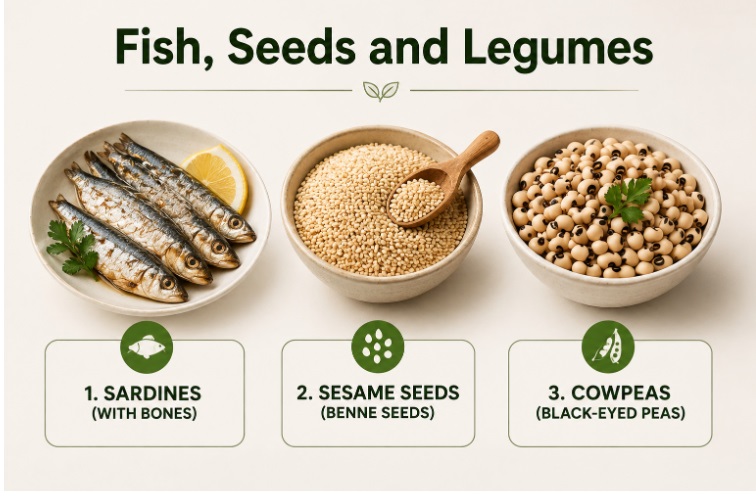
Info-poster showing sardines, sesame seeds, and cowpeas as calcium-rich non-dairy foods for people with lactose intolerance. Image credit: Chat GPT.
Sardines (with bones)
Do not remove the bones since they are what gives sardines their high calcium content. A single 3 ounce (85 g) serving of canned sardines gives you around 325 mg of calcium, which is roughly 25% of the amount needed by an adult each day. You’ll also get vitamin D, which makes it easier for your body to use all that calcium.
Sesame seeds (Benne seeds)
These tiny seeds contain a surprising amount of calcium. One tablespoon (9 g) of sesame seeds gives you about 88 mg of calcium.
Since most of the calcium is located in their outer shell, whole sesame seeds have considerably more calcium than the hulled ones. You can sprinkle them over salads, mix them into sauces or eat as tahini.
Cowpeas (Black-eyed peas)
Cowpeas are commonly eaten in many African homes and can, therefore, make a valuable addition to your calcium intake. Although they have less calcium than leafy greens or sardines, they are cheap, nutritious and also give you protein and fibre to help maintain a healthy diet.
A 100 g of dry cowpeas gives you somewhere around 80 to 130 mg of calcium, depending on the type.
Quick Tip:
Aim to include a variety of calcium-rich foods throughout the week rather than relying on just one source.

Close up photo of an African woman sitting in sunlight to get adequate vitamin D and support calcium absorption. Image Credit: Chat GPT.
Getting enough calcium is only part of the story. Your body needs vitamin D too if you want to actually use that calcium and keep your bones strong. Without enough vitamin D, your body won’t be able to utilise it no matter how much calcium you eat.
You can get vitamin D from safe sun exposure, certain foods like fish, fortified foods, or supplements if your healthcare provider recommends them.
Related:

Image showing an African woman eating a variety of calcium-rich foods to help meet daily calcium needs while managing lactose intolerance. Image Credit: Chat GPT.
Related: How Ultra-Processed Foods Affect Bone Health and Fracture Risk
Published: August 15, 2026
© 2026. Datelinehealth Africa Inc. All rights reserved.
Permission is given to copy, use, and share content freely for non-commercial purposes without alteration or modification and subject to source attribution.
Disclaimer
DATELINEHEALTH AFRICA INC., is a digital publisher for informational and educational purposes and does not offer personal medical care and advice. If you have a medical problem needing routine or emergency attention, call your doctor or local emergency services immediately, or visit the nearest emergency room or the nearest hospital. You should consult your professional healthcare provider before starting any nutrition, diet, exercise, fitness, medical or wellness program mentioned or referenced in the Datelinehealth Africa website. Click here for more disclaimer notice.