Study Suggests Melatonin May Ease Muscle Pain and Improve Sleep
By: Elizabeth Obigwe, B.Sc. Anatomy. Freelance Health Writer. Medically reviewed by The DLHA Editorial Team.
July 27, 2026
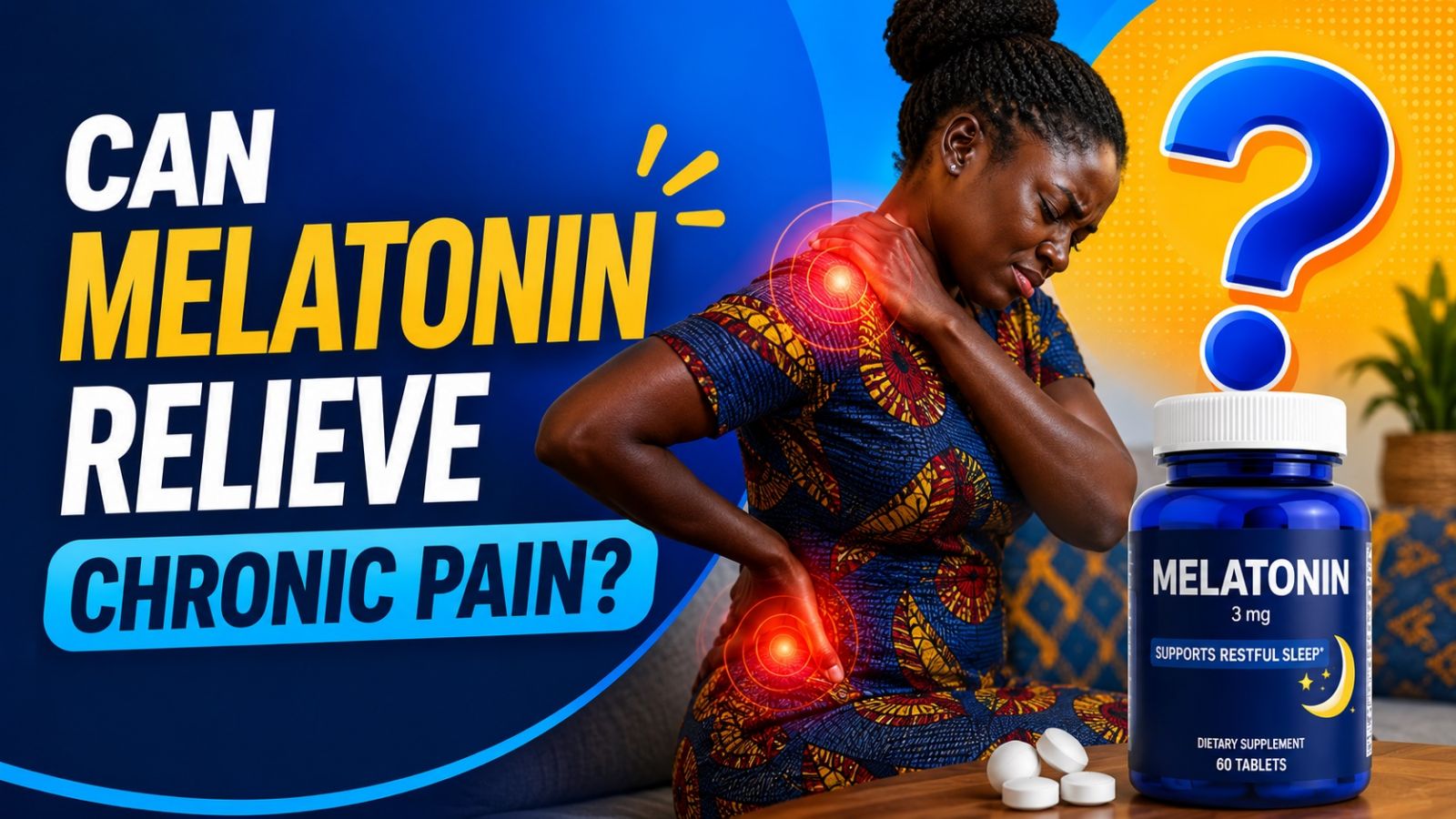
AI image of an achy looking African woman with a labeled melatonin bottle, captioned: Can Melatonin Relieve Chronic Pain? Click on image to enlarge.
Melatonin is best known as the hormone that helps regulate the body's sleep-wake cycle. Millions of people use melatonin supplements to manage insomnia or jet lag, and it is generally considered safe when used appropriately.
Now, new research suggests that melatonin may also play an important role in helping people living with chronic pain.
A study published in the journal “Pain” found that melatonin may reduce chronic musculoskeletal pain (pain affecting the bones, joints, ligaments, tendons, or muscles) while also improving sleep quality.
Researchers from the University of Sydney in Australia conducted a systematic review and meta-analysis to evaluate the effectiveness of melatonin in managing pain. A systematic review and meta-analysis combine and analyse the results of many carefully selected studies to provide a more reliable answer than any single study can offer.
The team searched six major medical databases for randomised controlled trials. They included studies involving adults with either chronic pain lasting at least three months or acute pain following surgery.
In total, the review analysed 23 clinical trials involving more than 2,000 participants from several countries. Most participants received melatonin tablets in doses ranging from 1 mg to 10 mg, with treatment lasting anywhere from a single dose before surgery to three months for chronic pain conditions.
The researchers focused mainly on two outcomes:
The study found that melatonin showed greater promise for chronic musculoskeletal pain than postoperative (after-surgery) pain.
On average, people taking melatonin experienced a modest reduction in pain. Across the studies analysed, pain scores improved by around 10 points on a 100-point pain scale. This effect falls within the range seen with commonly used pain medications such as non-steroidal anti-inflammatory drugs (NSAIDs), paracetamol, and opioids.
Melatonin also consistently improved sleep quality. This is important because sleep and chronic pain are closely connected. People with chronic pain frequently struggle to sleep, and inadequate sleep can make pain feel more intense. By improving sleep, melatonin may indirectly help reduce pain as well.
However, the findings were not equally strong for every type of pain.
For postoperative (after-surgery) pain, melatonin produced only small improvements compared with placebo and did not clearly outperform standard pain medications.
This suggests its benefits may be more relevant for long-term chronic pain than for short-term surgical pain.
Chronic musculoskeletal pain is a major health problem across Africa. Conditions such as chronic low back pain, osteoarthritis, and neck pain can make everyday activities difficult and reduce quality of life.
Managing these conditions is not always easy. Some pain medicines may cause side effects when used for long periods, and access to specialist pain care can be limited in many communities.
This is why the study's findings are encouraging. If future research confirms these findings, it could provide healthcare professionals with another option to complement existing treatments.
Since melatonin has already been extensively studied for sleep disorders, researchers have a good understanding of its safety profile, which may help speed up future research into its use for chronic pain.
Although melatonin is not yet a recommended treatment for chronic pain, the findings offer hope that a familiar supplement could one day play a role in improving pain management for people living with chronic musculoskeletal conditions.
Should You Start Taking Melatonin for Chronic Pain?
Not yet, at least not based on this study alone.
Although the findings are promising, melatonin is not currently a standard treatment for chronic pain. It should not replace medications or other treatments prescribed by a healthcare professional.
Like any supplement, melatonin may not be suitable for everyone and can interact with certain medications.
If you are considering using melatonin to help manage chronic pain, it is best to speak with your healthcare provider first. They can advise whether it is appropriate for your specific condition and medical history.
While the study provides encouraging evidence, it also has some important limitations.
For now, melatonin should be viewed as a promising area of research rather than a proven treatment for chronic pain.
This new study provides encouraging evidence that melatonin may do more than improve sleep. It could also help reduce chronic musculoskeletal pain while improving sleep quality, making it a promising addition to future pain management strategies.
Still, the research is not strong enough to recommend melatonin as a replacement for standard pain treatments. More high-quality studies are needed to identify who benefits most, the safest doses, and how long treatment should continue.
For Africans living with chronic pain, the findings offer hope that a familiar supplement may one day become another useful tool for managing a condition that affects millions. Until then, melatonin should be viewed as a promising area of research, not a proven cure for chronic pain.
Puterflam J, Lin J, Wu K, Beckenkamp PR, Ferreira ML, Zhang H, et al. Efficacy and effectiveness of melatonin for the management of musculoskeletal pain: a systematic review and meta-analysis of placebo and active controlled trials. Pain. 2026. doi:10.1097/j.pain.0000000000004045. Available here.
Related
Published: July 27, 2026
© 2026. Datelinehealth Africa Inc. All rights reserved.
Permission is given to copy, use and share content freely for non-commercial purposes without alteration or modification and subject to attribution as to source.
DATELINEHEALTH AFRICA INC., is a digital publisher for informational and educational purposes and does not offer personal medical care and advice. If you have a medical problem needing routine or emergency attention, call your doctor or local emergency services immediately, or visit the nearest emergency room or the nearest hospital. You should consult your professional healthcare provider before starting any nutrition, diet, exercise, fitness, medical or wellness program mentioned or referenced in the DatelinehealthAfrica website. Click here for more disclaimer notice.