Malaria in Pregnancy: Risks, Symptoms, Treatment and Prevention
By: Temitayo Adeola, RN, RM, RPHN Freelance health writer and DLHA Volunteer. Medically reviewed by: E. Odekina, MBBS. Family Physician.
September 14, 2026
: 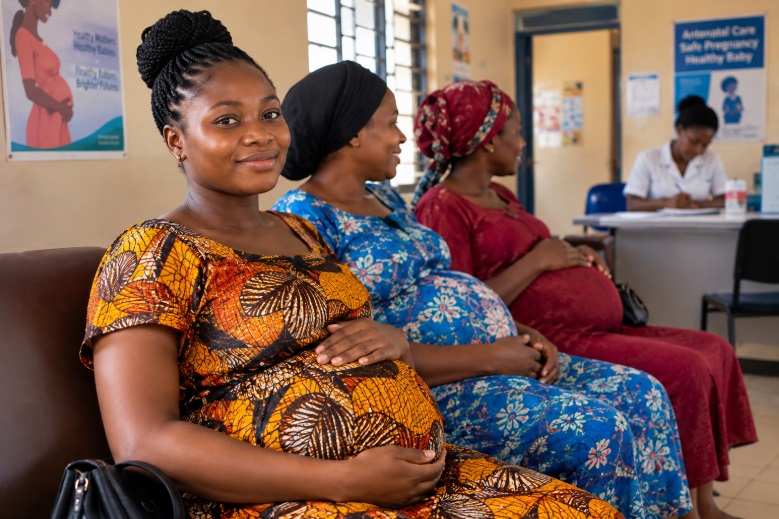
Pregnant African women sit together in an antenatal clinic while waiting for care. Image credit: ChatGPT. Click on image to enlarge.
Preparing for a new baby is a time filled with hope, anticipation and careful planning. Across sub-Saharan Africa, millions of women await the arrival of their little ones each year. Yet pregnancy can also bring added health concerns, malaria among others.
A bite from an infected mosquito can have serious consequences during pregnancy.
The burden of malaria remains particularly high in the region. In 2024, the WHO African Region accounted for about 94% of malaria cases and 95% of malaria deaths worldwide. Nigeria was responsible for about 31.9% of malaria deaths in the African Region, highlighting the importance of malaria prevention and care during pregnancy [1].
Pregnancy itself can make a woman more vulnerable to malaria, while Plasmodium falciparum parasites can accumulate in the placenta, creating additional risks for both mother and baby.
This article explores why malaria raises pregnancy risks, how it can affect maternal and fetal health, and the treatment and preventive measures that can help protect both mother and baby.
Malaria is a mosquito-borne infectious disease caused by Plasmodium parasites. It occurs when a person is bitten by an infected female Anopheles mosquito, allowing the parasite to enter the bloodstream. The parasite then develops in the body and infects red blood cells, causing symptoms such as fever, chills, headache, and weakness. Although malaria is preventable and treatable, delayed diagnosis or treatment can become severe and may even be life threatening [1, 2].
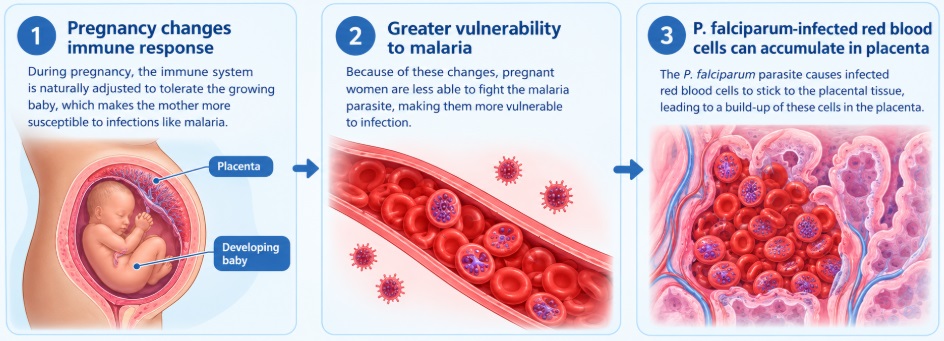
A simple medical infographic showing how pregnancy increases the risk of malaria and how the infection affects the placenta. Credit: Perplexity. Click on image to enlarge.
Pregnancy changes how the body immune system responds to infections, which can make a woman more vulnerable to malaria. At the same time, the placenta creates an environment that allows certain malaria parasites to behave differently during pregnancy. These factors make malaria in pregnancy a particular concern in areas where the disease is common [3, 4].
This is especially important with Plasmodium falciparum, the parasite responsible for most malaria cases in Africa. During pregnancy, infected red blood cells can attach to the placenta and accumulate there. This is known as placental malaria. The build-up of infected cells can cause inflammation in the placenta and interfere with its normal function [4].
The likelihood of placental malaria can also vary with pregnancy history. Women experiencing their first pregnancy may be more vulnerable because their immune system may not yet have developed the specific protection needed to prevent malaria-infected cells from attaching to the placenta [5].
With previous pregnancies in malaria-endemic areas, women may develop greater immunity to these pregnancy-specific forms of the parasite [5].
These biological changes help explain why malaria can pose a greater threat during pregnancy than at other times in a woman’s life.
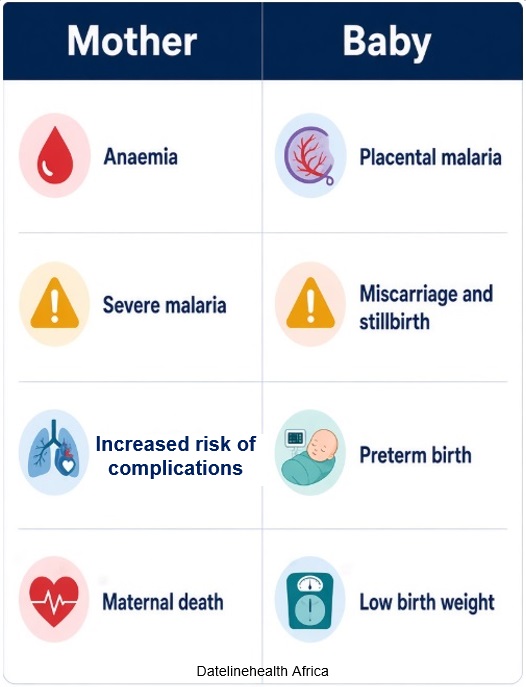
An infographic highlighting the possible effects of malaria on pregnancy outcomes. Image credit: Grok. Click on image to enlarge.
Malaria during pregnancy affects both the mother and her developing baby. The infection can place the mother at risk of serious illness while also increasing the risk of complications for the pregnancy and baby. Understanding these effects highlights why early testing and appropriate treatment are so important.
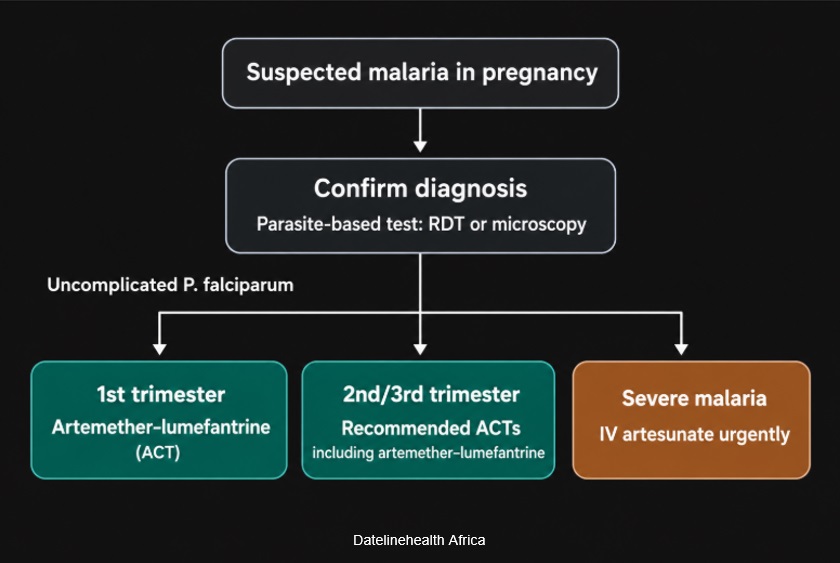
A flowchart outlining the diagnosis and treatment of malaria during pregnancy, based on trimester and severity. Image credit: Grok. Click on image to enlarge.
WHO recommends that all suspected cases of malaria be confirmed using parasite-based diagnostic testing (through either microscopy or a rapid diagnostic test).
The appropriate treatment depends on factors such as the malaria parasite involved, the severity of the infection, local drug resistance patterns and the stage of pregnancy.
For uncomplicated P. falciparum malaria, WHO currently recommends artemether–lumefantrine, an artemisinin-based combination therapy (ACT), during the first trimester. ACTs are also recommended during the second and third trimesters [2, 10].
If malaria becomes severe, urgent hospital treatment is required. WHO recommends intravenous artesunate for severe malaria, including during pregnancy [2, 10].
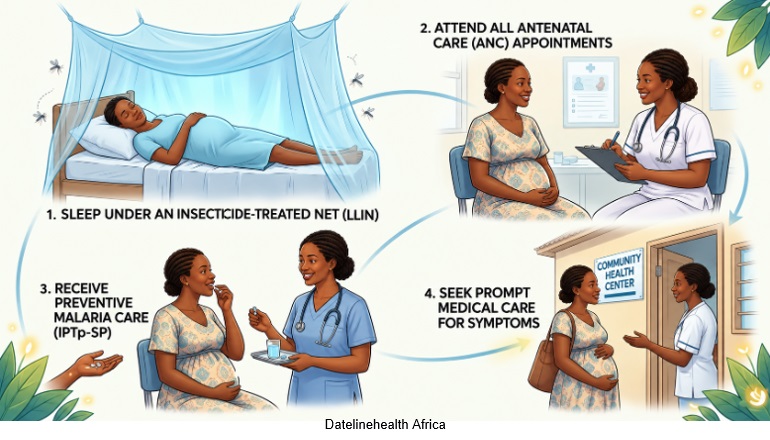
An educational illustration promoting malaria prevention and healthy pregnancy practices. Image credit: Gemini. Click on image to enlarge.
Here are ways to ways you can prevent malaria attack during pregnancy:
Malaria can become severe and life-threatening if treatment is delayed. Pregnant women are at higher risk of severe malaria, so symptoms should not be ignored.
Seek urgent medical attention if you experience:
Malaria remains an important health concern during pregnancy, particularly in sub-Saharan Africa. However, prevention, early testing and appropriate treatment can reduce the risk of serious complications.
If you are pregnant and develop symptoms that could indicate malaria, seek professional care promptly and do not self-medicate. Early care can help protect both you and your baby.
Yes. Malaria during pregnancy can affect both the mother and baby. It is associated with an increased risk of pregnancy loss, including miscarriage and stillbirth, as well as premature delivery and low birth weight.
Yes. Malaria can be treated during pregnancy, and seeking treatment early is important to protect both mother and baby. However, not every antimalarial medicine is suitable for every pregnant woman.
Do not self-medicate if you suspect malaria. Speak with a qualified healthcare professional for proper assessment and treatment.
You can reduce your risk by sleeping under an insecticide-treated net every night, attending antenatal care and taking recommended preventive treatment where it is offered. In malaria-endemic areas of Africa, WHO recommends intermittent preventive treatment with sulfadoxine-pyrimethamine (IPTp-SP) for pregnant women, beginning in the second trimester and with doses given at least one month apart.
References:
1. World Health Organization (WHO). Malaria [Internet]. 4 December 2025. [Cited 2026 Sep 5]. Available from here.
2. Samandari T, Gillespie E. Severe Malaria. [Updated 2026 May 11]. In: StatPearls [Internet]. Treasure Island (FL): StatPearls Publishing; 2026 Jan-. [Cited 2026 Sep 5]. Available from here.
3. Minwuyelet A, Yewhalaw D, Siferih M, Atenafu G. Current update on malaria in pregnancy: a systematic review. Tropical Diseases Travel Medicine and Vaccines. 2025 May 21;11(1):14. Available from here.
4. Rogerson SJ, Mwapasa V, Meshnick SR. Malaria in Pregnancy: Linking Immunity and Pathogenesis to Prevention. In: Breman JG, Alilio MS, White NJ, editors. Defining and Defeating the Intolerable Burden of Malaria III: Progress and Perspectives: Supplement to Volume 77(6) of American Journal of Tropical Medicine and Hygiene. Northbrook (IL): American Society of Tropical Medicine and Hygiene; 2007 Dec. Available from here.
5. Berhe AD, Doritchamou JYA, Duffy PE. Malaria in pregnancy: adverse pregnancy outcomes and the future of prevention. Frontiers in Tropical Diseases [Internet]. 2023 Aug 14;4.1229735, Available from here.
6. World Health Organization. World malaria report 2024 [Internet]. 2024 Dec. 11. [Cited 2026 Sep 5]. Available from here.
7. World Health Organization: WHO. Maternal health [Internet]. 2019 [Cited 2026 Sep 5]. Available from here.
8. Chua CLL, Hasang W, Rogerson SJ, Teo A. Poor Birth Outcomes in Malaria in Pregnancy: Recent Insights into Mechanisms and Prevention Approaches. Frontiers in Immunology [Internet]. 2021 Mar 15;12:621382. Doi: org/10.3389/fimmu.2021.621382. Available from here.
9. Menon S, D’Alessio F, Chaudhuri N, Onwuchekwa C, Kaur M, Nkumama I, et al. Placental malaria: a systematic review and meta-analysis of global burden, risk factors, and maternal and foetal outcomes. Journal of Global Health. 2025 Nov 27;15:04355. Available from here.
10. Rogerson SJ. Management of malaria in pregnancy. The Indian Journal of Medical Research [Internet]. 2017 Sep 1;146(3):328–33. Available from here.
Related:
Routine Tests in Pregnancy: A Practical Guide for African Women
Maternal Mortality in sub-Saharan Africa: A Call to Action
What Africans Need to Know About Antenatal Care
5 Ways Early Prenatal Care Protects You and Your Baby
Published: September 14, 2026
© 2026. Datelinehealth Africa Inc. All rights reserved.
Permission is given to copy, use, and share content freely for non-commercial purposes without alteration or modification and subject to source attribution.
DATELINEHEALTH AFRICA INC., is a digital publisher for informational and educational purposes and does not offer personal medical care and advice. If you have a medical problem needing routine or emergency attention, call your doctor or local emergency services immediately, or visit the nearest emergency room or the nearest hospital. You should consult your professional healthcare provider before starting any nutrition, diet, exercise, fitness, medical or wellness program mentioned or referenced in the DatelinehealthAfrica website. Click here for more disclaimer notice.