10 Common Myths about Dentures: The Fact vs. Fiction
By: Francois Benier-Alleaume, Dental prosthetist. Medically reviewed by: A. Odutola, MBBS, PhD.
July 22, 2026
 .
.
An African couple cleaning dentures for better care. Image credit: Magnific.
Dentures are removable replacements for missing teeth, made from acrylic, metal, or flexible materials, that restore your ability to chew, speak, and smile with confidence. They come as full sets, replacing all teeth in a jaw, or partials that fill in gaps between remaining natural teeth. For millions of people, they are a practical and affordable way to bring back everyday function after tooth loss. But alongside the facts, a lot of misinformation gets passed around, and that is where the myths begin.
Common denture myths stop many people from replacing missing teeth or push them into habits that damage their dentures. Sorting out denture facts vs myths matters because myths about false teeth are passed around families and communities as if they were medical advice.
The problem is bigger than most people realise. The World Health Organization (WHO) estimates that severe tooth loss affects around 7% of adults aged 20 and above worldwide, rising to 23% among those aged 60 and older (1). In the WHO African Region, nearly 23% of people aged 15 years and above live with severe gum disease, a major cause of tooth loss (2). With dental care access still limited across much of Africa, reliable information about dentures matters more, not less.
Let us clear up the ten myths we hear most often.
A tooth can loosen at any age. Accidents, gum disease, untreated decay, and some medical conditions can all lead to missing teeth in your twenties or thirties. A well-made partial denture restores chewing and speech no matter how old you are.
They do not. The jawbone slowly shrinks after teeth are lost, so the denture that fitted well five years ago may rock or slip today. Most dentures need relining (reshaping the fitting surface) or replacing every five to eight years.
Even with no natural teeth left, your gums, jaw joints, and soft tissues still need checking, because oral health affects far more than your smile. Dentures stomatitis, a fungal inflammation under the denture, affects a large share of wearers and often goes unnoticed until it becomes painful.
This is one of the most common denture cleaning mistakes. Ordinary toothpaste is abrasive. It leaves tiny scratches where bacteria and stains settle. Use a soft brush with mild soap or a cleaner made for dentures, and rinse well after meals.
Your gums need rest. Evidence-based guidelines advise removing dentures overnight because continuous wear raises the risk of gum inflammation and fungal infection. Take them out before bed and soak them in water or a soaking solution. Never put it in hot water, which warps the material.
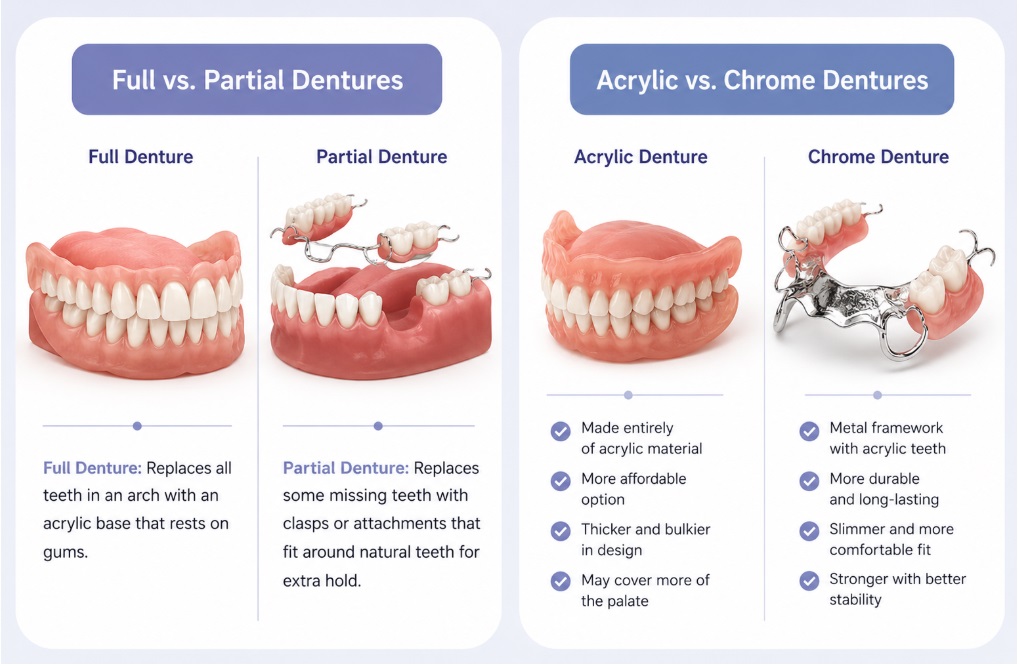
Image comparing Full vs Partial dentures and Acrylic vs. Chrome dentures. Click on image to enlarge.
Far from it. Full dentures replace every tooth in a jaw, while partials fill gaps between natural teeth. Materials differ too. Acrylic is affordable and easy to repair; flexible dentures suit people who dislike metal clasps, and chrome dentures use a thin cobalt-chromium framework that is stronger and slimmer than acrylic. The right choice depends on how many teeth you are missing and your budget.
There is an adjustment period, usually a few weeks. Start with soft foods cut into small pieces and chew on both sides. Most wearers return to a near-normal diet, including many of the firmer staples common across African kitchens. Very hard or sticky items simply need care.
Mild soreness with a brand-new denture is expected. Ongoing pain is not. Persistent sore spots usually mean the fit needs adjusting, and a dental professional can often fix this in a single visit. Suffering in silence only makes small problems worse.
Myth 9: Everyone Will Notice Your False Teeth
Modern dentures are matched to your natural tooth shade, gum color, and face shape. A well-fitted set is very hard to spot in conversation. What people do notice is a sunken mouth from missing teeth, which dentures actually correct.
Household glue is not safe in the mouth, and DIY repair kits rarely restore a proper fit. A badly repaired denture can rub, crack again, or change your bite. Professional repairs are quicker and cheaper than the damage a home repair can cause.
The denture care facts are simple. Dentures work for all ages; they need daily cleaning with the right products; they should come out at night, and they need professional attention when they hurt, loosen, or break.
Where dentists are few and appointments are costly, as is true in many African communities, prevention and correct daily care protect the investment you have already made. If a claim about false teeth sounds like folk wisdom rather than advice from a dental professional, question it. Your mouth will thank you.
Related:
Dental care in Africa: Challenges and Solutions
Unlocking the Secrets of Dental Health: More Than Just Your Smile
The Right Ways to Maintain Your Dental Health
Dr. Francois is a skilled dental prosthetist with 17 years of experience, specializing in custom prosthetics that restore smiles, function, and confidence.
Published: July 22, 2026
© 2026. Datelinehealth Africa Inc. All rights reserved.
Permission is given to copy, use and share content for non-commercial purposes without alteration or modification and subject to source attribution
DATELINEHEALTH AFRICA INC., is a digital publisher for informational and educational purposes and does not offer personal medical care and advice. If you have a medical problem needing routine or emergency attention, call your doctor or local emergency services immediately, or visit the nearest emergency room or the nearest hospital. You should consult your professional healthcare provider before starting any nutrition, diet, exercise, fitness, medical or wellness program mentioned or referenced in the DatelinehealthAfrica website. Click here for more disclaimer notice.