Hair Extensions May Contain Hidden Chemicals, Study Shows
By Adebowale Bello. B.Tech Microbiology, Freelance Health Writer. DLHA Fellow. Medically reviewed by the DLHA team.
May 7, 2026.
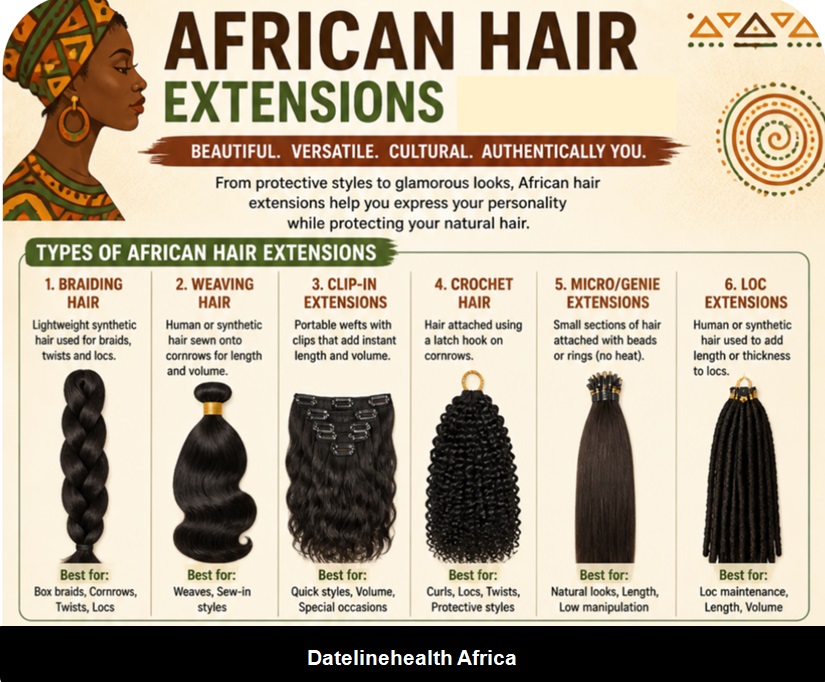
An image showing a variety of hair extensions in common use in Africa. AI generated from ChatGPT. Click on image to enlarge.
Hair extensions, wigs and braids are a big part of everyday beauty culture across Africa. From protective styling to fashion, many people rely on them regularly. Over the years, concerns have been raised regarding these hair products and a recent scientific study has raised important questions about what might actually be inside them.
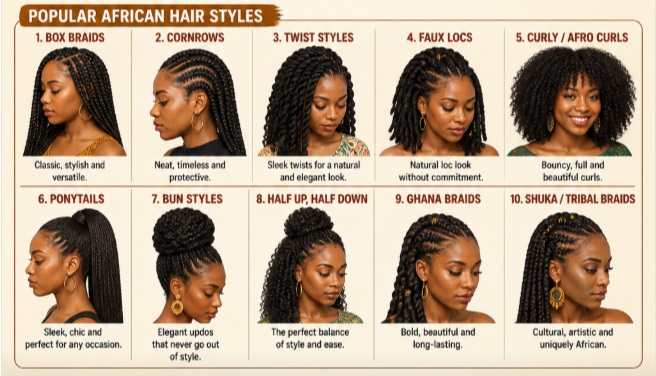
Fashion statements: Popular African hair styles created with the use of hair extensions. AI generated from ChatGPT. Click on image to enlarge.
Researchers have found that some hair extensions contain a wide range of chemicals, including some that are linked to health concerns.
This does not mean that using extensions is specifically dangerous but it does highlight something many people have never thought about before: “What exactly are we putting so close to our scalp for long periods of time?”
This blog breaks down the study in a simple way and explains what it really means, especially for African users.
The study was published in a scientific journal focused on environmental health and the researchers aimed to understand the types of chemicals present in both synthetic and human hair extensions.
To do this, they used advanced laboratory techniques that can detect hundreds of different chemical compounds at once.
Instead of only looking for a few known substances, they used two approaches. One looked for known harmful chemicals, while the other searched for unknown or unexpected substances.
This is important because many everyday products contain chemicals that are not fully listed or regulated.
By using these methods, the researchers were able to get a more complete picture of what is inside these hair products.
It is also crucial to note that this study did not test people or measure health effects directly, rather it focused on identifying chemicals and understanding potential exposure only.
The researchers detected over 900 chemical signals across the hair samples they tested. Out of these, about 169 chemicals were identified with reasonable confidence. This shows that hair extensions are not just simple materials, they are also chemically complex products, especially synthetic ones.
Some of the identified chemicals fall into groups that scientists already associate with health concerns. These include:
These chemicals are not automatically dangerous in every situation but their presence raises questions about long term exposure.
One of the key findings is that many of these chemicals were present across different types of hair extensions. This includes both synthetic hair and human hair products. In some human hair samples, traces of pesticides were also found which may have come from how the hair was processed or treated before being sold.
The study also showed that some of these chemicals can be released under normal conditions. For example:
This suggests that exposure is possible through the scalp or through inhalation, especially during styling.
Hair extensions are widely used across African countries, often for long periods of time. Some people wear braids or wigs continuously for weeks or even months. This makes the findings of this study particularly relevant. Here's why:
Because many African hairstyles are protective and long lasting, there is more time for any chemicals present to interact with the scalp. This does not mean harm will occur but it increases the importance of understanding what is being used.
Hot water setting, straightening and curling are common practices and since the study shows that heat can release chemicals, this may increase exposure, especially in poorly ventilated spaces.
In many African markets, imported or locally sold hair products may not go through strict safety checks. Labelling is often incomplete and consumers may not know what chemicals are present. This makes it harder for people to make informed choices.
Many people choose affordable synthetic options, which may contain more chemical additives. While these options are practical and widely available, they may also come with higher chemical exposure compared to higher quality products.
It is important to interpret this study carefully because the presence of chemicals does not automatically mean there is a direct health risk.
The study did not measure how much of these chemicals actually enter the body or whether they cause disease in users.
However, it does raise awareness about something that has been largely ignored. The repeated and long term exposure to certain chemicals can add up over time, especially when combined with other sources such as cosmetics, air pollution and food.
While more research is needed, there are simple steps that can help reduce potential exposure:
These steps are not about fear but about being informed and cautious.
This study provides valuable insight into something many people use without thinking twice. Hair extensions, whether synthetic or human, can contain a wide range of chemicals, some of which are linked to health concerns. At the same time, it does not prove that these products cause harm; rather, it highlights a gap in awareness and regulation.
For African users, where hair extensions are a major part of daily life, this information is especially important as it allows individuals to make better decisions about their hair care practices while also pushing for better product safety standards.
Source: Franklin, E. T, Favela, K, Spies, R, Ranger, J. M, & Rudel, R. A. (2026). Identifying chemicals of health concern in hair extensions using suspect screening and nontargeted analysis. Environment & Health. Available from here.
Related:
Make up, Nail Polish, Hair Dyes Can Be Harmful During Pregnancy and Breastfeeding
Published: May 7, 2026
© 2026. Datelinehealth Africa Inc. All rights reserved.
Permission is given to copy, use and share content for non-commercial purposes without alteration or modification and subject to attribution as to source.
DATELINEHEALTH AFRICA INC., is a digital publisher for informational and educational purposes and does not offer personal medical care and advice. If you have a medical problem needing routine or emergency attention, call your doctor or local emergency services immediately, or visit the nearest emergency room or the nearest hospital. You should consult your professional healthcare provider before starting any nutrition, diet, exercise, fitness, medical or wellness program mentioned or referenced in the DatelinehealthAfrica website. Click here for more disclaimer notice.