Ageing Worries Make You Age More, Study Suggests
By Adebowale Bello. B.Tech Microbiology | DLHA Fellow. Medically reviewed by the DLHA team
April 25, 2026.
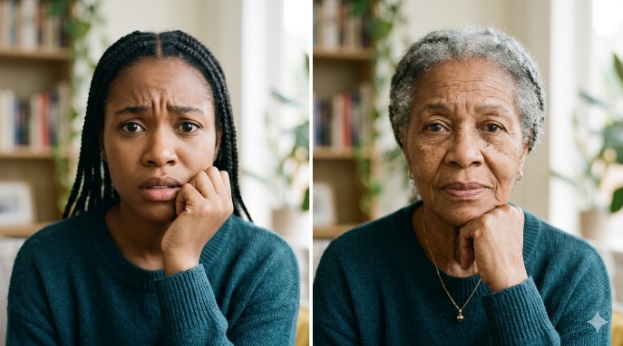
A side-by-side comparison of a young African woman looking anxious and her future elderly self. Image Credit: Gemini AI. Click on image to enlarge.
Ageing is something many people think about, especially as responsibilities increase and health becomes more important. In many African communities, there is a strong focus on staying active, providing for family and maintaining good health as one grows older. But alongside this comes a quiet concern that many people rarely talk about openly, the fear of ageing.
This fear can show up in different ways. Some people worry about losing their strength, others about changes in appearance and many about developing health problems later in life. While these concerns may seem normal, a new scientific study suggests that certain types of fear about ageing may go beyond emotions and actually affect the body at a deeper level.
The study focused on adult women and used data from over 700 participants who were part of a long-term health study in the United States. Researchers wanted to understand whether anxiety about ageing could be linked to how fast the body is ageing biologically. Instead of looking only at chronological age, which is the number of years a person has lived, they looked at biological age. This reflects how well the body is functioning at a cellular level.
To measure this, the researchers used what are known as epigenetic clocks. These tools analyse changes in DNA patterns to estimate how quickly the body is ageing. They also assessed different types of ageing-related fears, including concerns about health decline, physical appearance and reproductive ageing.
First, the researchers discovered that higher levels of anxiety about ageing were linked to faster biological ageing. This means that people who worried more about getting older showed signs that their bodies were ageing more at the cellular level.
However, not all fears had the same effect and the strongest link was found with fear related to declining health. Women who were particularly worried about future illness or losing their physical ability were more likely to show signs of accelerated biological ageing. In contrast, concerns about appearance or fertility did not show the same strong connection.
Another important finding was that this relationship may be influenced by lifestyle behaviours. People who feel anxious about their health may be more likely to adopt unhealthy habits such as poor diet, reduced physical activity or increased alcohol consumption. Over time, these behaviours can contribute to faster ageing.
The study also supports the idea that psychological stress can become physically embedded in the body. In simple terms, how you think and feel consistently over time can influence your physical health in measurable ways.
To understand these findings better, it helps to look at how the body responds to stress.
When a person is constantly worried, especially about something as significant as their future health, the body remains in a state of alert. This leads to the release of stress hormones such as cortisol and over time, high levels of these hormones can cause inflammation, weaken the immune system and affect how cells repair themselves.
There is also the behavioural side. Someone who believes their health will decline may feel less motivated to take care of themselves and they may skip exercise, delay medical check-ups or ignore healthy eating habits. These choices, even if small at first, can build up and affect long-term health.
At the cellular level, these combined effects can influence DNA activity through a process known as epigenetics. This is what the researchers measured when they assessed biological ageing.
In many African settings, access to healthcare is still a challenge and this means that fear of illness is often not just emotional but based on real concerns about affordability and availability of treatment. It is therefore understandable that many people may worry about what ageing could bring.
However, this study highlights an important point that constant worry about ageing, especially when it becomes overwhelming, may actually contribute to the very outcomes people fear.
For Africans, this creates a need to balance awareness with action. Instead of focusing only on the fear of future illness, there should be more emphasis on preventive care. This includes regular health checks, maintaining a balanced diet, staying physically active and manageing stress effectively.
Community support also plays a key role. In many African cultures, strong social ties can help reduce stress and provide emotional support. Engageing in community activities, religious gatherings or family interactions can help ease anxiety and improve overall wellbeing.
Furthermore, there is also a need for better public health education. When people understand what they can control about their health, they are less likely to feel helpless or anxious about ageing.
One of the most important messages from this study is that the mind and body are closely connected. It is easy to think of health as only physical but mental and emotional states play a major role in how the body functions. Persistent negative thoughts, especially those linked to fear, can gradually affect physical health over time but this does not mean that every worry will lead to illness and in fact, occasional concern is normal, even helpful. The problem arises when fear becomes constant and begins to shape daily behaviour and outlook.
Learning how to manage stress through simple practices such as physical activity, relaxation techniques or speaking with trusted individuals can make a significant difference.
Wrap Up
Ageing is a natural part of life and some level of concern about it is expected. However, this study shows that not all fears are harmless. In particular, a persistent fear of declining health may be linked to faster biological ageing.
For individuals and communities, especially in Africa, this highlights the importance of shifting focus from fear to action. By adopting healthy habits, staying informed and manageing stress effectively, it is possible to support both mental and physical wellbeing. In the end, how people think about agieng may play a bigger role in their health than they realise.
Source: Rodrigues M, Bather J R, & Cuevas AG. Ageing anxiety and epigenetic ageing in a national sample of adult women in the United States. Psychoneuroendocrinology, 2026;184, 107704. Available from here.
Related:
Moving Aids Healthy Ageing: Study finds
A Sense of Purpose May Protect the Ageing Brain
Published: April 25, 2026.
© 2026. Datelinehealth Africa Inc. All rights reserved.
Permission is given to copy, use and share content for non-commercial purposes without alteration or modification and subject to source attribution.
DATELINEHEALTH AFRICA INC., is a digital publisher for informational and educational purposes and does not offer personal medical care and advice. If you have a medical problem needing routine or emergency attention, call your doctor or local emergency services immediately, or visit the nearest emergency room or the nearest hospital. You should consult your professional healthcare provider before starting any nutrition, diet, exercise, fitness, medical or wellness program mentioned or referenced in the DatelinehealthAfrica website. Click here for more disclaimer notice.