Mediterranean Diet Linked to Lower Stroke Risk in New Study
By Adebowale Bello. B.Tech Microbiology | DLHA Fellow. Medically reviewed by the DLHA team
April 21, 2026.
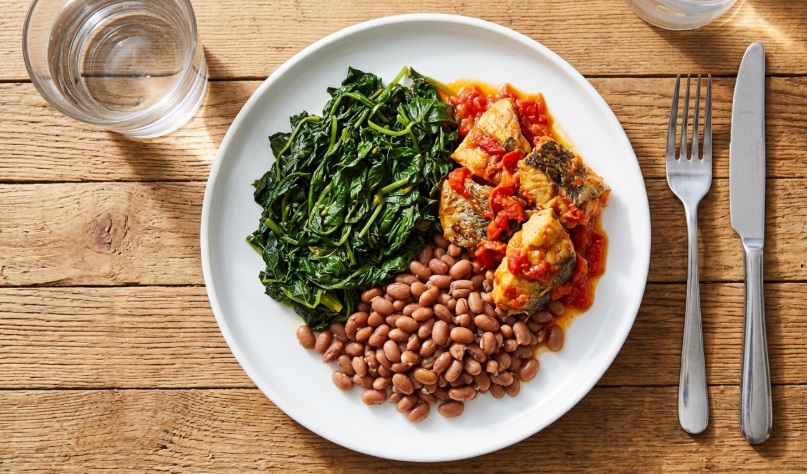
Image of a plate of food in line with the Mediterranean diet. Image Credit: Gemini AI. Click on image to enlarge.
Stroke is one of the leading causes of death and disability worldwide and its impact is increasingly felt across African countries. Many people focus on medical treatment but what you eat every day quietly shapes your long-term health. A growing body of research now shows that diet is not just about weight or appearance but also about protecting your brain.
A recent study has added strong evidence to this conversation by exploring how a popular eating pattern known as the Mediterranean diet affects the risk of stroke in women. The findings are both practical and relevant, especially for populations like ours where lifestyle-related diseases are on the rise.
This was a large, long-term study involving over 100,000 women in the United States. The participants were followed for more than 20 years, making it one of the more robust studies on diet and stroke risk.
At the start of the study, none of the women had a history of stroke. Researchers assessed their eating habits using detailed food questionnaires and gave each participant a score based on how closely their diet matched the Mediterranean style of eating.
The Mediterranean diet is not a strict or restrictive plan. It focuses on:
Over time, the researchers tracked how many of the participants developed stroke and what type of stroke occurred.
The findings were clear and consistent as women who followed the Mediterranean diet more closely had a significantly lower risk of stroke.
These women had:
These results are important because they show that the diet was linked to a reduction across all major types of stroke, not just one.
Another key point is that the strongest reduction was seen in haemorrhagic stroke, which is often more difficult to prevent and manage. However, it is important to be precise as this study shows an association and not a direct cause and effect. In simple terms, people who followed this diet were less likely to have a stroke but the study does not prove the diet alone was responsible.
Although the study itself focused on outcomes, existing scientific knowledge helps explain why the Mediterranean diet works.
This way of eating:
These are all major risk factors for stroke and when they are well managed, the chances of developing strokes reduce significantly.
What the Study Means for Africans
The Mediterranean diet is often seen as a foreign concept but its principles are very adaptable to African diets. The real message is not about copying foreign meals. It is about the pattern of eating.
For many African households, this could mean:
These changes do not require expensive ingredients but they require consistency and awareness.
In recent years, the risk of stroke has been rising in Africa due to urbanisation, poor diet and sedentary lifestyles and this makes preventive strategies like diet even more critical. The study also focused on women, but the implications go beyond that because in many African homes, women play a central role in food preparation and their dietary choices often shape the health of the entire household.
While the findings are strong, they should be interpreted carefully.
Despite these limitations, the consistency of the results with previous research makes the findings credible and useful.
What we eat over time plays a major role in protecting our brain health and this study reinforces that simple yet powerful idea. Women who followed a Mediterranean-style diet were less likely to experience stroke, including both common and severe types and while the diet itself is not a cure or guarantee, it represents a practical and sustainable approach to reducing risk.
For African populations, the takeaway is not to adopt a foreign diet but to rethink everyday food choices. By focusing on whole foods, reducing processed meals and maintaining balance, it is possible to lower the risk of stroke and improve long-term health. In the end, prevention often starts with small, consistent decisions made daily and your diet remains one of the most powerful tools available.
Source: Sherzai, A. Z, Cauble, E. L, Spielfogel, E. S, Willey, J. Z, Gu, Y, Scarmeas, N, Lacey, J. V, Sherzai, D, Elkind, M. S. V, & Wang, S. S. (2026). Mediterranean diet and the risk of stroke subtypes in women: The California Teachers Study. Neurology Open Access, 2026;2(1), e000062. Available from here
Related:
Simple Lifestyle Changes May Add Years to Life, Study Says
Best African foods for post-stroke recovery
Stroke Recovery Timeline – A Guide for Africans
Published: April 21, 2026
© 2026. Datelinehealth Africa Inc. All rights reserved.
Permission is given to copy, use and share content for no n-commercial purposes without alteration or modification and subject to source attribution..
DATELINEHEALTH AFRICA INC., is a digital publisher for informational and educational purposes and does not offer personal medical care and advice. If you have a medical problem needing routine or emergency attention, call your doctor or local emergency services immediately, or visit the nearest emergency room or the nearest hospital. You should consult your professional healthcare provider before starting any nutrition, diet, exercise, fitness, medical or wellness program mentioned or referenced in the DatelinehealthAfrica website. Click here for more disclaimer notice.