Does Eating Beans Lower Blood Pressure?
By Adebowale Bello. B.Tech Microbiology. DLHA Fellow. Medically reviewed by the DLHA team.
July 29, 2026.
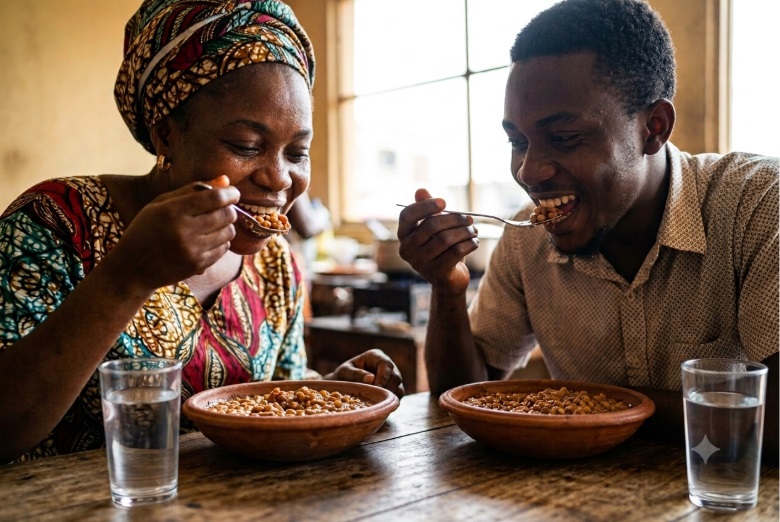
An image of an African mother and son eating beans from a bowl at table. Image Credit: Gemini AI. Click on image to enlarge.
High blood pressure, also known as hypertension, is one of the biggest health challenges facing Africans today. It often develops without obvious symptoms, which is why it is sometimes called the "silent killer" and when left untreated, it can increase the risk of heart disease, stroke, kidney disease and other serious health problems.
Urbanisation, changing diets, physical inactivity, obesity and stress have all contributed to the growing number of Africans living with the condition. While medication plays an important role in treatment, experts continue to emphasise the value of healthy eating in preventing high blood pressure in the first place.
A new study adds to this growing body of evidence as it suggests that people who eat more legumes and soy foods may be less likely to develop hypertension over time. So, does this mean eating more beans can prevent high blood pressure? Let's take a closer look at what the study found and what it means.
Researchers carried out a systematic review and dose response meta-analysis, one of the strongest types of research used to examine evidence from multiple studies. Instead of conducting a new experiment, they combined findings from previous prospective cohort studies, where participants were followed over several years to see who developed hypertension.
The researchers searched two major scientific databases and included 12 prospective studies involving hundreds of thousands of participants from countries in North America, Europe and Asia. For the legume analysis, they examined data from more than 309,000 participants and over 86,000 cases of hypertension. For soy foods, the analysis included more than 278,000 participants and almost 94,000 cases of hypertension.
Legumes included foods such as beans, lentils, chickpeas and peas while soy foods included products like tofu, soybeans and other soy-based foods. The researchers also looked at whether eating larger amounts of these foods was linked to greater changes in hypertension risk, a method known as a dose response analysis.
Related: 5 Health Benefits of Beans Africans Need to Know
Legumes are packed with nutrients such as fibre, plant protein, potassium and magnesium, that have been known to support heart health and healthy blood pressure. Fibre may also support beneficial gut bacteria, which produce compounds called short chain fatty acids during digestion. These compounds may help the blood vessels relax, thereby making it easier for blood to flow through the body.
Related: Low-Fibre Diets Can Quietly Harm Your Heart, Study Reveals
Soy foods also contain natural compounds called isoflavones and previous clinical trials have suggested these compounds may help lower blood pressure, although more research is still needed to understand exactly how they work.
Rather than acting through one single nutrient, legumes and soy foods are likely to benefit heart health because of their overall nutritional profile.
Legumes are already part of many traditional diets in a typical African home. Foods such as beans, cowpeas, bambara groundnuts and pigeon peas are widely available across the continent because they are affordable, filling and nutritious, yet many people are gradually replacing them with more processed foods that are often higher in salt, unhealthy fats and refined carbohydrates.
Related: Ultra-Processed Foods Raises Early Death Risk
While soy foods are less common in some African countries, products such as soybeans, soy milk and tofu are becoming more widely available.
The findings suggest that keeping legumes as a regular part of everyday meals could support long term heart health. For example, instead of relying heavily on highly refined meals, families could include bean porridge or bean soups more often during the week.
Blood pressure is influenced by many factors including age, family history, body weight, physical activity, salt intake, smoking and alcohol consumption. Therefore, eating more legumes should be seen as one part of a healthy lifestyle rather than a miracle solution.
The short answer is no. Based on this study, we cannot say that eating beans prevents high blood pressure or that it directly lowers high blood pressure.
Although the researchers found that people who ate more legumes and soy foods were less likely to develop hypertension, the study did not prove that these foods were the direct cause of the lower risk. This is because it was based on observational studies, where researchers followed people's eating habits over time instead of assigning them specific diets.
People who regularly eat beans may also have other healthy habits. They may be more physically active, eat more fruits and vegetables, smoke less or maintain a healthier weight. While the researchers adjusted for many of these factors, it is impossible to account for every difference between people.
What this study does tell us is that eating beans and other legumes as part of a balanced diet is associated with better heart health. Combined with other healthy lifestyle habits, eating more legumes may help lower your overall risk of developing high blood pressure.
If you already have hypertension, it is important to continue taking any prescribed medication and follow your healthcare provider's advice. Diet can support blood pressure management but it should not replace medical treatment.
Adding more legumes to your diet does not have to be expensive or complicated. Many of the foods linked with better heart health are already common across Africa and can easily be included in everyday meals.
Here are a few simple ideas:
Remember, there is no single "superfood" that can prevent high blood pressure. The biggest benefits come from following a healthy eating pattern over time. Including more beans and other legumes in your meals is one practical step that can support better heart health alongside regular exercise, good sleep, stress management and routine blood pressure checks.
This large review provides encouraging evidence that eating more legumes and soy foods is linked with a lower risk of developing high blood pressure. While the findings cannot prove these foods directly prevent hypertension, they strengthen existing advice that encourages people to include more plant based foods in their diets.
For many Africans, this is welcome news because legumes are already familiar, affordable and widely available. Rather than searching for expensive superfoods, one of the simplest ways to support heart health may be to make traditional foods like beans and other legumes a regular part of balanced meals.
Combined with regular exercise, maintaining a healthy weight, reducing salt intake, avoiding tobacco and limiting alcohol, choosing more legumes could be another practical step towards lowering the burden of hypertension across Africa.
Source: Metoudi M, Sadler I, Kassam S, Aune D. Legume and soy consumption and the risk of hypertension: a systematic review and dose–response meta-analysis of prospective studies. BMJ Nutrition, Prevention & Health. 2026;9. Available from here.
Related:
The Role of Diet In The Control of Hypertension: What Africans Should Know
Best African Foods To Lower Your Blood Pressure
Published: July 29, 2026.
© 2026. Datelinehealth Africa Inc. All rights reserved.
Permission is given to copy, use and share content for non-commercial purposes without alteration or modification and subject to attribution as to source.
DATELINEHEALTH AFRICA INC., is a digital publisher for informational and educational purposes and does not offer personal medical care and advice. If you have a medical problem needing routine or emergency attention, call your doctor or local emergency services immediately, or visit the nearest emergency room or the nearest hospital. You should consult your professional healthcare provider before starting any nutrition, diet, exercise, fitness, medical or wellness program mentioned or referenced in the DatelinehealthAfrica website. Click here for more disclaimer notice.