Simple Lifestyle Changes May Add Years to Life, Study Says
By Adebowale Bello. B.Tech Microbiology, Freelance Health Writer. DLHA Fellow. Medically reviewed by the DLHA team.
March 13, 2026.
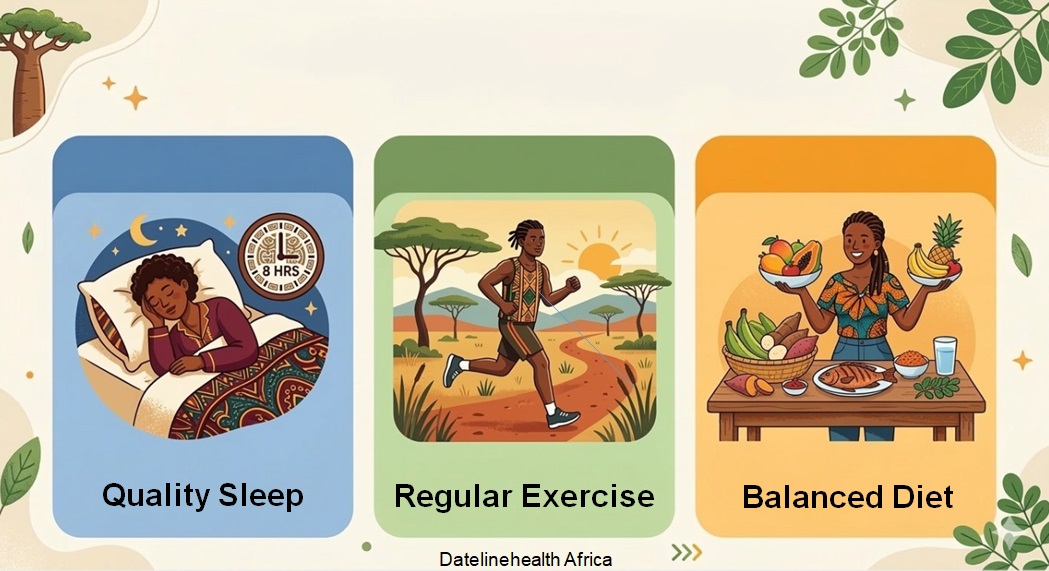
A healthy lifestyle is built on three essential pillars: quality sleep, regular exercise, and balanced nutrition. Image Credit: Gemini AI. Click on imae to enlarge.
When looked at individually, such small changes may seem insignificant but when combined, they were associated with measurable differences in lifespan and health span.
Many people believe that living longer requires expensive wellness programmes, extreme diets and significant exercise commitments. But what if the real answer lies in small daily improvements that most of us can manage?
A recent study suggests that even modest changes in sleep, physical activity and diet may be linked to longer life and more years free from chronic disease.
For many Africans balancing work, family responsibilities and economic pressures, the idea of drastic lifestyle changes can feel unrealistic, yet this research offers a more encouraging message that small consistent improvements across different areas of health may be beneficial.
The researchers used data from the UK Biobank, a large long term health database that tracks hundreds of thousands of adults in the United Kingdom. For this particular analysis, nearly 60,000 participants were included and followed for about eight years.
The study focused on three main lifestyle factors:
Participants wore wearable devices for a week which measured their sleep and physical activity while their diet quality was assessed using standard dietary questionnaires.
The researchers were interested in two outcomes:
Instead of looking at each lifestyle factor alone, the researchers created a combined score and this allowed them to estimate how different combinations of sleep, physical activity and diet were associated with years of life and years of healthy life. It is important to note that this was an observational study which means it looked solely at patterns and associations, rather than a direct cause and effect.
One of the most interesting findings was that very small improvements across all three lifestyle areas were statistically associated with longer life.
For participants with the poorest lifestyle scores, the model suggested that the following small daily improvements were linked with about one extra year of life:
When looked at individually, such small changes may seem insignificant but when combined, they were associated with measurable differences in lifespan and health span.
The study also showed that people who consistently had healthier patterns, such as sleeping around seven to eight hours per night, engaging in over 40 minutes of moderate to vigorous activity daily and maintaining higher diet quality scores, were associated with up to nine additional years of life compared to those with the poorest habits.
Another key message was synergy because, although improving sleep or exercise alone was helpful, the strongest associations were seen when improvements happened across all three areas together. This suggests that the body does not respond to health behaviours in isolation. Sleep affects hormones and appetite while physical activity affects blood sugar and heart health and diet influences inflammation and weight. When these factors work together, the overall effect may be greater.
It is important to note that the extra years mentioned are based on statistical modelling and the study does not prove that adding five minutes of sleep will directly give someone one extra year of life. It simply shows that people with slightly better combined habits tended to live longer and healthier lives.
Why Small Changes Matter
Many people feel discouraged when they cannot follow strict health routines. This research suggests that consistency and balance across different behaviours may be more important than intensity in one area.
Biologically, small improvements can add up over time.
A few extra minutes of sleep can help regulate stress hormones and slightly more physical activity can improve blood circulation and insulin sensitivity while extra vegetables can increase fibre intake and reduce inflammation. When practised daily for years, these modest benefits may accumulate.
There is also a psychological benefit as small goals are easier to achieve and maintain. When people experience success, even in small steps, they are more likely to continue and build on those habits.
Although the research was conducted in the United Kingdom, its message is relevant to African populations. Across many African countries, non-communicable diseases such as hypertension, stroke and type 2 diabetes are rising. Urbanisation, sedentary jobs and increased access to processed foods are changing lifestyle patterns. At the same time, many people struggle with poor sleep due to long working hours, stress, shift work or unstable electricity supply.
The key takeaway from this study is that improvement does not have to be extreme to be meaningful. For example:
These are realistic adjustments in many African settings and they do not require expensive gym memberships or imported health foods.
The study also reinforces the importance of public health policies that promote healthy environments such as safe walking paths, access to affordable fresh produce and education about sleep hygiene which can support these small daily changes.
This study offers a hopeful message that living longer and healthier may not always require dramatic life overhauls. Small, steady improvements in sleep, movement and diet, when combined, are associated with meaningful differences in lifespan and health span.
As African communities are facing growing rates of chronic disease, you can stay healthy by being intentional about adding more movement to your day, prioritising consistent sleep and even adding more veggies in your meals. These steps may seem small now, but over time they could contribute to more years lived and more years lived well.
Source: Koemel, N. A, Biswas, R. K, Ahmadi, M. N, et al. Minimum combined sleep, physical activity, and nutrition variations associated with lifeSPAN and healthSPAN improvements: A population cohort study. eClinicalMedicine, 2026;92, 103741. Available from here
Related:
10 Reasons Africans Should Exercise
Eat More Fruits and Vegetables to Improve Your Sleep, Study Recommends
Published: March 13, 2026.
© 2026. Datelinehealth Africa Inc. All rights reserved.
Permission is given to copy, use and share content for non-commercial purposes without alteration or modification and subject to source attribution.
DATELINEHEALTH AFRICA INC., is a digital publisher for informational and educational purposes and does not offer personal medical care and advice. If you have a medical problem needing routine or emergency attention, call your doctor or local emergency services immediately, or visit the nearest emergency room or the nearest hospital. You should consult your professional healthcare provider before starting any nutrition, diet, exercise, fitness, medical or wellness program mentioned or referenced in the DatelinehealthAfrica website. Click here for more disclaimer notice.