
Image showing a young African male wearing sunglasses, Image Credits: Freepik
By: Ipsita Roy, M.Sc. (Systems Biology), DLHA Volunteer and Freelance Health writer. Medically reviewed by the DLHA Team.
January 21, 2026
We all may wear sunglasses as a fashion statement or as a way to elevate our look, but did you know that sunglasses are really important for eye health? It helps protect your eyes and prevents many complications and disturbances in vision. This is even more important for people living in Africa, as the sunlight here can be really intense due to Africa’s geographical position. The equator passes right through the centre of Africa, which means that Africa receives a lot of sunlight.
Read on to find out 10 health reasons why you should wear sunglasses everyday whenever you are outdoors in Africa.

AI generated photo of a cheerful looking young African couple posing together and wearing sunglasses to protect their eyes in a bright sunny outdoor environment. Image Credit: ChatGPT
The equator passes right through Africa, which means compared to the rest of the world, Africa receives much more sunlight. In an already sunny environment, the presence of sandy areas which reflects more sunlight, can affect the vision long term by exposing you to more UV rays.

AI generated image showing an African farmer man wearing wrap-around sunglasses and a bandana straw hat in a very hot and dusty farm environment. Image Credits: Ocreate
It can get really dusty in areas which are hot and dry. In such an environment, if the eyes are not protected enough, the dust particles can enter and cause irritation to the eyes. When hot winds blow through, the eyes require protection from the dust and debris the wind carries.

Image showing a professional looking African male suffering from eye-strain induced headache from being in a sunny environment. He is holding his head with both hands. Image Credit: Pexels
Some people suffer from migraines or headaches due to sensitivity to light. They can get headaches while being out and about or even from staring at screens for too long.
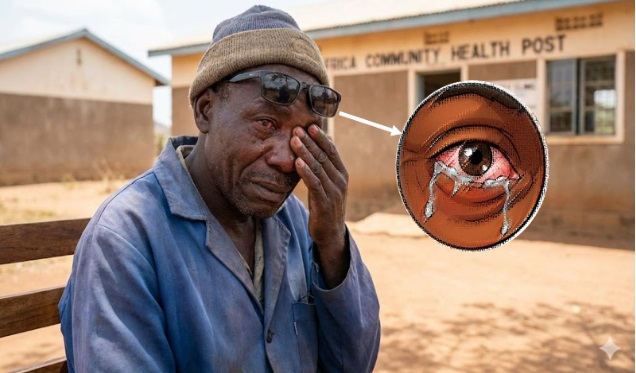
Image showing an African man sitting on a bench outside a health clinic with eye discomfort, and a black sunglass worn over his cap. His eyes are red and watering, shown in the cartoon zoomed inset. He may be suffering from sunburn eyes. Image Credit: Nano Banana Gemini
When your eyes are exposed to the sun for an extended time, it can cause short and long term damage.
Short term damage to the protective layer of the outer surface of your eyes, called the cornea causes redness, itchy sensation, watering of the eyes, and even swelling, a condition known medically as photokeratitis.
Photokeratitis is usually temporary and lasts for 24-48 hours.
Long term damage includes chronic inflammation or non-cancerous tissue growth from the white of the eyes across your cornea (pterygium). These conditions happen due to exposure to harmful UV rays of the sun.
If you can, avoid sun exposure during peak hours (10 AM to 4 PM)

Image showing close up of an eye with a fleshy tissue (Surfer's eye or Pterygium) growing from the white corner of the eye towards the centre of the eye. Image Credit: Nano Banana Gemini.
Prolonged exposure to sunlight, causes growth of a fleshy tissue from the corner of the white of the eyes towards the centre of the eyes. Commonly known as the Surfer’s eye or Pterygium, it can affect vision and lead to irritation and redness. It happens mainly to people who work outside, and are exposed to the glare of the sun and dust, like farmers, divers, fishermen etc.
How to prevent Surfer’s eyes:
.jpg)
An image showing an African man’s side profile and indicating the transparent, raised part of the eye called cornea Image Credits: Canva
The cornea protects the lens of the eyes from UV exposure, as well as from dust and other elements of nature. It is like the first filter against the natural elements, protecting our eyes. But prolonged exposure to sunlight can harm the cornea and interfere with its functions.
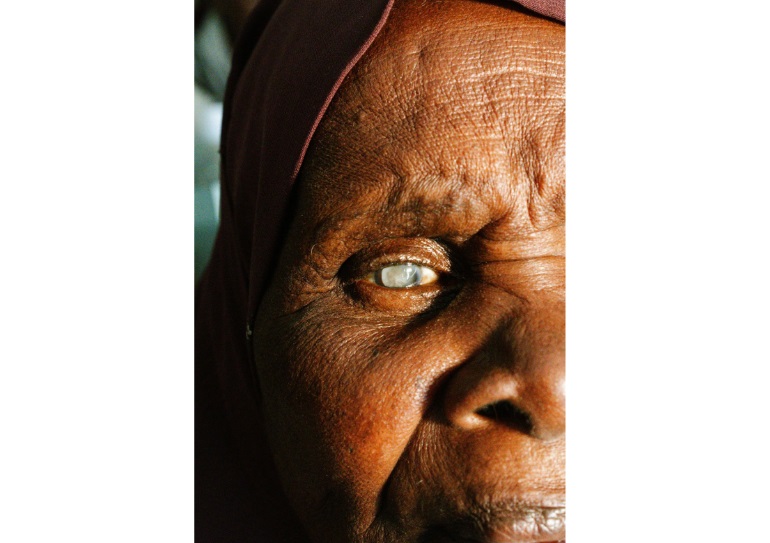
An image showing the partial face of an African woman suffering from cataract. The eye looks glassy. Image Credits: Nano Banana Gemini
Cataract is a condition where the eye lenses become cloudy due to damaged protein of the lenses. Cataracts are caused by many reasons like ageing, genetics, diabetes, and others. People with cataracts in their eyes cannot see properly. To a person with cataract, it seems like there is a haze in front of the eyes, where the details of objects are not clear at all. UV light exposure worsens the damage in eye lenses due to cataracts even faster.
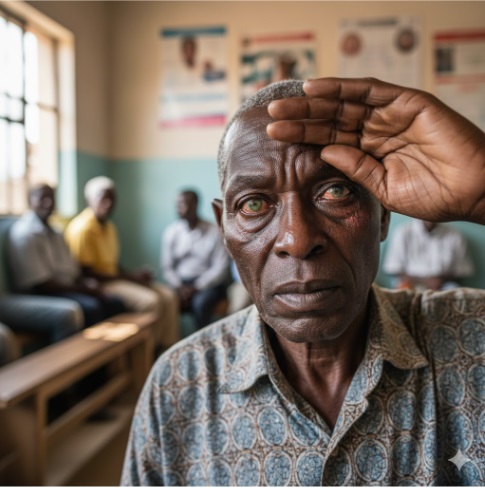
Image showing an African man suffering from glaucoma and sitting inside a health facility. The eyes look hazy and red. Image Credits: Nano Banana Gemini
Glaucoma is a group of conditions where the optic nerve that carries information about the external environment from the retina to the brain, gets damaged due to high fluid pressure within the globe of the eye.
The retina receives light and shadows from the environment, converts them to electrical signals which the optic nerve carries to the brain, for us to “see”.
The exact cause of glaucoma is unknown but risk factors include, age, race, genetics, certain eye conditions, medications, and lifestyles and medical conditions that raises fluid pressure with the eyes.
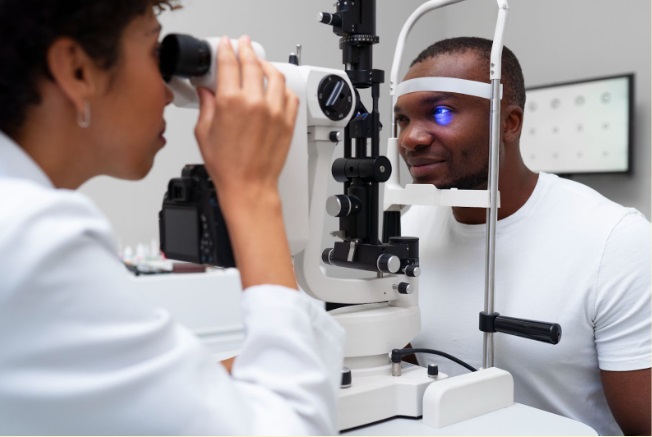
An image showing an African man getting an eye check-up. Image Credits: Freepik
Macular degeneration is an age related disease where the retina gets affected and people cannot see things in front of them, even though they can see things sideways. Macula is the central part of the retina. The retina is responsible for converting light into electrical signals, which are processed in the brain for us to perceive the images. In this disease, yellow deposits on the macula region of the retina are formed, due to which the vision is gradually affected, though there are forms which progress faster. In faster progressing forms, abnormal blood vessels may grow behind the retina, leaking and creating pressure on the retina.
.jpg)
A closeup image of an African man with right lower eyelid cancer. Image Credits: Nano Banana Gemini
Exposure to more sunlight, leads to exposure to higher levels of ultraviolet or UV rays. Exposure to UV rays can increase the chances of cancers of the eyelids like squamous cell carcinoma. In this type of cancer, a swelling or sore can form on the top eyelid or the bottom, and surgery is required to remove the cancer. Otherwise the cancer may worsen to affect other eye components and interfere with vision.
Wear sunglasses that are certified to block 100% of UV-A and UV-B rays from the sun.
Wear a wide-brimmed hat when outdoors.
If you can, avoid sun exposure during peak hours (10 AM to 4 PM).
Get regular eye examination by an eye doctor as well as self-check the skin around your eyes for unusual swellings and early detection.
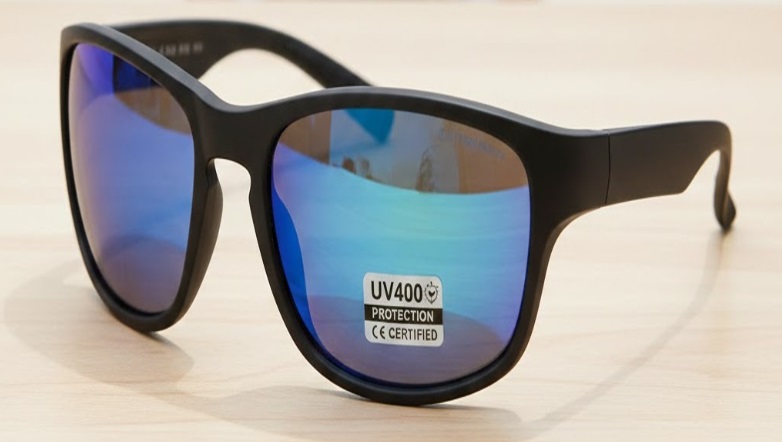
An image showing a UV Protection certified sunglass placed on a table. There is a UV400 protection certified label on the left lower part of the sunglasses. Image Credits: Nano Banana Gemini
Wearing good sunglasses, which are UV protection certified would help protect your eyes from the environmental elements, as well as from harmful UV rays. These sunglasses may have labels showing UV400, which means it blocks all rays of wavelength up to 400 nanometers, which includes UV rays. There are other sunglasses which might have labels UV 95%-100%, which means that these sunglasses can block 95 - 100% of harmful UV radiation.
So what sort of sunglasses should one buy? Sunglasses need not be expensive, but they definitely should be UV protection certified with either UV400 label or UV 95-100% label. Please be careful not to buy tinted glasses which look like sunglasses but are not UV protection certified. These “fake” sunglasses can cause more harm to the eyes.
1. St. Clair B. How Sunglasses Help Protect Your Eyes' Health [Internet, n.d.]. Johns Hopkins Medicine. Baltimore: [Cited 2026 Jan 15]. Available from here.
2. Demarco C. 9 things to know about sunglasses, eye protection and cancer [Internet]. MD Anderson Cancer Center; July 31 2024. [Cited 2026 Jan 15]. Available from here.
3. Cleveland Clinic. Macular degeneration [Internet]. Last updated 02.14.2023. [Cited 2026 Jan 15]. Available from here.
4. Fekadu SA, Assem AS, Adimassu NF. Prevalence of pterygium and its associated factors among adults aged 18 years and above in Gambella town, Southwest Ethiopia, May 2019. PLoS One. 2020;15(9):e0237891. Available from here
5. Wright CY, Norval M. Health risks associated with excessive exposure to solar ultraviolet radiation among outdoor workers in South Africa: an overview. Front Public Health. 2021;9:678680.Available from here.
6. National Headache Foundation. Light and Headache Disorders. Understanding light triggers and photophobia [Internet]. July 31 2024. [Cited 2026 Jan 15]. Available from here.
7. Nathaniel GI, Eze UA, Onwuegbuna AA, Echieh CI, Alen HA. Pattern of Orbito-ocular Tumours in Nigeria: a systematic review. BMC Cancer. 2025;25(1):224. Available from here.
8. Sinyiza FW, Chisale MRO, Kayira AB, Chimbatata CS, Kaseka PU, Kamudumuli P, et al. Histopathological profile of orbito-ocular cancers at a tertiary hospital in Northern Malawi: a retrospective cross-sectional study. BMJ Open Ophthalmol. 2022;7(1):e000977. Available from here.
Related:
5 Practical Tips For Good Eye Health
Cataracts in Africa: Symptoms, Diagnosis and Care
Care for ageing eyes: Simple ways to protect your vision
Dusty Harmattan Season in West Africa: Tips on staying healthy.
How to Prevent Eye Disorders in Diabetes: Practical Advice for Africans
6 Practical Tips to Prevent Eyesight Loss in African Diabetics
Published: January 21, 2026
© 2026. Datelinehealth Africa Inc. All rights reserved.
Permission is given to copy, use and share content for non-commercial purposes without alteration or modification and subject to attribution as to source
Disclaimer
DATELINEHEALTH AFRICA INC., is a digital publisher for informational and educational purposes and does not offer personal medical care and advice. If you have a medical condition needing routine or emergency attention, call your doctor or local emergency services immediately, or visit the nearest emergency room or the nearest hospital. You should consult your professional healthcare provider before starting any nutrition, diet, exercise, fitness, medical or wellness program mentioned or referenced in the Datelinehealth Africa website. Click here for more disclaimer notice.