By: Elizabeth Obigwe, B.Sc. Anatomy. Freelance Writer. Medical review by The DLHA Editorial Team.
.jpg)
A seated elderly black man holding his head in both hands probably due to a headache.
More often than not, when you have a headache, you take an over-the-counter painkiller pill. These often take care of headaches caused by stress, tension, or dehydration. However, some headaches can signal more serious underlying health issues that require prompt medical attention. Identifying these dangerous headaches early is crucial for preventing complications.
Fortunately, there are several tests that your doctor can carry out on you if your headache is suspected to be serious or dangerous.
Some serious causes of headaches include brain tumours, bleeding in the brain, and infections. So, if your headache does not improve with over-the-counter pills or it is associated with other symptoms that make you worried, you should see your doctor.
This report will help to give you some understanding of the tests that your doctor can order towards making an informed diagnosis of the cause of your serious headache

A doctor's office scene with a black doctor taking a history from a male patient.
Your doctor would typically begin by taking your history and asking further questions regarding your symptoms, medical, family and lifestyle history, etc. This may be followed by a physical examination that may focus on your nervous system. What your doctor uncovers in each phase of the examination will determine the type of test that will be recommended. The different headache diagnostic tests discussed in this article are:
.jpg)
A humanitarian aid African doctor checking blood pressure in a female patient.
For a general physical examination, your doctor will check your vital signs, including blood pressure, heart rate, and temperature, to identify any abnormalities that could contribute to headaches, such as hypertension or fever.
They may then examine the head, neck, and shoulders to detect tenderness, muscle tension, or any swelling. Your eyes will also be examined for signs of redness, swelling, abnormal pupil reactions or abnormal appearance of the tissues inside the eyes.
In addition, your doctor will also perform a neurological examination. This involves evaluating your brain and nervous system functioning. Some of the things your doctor will check include:
Mental status: This test involves simple questions or tasks that test memory, attention, language, and problem-solving skills.
Cranial nerves: There are 12 pairs of cranial nerves, which connect the brain with the eyes, ears, nose, face, tongue, throat, neck, upper shoulders, and some internal organs. Your doctor will check all of these nerves for proper function. They may ask you to identify a smell like coffee, check your vision, follow a finger with your eyes, smile, stick out your tongue, and more to evaluate your cranial nerve function.
Motor nerves: These nerves carry signals from the brain and spinal cord to the muscles which you have control over such as your legs and arms. You may be asked to perform simple movements like gripping something, lifting your arms and legs against resistance, and walking. This helps assess muscle strength, tone, and coordination.
Sensory nerves: These nerves carry signals from your skin to your brain to help you appreciate touch, taste, smell, images, etc. Your doctor may test each of these senses for any abnormality.
Reflexes: A reflex is an automatic response that is based on your spinal cord and not the brain, e.g., a knee jerk. Your doctor may tap specific areas, like the knees or elbows, with a reflex hammer to test your reflex responses.
Coordination, balance and gait: You may be asked to perform tasks like touching your nose with your finger, standing with eyes closed, or walking in a straight line to assess coordination and balance.
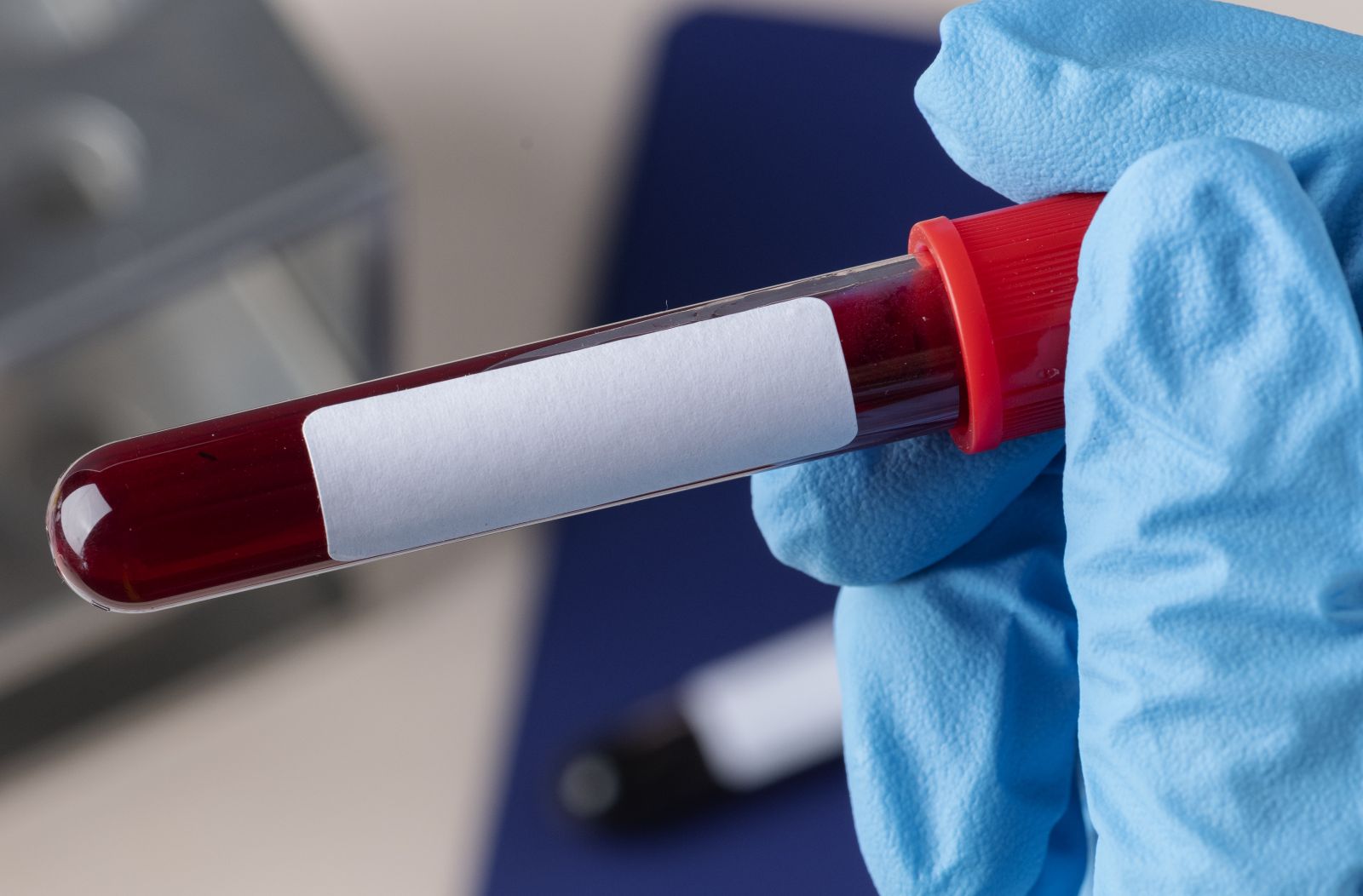
A hand holding a test tube containing human blood sample
Blood tests are not used to diagnose headaches directly, but they can help identify underlying conditions that might be causing or contributing to headaches. The type of blood test your doctor will recommend depends on the underlying condition suspected.
For instance, if your doctor suspects that you may have an infection, you may be asked to go for a complete blood count (CBC) test. Whereas, if an inflammation is suspected, you may be required to take the following tests that are markers of recent or long-standing infections/inflammation:
An elevated ESR or CRP level can indicate chronic inflammatory conditions like temporal arteritis (inflammation of blood vessels on the side of the head) which is a serious cause of headaches in older adults, or acute infective or inflammatory conditions like bacterial or viral attack of the coverings of your brain and spinal cord (meningitis).
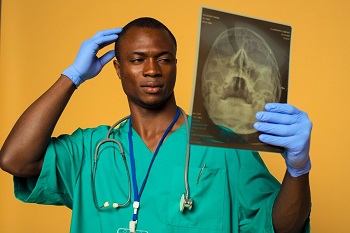
A medical professional holding a radiograph of a head scan.
Imaging tests are not commonly used in diagnosing day-to-day headaches. However, if your doctor highly suspects a secondary cause of your headache, they may send you to undergo any one of these tests.
Computed Tomography (CT) and Magnetic Resonance Imaging (MRI)
Both CT scans and MRIs can be used for imaging your brain but for reasons of cost, your doctor is more likely to initially ask for a CT scan.
Brain imaging is usually conducted when the following conditions are suspected:
X-ray
X-rays are employed when there is suspected trauma to the head or neck. A cervical spine X-ray can help detect problems in the vertebrae (bones of the spine) or discs (cushion-like pads between the vertebrae) that might be contributing to headaches. Headaches originating from the neck region are often caused by issues like arthritis (inflammation of a joint), misalignment of the spine, or disc degeneration.
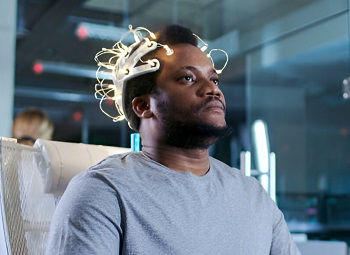
A black man undergoing electroencephalography (EEG test) in a brain study laboratory.
The primary use of an EEG is to detect possible seizure disorders. Hence, if a patient with a headache shows other seizure symptoms such as episodic loss of consciousness, an EEG may be conducted. However, if the doctor suspects other structural causes, a CT scan or MRI will be a better option.
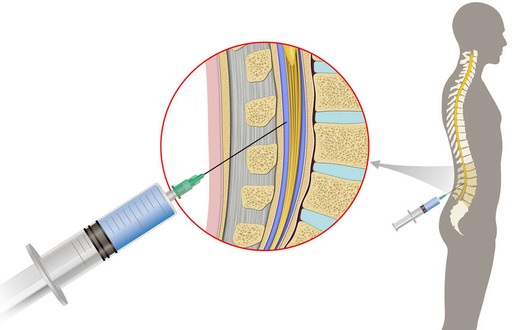
An illustration of a lumbar puncture procedure.
A lumbar puncture, also known as a spinal tap, may be a useful addition to a CT scan or an MRI especially when an infection or inflammation is suspected. It may also be used to test for bleeding in the brain (subarachnoid haemorrhage) in cases where a CT scan is negative. The fluid around the spinal cord and brain (cerebrospinal fluid or CSF) is examined for evidence of fresh or old bleeding.
Other possible scenarios where lumbar puncture might be considered include; a first or worst headache, headache with fever or other signs of an infection, and a progressively worsening headache in HIV-positive or cancer patients.
If your headache lasts up to 72 hours without improvement despite treatment, seek medical attention immediately. You should also see a doctor if you have;
These are some of the signs of a potentially dangerous headache.
Most of the time, your healthcare provider may be able to diagnose the cause of your headache by asking about your medical history and performing neurologic and general physical examinations. However, if they suspect an underlying condition, they may recommend more advanced tests in order to make an accurate diagnosis of the cause of your serious headache. These headache tests generally do not pose any significant risk.
1. Freedman M. Neurologic examination [Internet]. MSD Manual - Consumer Version. [Updated 2023 Aug]. Cited 2024 Sept 11. Available from here.
2. Evans RW. Diagnostic testing for headache. The Medical Clinics of North America. 2001;85(4):865–885. doi: 10.1016/S0025-7125(05)70348-5. Available from here.
3. De Luca GC & Bartleson JD. When and how to investigate the patient with headache. Seminars in Neurology. 2010;30(2):131–144. Doi: 10.1055/s-0030-1249221. Available from here.
Headache: An Overview for Africans
Migraine: An Overview for Africans
What Africans Need to Know About Tension Headache
Published: September 19, 2024
© 2024. Datelinehealth Africa Inc. All rights reserved.
Permission is given to copy, use and share content for non-commercial purposes without alteration or modification and subject to source attribution.
DATELINEHEALTH AFRICA INC., is a digital publisher for informational and educational purposes and does not offer personal medical care and advice. If you have a medical problem needing routine or emergency attention, call your doctor or local emergency services immediately, or visit the nearest emergency room or the nearest hospital. You should consult your professional healthcare provider before starting any nutrition, diet, exercise, fitness, medical or wellness program mentioned or referenced in the DatelinehealthAfrica website. Click here for more disclaimer notice.