What Every African Should Know About CPR
By: Chiamaka Wisdom-Asotah, MB,BS, Medical Doctor and Healthcare Content Writer. Medically reviewed by: A. Odutola MB.BS, PhD. FRCSEd.
March 2, 2026.
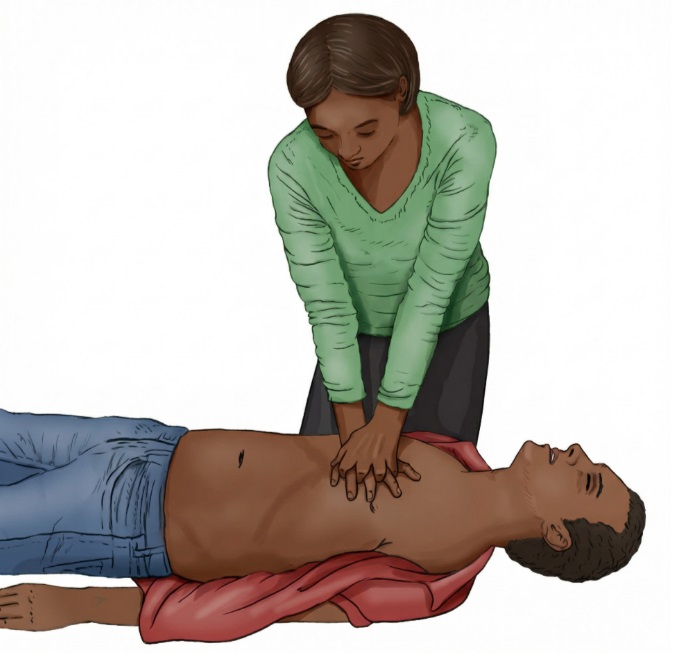
Cartoon illustration of a female bystander performing chest compressions in an unconscious man. Click on image to enlarge
If you were walking by and met someone who slumped and is lifeless, what would you do before medical help arrives?
Permit me to guess your obvious answer. Do nothing? Walk away?
Unfortunately, that would make you one of the over 90% of Africans who may not be helpful in an emergency situation, not because they don’t care, but because they lack the necessary skills.
Cardiac arrest is responsible for a significant proportion of deaths worldwide [1]. In one year alone, over 436,000 Americans die from cardiac arrest [2]. While exact numbers are unknown in Africa due to limited data, deaths from heart-related conditions on the continent have been steadily rising [3].
If you’ve read up to this point, I’ll assume you’re ready to dive deeper and learn about the life-saving skill of CardioPulmonary Resuscitation.
Cardiopulmonary Resuscitation (CPR) is an emergency skill used when a person’s heart stops beating or they stop breathing — a condition known as cardiac arrest.
The goal of CPR is simple: to keep oxygen-rich blood flowing to the brain and vital organs until medical help arrives.
Because cardiac arrest can happen anywhere and to anyone, everyone should learn how to perform CPR.
Studies in countries of the north, show that bystander CPR significantly increases the chances of survival, especially because every second counts and a health professional may not be present. Yet globally, only 35 - 45 percent of people who suffer cardiac arrest receive CPR from a bystander.
.jpg)
An info poster showing the common causes of cardiac arrest. Click on image to enlarge.
Cardiopulmonary arrest (CPA), also called cardiac arrest, occurs when the heart suddenly stops working due to electrical malfunction.
When this happens:
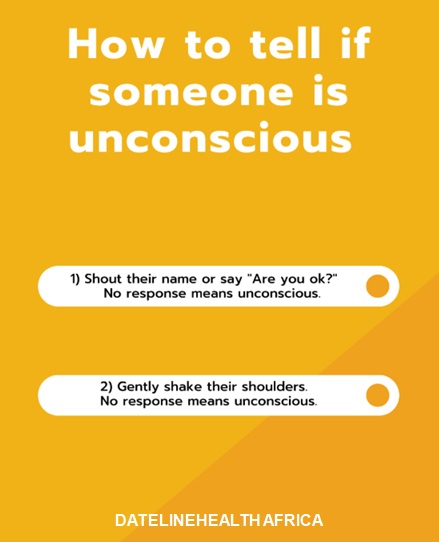
An image showing how to know a person is unconscious. Click on image to enlarge.
Without immediate help, like CPR with or without the use of a defibrillator (a machine that restarts the heart), the person can die within minutes.
In the United States, about 347,000 adult cardiac arrests occur outside hospitals each year, while 292,000 occur inside hospitals [4, 5]. This means the average person is actually more likely to witness a cardiac arrest than a health professional.
Data from Africa is limited due to a lack of large-scale research, but available studies suggest cardiac arrest is common and outcomes are significantly poor [6].
This is why Africans must be equipped with CPR knowledge.
An important step in giving CPR is knowing that a person needs it in the first place. So how can you tell?
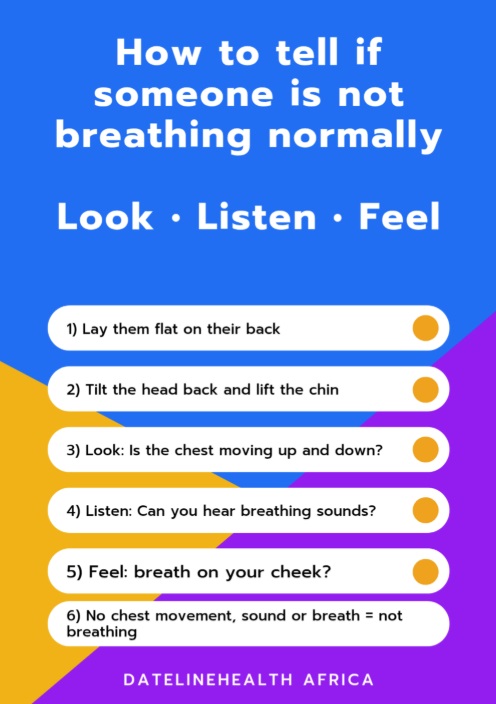
An info poster showing how to tell if a person isn't breathing. Click on image to enlarge.
Look for any of these signs in 10 seconds (because time is life):
If you notice any of the above signs, you'd need to perform CPR immediately.
Before starting CPR, quickly assess your surroundings to ensure it is safe.
Here's what to look out for:
Move the victim away from any danger.
If necessary and safe to perform a CPR, ensure the person is lying flat on their back, preferably on the ground, for effective chest compressions.
The next thing to do is to call the emergency service. If someone else is with you, ask them to do this while you begin CPR.
Emergency service numbers vary from country to country. Make sure you know yours.
When you call emergency services, stay calm and clear and be ready to say:
Do not hang up until you’re sure they have all the details they need. Preferably, use a speakerphone / hands-free so you can continue CPR while receiving instructions.
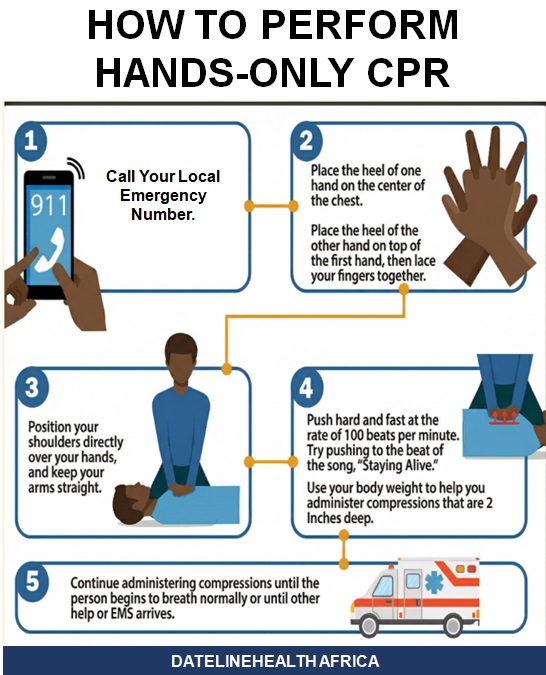
An image showing the steps involved in delivering hands-only CPR. Click on the image to enlarge.
In 2008, the American Heart Association (AHA) recommended hands-only CPR after research demonstrated that it is a quicker and more straightforward response, and just as effective as conventional CPR with rescue breaths during the early moments of adult cardiac arrest [7].
Hands-only CPR places emphasis on strong, consistent chest compressions, allowing ordinary individuals to take life-saving action when every second counts.
To perform hands-only CPR, follow the CAB approach:
Kneel beside the person. Place the heel of one hand in the centre of the chest (the lower half of the breastbone). Place your other hand on top and lock your fingers together. Keep your arms straight and shoulders over your hands (Do not bend your elbows).
Push down using your upper body weight, then let the chest rise fully.
Compress the chest 5–6 cm (about 2 inches) deep each time at a fast and steady rate of 100–120 compressions per minute.
Tilt the head gently to keep the airway open. Someone else can help with this to ensure chest compressions are not interrupted.
For hands-only CPR, the focus is on chest compressions alone.
However, if you are trained and confident, give 2 rescue breaths after every 30 compressions (30:2).
To give rescue breaths:
If rescue breaths aren’t possible, continue chest compressions only as they are highly effective.
For children and infants, the procedure is similar, but the sequence is slightly different.
Continue the cycle at the rate of 30 compressions to 2 breaths until help arrives or the child begins to show signs of life.
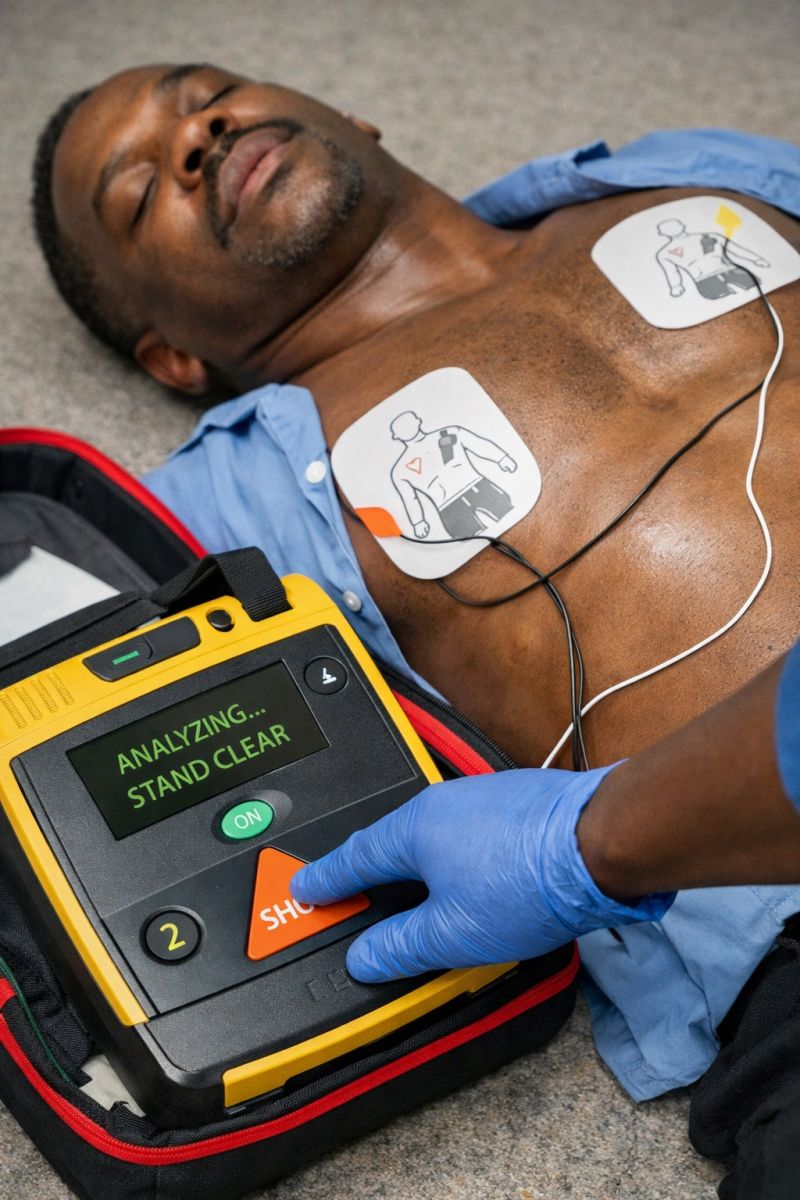
An image showing an Automated External Defibrillator (AED) in use on a black man who lies unconscious on his back. Image generated from ChatGPT. Click on image to enlarge.
An Automated External Defibrillator (AED) is a device that analyses heart rhythm (the way the heart beats) and delivers an electrical shock to restart the heart. The good thing is that anyone can use it. But they are not readily available in public places in most African countries.
After calling emergency services, send someone to get an AED (if available) while you continue CPR.
The device provides clear voice and visual instructions. Attach the pads to the bare chest and allow the AED to analyse the heart rhythm.
If a shock is advised, ensure no one is touching the person and press the shock button when instructed. The AED will guide you on when to resume CPR.
Continue CPR until any of the following happens [8]:
CPR should not be stopped for any other reason as it increases the chances of survival.
Studies show that in some African settings, the majority of people have never received CPR training and even many healthcare workers lack formal CPR skills [9, 10, 11].
This means most cardiac arrest victims may not get timely help when every minute counts.
Cardiac arrests and sudden deaths can happen anywhere and at any time, and survival drops by 7–10% for every minute without CPR [12].
In many African countries, emergency medical services are limited, ambulance response times are long or inconsistent, and not everyone has CPR training. This is why the training of everyday people is crucial.
Even though CPR can save lives, many Africans lack the skill. Some common reasons include [13]:
Most people have never learned CPR, so they don’t feel confident to perform it. Also, people may not know when someone is in cardiac arrest or may mistake gasping (agonal breathing) for normal breathing. In many African countries, CPR is not taught widely in schools or communities [11].
These include:
Many hesitate because they:
CPR can be stressful and frightening, even for trained people. Some bystanders may panic or be afraid to act.
1. Make CPR training more accessible and realistic by focusing on recognising cardiac arrest and acting confidently and calmly, while keeping on-looking crowd away.
2. Teach CPR in schools and workplaces.
3. Include real-world scenarios in training, such as helping family members or strangers.
4. Encourage hands-only CPR, which is easier to learn and less intimidating for non-medical people.
5. Teach CPR as safe and dispel fears about harming the person or legal consequences.
6. Teacg emergency dispatchers on how to guide callers through CPR over the phone.
7. Build mobile apps to alert nearby trained responders and locate defibrillators quickly.
8. Place defibrillators in more public and residential areas.
9. Provide psychological training so that bystanders can feel ready and less anxious during emergencies.
CPR is a life saving skill that everyone can learn. Acting quickly can double or triple a person’s chance of survival during cardiac arrest. Hence, public awareness and training in this skill is crucial.
1. Do I need to remove clothing to perform CPR or use a defibrillator?
CPR can be done over a person’s clothes. However, defibrillator pads must touch bare skin to work effectively but they can go under a bra strap, so it is not necessary to remove a woman’s bra.
2. Do I need training before using a defibrillator?
No medical training is required. Defibrillators are designed for anyone to use. Just follow the visual and voice instructions.
3. Do I place my hands differently if the person is female?
No. Hand placement is the same for everyone.
4. When should I not do CPR?
Do not perform CPR if the person is conscious or breathing normally, the environment is unsafe or there is a valid DNR (Do not resuscitate order, which is not common in African countries). Also, CPR is not needed if there are clear signs of irreversible death, such as:
5. What if I am wrong and they did not need CPR?
In many countries, Good Samaritan Laws protect people who act in good faith to help. It is better to start CPR than hesitate.
1. Tomas N, Kachekele Z. Nurses’ knowledge, attitudes, and practice of cardiopulmonary resuscitation at a selected training hospital in Namibia: a cross?sectional survey. SAGE Open Nursing. 2023;9. doi:10.1177/23779608231216809. Available from here.
2. American Heart Association CPR & First Aid. CPR Facts & Stats [Internet, n.d.]. Dallas (TX): American Heart Association; [Cited 2026 Jan 25]. Available from here.
3. World Health Organization Regional Office for Africa. Cardiovascular Diseases [Internet]. Brazzaville: WHO Regional Office for Africa; [Cited 2026 Jan 25]. Available from here.
4. Sudden Cardiac Arrest Foundation. Latest Statistics | Sudden Cardiac Arrest Foundation [Internet]. Wexford (PA): Sudden Cardiac Arrest Foundation; [cited 2026 Jan 25]. Available from here.
5. Barros AJ, Enfield KB. In-Hospital Cardiac Arrest. Emerg Med Clin North Am. 2023 Apr 7;41(3):455–464. doi: 10.1016/j.emc.2023.03.003. Available from here.
6, Thibodeau J, Werner K, Wallis LA, Stassen W. Out-of-hospital cardiac arrest in Africa: a scoping review. BMJ Open. 2022 Mar;12(3):e055008. DOI:10.1136/bmjopen-2021-055008. Available from here.
7. American Heart Association CPR & First Aid. Hands-Only CPR [Internet, n.d.], Dallas (TX): American Heart Association; [cited 2026 Jan 25]. Available from here.
8. Institute for Quality and Efficiency in Health Care (IQWiG). In brief: Cardiopulmonary resuscitation (CPR): What you need to know [Internet]. Cologne, Germany: InformedHealth.org; Updated 2022 Feb 21 [Cited 2026 Jan 25]. Available from here.
9. du Plessis N, Lamacraft G, Joubert G. Training, knowledge, experience and perceptions regarding cardiopulmonary resuscitation of doctors at an academic hospital in central South Africa. African Journal of Emergency Medicine. 2022 Aug;12(4):344–351. Doi: 10.1016/j.afjem.2022.07.001. Available from here.
10. Sayed AI, Mobarki SJ, Hakami AA, Saabi SM, Oraibi MM, Darraj BH, et al. Awareness, knowledge, and attitudes regarding cardiopulmonary resuscitation among non-medically trained individuals in Jazan, Saudi Arabia. Ann Afr Med. 2024;23(2):118–124. Available from here.
11.Anto-Ocrah M, Maxwell N, Cushman J, Acheampong E, Kodam RS, Homan C, Li T. Public knowledge and attitudes towards bystander cardiopulmonary resuscitation (CPR) in Ghana, West Africa. Int J Emerg Med. 2020 Jun 10;13(1):29. doi: 10.1186/s12245-020-00286-w. Available from here.
12. Resuscitation Council UK. Defibrillation [Internet, n.d.]. London: Resuscitation Council UK; [Cited 2026 Jan 25]. Available from here.
13. Farquharson B, Johnston M, Best C, et al. What factors delay initiation of bystander CPR in out-of-hospital cardiac arrest? Results from an analysis of 200 recorded ambulance calls. Emergency Medicine Journal Published Online First: 20 January 2026. doi: 10.1136/emermed-2024-214733. Available from here.
14. Dainty KN, Colquitt B, Bhanji F, Hunt EA, Jefkins T, Leary M, Ornato JP, Swor RA, Panchal A, on behalf of the Science Subcommittee of the American Heart Association Emergency Cardiovascular Care Committee. Understanding the importance of the lay responder experience in out-of-hospital cardiac arrest: a scientific statement from the American Heart Association. Circulation. 2022 Apr 26;145(17):e852–e867. Available from here.
Related:
Published: March 2, 2026
© 2026. Datelinehealth Africa Inc. All rights reserved.
Permission is given to copy, use and share content freely for non-commercial purposes without alteration or modification and subject to source attribution.
DATELINEHEALTH AFRICA INC., is a digital publisher for informational and educational purposes and does not offer personal medical care and advice. If you have a medical problem needing routine or emergency attention, call your doctor or local emergency services immediately, or visit the nearest emergency room or the nearest hospital. You should consult your professional healthcare provider before starting any nutrition, diet, exercise, fitness, medical or wellness program mentioned or referenced in the DatelinehealthAfrica website. Click here for more disclaimer notice.