By Adebowale Bello. B.Tech Microbiology, Freelance Health Writer. Medically reviewed by the DLHA Team.
February 12, 2026
.jpg)
A close up image of a young black man shedding tears. Image Credit: Freepik
Introduction
A newly born child takes her first breath and as her lungs begin to function, she lets out a sharp, piercing cry that heralds her arrival.
Jasmine walks down the aisle, ready to exchange vows and as her eyes slowly get moist, she can see her parents also wiping theirs.
When Esther's phone rang by 11:17 pm, she knew something was wrong as she picked it up. The voice on the other end spoke in short, urgent sentences, then broke the news of the death of her father. In shock and disbelief, she dropped the phone and began to cry.
Even though these human experiences vary, they point to crying as a general human behaviour which may be experienced for different reasons.
Why exactly do we cry?
Is crying even good for you?
Why do some people cry easily and others don't? This article explains in detail what you need to know about crying and why people cry.
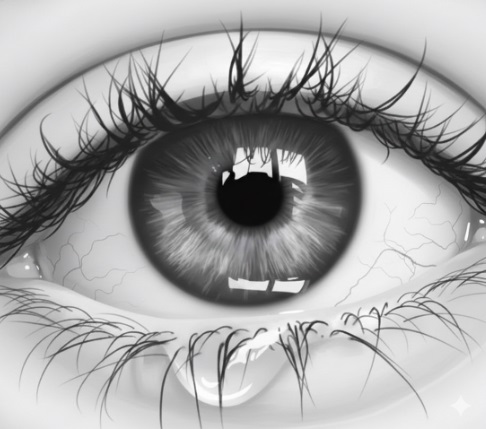
A close up image of a teary eye. Image Credit: Gemini AI Click on image to enlarge.
Crying is the release of tears from the eyes, usually as a response to emotions, irritation or even physical pain and it is both a biological process and an emotional behaviour. Crying may look simple from the outside but it involves a coordinated response between a variety of stimuli, the brain, nerve pathways and tear glands [1]. See fig.1.
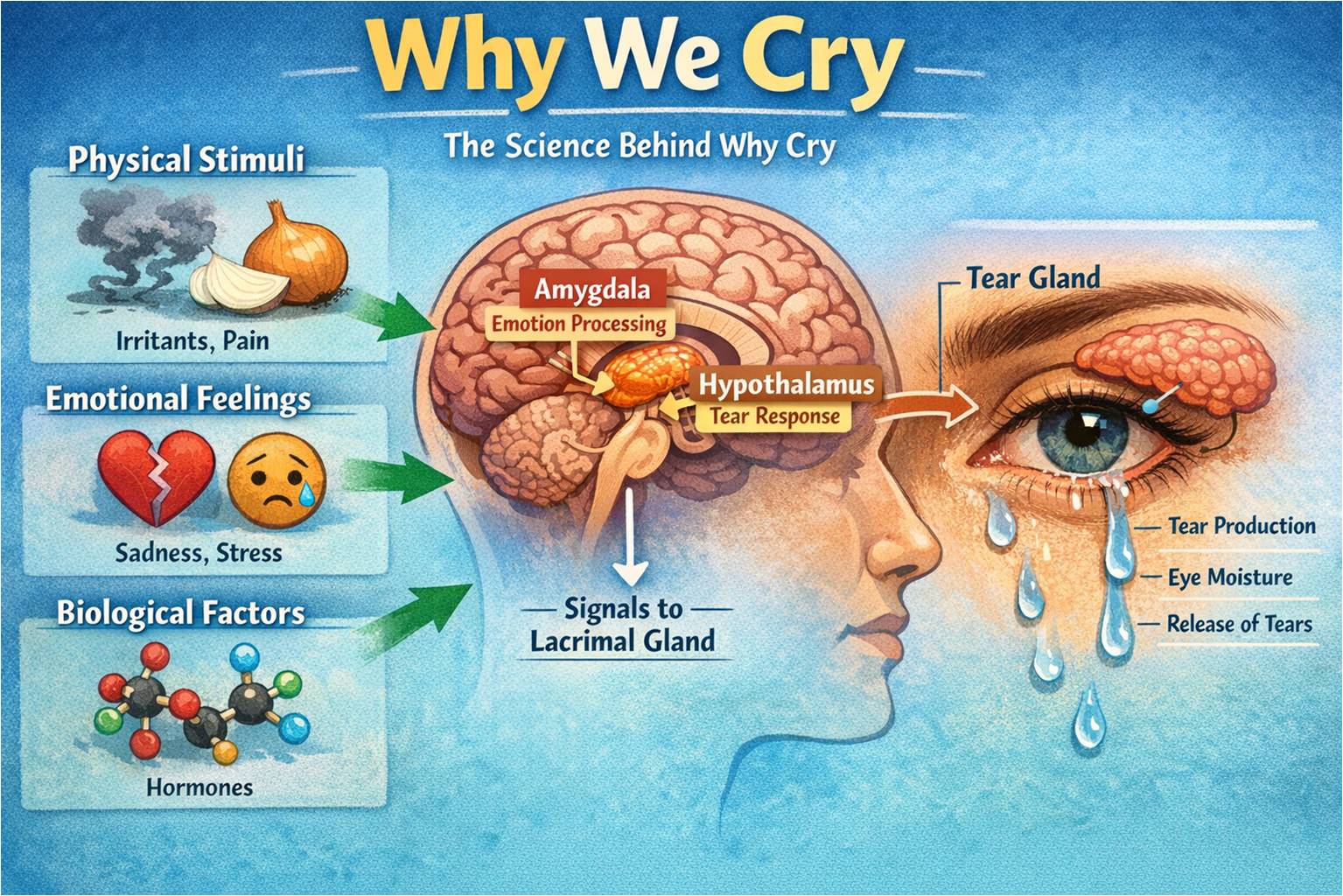
Fig. 1: AI generated info poster on the science behind why people cry. Image generated from ChatGPT. lick on image to enlarge.
Tears are produced from the lacrimal glands, located just above each eye. These glands constantly make fluid to keep the eyes moist and protected [1]. When crying is triggered, the glands produce a larger volume of tears that can overflow onto your cheeks. Scientists generally agree there are three major kinds of tears humans produce. Each type has a different purpose and is triggered in a different way.
Basal tears are the ones your eyes make all the time without you even noticing. They keep the surface of your eye moist, nourished and healthy so you can see clearly and avoid irritation. Think of basal tears as the eye’s natural moisturiser that works in the background every time you blink. They protect and keep your eyes comfortable and because they are always present and drained, basal tears don’t usually roll down your face [2].
Reflex tears happen when something touches your eye or irritates it. That could be dust, smoke, chopping onions or even blowing wind and these tears are a protective response designed to quickly flush the irritant out. They are usually clear and watery and they come almost immediately after the irritation with the sole aim of protecting the eye [2].
3. Emotional Tears
Emotional tears are the ones we usually think of when we talk about crying. These tears come not because something is physically irritating your eye but because your brain has processed a strong feeling, be it sadness, joy, frustration, relief or stress [2].
Emotional tears have a different chemical composition from basal and reflex tears, with higher levels of certain proteins and hormones such as prolactin (which is also involved in other bodily functions) and adrenocorticotropic hormone (ACTH), that are linked to emotional states [3]. This shows that emotional tears are not just the same fluid as other tears but something with a distinct biological signature.
Research further suggests that emotional crying is not simply a side effect of feeling something intensely; instead, it likely evolved as a non-verbal signal that communicates internal distress, need or vulnerability to others. One behavioural study found that observers are more willing to offer help and support when they see someone crying, because tears tend to increase perceptions of helplessness and connectedness and can encourage supportive behaviour from others [4].
Crying starts in the brain, not the eyes. When for example you feel a strong emotion, a small area deep in your brain that acts like an emotional alarm system known as the amygdala notices how important that feeling is. It then sends a signal to the hypothalamus, which works like the body’s control center and helps to manage automatic reactions. This control center turns on your body’s autonomic nervous system which is like your body's built-in automatic system that runs in the background, handling things like your heart rate, breathing and tear production, without you thinking about it (see fig. 1). That is why crying can happen even when there is no physical irritation, because the trigger is emotional but the response is physical [1].
Neural pathways connect reflex and emotional processing centres in the brain with the lacrimal glands, allowing feelings and stimuli to directly produce tears.
During an emotional crying episode, breathing patterns may change, facial muscles contract and the voice may tremble. After an intense emotional crying, many people experience a shift toward parasympathetic activity, the part of the nervous system associated with rest and recovery and this may explain why some people feel calmer after crying, although the effect varies depending on the situation and level of support available [1, 5].
Humans are the only species known to shed emotional tears and people cry for a mix of biological, emotional and social reasons. It is a built-in human regulation system and not just an emotional reaction.
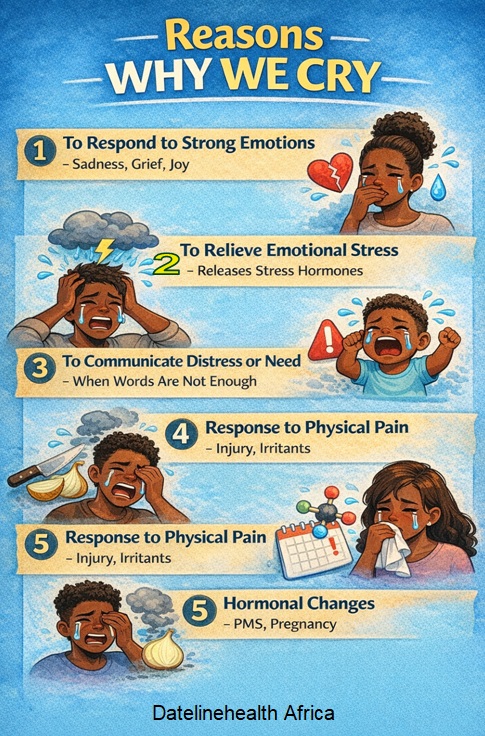
Info poster: Reasons why we cry. AI generated from ChatGPT. Click on image to enlarge.
Here are some psychosocial and physical reasons why people cry:
Crying is commonly triggered by intense feelings such as sadness, fear or joy. These emotions activate areas of the brain involved in emotional processing which then signal the nervous system to produce tears. This is why emotional crying often comes with physical sensations like trembling lips or uneven breathing [6].
Emotional tears are thought to help the body return to balance after distress. Crying activates the parasympathetic nervous system and you may feel a calming effect afterward.
Crying is also a social signal. In infants, it is a survival tool that alerts caregivers to hunger or discomfort. In adults, tears can nonverbally communicate that someone is overwhelmed or in need of support, often strengthening social bonds and empathy [7].
The body may produce tears when you experience intense physical pain. This response is linked to the same stress pathways that activate during emotional distress [8].
Hormonal fluctuations can influence how easily someone cries. This is why crying may increase during puberty, premenstrual periods, pregnancy or times of major hormonal shifts [9].
Crying is more than just an emotional release and scientists have found that it can have both physical and psychological benefits, although the effects are not always immediate or uniform for everyone.
One of the main reasons people feel better after crying is that tears help the body process strong emotions. Emotional crying can act as a natural release valve, reducing the intensity of feelings like sadness and frustration. Once again, studies suggest that crying stimulates the parasympathetic nervous system, which helps the body return to a calmer state after emotional stress making some people feel lighter or more relaxed after a good cry [10].
Emotional tears contain stress-related hormones such as adrenocorticotropic hormone (ACTH) and some researchers believe that shedding these tears may help regulate stress levels in the body, providing a chemical outlet for emotions that might otherwise build up internally. While it is not a cure for chronic stress, this process can contribute to short-term emotional relief [3].
Visible tears communicate vulnerability and need to others, encouraging empathy and support. In both familial and communal settings, tears can strengthen bonds, prompt comforting behaviour from friends or family and reinforce social cohesion. Studies have shown that observers often perceive someone who is crying as more sincere and in need of help, which can improve interpersonal connections [11].
However, not everyone experiences immediate relief after crying. Some people may feel worse temporarily, particularly if they are in distressing environments, lack support or are experiencing chronic emotional difficulties. If crying becomes persistent or uncontrollable, it may indicate an underlying mental health issue, which should be addressed with professional help.
Crying is a deeply personal experience and people vary widely in how often and how intensely they cry. Several factors help explain these differences, ranging from biology to culture.
Here are some reasons why people cry differently:
Research shows that personality traits can influence how likely someone is to cry. People who are highly sensitive or emotionally expressive tend to cry more easily, while those who are more reserved or stoic may cry less. These differences are partly biological, linked to how the brain processes emotions and how strongly the nervous system reacts to emotional stimuli [6].
Culture plays a major role in shaping crying behaviour. In many African communities, for example, boys and men are often discouraged from crying, especially in public, as crying may be seen as a sign of weakness. Conversely, women may be socially permitted or even expected to express emotions through tears. Over time, these cultural expectations can shape how easily someone allows themselves to cry [12,13].
Children who grow up in supportive environments where emotions are validated tend to express tears more freely, while those in households that discourage emotional expression may learn to suppress tears. Suppressing tears repeatedly can alter both emotional processing and social signalling, making crying less frequent in adulthood.
Hormonal differences can influence crying as well. For example, fluctuations in oestrogen and prolactin levels have been linked to higher rates of crying in women. Men may cry less often due to lower baseline levels of these hormones, although social factors are often equally influential [9].
Related: 10 Common Hormone-Linked Disorders in African Women
In Africa, crying is rarely just a personal, private act. It is deeply shaped by culture, tradition and social expectations, which influence when, where and how people express their tears.
In many African societies, cultural norms shape who is “allowed” to cry openly. Women are often expected to show emotion more freely, while men may face social pressure to restrain tears, especially in public.
Boys are sometimes taught from an early age that crying is a sign of weakness, which can carry into adulthood and influence emotional expression. This is not a reflection of biology alone as it shows the powerful role social reinforcement plays in how tears are expressed [12,13].
In many African communities, whether crying is accepted depends on the situation. Here are two major occasions:
.jpg)
An African family mourning the death of a loved one. Image Credit: Gemini AI. Click on image to enlarge.
One of the most common and socially accepted occasions for crying is at a funeral or during mourning. Tears in these settings are a public expression of grief, respect and shared sorrow. In many African cultures, crying is an expected part of honouring the deceased and the intensity of tears can even signal the closeness of the relationship or the depth of loss.
.jpg)
A joyful family at a wedding, with happy tears and warm smiles. Image Credit: OpenAI. Click on image to enlarge.
Weddings, naming ceremonies, graduations and other milestones often evoke tears of joy, relief or pride. These emotional displays are recognised and accepted within African communities, reflecting the strong role of shared experience and emotional connection in social life. Such tears can strengthen relationships, signalling both authenticity of feelings and deep engagement with communal life.
While crying is a natural and often healthy response to emotions, there are times when frequent or uncontrollable tears can indicate a physical or mental health issue. Recognising these signs can help people seek support before a problem worsens.
Here are some situations when crying is more than just crying:
Some individuals find themselves crying frequently for no obvious cause. It is likely that such unexplained or excessive crying can be linked to underlying conditions such as depression, anxiety or hormonal imbalance and if crying happens daily or interferes with daily life, it may signal that professional help is needed.
Crying that accompanies prolonged feelings of sadness, hopelessness or loss of interest in usual activities can indicate a depressive episode. In these cases, tears are not simply an emotional release but a symptom of a broader mental health concern that warrants attention.
New mothers often experience heightened emotional sensitivity and frequent tears due to postpartum hormonal changes. While this is a common experience, persistent or intense crying that disrupts daily functioning may point to postpartum depression, which requires professional assessment and support.
Crying can also be triggered by hormonal fluctuations, neurological conditions or certain medications. For example, thyroid disorders and changes in oestrogen or prolactin levels can increase tearfulness. Recognising these physical contributors is important because addressing the underlying cause may reduce excessive crying.
Pathological crying is crying that is generally involuntary, uncontrollable, and emotional. It often occurs at a level that is out of proportion to any internal feelings or external stimuli. It is commonly linked to brain disorders such as Pseudobulbar Affect (PBA).
Other brain disorders that are linked with pathological crying include:
Crying can feel overwhelming, both for the person shedding tears and for anyone nearby. Your response can make a world of difference as the goal is not to stop the tears but to offer comfort and understanding.
Here are some ways you can show support when someone is crying:
Your presence alone can provide powerful support. You don’t need to say anything, rather just sitting quietly with someone can provide a sense of safety and solidarity. Do not dismiss their feelings with words like “stop crying” or “it’s not a big deal”, because they can make the person feel misunderstood or isolated.
Small gestures such as a hand on the shoulder, a tissue or even a reassuring nod can signal empathy and care. If the person wants to talk, listen actively without interrupting or offering immediate solutions. Sometimes tears are less about seeking advice and more about releasing emotion and being heard.
Phrases like “I’m here for you” or “It’s okay to feel this way” validate emotions and can help the person feel supported. Avoid trying to “fix” the situation immediately unless asked. Remember that emotional relief should come first and solutions later.
If crying is persistent, uncontrollable or linked with severe sadness or functional difficulties, it may be time to suggest a mental health professional or healthcare provider. Encouraging professional support is a sign of care, not a judgement.
Crying is more than a simple reaction to sadness or joy. It is a complex human behaviour that connects our emotions and the people around us. Whether tears come from grief, happiness, pain or stress, they serve multiple purposes such as a biological response to strong emotions, a signal for social support and a way to help the body regain balance.
In African communities, crying is shaped by both culture and tradition. Funerals, weddings and other milestones often provide socially accepted spaces for tears, while gender norms and upbringing influence who cries and how openly.
Despite these differences, tears communicate vulnerability, authenticity and connection. If you understand why people cry, it can help you respond with empathy as you appreciate the richness of human expressions. Rather than seeing tears as a weakness, you can recognise them as a powerful signal that emotions are meant to be felt and acknowledged both in private and public.
1. Bylsma LM, Gra?anin A, & Vingerhoets AJJM. The neurobiology of human crying. Clinical autonomic research: Official Journal of the Clinical Autonomic Research Society, 2019;29(1), 63–73. Available from here.
2. Gupta PD. Advances in Tear Research: Tears as Useful Biomarker. JOJ Ophthalmol. 2024; 11(1): 555805. Available from here.
3. MukamalR. All about emotional tears. [Internet]. Feb. 28, 2017. American Academy of Ophthalmology. [Cited Feb. 2, 2026]. Available from here.
4. Balsters M J, Krahmer EJ, Swerts MG, Vingerhoets AJ. Emotional tears facilitate the recognition of sadness and the perceived need for social support. Evol Psychol. 2013 Feb 12;11(1):148-58. doi: 10.1177/147470491301100114. Available from here.
5. Sharman LS, Dingle GA, Vingerhoets AJJM, & Vanman EJ. Using crying to cope: Physiological responses to stress following tears of sadness. Emotion, 2020;20(7),1279–1291. Available from here.
6. Vingerhoets AJJM, & Bylsma LM. The Riddle of Human Emotional Crying: A Challenge for Emotion Researchers. Emotion review : journal of the International Society for Research on Emotion, 2016;8(3), 207–217. Available from here.
7. Wang Z, Cai Y, Wang X, Wu S, Cao Y, Xu F, & Huang M. The significance of an infant’s cry: A narrative review of physiological, pathological, and analytical perspectives. Frontiers in Pediatrics, 2025;13, 1558951. Available from here.
8. Helmer LML, Weijenberg RAF, de Vries R, Achterberg WP, Lautenbacher S, Sampson EL, & Lobbezoo F. Crying out in pain-A systematic review into the validity of vocalization as an indicator for pain. European journal of pain (London, England), 2020;24(9), 1703–1715. Available from here.
9. Kurpanik M, Grzybowska M, Krupa-Kotara K, Barylska K, Juraszek P, & Grajek MK. The impact of the menstrual cycle on emotions and behavior — A review of current research. Applied Psychology Research, 2024;3(2), 1432. Available from here.
10. Graanin A, Bylsma LM, & Vingerhoets AJJM. Is crying a self-soothing behavior?. Frontiers in psychology, 2014;5, 502. Available from here.
11. Vingerhoets AJJM, van de Ven N. & van der Velden Y. The social impact of emotional tears. Motiv Emot 2016;40, 455–463. Available from here.
12. Ezeugwu CR, & Ojedokun O. Masculine norms and mental health of African men: what can psychology do?. Heliyon, 2020;6(12), e05650. Available from here.
13. Sharman LS, Dingle GA, Baker M, Fischer A, Gra?anin A, Kardum I, Manley H, Manokara K, Pattara-Angkoon S, Vingerhoets AJJM, Vanman EJ. The Relationship of Gender Roles and Beliefs to Crying in an International Sample. Frontiers in psychology, 2019;10, 2288. Available from here
Published: February 12, 2026
© 2026. Datelinehealth Africa Inc. All rights reserved.
Permission is given to copy, use and share content for non-commercial purposes without alteration or modification and subject to source attribution.
DATELINEHEALTH AFRICA INC., is a digital publisher for informational and educational purposes and does not offer personal medical care and advice. If you have a medical problem needing routine or emergency attention, call your doctor or local emergency services immediately, or visit the nearest emergency room or the nearest hospital. You should consult your professional healthcare provider before starting any nutrition, diet, exercise, fitness, medical or wellness program mentioned or referenced in the DatelinehealthAfrica website. Click here for more disclaimer notice.