Small Device, Big Protection: Why You Need a Home Blood Pressure Monitor
By: Foluke Akinwalere, Health & Medical Writer. Medically reviewed by the DLHA Team.
July 14, 2026
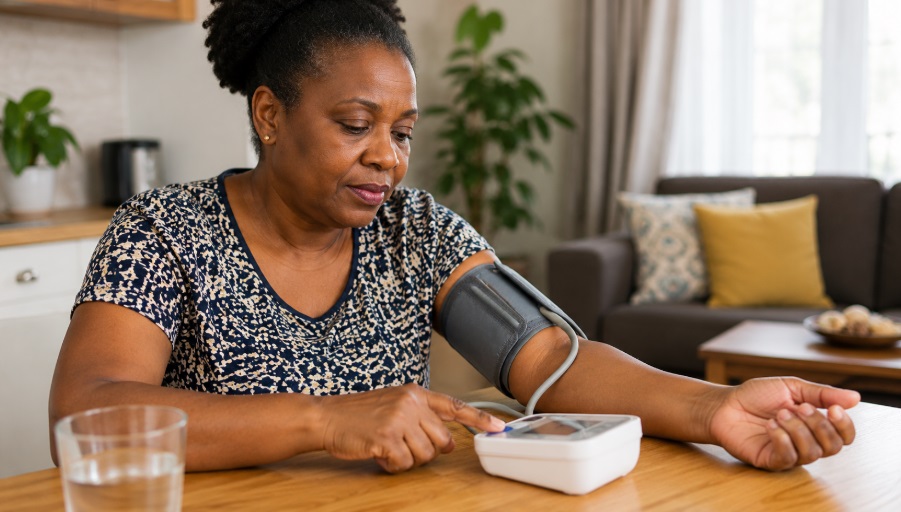
Photo showing an African woman checking her blood pressure at home with a digital blood pressure monitor. Image created from ChatGPT. Click on image to enlarge.
High blood pressure, also known as hypertension, is often called the “silent killer”. It does not usually cause obvious symptoms, yet it quietly damages the heart, brain, kidneys, and blood vessels over time. In many African communities, people only discover they have high blood pressure after a serious event like a stroke or heart attack.
But what if preventing these complications could start from something as small and simple as a device in your home? See figure1 below.
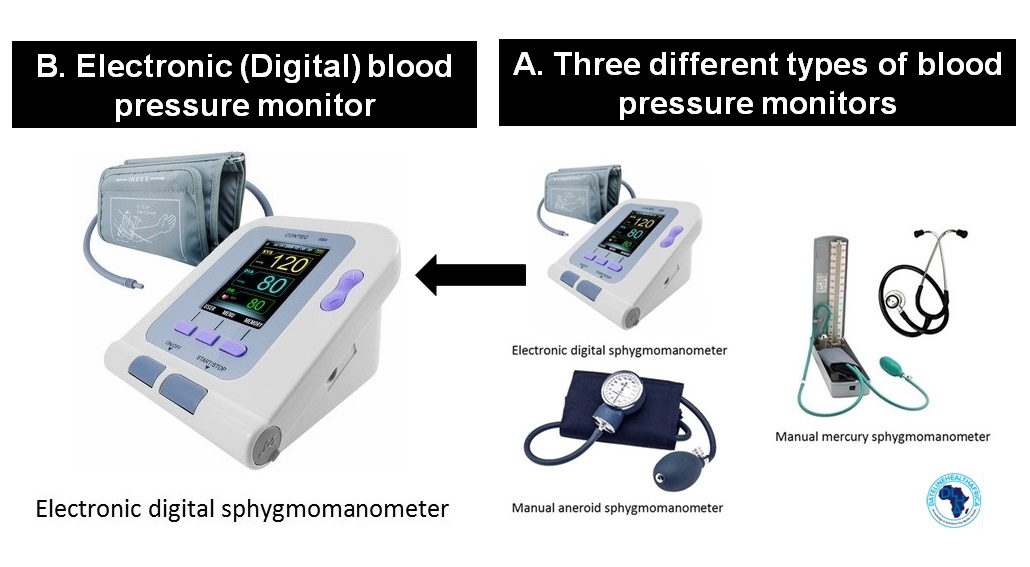
Figure 1: Different types of blood pressure (BP) monitors (sphygmomanometers) shown in (A), with the electronic or digital BP monitor shown at (B).
A new study has shown that using a home blood pressure monitor can significantly reduce the risk of life-threatening conditions. When used correctly and consistently, this small device becomes a powerful tool for early detection, better control, and long-term protection of your health.
This article breaks down the study, what it found, why it matters, and most importantly, what it means for you as an African living with or at risk of hypertension, and why you should consider owning a home blood pressure monitor.
The study was conducted by researchers from Edinburgh Napier University and the University of Edinburgh in the United Kingdom.
The research team analysed health records for approximately 450,000 patients in Scotland who had been diagnosed with high blood pressure and were receiving treatment between 2019 and 2022. This is one of the largest real-world studies ever conducted on home blood pressure monitoring, which is what makes its findings particularly powerful.
The study compared two groups of patients:
This type of system often referred to as “blood pressure telemonitoring,” works in a straightforward way. The patient uses a blood pressure monitor at home, and the readings are automatically or manually shared with their healthcare provider. Some systems also send reminders to patients when it is time to take a reading, helping them stay consistent.
The findings were both clear and encouraging.
Patients who regularly monitored their blood pressure at home and shared the data with their doctors:
Dr. Brian McKinstry, an Emeritus Professor of Primary Care eHealth at the University of Edinburgh and the study’s senior researcher, summed up the significance of the findings clearly:
“This study provides the strongest evidence to date that telemonitoring not only reduces blood pressure but strokes and heart attacks too.”
Jame Leiper, Director of Research at the British Heart Foundation, also weighed in on the importance of these findings. He noted that once people are diagnosed with high blood pressure, they must be monitored closely to ensure they are being effectively treated, and described empowering people to check their blood pressure regularly at home and share results with a doctor, with regular reminders to do so, as an efficient approach that could help improve people’s blood pressure control.
The message from the scientific community is consistent: home blood pressure monitoring is not just a convenience; it is life-saving.
You might wonder why it matters where the blood pressure is measured.
The answer lies in several important realities.
Most people with hypertension see a doctor only once every few months, or even less often in many African settings. A lot can happen to blood pressure levels between appointments. Home monitoring creates a continuous picture of what is happening with a patient’s heart health, not just a single snapshot.
Many people experience a temporary spike in blood pressure simply from being nervous at a doctor’s office (the “white coat syndrome”). This can lead to inaccurate readings and even unnecessary medication changes. Home readings tend to be more relaxed and accurate than doctor's office readings.
When a doctor can see home blood pressure readings regularly, they can adjust medication doses much faster if blood pressure is not responding well to treatment. This proactive approach is what prevents the condition from silently worsening.
There is a psychological benefit to self-monitoring. Seeing your own numbers encourages you to make lifestyle changes: eating less salt, exercising more, reducing stress, and taking medication consistently.
Research suggests that people with hypertension who regularly monitor their blood pressure at home and share readings with healthcare professionals experience better health outcomes.
While the study provides strong evidence, it is important to understand its limitations:
These limitations remind us that while home monitoring is powerful, it must be done correctly and combined with proper medical care.
This research is especially important for African populations, where hypertension is becoming increasingly common.
What makes this even more alarming is that a large proportion of people living with hypertension in Africa do not know they have it. Between 2003 and 2022, the overall number of hypertension cases in Africa nearly doubled from 241 million to 390 million, while treatment and control rates remained critically low. Among those who are diagnosed, far too few have their blood pressure adequately controlled.
There are real structural barriers that contribute to this:
Many Africans do not check their blood pressure regularly due to limited access to healthcare facilities. By the time symptoms appear, complications may already be severe.
A home monitor helps bridge this gap by bringing health monitoring directly into the household.
In some rural or underserved areas, visiting a clinic frequently may not be practical. Home monitoring reduces the need for constant hospital visits while still keeping track of your health.
In some communities, people may rely on herbal remedies or ignore symptoms until they worsen. Regular home monitoring provides objective evidence that encourages timely medical action.
While buying a monitor may seem like an expense, it is far cheaper than treating complications like stroke, kidney failure, or heart disease.
In African households, health decisions often involve the whole family. A single home blood pressure monitor can help multiple family members check their health, especially older adults.
For Africans managing hypertension while juggling busy daily lives, long commutes, physically demanding work, financial stress, and limited sick leave, the convenience of home monitoring is not a luxury. It is a practical, realistic solution.
It is also worth noting that Smartphone penetration across Africa continues to rise rapidly. Several affordable blood pressure monitors now connect via Bluetooth to a phone app, making it easier to record and share readings with a doctor, even via WhatsApp, which many African healthcare providers already use for patient communication.
If you have been diagnosed with hypertension, or if you have a family history of high blood pressure, stroke, or heart disease, here is what this evidence means for you in practical terms:
Basic, validated upper-arm monitors are available in pharmacies and online across many African cities. They are reusable, accurate, and a one-time investment that can protect your health for years (see figure 2).
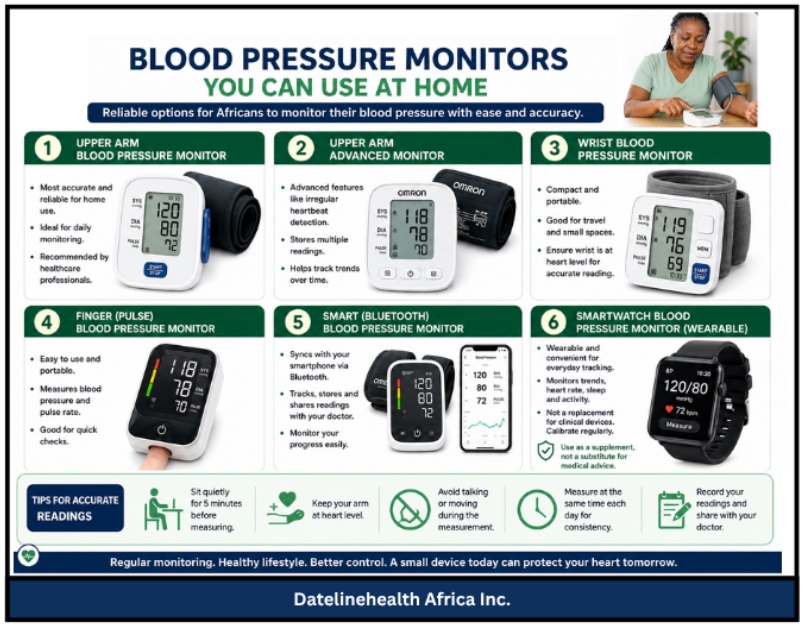
Figure 2: Showing different types of home blood pressure monitoring devices. Image credit: ChatGPT. Click on image to enlarge.
The way you take your blood pressure at home matters a great deal. Sitting position, arm placement, time of day, and whether you have just exercised or had a caffeine product can all affect your reading. Visit our detailed guide on The Correct Way to Take Your Blood Pressure At Home to get this right from the start.
Whether you write them in a notebook or use an app, track your readings over time. Look for patterns; is your pressure consistently high in the evenings? Does it spike on stressful days?
This is the step that makes all the difference. Regular readings shared with a healthcare provider allow for timely treatment adjustments that could prevent a crisis.
A good reading does not mean you are cured. Hypertension is a chronic condition. Always consult your doctor before making changes to your treatment plan.
High blood pressure does not announce itself loudly; it builds silently over time. But with a home blood pressure monitor, you can stay one step ahead. You can detect changes early, work closely with your healthcare provider, and make informed decisions about your health.
For Africans, this tool is more than a convenience; it is a necessity.
The message is clear: do not wait for symptoms. Do not wait for a crisis.
Invest in a digital home blood pressure monitor. Learn how to use it properly. Make it part of your daily or weekly routine.
Source: Hanley J, Paterson M, Parker R, Pearsons A, Pollock R, et al. Blood pressure telemonitoring and the incidence of cardiovascular events: a records based, matched patient analysis, European Heart Journal - Digital Health, 2026 June; 7 (5) ztag069. doi: 10.1093/ehjdh/ztag069. Available from here
Related:
The 2025 High Blood Pressure Guidelines: What Africans Need to Know
Blood Pressure Swings Can Harm Your Brain Health, Study Reveals
Hypertension in Nigerian Adults: Essential things to know
Published: July14, 2026
© 2026. Datelinehealth Africa Inc. All rights reserved.
Permission is given to copy, use, and share content freely for non-commercial purposes without alteration or modification and subject to source attribution.
DATELINEHEALTH AFRICA INC., is a digital publisher for informational and educational purposes and does not offer personal medical care and advice. If you have a medical problem needing routine or emergency attention, call your doctor or local emergency services immediately, or visit the nearest emergency room or the nearest hospital. You should consult your professional healthcare provider before starting any nutrition, diet, exercise, fitness, medical or wellness program mentioned or referenced in the DatelinehealthAfrica website. Click here for more disclaimer notice.