5 Common Foodborne Illnesses in Nigeria and How to Protect Your Family
By Helen Ohunene Otailku, B.Sc. Ed, Health Educator, Freelance Health Writer and DLHA Volunteer. Medically reviewed by: O. Olatunbosun, M.B.B.S., MSc. (Clinical Microbiology and Parasitology).
July 6, 2026.
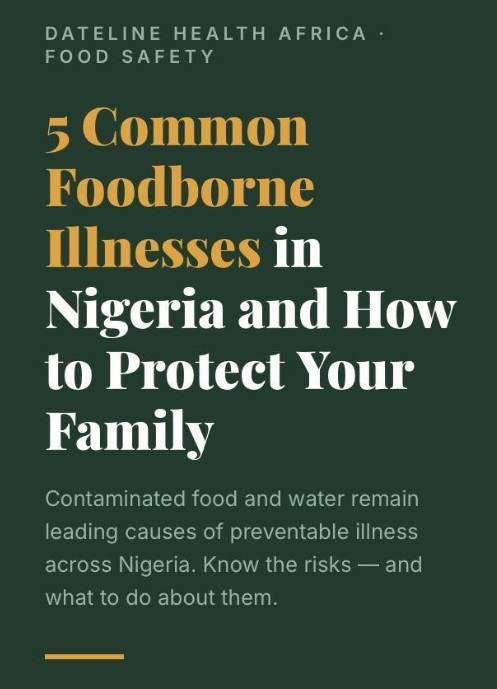
Infographics titled - 5 Common Foodborne Illnesses in Nigeria and How to Protect your Family. With the subtitle: Contaminated food and water remain the leading causes of preventable illnesses across Nigeria. Know the risks and what to do about them by Dateline Health Africa. Image Credit: Claude AI
Every day, millions of Nigerians sit down to a meal without knowing it could make them seriously ill. Contaminated food is responsible for nearly 50 million illnesses and more than 53,000 deaths in Nigeria every year (1). Yet most people cannot name the diseases behind these numbers. Foodborne illnesses cost families their health, their income, and in too many cases, their children. Children under five years old bear more than 80 percent of this burden in Nigeria (2, 3). Lost productivity, repeated hospital visits, and preventable deaths quietly drain households and communities.
This article explains the five most common foodborne illnesses in Nigeria and reveals how to protect yourself and your family.
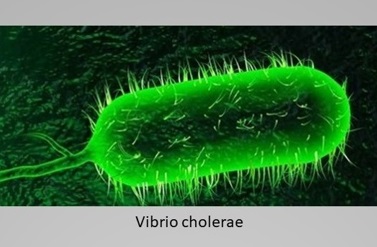
Microscopic illustration of Vibrio cholera. Click on image to enlarge.
Cholera is a serious bacterial infection of the gut caused by Vibrio cholerae. It spreads rapidly and can kill within hours if not treated. Nigeria continues to face persistent annual incidences of cholera, with seasonal peaks during periods of heavy rainfall and flooding (3).
Cholera spreads when an infected person defecates outside and contaminated faeces are washed into drinking water. It also spreads through food or drinks such as Zobo or tiger nut drinks prepared with contaminated water, as well as through indiscriminate dumping of refuse and irregular sewage disposal (4)
Symptoms include (4):
Dehydration can become life-threatening especially in children under age 5 years within hours due to the large volume of body fluid lost through associated stooling and vomiting.
People living in urban slums, overcrowded internally displaced people’s camps, and conflict-affected areas such as Borno and Adamawa are disproportionately affected, particularly due to poor sanitation infrastructure (4). Children under five are especially vulnerable.
Related: Cholera in the African setting
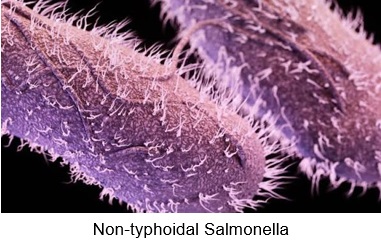
Microscopic illustration of non-typhoidal Salmonella.
Salmonellosis is a bacterial infection caused by non-typhoidal strains of Salmonella which is different from the strain that causes typhoid. It is one of the leading causes of diarrhoeal illness across Nigeria and Africa. Over 40 million diarrhoeal illnesses in Nigeria are linked to foodborne pathogens including Salmonella (5).
Transmission occurs through contaminated food and water sources, including incorrectly handled poultry, eggs, meat, and vegetables. Inadequate food safety standards, poor sanitation, and poor hygiene practices all contribute to the spread of the disease. In Nigeria, approximately 41.6% of poultry farms surveyed in North Central Nigeria had experienced non-typhoidal Salmonella in an 18-month period (5).
Typical symptoms develop 12 to 72 hours after infection and include (5):
In severe cases, the infection can enter the bloodstream and affect other organs.
Those at higher risk of severe illness include young children, older adults, and people with weakened immune systems (5). In Nigeria, people living with malaria, malnutrition, severe anaemia, or HIV are especially susceptible to invasive disease.
Related:
Diarrhoea in African Children: Causes and Symptoms
Diarrhoea in African Children: Types and who is at risk?
Diarrhoea in African Children: Diagnosis and Treatment
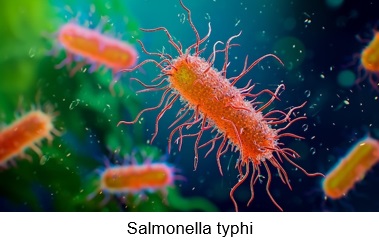
Microscopic appearance of Salmonella typhi. Image credit: Magnific.
Typhoid fever is a potentially life-threatening infection caused by Salmonella Typhi. Unlike ordinary Salmonellosis, this strain lives only in humans and spreads through the bloodstream, making it far more dangerous. Urbanisation and climate change have the potential to increase the global burden of typhoid, and increasing resistance to antibiotic treatment is making it easier for the disease to spread in communities that lack access to safe drinking water or adequate sanitation (6). Nigeria is a high-burden country.
Human infection with Salmonella Typhi is mainly through the oral route by ingesting food or water contaminated with faeces, or through unclean hands and house flies.7 Contaminated vegetables irrigated with unsafe water are also a significant local route.
Symptoms include:
Some patients may also develop a rash (6). Unlike a regular stomach upset, typhoid fever builds gradually and can last weeks without treatment.
School-age children and young adults are most affected in Nigeria. Previous reports in Africa have shown that children bear the highest burden of typhoid disease, and asymptomatic carriers who show no symptoms play a role in spreading the infection in endemic areas like Nigeria (6).
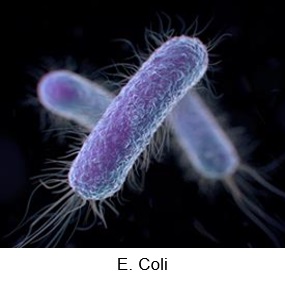
Microscopic appearance of pathogenic E. Coli.
Escherichia coli (E. coli) is a bacterium (germ) that normally lives harmlessly in the gut. However, certain pathogenic strains can cause serious illness and a few strains have been identified in Nigeria. They are responsible for causing acute watery or bloody diarrhoea, stomach cramps, and vomiting (7).
Humans can contract pathogenic E. coli by eating contaminated food such as raw or undercooked meat products and fresh produce sold in open markets as well as by coming into contact with contaminated wastewater, municipal water, soil, and faeces (7). In Nigeria, open gutters near markets and the use of untreated water for irrigation are common risk factors.
Symptoms usually begin 1–10 days after exposure depending on the strain and include:
In children, dangerous kidney complications can develop.
Children under five are at greatest risk of severe complications. People who buy fresh produce from informal open markets, eat undercooked meat, or rely on untreated water sources are also highly vulnerable.
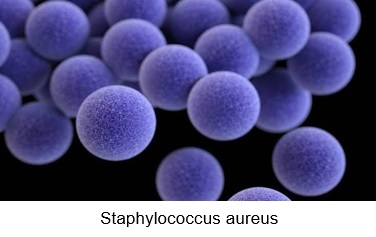
Microscopic appearance of Staphylococcus aureus. Image credit: CDC.
Staphylococcal food poisoning is caused not by the bacteria itself but by the toxins that Staphylococcus aureus produces in food before it is eaten. This makes it unique, even if contaminated food is thoroughly cooked, it may not destroy the toxins once they have formed. Studies across multiple Nigerian states have found Staphylococcus aureus contamination in street foods including roasted fish, meat, and plantain at levels that exceed acceptable safety limits (8).
S. aureus is commonly present on human skin and nostril. It enters food when food handlers do not wash their hands properly before touching food. If food is then left at room temperature, the bacteria multiply and produce toxins. Critically, food contaminated with Staph toxins may not smell bad or look spoiled. This is a serious risk in Nigeria’s street food and canteen culture, where food often sits out for long periods.
Symptoms begin abruptly typically within 30 minutes to 8 hours of eating contaminated food and include (8):
Most people recover within 24 hours, but young children, the elderly, and people with weakened immunity can become seriously ill.
Anyone who eats food that has been handled without proper hygiene or left at room temperature for too long. This is particularly relevant for Nigerian consumers of street food, canteen meals and party foods.
Your doctor is able to diagnose any of the five common foodborne illnesses described above and more after performing a detailed clinical assessment (history taking and physical examination). In addition, your doctor will ask for your blood and stool samples to be studied under the miscroscope and also cultured for identification of the specific pathogens (germs) causing the diarrhoea illness.
Even before laboratory result of cultures are available, doctors use specific groupings of symptoms to narrow down the diagnosis of diarrhoea illness and initiate prompt treatment.
The five diseases covered in this article share a common thread: they are largely preventable. According to the World Health Organization a practical framework every Nigerian household can follow include (9):
The most urgent concern with foodborne illness is not what might happen months later, it is what can happen within hours. Severe dehydration from relentless vomiting and diarrhoea, sepsis from bacteria entering the bloodstream, and sudden organ failure are immediate, life-threatening emergencies. Children can deteriorate frighteningly fast. These are crises that happen at home, often before a family realises how serious the situation has become. Prevention is not just good advice, it is the difference between life and death.
Cholera, Typhoid, Salmonella, and the other diseases featured here kill tens of thousands of Nigerians every year. Yet the majority of these deaths are preventable. Safe water, clean hands, proper cooking, and careful food storage are not luxuries; they are lifesaving habits within every family’s reach.
Start today and adopt these lifesaving habits to protect your health and those of your loved ones.
References
1. Bako A. FG says Nigeria is ahead of WHO food safety target. Federal Ministry of Health and Social Welfare; June 8, 2026. Available from here.
2. Lake R, Devleesschauwer B, Majowicz S et al. WHO estimates of the global, regional, and national burden of 42 foodborne infectious and chemical hazards, 2000–21: an updated data synthesis. The Lancet Global Health. 2026. Available from here.
3. World Health Organization. Unsafe food causes 866 million illnesses and 1.5 million deaths annually, young children at highest risk. WHO [Internet]. June 4, 2026. [Cited June 22, 2026]. Available from here.
4. Eneh S, Onukansi F, Anokwuru C, Ikhuoria O, Edeh G, Obiekwe S, Dauda Z, Praise-God A, Okpara C. Cholera outbreak trends in Nigeria: policy recommendations and innovative approaches to prevention and treatment. Frontiers in Public Health. 2024;12:1464361. doi:10.3389/fpubh.2024.1464361. Available from here.
5. World Health Organization. Salmonella (non-typhoidal). [Internet]. WHO Fact Sheet. [Cited June 22, 2026]. Available from here.
6. World Health Organization. Typhoid. WHO Fact Sheet. [Internet]. March 2023. {Cited June 22, 2026]. Available from here,
7. Anueyiagu KN, Agu CG, Umar U, Lopes BS. Antimicrobial resistance in diverse Escherichia coli pathotypes from Nigeria. Antibiotics (Basel). 2024;13(10):922. doi:10.3390/antibiotics13100922. Available from here.
8. Odetokun IA, Adetona MA, Ade-Yusuf RO et al. Staphylococcus aureus contamination of animal-derived foods in Nigeria: a systematic review, 2002–2022. Food Safety and Risk. 2023;10:6. doi:10.1186/s40550-023-00106-y. Available from here.
9. World Health Organization. Five keys to safer food poster. WHO Food Safety. [Internet, n.d.] Cited June 22, 2026. Available from here.
Published: June 6, 2026
© 2026. Datelinehealth Africa Inc. All rights reserved.
Permission is given to copy, use and share content for non-commercial purposes without alteration or modification and subject to source attribution.
DATELINEHEALTH AFRICA INC., is a digital publisher for informational and educational purposes and does not offer personal medical care and advice. If you have a medical problem needing routine or emergency attention, call your doctor or local emergency services immediately, or visit the nearest emergency room or the nearest hospital. You should consult your professional healthcare provider before starting any nutrition, diet, exercise, fitness, medical or wellness program mentioned or referenced in the DatelinehealthAfrica website. Click here for more disclaimer notice.