How Africans Can Nurture Healthy Relationships Year-Round
By: Foluke Akinwalere, Health & Medical Writer. Medical reviewed by editorial support from the DLHA Team.
April 21, 2026.
Image of a happy African couple in a garden, holding a pot of pink roses. Image created from ChatGPT. Click on image to enlarge.
In African societies, relationships are more than personal connections; they are the foundation of family life, community strength, cultural continuity, and emotional well-being. Whether in marriage, friendship, extended family systems, or community bonds, healthy relationships shape how we live, love, and grow.
Research shows that healthy relationships improve mental and physical health. They influence emotional balance, family harmony, and community strength. When relationships thrive, homes feel peaceful, children grow in secure environments, and adults feel supported through life’s challenges. On the other hand, when relationships struggle, stress, sadness, and misunderstandings can follow.
This guide provides simple, culturally sensitive, and practical tips to help couples in healthy relationships build stronger marriages, deeper emotional connections, and lasting family harmony.
A healthy relationship is one where both people feel:
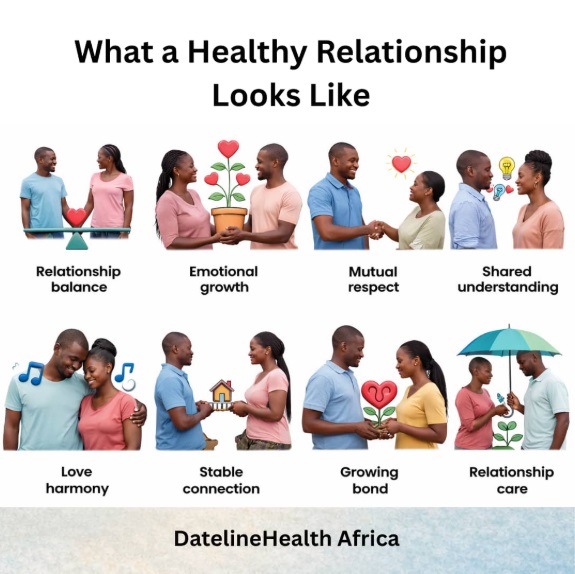
Infographics of what a healthy relationship looks like. Image created from ChatGPT. Click on image to enlarge.
Many people confuse simply “being together” with being emotionally connected [1]. However, true healthy love involves ongoing emotional presence, mutual respect, and shared growth. It is not about perfection; it’s about understanding each other’s feelings, values, needs, and investing in each other over time.
Importantly, a healthy relationship never includes physical violence, emotional manipulations, constant fear, or financial control. If a relationship feels unsafe, seeking help is a sign of strength, not weakness.
Strong communication is the foundation of every healthy relationship.
Sometimes people expect their loved one to “just know" how they feel. However, healthy relationships require clear and respectful expressions [1] . Effective communication is a skill.
You strengthen your relationships when you share:
Expecting your partner or family member to guess your thoughts and needs can lead to misunderstandings and resentment. Speaking openly builds trust and a deeper emotional bond [1].
Listening isn’t just silence; it’s active engagement:
Active listening helps you understand the intentions and emotions behind their words.[2] This will reduce conflict and build empathy.
People show and receive love in different ways. Dr. Gary Chapman’s concept of the Five Love Languages explains five common ways people feel loved:
When you understand how your partner or family member prefers to receive love, you can connect with them more deeply. This will make your relationship stronger, warmer, and more fulfilling.
In fast-paced African cities and rural communities alike, people juggle many responsibilities, work, school, family duties, church activities, market days, and time usually becomes scarce.
But carving out moments for meaningful connection matters.
Meaningful connection requires presence. That means:
Face-to-face interaction builds emotional closeness that texts or quick greetings can’t replicate.
Shared experiences create lasting memories and strengthen emotional bonds. You can:
Doing things together nurtures connection and creates positive memories.
In African cultures, physical affection is often expressed through hugs, holding hands, greetings, and respect for personal space. In romantic relationships, intimacy helps maintain connection and emotional security.[3]
Love is shown and felt through:
These actions release oxytocin, usually called the “love hormone,” which reduces stress and strengthens emotional safety in relationships.
Talking about physical intimacy, including sex, can be sensitive in some African cultures. However, respectful and open dialogue is important for a healthy marriage. When both partners share their feelings without judgment, the relationship becomes healthier and more trusting.
No two people agree on everything, and that’s okay; it’s part of being human. What matters is how you navigate disagreements.
Recognising what your partner truly values opens doors to meaningful compromise. It’s not about winning an argument, but about finding solutions that respect both partners.
Here are practical conflict-resolution tips:
Compromise is not losing; it’s choosing peace and progress together.
Boundaries are limits that protect your emotional space and dignity. Setting healthy boundaries shows self-respect and helps others know how to treat you.
Without clear boundaries:
Healthy boundaries allow you to love others while also respecting yourself and your individual needs.
Boundaries are not walls; they are bridges to healthy relationships.
Life brings challenges, health issues, financial stress, loss, work pressure, family responsibility, and cultural expectations. These stressors can strain even strong relationships.
Seeing problems as shared challenges rather than opponents’ faults, unites you as a team.
When life gets busy, take moments to recall what brought you together in the first place: your earliest memories of joy, laughter, and shared dreams. Finding ways to rekindle connection strengthens resilience and renews love.
Healthy relationships circle beyond romantic partnerships. Your bonds with:
Affect your emotional well-being and family harmony.
Respect for elders is deeply rooted in many African communities. But healthy relationships balance respect with open communication.
You can:
These ties ensure emotional support, cultural continuity, and a sense of belonging in the community.
Sometimes challenges can feel bigger than what two people can handle alone.
Consider seeking help if:
Support options may include:
Getting help together can rebuild connection and provide tools for resolving ongoing problems.
Here are simple daily habits Africans can practice for ongoing relationship health:
These habits may seem small, but over time, they strengthen bonds and build lasting emotional connections.
Strong relationships reduce anxiety, depression, and loneliness. They improve heart health, lower stress hormones, and boost overall well-being.
According to Dr. Sheehan D. Fisher, PhD, – a Northwestern Medicine Psychologist, when you invest in healthy marriages, friendships, and family bonds, you are also investing in your physical health and mental resilience [4].
Healthy relationships are not just emotional luxuries; they are essential for holistic health.
Healthy relationships don’t grow automatically. They are cultivated through communication, respect, compromise, emotional intimacy, boundaries, and shared effort.
Across African communities, where unity, respect, and mutual care are deeply valued, nurturing healthy relationships year-round strengthens families, protects mental health, and builds resilient societies.
Remember, a healthy relationship is not about perfection; it’s about ongoing effort, patience, understanding, and the courage to grow together.
1. HelpGuide. Healthy Relationship Tips. How To Make a Relationship Work. [Internet]. February 19, 2026. Cited February 20, 2026. Available from here.
2. Drugs.Com How to Nurture A Healthy Relationship 365 Days a Year. [Internet]. February 15, 2026. Accessed February 18, 2026. Available from here.
3. Oluwasola S. DatelineHealth Africa Inc. 9 Exciting Ways to Nurture Intimacy in a Marriage or Relationship. [Internet]. May 23, 2024. Accessed February 18, 2026. Available from here.
4. Northwestern Medicine. 5 Benefits of Healthy Relationships. [Internet]. September 2021. Accessed February 20, 2026. Available from here.
Related:
9 Exciting Ways to Nurture Intimacy in a Marriage or Relationship
10 Health Benefits of Sex in a Relationship or Marriage
Marriage is good for Men’s Health as They Age, Study Says
Published: April 21, 2026.
© 2026. Datelinehealth Africa Inc. All rights reserved.
Permission is given to copy, use, and share content freely for non-commercial purposes without alteration or modification and subject to source attribution.
DATELINEHEALTH AFRICA INC., is a digital publisher for informational and educational purposes and does not offer personal medical care and advice. If you have a medical problem needing routine or emergency attention, call your doctor or local emergency services immediately, or visit the nearest emergency room or the nearest hospital. You should consult your professional healthcare provider before starting any nutrition, diet, exercise, fitness, medical or wellness program mentioned or referenced in the DatelinehealthAfrica website. Click here for more disclaimer notice.