Workplace Mental Health: How African Employers Can Support Employees
By Foluke Akinwalere. Health & Medical Writer. Medically reviewed by the DLHA Editorial Team.
June 5. 2026

Image of an African employer having a supportive conversation with his employee in the office. Image from ChatGPT. Click on image to enlarge.
In Africa, work is closely tied to survival, dignity, and responsibility. Many workers rely on their jobs not only for career advancement but also to provide for their families, assist extended family members, cover school expenses, and manage increasing living expenses. Given these circumstances, workplace pressures can quickly become overwhelming.
Employee mental health in African workplaces is facing growing challenges. Factors such as long work hours, job insecurity, economic uncertainty, ineffective leadership, and limited access to mental health services are silently impacting workers in various industries. Despite these issues, mental health remains a neglected aspect of workplace wellness in Africa.
Previously, mental health was considered a personal matter that employees were expected to handle on their own. However, research now demonstrates that employers play a crucial role in promoting employee mental well-being. Supporting mental health is not only a moral responsibility but also a strategic necessity for businesses.
This article examines the role of employers in supporting employee mental health and well-being, explains how Human Resources (HR) can contribute to employees’ mental well-being, and outlines best practices in employee assistance programs and mental health policies in African workplaces.
Mental health refers to a person’s emotional, psychological, and social well-being. In the workplace, it plays a major role in how employees think, feel, behave, relate with colleagues, and perform their duties. Globally, mental health conditions are a leading cause of work absences, creating significant challenges for employees, employers, and the wider economy [1].
Employees across Africa face multiple stressors that affect their mental well-being, including:
Unlike physical illnesses, these conditions usually go unnoticed. Many employees continue working despite emotional distress, fearing stigma, job loss, or being perceived as weak.
In many African societies, mental health challenges are still misunderstood. Emotional distress may be attributed to spiritual weakness, lack of faith, or personal failure. Employees are often advised to “be strong”, “pray more”, or “stop worrying”, rather than encouraged to seek professional help.
This stigma makes it difficult for workers to speak openly about mental health concerns, allowing problems to grow until they affect productivity, relationships, or physical health.
Many African workplaces also operate within systems that limit access to care:
Understanding this context is essential for designing realistic, effective mental health strategies.
Related: Burnout in Nigeria's Workplaces: Risk Factors, Warning Signs and Solutions
Employers have a powerful influence on employee well-being because the work environment shapes daily experiences, stress levels, and access to support. This makes the workplace one of the most effective settings for early mental health intervention.
Employees spend a significant portion of their waking hours at work. Workplace culture, leadership style, workload, and job security all have a direct impact on mental well-being.
Because of this, the workplace is one of the most effective entry points for mental health support. Employers can reach large numbers of people, reduce stigma, and encourage early intervention before problems become severe.
HR and mental health initiatives are especially powerful because HR teams influence policies, leadership behaviour, and employee engagement systems.
Ignoring employee mental health in African workplaces comes at a high cost [2].
Organisations often experience:
In contrast, organisations that prioritise and invest in employees’ mental health experience higher engagement, stronger loyalty, greater innovation and competitiveness, and better overall performance, showing that supporting mental well-being is not a luxury, but a core business strategy.
Supporting employee mental health requires more than good intentions; it calls for deliberate actions that shape everyday work experiences. African employers can make a meaningful difference by implementing the following practices:
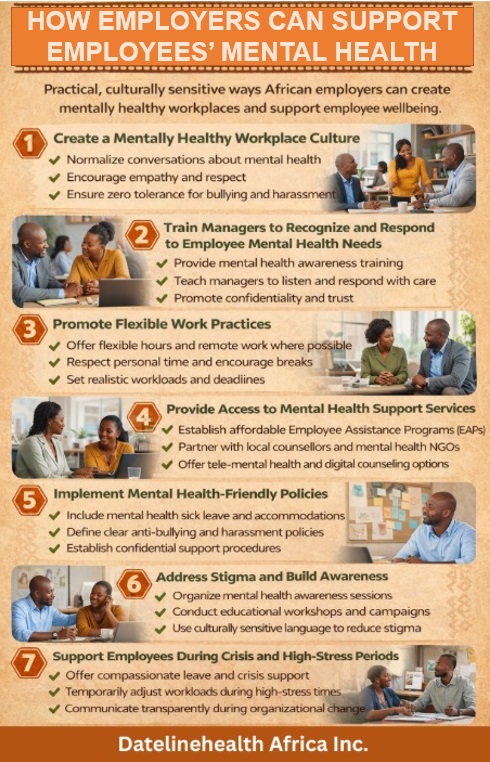
Infographics: How African Employers Can Support Employee Mental Health. Click on image to enlarge.
A mentally healthy workplace starts with culture—the shared values, attitudes, and behaviours that shape daily work life.
Employers can foster a supportive culture by:
When employees feel safe to speak without fear of punishment or ridicule, they are more likely to seek help early.
Leadership and supervisors play critical roles here. When they acknowledge stress, take breaks, and respect boundaries, employees feel permitted to do the same. Culture is shaped by what leaders tolerate, reward, and model.
Managers are often the first to notice changes in employee behaviour. However, many African managers lack training on mental health and may respond with criticism rather than care.
Training managers is one of the most effective ways to improve employee mental health.
Basic training should cover:
Managers do not need to be therapists. Their role is to listen, show concern, and connect employees to available support systems.
Related: How to Recognise the Signs of Burnout In Yourself or Others. A Guide for Africans
Rigid work structures often worsen stress and burnout. While not all jobs allow flexibility, many African employers can introduce practical adjustments that support mental well-being.
Flexible work practices may include:
Promoting flexibility helps employees manage family responsibilities, health needs, and personal challenges without constant anxiety.
Many employers believe mental health support is expensive [2]. However, best practice in employee assistance programs shows that even low-cost interventions can make a significant difference [3].
Options for African employers include:
Best practice in employee assistance programs emphasises confidentiality, accessibility, and cultural sensitivity. Employees must trust that seeking help will not affect their job security or career progression.
Policies provide structure and consistency in how mental health issues are handled. Best practice mental health policies in African workplaces should include:
HR plays a central role here. HR and mental health initiatives must align with organisational values and be communicated clearly to all staff.
Stigma remains one of the biggest barriers to mental health support in Africa [4]. Employers can actively reduce stigma through education and awareness.
Effective approaches include:
When employees see mental health discussed openly and respectfully, fear and misinformation gradually reduce.
African employees often face personal and collective crises, including bereavement, illness, financial hardship, community violence, and economic instability.
Employers can provide meaningful support by:
Support during difficult times builds trust and long-term loyalty.
Mental health initiatives should not be one-off activities. Sustaining impact requires monitoring and continuous improvement.
Employers can measure effectiveness by:
Sustainable mental health strategies require leadership commitment, adequate resources, and integration into overall Human Resources systems.
Employee mental health in African workplaces is no longer a side issue; it is central to organisational success and social development. Employers, HR professionals, and leaders have a powerful role to play in creating environments where employees feel supported, valued, and psychologically safe.
By investing in mental health, African employers strengthen productivity, reduce costs, and contribute to healthier families and communities. Progress does not require perfection. It requires intentional action, empathy, and consistency.
The future of work in Africa depends on mentally healthy workplaces.
References:
1. Hoosain M, Mayet-Hoosain N, Plastow NA. Workplace-Based Interventions for Mental Health in Africa: A Scoping Review. Int J Environ Res Public Health. 2023 May 18;20(10):5863. doi: 10.3390/ijerph20105863. Available from here.
2. Ramesh, Dr. The Cost of Ignoring Mental Health: Impacts on Employee Performance and Organizational Success. Journal of Mental Health Issues and Behavior. 2023;3.12-18. doi: 10.55529/jmhib.33.12.18. Available from here.
3. Matlhape, M. Strategic positioning of EAP in South African workplaces. Acta Commercii. 2003;3. 29-38. doi: 10.4102/ac.v3i1.40. Available from here.
4. World Health Organisation. Addressing the complex hurdles to optimal mental health in Africa’s workplaces.[Internet]. 10 October 2024. [Accessed, January 6, 2026] Available from here.
Related
Mental Health Crisis in Nigeria - A Call For Urgent Action
Signs You Are Stressed Out At Work
How to Recognise Burnout in Yourself or Others - A Guide for Africans
Published: June 5, 2026
© 2026. Datelinehealth Africa Inc. All rights reserved.
Permission is given to copy, use, and share content freely for non-commercial purposes without alteration or modification, and subject to source attribution.
DATELINEHEALTH AFRICA INC., is a digital publisher for informational and educational purposes and does not offer personal medical care and advice. If you have a medical problem needing routine or emergency attention, call your doctor or local emergency services immediately, or visit the nearest emergency room or the nearest hospital. You should consult your professional healthcare provider before starting any nutrition, diet, exercise, fitness, medical or wellness program mentioned or referenced in the DatelinehealthAfrica website. Click here for more disclaimer notice.