Brain Tumours Explained for Africans
By Oluwasola Samuel, Freelance Health Writer. Medically reviewed by A. Odutola. MB BS, PhD, FRCSEd.
March 27, 2026
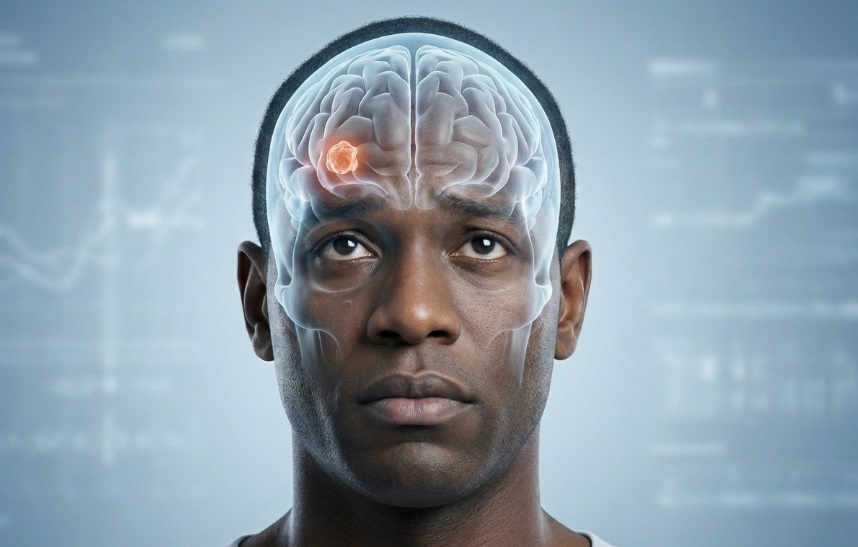
An AI-generated image depicting a man with a transparent view of the brain, highlighting a glowing orange mass, which represents a brain tumour. Click on the image to enlarge.
Brain tumours can be frightening, especially when the information available online is a bit complex or difficult to understand. When many Africans hear the term “brain tumour”, they immediately think of the worst. Some may even ignore early symptoms because they assume it is stress, malaria, or part of getting older.
In Africa, access to health information and specialised care can vary widely. This makes it even more crucial to understand what brain tumours are, how they impact the body, and why early detection is important.
This article is written to explain brain tumours clearly and simply for Africans. It will look at brain tumours from the following viewpoints:
A brain tumour is the growth of abnormal cells that should not be there. These abnormal cells grow uncontrollably in the brain, affecting how your body and mind work. Not all brain tumours are cancerous [1]. Some grow slowly and may cause mild problems, while others grow quickly and can be more serious.
Brain tumours can start in the brain itself or metastasise (i.e. lodge in the brain) from elsewhere in the body. Tumours that start in the brain are called “primary tumours”. Those that spread from elsewhere are called “secondary” or “metastatic tumours”. Both types can cause problems because the brain has limited space, and any extra growth can press on the affected part of the brain.
Brain tumours can be either benign or malignant [2]. Benign tumours usually grow slowly and are less likely to spread, but they can still cause serious problems if they press on important parts of the brain. Malignant tumours are cancerous; they can grow quickly, and they spread fast to other parts of the brain.
The burden of brain tumours in sub-Saharan Africa is reportedly rising, but presently, the occurrence rate is stated to be less than 2 per 100,000 population. This rate is low when compared to rates from high income countries (6 to 8 per 100,000 pop.) and may be due to many factors including underreporting because of challenges in national and regional data collection and management, late presentation and diagnosis, high death rate, limited specialised care resources and infrastructure, etc. [3]
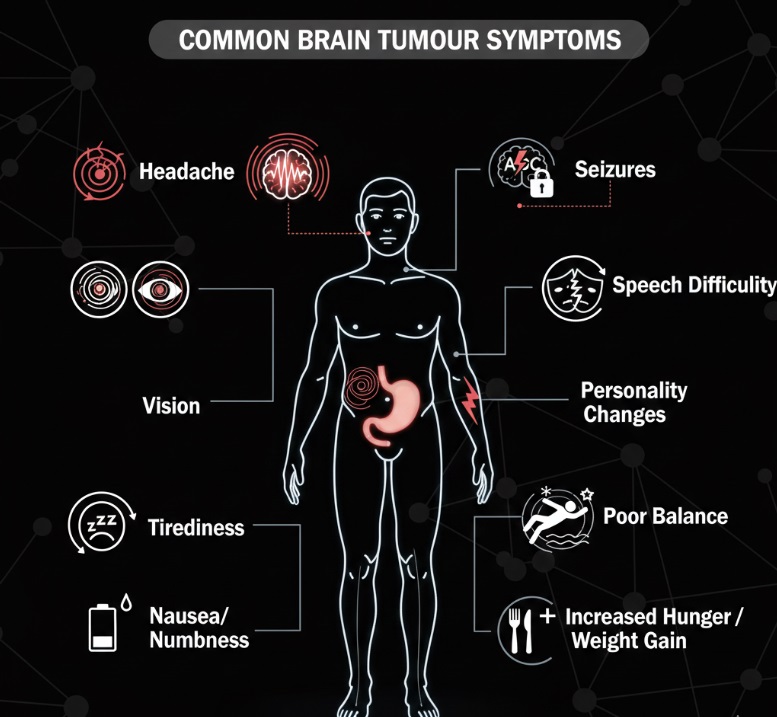
An Ai generated info poster illustrating some of the common symptoms of a brain tumour. Click on the image to enlarge.
Knowing if you or someone you know has a brain tumour may not be easy as the complaints (symptoms) may depend on where the tumour is located and how fast it is growing.
Here are some complaints or observations that may indicate someone has a brain tumour:
There are over 100 types of brain tumours [4]. They can be classified in two ways. One is by “how they behave”, and the other is by “where they start”. Understanding these classifications helps you know what to expect and why treatment may differ.
Brain tumours can be classified as follows:
Benign tumours grow slowly and do not spread to other parts of the body. They are not cancerous, but because the brain is in a fixed space, even a slow-growing tumour can press on important parts of the brain and cause problems.
Examples of benign tumours are:
Meningioma is a type of brain tumour that starts from the meninges, the protective layers that cover the brain and spinal cord. It does not grow from the brain itself but presses on the brain as it gets bigger. Most meningiomas are benign, meaning they are not cancerous. They often grow slowly, sometimes over many years, and some people may not notice symptoms at first. However, as the tumour grows, it can cause problems because of pressure on nearby brain tissue.
Pituitary adenoma is a non-cancerous tumour that grows in the pituitary gland, a small gland located at the base of the brain. The pituitary gland is often called the master gland because it controls many hormones in the body. These tumours usually grow slowly and are often benign, but they can still cause serious problems like weakness, weight issues, or blurred vision.
Malignant brain tumours are cancerous. They grow faster and can invade nearby brain tissue. These tumours usually cause symptoms earlier and require urgent treatment.
Examples of malignant tumours include:
A. Primary brain tumours
Primary brain tumours start in the brain. They can be either benign or malignant. Most of the tumours described above, like meningiomas, gliomas, and pituitary adenoma are primary.
Secondary brain tumours, also called metastatic tumours, start in another part of the body and spread to the brain. They are always malignant (cancerous). Common cancers that can spread to the brain include breast, lung, and kidney cancers.
The brain consists of different types of cells that include nerve cells, different types of non-nerve cells that are called glia cells, cells associated with blood vessels, etc. Any of these cells may develop abnormal growth patterns to form brain tumors that can be classified or categorised. Details of brain tumor classification by cellular types are beyond the scope of this basic article.
.jpg)
An illustrative image showing a transparent view of a human head. The brain is visible and features a highlighted orange tumour in the left lower region, alongside text listing the causes of brain tumours.
In many cases, doctors do not know the exact cause of brain tumours. Yes, this can be frustrating, but it is important to understand that having a brain tumour is not caused by something a person did or did not do.
Research has shown that brain tumours often develop due to changes in brain cells that cannot always be traced to a single reason.
Brain tumours develop when the DNA inside brain cells gets damaged and stops working normally [5].
The DNA is like an instruction manual that tells cells when to grow, divide, and die. When the DNA gets damaged, the cells don't follow the normal rules anymore. Instead of growing at a healthy pace and dying when they are supposed to, they keep multiplying out of control. This creates a mass of abnormal cells that forms a tumour, which can grow large enough to damage healthy brain tissue around it.
Doctors don't fully understand why DNA in brain cells changes or gets damaged in the first place. In many cases, brain tumours appear without a clear cause. However, research has identified certain risk factors that increase your chance of developing one.
The odds of developing brain tumours of brain tumour (i.e. risk factors) increases with the following:
High levels of radiation can damage the DNA in brain cells, causing them to grow abnormally and form a tumour over time. The risk is higher when radiation affects the head, especially in children, because their brains are still developing. The effects of radiation may take years to appear, sometimes resulting in a brain tumour long after exposure. This risk mainly comes from strong medical radiation, such as cancer treatment, and not from everyday sources like mobile phones or household electronics.
Genetic changes in brain cells occur when the instructions that control cell growth are altered. These changes can make brain cells grow uncontrollably or prevent them from dying when they should, which can lead to a tumour. While most of these changes happen by chance, they increase the risk of developing a brain tumour over time.
Inherited genetic conditions can increase the risk of brain tumours because they affect genes that normally control how cells grow and divide. Only a small percentage of brain tumours are linked to inherited genetic conditions that run in families [6]. Most studies estimate that about 5% - 10% of all brain tumours occur in people who have inherited genetic syndromes or a family history that increases their risk [7].
4. Advanced age
Age is a risk factor for brain tumours because certain types are more common at specific stages of life. In children, rapidly growing brain cells can be more vulnerable to abnormal growth, leading to tumours. In adults, natural ageing increases the chance of errors in cell division, which can allow tumours to develop over time.
Previous cancer in another part of the body can increase the risk of a brain tumour because cancer cells can travel through the blood or lymph system to reach the brain. When these cancerous cells settle in the brain, they can grow and form a secondary, or metastatic, brain tumour. This type of tumour is always malignant and reflects the spread of the original cancer rather than a new brain disease.
Some races are at higher risk of certain types of brain tumour. For example, Africans or people of black descent are at higher risk of meningiomas, a type of brain tumour.
The diagnosis of a brain tumour is a step-by-step process that involves a good understanding of symptoms, examining the brain’s functions, and using tests that allow doctors to see and study the brain in detail. Each step adds important information that helps doctors make accurate decisions.
Brain tumour diagnosis follows the following clinical processes:
The first step in diagnosing brain tumours is listening to the patient’s complaints and asking further probing questions. Your healthcare professional will ask you more details about your symptoms such as headaches, seizures, vision problems, weakness, or changes in behaviour. This is to know when the symptoms started, how often they occur, whether they are getting worse, and to know the part of your brain affected.
After reviewing symptoms, your healthcare professional will carry out a neurological examination. This is a detailed check of how your brain and nervous system are working.
Your healthcare professional will check your:
This examination helps your healthcare professional identify signs of pressure or damage in specific areas of your brain. It also helps rule out other conditions that can cause similar symptoms.
3. Imaging (CT scan and MRI)
A CT (Computerised Tomographic) scan uses X-rays to produce images of the brain. It is often used first to image the brain in tumour patients, especially in emergencies or where an MRI is not readily available or not advised. It can show large tumours, swellings, bleeding, or fluid buildup in the brain.
An MRI scan does not use ionising radiation like CT scans. It uses high frequency radio waves in a magnetic field with computer analysis of the cellular signals produced, to create clearer and detailed images of the brain than from a CT scan. It helps healthcare professionals see the size, shape, and exact location of a brain tumour. MRI scans are especially useful for planning surgery or further tests.
4. Biopsy
A biopsy involves taking a small sample of the abnormal tissue so it can be examined under a microscope.
A biopsy can be done in two ways:
After collecting the tissue sample, it is then analysed in a laboratory to determine the tumour type and whether it is benign or malignant.
Although a brain biopsy is not specifically needed to make a diagnosis in brain tumor cases, it provides the most definitive diagnosis of the nature of a tumour (cancerous or non-cancerous), the type of cells involved, and to guide treatment, especially when other methods are inconclusive.
A lumbar tap is also known as a lumbar puncture or spinal tap. It involves the insertion of a sterile needle between the bones of the lower back into a fluid containing space surrounding the spinal cord. The needle is used to collect a small amount of the fluid for testing. This test can help detect cancer cells or other abnormalities in the fluid that surrounds of the brain and spinal cord.
In addition to the tests above, you may need to do other tests like blood tests to assess your general health and prepare for treatment.
If a secondary brain tumour is suspected, tests may be done to find the site of the original cancer elsewhere in your body.
Treatment options for brain tumours depends on many factors, like the type of tumour, its size, where it is located in your brain, how fast it is growing, and your overall health.
Healthcare professionals often combine more than one treatment option to get the best result. The main goal of brain tumour treatment is to remove or control the tumour, relieve symptoms, and protect brain function.
The different treatment options for brain tumours include:
Surgery is often the first treatment for brain tumours when it is safe to do so. The surgeon opens your skull and removes as much of the tumour as possible. In some cases, the entire tumour is removed. In other cases, only part of it is removed to reduce pressure in the brain. Surgery helps relieve symptoms like headaches and seizures and also provides tissue for diagnosis. Not all brain tumours can be removed by surgery, especially if they are deep in the brain or close to vital areas.
Chemotherapy uses medications to kill cancer cells or slow their growth. These drugs may be taken by mouth or given through a vein. Chemotherapy is often used for malignant brain tumours and may be combined with surgery and radiotherapy. Some chemotherapy drugs can cross the blood-brain barrier and reach the tumour, while others may be less effective.
Radiotherapy uses high-energy rays to destroy tumour cells or stop them from growing. It is commonly used after surgery to kill remaining tumour cells. Radiotherapy may also be used when surgery is not possible. Treatment is usually given over several sessions. Radiotherapy helps control tumour growth but can also affect blood-brain tissue, so it is carefully planned.
Targeted therapy uses drugs that focus on specific changes in tumour cells. These medicines attack cancer cells that have specific molecular, genetic or protein markers that allow cancer to grow, divide, and survive, while causing less damage to healthy tissues.
Steroids are used to reduce swelling in the brain caused by the tumour or treatment. This helps relieve symptoms such as headaches and weakness. Anti-seizure medicines may be prescribed to control seizures. Pain relief, physiotherapy, speech therapy and psychotherapy may also be part of treatment to improve quality of life.
For some slow-growing and non-aggressive brain tumours, your healthcare professional may recommend close monitoring instead of immediate treatment. This approach involves you having regular scans to watch for changes. Treatment begins if the tumour starts to grow or causes symptoms.
Palliative care focuses on comfort and symptom control rather than curing the disease. It may be used alongside other treatments or when treatment is no longer effective. The goal is to improve quality of life and support you and your family.
In many African countries, access to specialised care, radiotherapy, and advanced medicines may be limited. Early diagnosis, referral to specialist centres, and supportive care can still make a big difference in outcomes.
Brain tumour treatment works best when it is tailored to the individual and several local and structural factors may work against this individualized care that is most essential for the best treatment outcome.
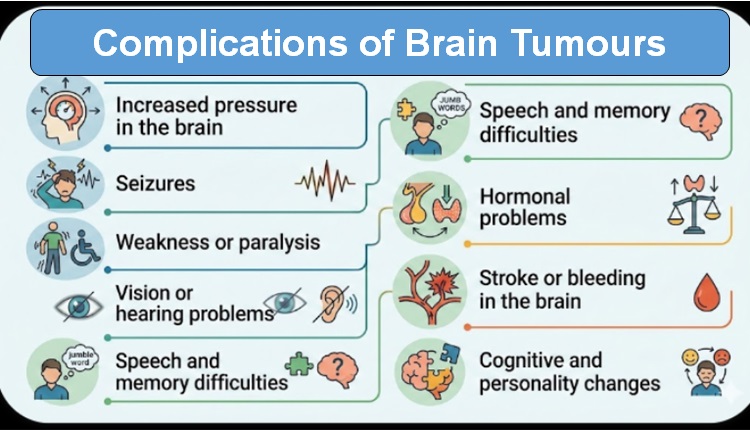
Info poster showing common complications of brain tumours. Click on image to enlarge.
Brain tumours can cause several complications depending on their size, location, and how fast they grow. These complications can affect daily life and overall health if the tumour is not treated promptly.
Some of the complications are:
These complications highlight the importance of early detection and timely treatment. Even benign tumours can cause serious problems if they press on critical areas of your brain.
You should see a doctor immediately if you or someone you know has persistent or worsening symptoms that may suggest a brain tumour.
These include:
Brain tumours can affect anyone and often present with symptoms that are easy to overlook at first. Understanding the signs, causes, diagnosis, complications, and treatment options helps people make informed decisions about their health.
Early recognition of symptoms and prompt medical care can improve outcomes and quality of life. For Africans and caregivers, seeking medical help early and following through with recommended tests and treatment can make a meaningful difference.
There is no guaranteed way to prevent a brain tumour because the exact cause of most brain tumours is not yet known. However, if you reduce your exposure to high dose radiation and manage inherited genetic conditions with proper medical care, you may lower your risk. In general, living a healthy lifestyle supports overall brain health, but it does not fully prevent brain cancer or other types of brain tumours.
Yes, some people can live a fairly normal life with a brain tumour, especially if it is benign, grows slowly, or is treated early. Treatment such as surgery, radiotherapy, or chemotherapy can help control the tumour and reduce symptoms, which will improve your quality of life.
Brain tumours can develop in different parts of your brain. They may form in the cerebrum, the part of the brain that controls thinking, memory, and movement, or in the cerebellum, which controls balance and coordination. Some brain tumours develop in the brainstem, which controls breathing and other vital functions, while others may form in the lining around the brain or in the pituitary gland.
4. What makes brain tumours of concern?
Brain tumours are a concern because the skull has limited space. As the tumour grows, it can increase pressure inside the brain and affect important functions such as speech, movement, vision, and memory. Even a benign brain tumour can cause serious problems if it presses on critical areas of your brain.
5. What is a silent tumour?
A silent tumour is a brain tumour that is asymptomatic (i.e., does not produce noticeable symptoms in its early stages). It may grow slowly and remain undetected until it becomes large enough to press on surrounding brain tissue. Because early brain tumour symptoms can be mild or absent, regular medical checkups and early evaluation of unusual symptoms are important for timely diagnosis.
References:
1. NIH National Cancer Institute. What Is Cancer? [Internet]. Updated October. 11 2021. [Cited 2026 Feb 17]. Available from here.
2. NIH MedlinePlus. Benign Tumors. [Internet]. Last updated: June 29, 2025. [Cited 2026 Feb 17]. Available from here.
3. Kanmounye US, Karekezi C, Nyalundja AD, Awad AK, Laeke T, Balogun JA. Adult brain tumors in Sub-Saharan Africa: A scoping review. Neuro Oncol. 2022 Oct 3;24(10):1799-1806. doi: 10.1093/neuonc/noac098. Available from here.
4. American Bain Tumor Association. Primary Brain Tumors. [Internet, n.d.]. [Cited 2026 Feb 17]. Available from here.
5. NIH National Human Genome Research Institute. Deoxyribonucleic Acid (DNA). [Internet]. Updated March 25, 2026. [Cited 2026 March 25]. Available from here.
6. Cancer Research Institute UK. Risks and causes of brain tumours [Internet]. Last updated 19 Jan. 2023. [Cited 2026 Feb 17]. Available from here.
7. Ostrom QT, Francis SS, Barnholtz-Sloan JS. Epidemiology of Brain and Other CNS Tumors. Curr Neurol Neurosci Rep 2021;21(12):68. doi: 10.1007/s11910-021-01152-9. Available from here.
Other Africa related cancer resources:
Published: March 27, 2026
© 2026. Datelinehealth Africa Inc. All rights reserved.
Permission is given to copy, use, and share content freely for non-commercial purposes without alteration or modification and subject to source attribution.
DATELINEHEALTH AFRICA INC., is a digital publisher for informational and educational purposes and does not offer personal medical care and advice. If you have a medical problem needing routine or emergency attention, call your doctor or local emergency services immediately, or visit the nearest emergency room or the nearest hospital. You should consult your professional healthcare provider before starting any nutrition, diet, exercise, fitness, medical or wellness program mentioned or referenced in the DatelinehealthAfrica website. Click here for more disclaimer notice.