Hiding in Plain Sight: The Toxic Truth About Where We Live
By: Chinenye Abel, B.Tech, Information Systems. Freelance writer and Datelinehealth Africa volunteer. Medically reviewed by the DLHA Editorial Team
October 12, 2026
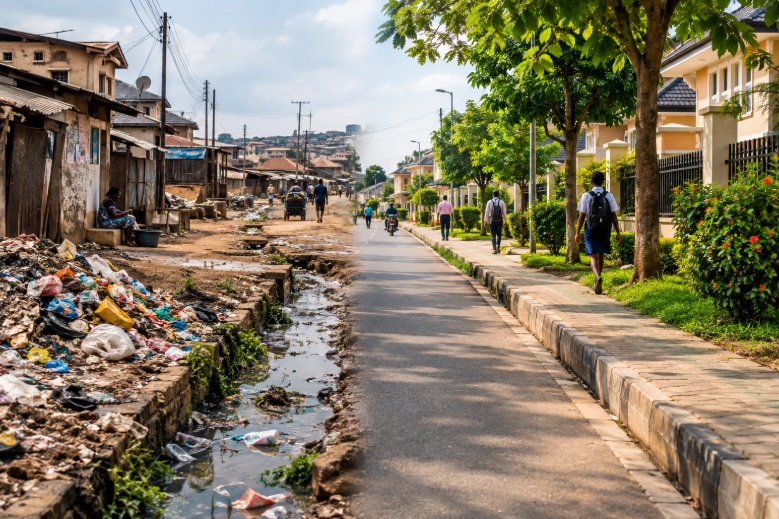
A realistic but fictitious collage of an urban African neighbourhood showing both poorly maintained and unhealthy surroundings, with blocked drainage, stagnant water and waste contrasted against clean streets, clear drainage, greenery and well-maintained homes. Image Credit: ChatGPT. Click image to enlarge.
The environment of the place we call home can influence much more than our daily routines. From the quality of the air we breathe and the water we use to the condition of our roads and public spaces, our surroundings can shape the health risks we face and our overall well-being. This article explores what unhealthy and healthier neighbourhoods look like, who may be most vulnerable, and why creating healthier communities is a shared responsibility.
It is just after 6 a.m. in a busy and typical sub-Saharan African city. The first sounds of the day are already filling the streets: a distant call to prayer, buses and motorcycles starting their routes, shop owners lifting their shutters, and generators humming outside homes and businesses.
In one neighbourhood, last night's rain has left the street muddy and uneven. A blocked gutter is holding dirty water beside a heap of rubbish that has not been collected. School children pick their way around the puddles as they make their way along the roadside to catch a bus. A food seller is setting up nearby, while vehicle fumes mix with dust in the air. For the residents, none of this is unusual. It is simply another morning.
Across town, another neighbourhood is beginning its day. The gutters are clear, waste has been collected, and the road is easier to walk along. Trees provide shade, houses have well-manicured lawns, and children have a safer space to move and play. Shops are opening, commuters are heading to work, and the same city is coming alive—but the surroundings create a very different experience.
The contrast may seem like a matter of cleanliness or appearance. It is more than that.
The environment people wake up to, walk through and return to every day can influence their health. The water available to them, the air they breathe, the condition of their homes, the noise around them, the way waste is managed and even whether they have safe spaces to move about can all shape everyday well-being.
We often think about health in terms of personal choices: what we eat, how much we exercise, or when we visit a doctor. But people do not make those choices in isolation. The neighbourhood around them can make healthy living easier—or considerably harder.
Across many sub-Saharan Africa countries, where communities are growing rapidly and cities continue to change, the question is not only how people can protect their health, but also whether the places they call home are helping them do so.
This article examines how the environmental conditions in neighbourhoods affect health, highlights the risks associated with unhealthy environments, and explains what individuals, communities and authorities can do to create healthier places to live.
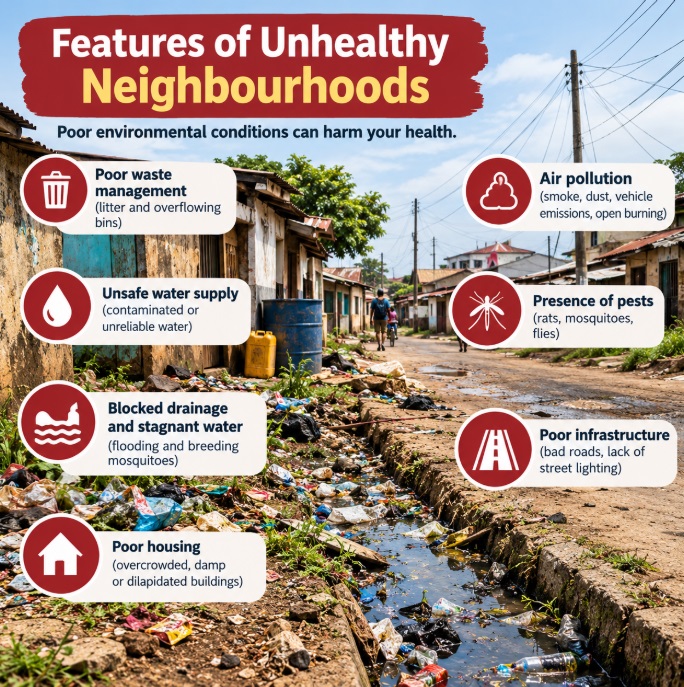
Infographic showing how poor waste management, polluted air, contaminated water, blocked drainage, pests, and unsafe housing create health risks for residents. Image credit: ChatGPT. Click to enlarge.
An unhealthy neighbourhood does not always look like a disaster zone. Sometimes, it is an ordinary community where residents have gradually become accustomed to conditions that should not be normal. Some of the most common signs include:
Rubbish may accumulate along roadsides when waste collection is irregular. Plastic bags, food waste and other refuse can end up in open spaces and gutters, making the surroundings unpleasant and attracting pests.
When gutters are filled with waste, rainwater has nowhere to go. During heavy rainfall, roads and compounds may flood, while pools of stagnant water can remain afterwards. For residents, this can mean difficult journeys and greater exposure to mosquitoes.
Water and sanitation can present another challenge. Poorly maintained toilets, leaking sewage systems and open drains may contaminate the surrounding environment. Where safe water is unreliable, maintaining hygiene can become more difficult. The World Health Organization links unsafe water and inadequate sanitation with diseases including diarrhoea, cholera, dysentery and typhoid.
Above ground, the air may carry its own risks. Traffic fumes, dust from unpaved roads, smoke from burning waste and generator emissions can become familiar parts of the neighbourhood. Air pollution is associated with a range of health problems, including respiratory and cardiovascular diseases.
The soundscape can be just as difficult. Generators, traffic, loud music, markets and construction may continue throughout the day, leaving residents with little opportunity for quiet and rest. WHO identifies environmental noise as a health risk and notes associations with sleep disturbance, stress and other health effects.
Getting around may also be a daily challenge. Damaged roads, flooded streets and inadequate walkways can make it harder for children to reach school, workers to get to work and older adults to access healthcare. The design and condition of neighbourhoods can influence access to transport, services, physical activity and safety.
Inside the home, conditions may offer little relief. Overcrowding, poor ventilation, damp walls, leaking roofs and inadequate sanitation can affect the comfort and safety of residents. The World Health Organization (WHO) identifies crowding, dampness, poor ventilation, unsafe sanitation and other housing conditions as important environmental health risks.
None of these conditions exists in isolation. Together, they can turn an ordinary neighbourhood into an environment where people face repeated health and safety risks as part of everyday life.
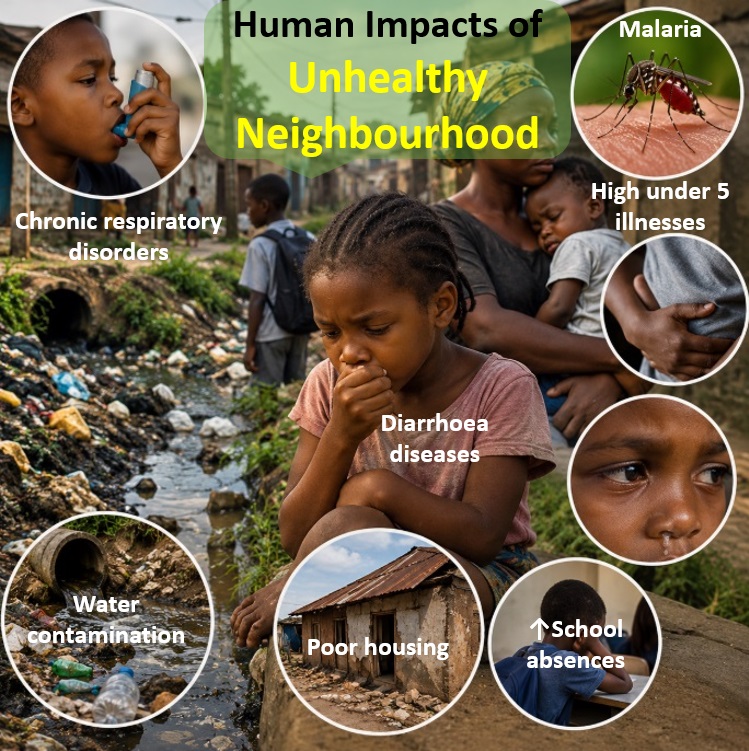
Infographic showing how unhealthy neighbourhoods expose residents to air and water pollution, infectious diseases, unsafe housing, emotional distress, and a reduced quality of life. Image credit: ChatGPT. Click image to enlarge.
Unsafe water, poor sanitation and flooding can increase exposure to contaminated water and contribute to diseases such as diarrhoea, cholera, dysentery and typhoid.
Stagnant water around homes and streets can provide breeding sites for mosquitoes. Poor drainage and inadequate water infrastructure can therefore contribute to conditions that increase the risk of diseases such as malaria and dengue.
People living around traffic fumes, smoke from burning waste, dust or generator emissions may regularly breathe polluted air. Repeated exposure to air pollution can irritate the respiratory system and increase the risk of respiratory and cardiovascular diseases.
The condition of the neighbourhood can also affect physical safety. Flooded or damaged roads, unsafe walkways and poorly maintained homes can create opportunities for falls, traffic injuries and other accidents.
Constant noise from traffic, generators, construction or loud music can interfere with sleep and make it difficult to concentrate. Poor sleep can affect how people function during the day and their overall well-being.
The effects are not only physical. Constant noise, overcrowding, pollution, flooding and poorly maintained surroundings can contribute to stress, frustration and poor sleep. In contrast, clean, safe and green spaces can provide a more comfortable environment for relaxation and social interaction.
These effects show why environmental health cannot be separated from everyday life. The quality of the surroundings people live in can influence both the risks they face and the opportunities they have to live healthy, comfortable lives.
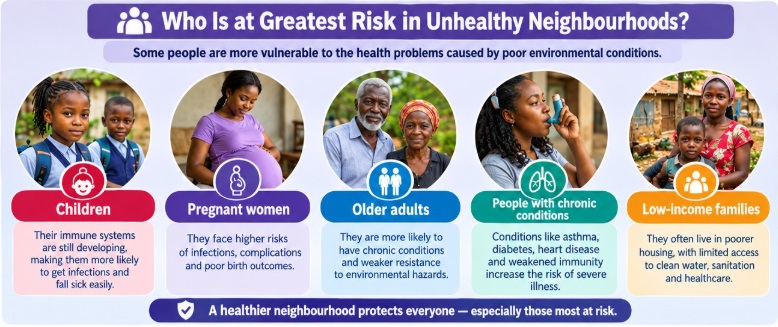
Infographic. Children, pregnant women, older adults, people with chronic conditions, and low-income families are more vulnerable to the health effects of unhealthy neighbourhoods. Image credit: ChatGPT. Click image to enlarge.
Environmental health risks do not affect everyone in exactly the same way. Some people are more vulnerable because of their age, health status, living conditions or circumstances.
Children are still developing and may be more vulnerable to polluted air, unsafe water, poor sanitation and other environmental hazards. Their daily activities also mean they may spend considerable time outdoors or in shared spaces.
Older people may be more affected by extreme heat, air pollution, unsafe roads and other environmental risks, particularly when they have existing health conditions or difficulty moving around.
During pregnancy, exposure to certain environmental hazards can have implications for both the mother and developing baby. Safe water, clean air, adequate housing and a healthy living environment are therefore particularly important.
People living with conditions that affect the heart, lungs or other parts of the body may be more sensitive to environmental exposures such as air pollution, extreme heat or poor housing conditions.
People living in overcrowded, poorly ventilated or poorly maintained homes may have greater exposure to environmental risks. Limited resources can also make it harder to move to safer housing or address problems within the home.
This is why creating healthier neighbourhoods matters to everyone, but especially to people who may have fewer options for protecting themselves from environmental risks.
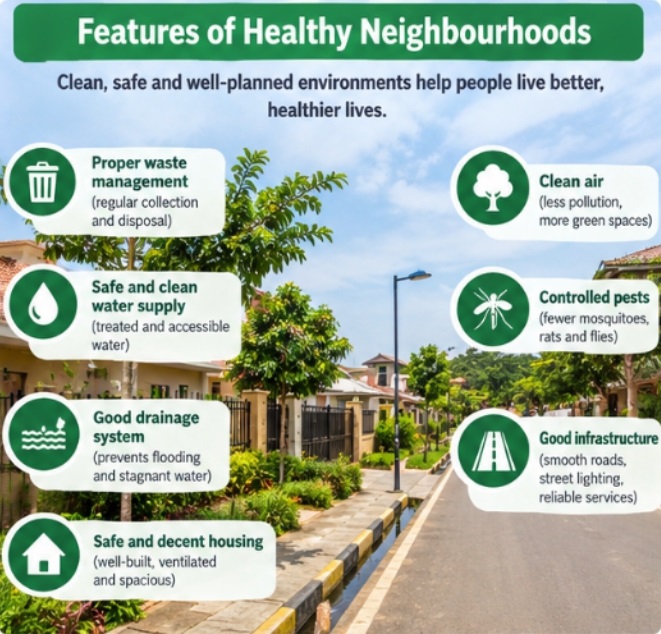
Infographic. Clean air and water, proper waste disposal, good drainage, safe housing, and reliable infrastructure promote healthier living conditions. Image credit: ChatGPT. Click image to enlarge.
A healthier neighbourhood does not have to be perfect or expensive. It is one where the basic conditions around people support safer and healthier daily living. Some of its features include:
Waste is collected regularly, public spaces are kept reasonably clean, and residents have proper places to dispose of rubbish.
Gutters and drainage channels are maintained and able to carry rainwater away, reducing unnecessary flooding and stagnant water.
Residents have access to safe water, functional toilets and proper sewage disposal, helping to reduce exposure to contamination and disease.
Reducing unnecessary smoke, burning of waste and other sources of pollution can improve the quality of the air. Managing excessive noise from traffic, generators and other activities can also create a more comfortable living environment.
Trees, parks and other accessible green spaces provide places for people to walk, relax and spend time outdoors. Urban green spaces can also support physical and mental well-being.
Well-maintained roads, sidewalks and crossings make it easier and safer for people to move around their communities, including children, older adults and people with disabilities.
Having clinics, pharmacies and other essential health services within reasonable reach can make it easier for people to seek care when they need it.
A healthier neighbourhood is therefore not defined by expensive buildings or perfect streets. It is defined by whether the environment provides people with basic conditions that support health, safety and everyday well-being.
A healthy neighbourhood matters because people interact with their surroundings every day. The quality of the streets, water, air, housing and public spaces can either create additional health risks or make everyday living safer and more comfortable.
Healthy neighbourhoods matter for the following reasons:
Creating a healthier neighbourhood cannot be left to one person or one group. The condition of a community is shaped by the actions of the people who live, work and make decisions there.
Residents can help by disposing of waste properly, avoiding practices such as dumping refuse in drainage channels, keeping shared spaces clean and reporting environmental problems.
Landlords and property owners have a responsibility to maintain homes, provide basic sanitation and address problems such as leaks, poor ventilation and unsafe facilities.
Businesses also have a role to play by managing their waste responsibly and avoiding activities that unnecessarily pollute or obstruct shared spaces.
Community leaders can encourage residents to work together, identify local problems and communicate with the relevant authorities when services or infrastructure need attention.
Government and local authorities have a wider responsibility to provide and maintain essential services such as waste collection, drainage, roads, water, sanitation and accessible healthcare.
Effective urban planning and public services are important parts of creating healthier communities. When these responsibilities are shared, maintaining a healthy neighbourhood becomes more than an occasional clean-up exercise. It becomes an ongoing effort to create surroundings that support the health and well-being of everyone who lives there.
Health does not begin and end inside a hospital, clinic or home. It is also shaped by the environment people return to every day.
The difference between an unhealthy and healthier neighbourhood may seem ordinary at first—a blocked gutter versus a clear one, waste left on the roadside versus proper waste collection, polluted and noisy surroundings versus cleaner and more peaceful spaces. But these differences can influence the risks people face and how comfortably they live.
Creating healthier communities therefore requires more than asking individuals to make better health choices. People also need surroundings that make those choices easier: safe water, proper sanitation, clean air, good housing, safe roads, accessible services and spaces where they can rest and move freely.
A healthier neighbourhood may not be perfect, but it should provide the basic conditions that allow people to live with greater safety and well-being. When the places we call home are healthier, the people who live in them have a better foundation for healthier lives.
Sources:
1. World Health Organization (WHO). Health risks of ambient air pollution. [Internet]. 2026. [Cited September 20, 2026]. Available from here.
2. World Health Organization (WHO). Housing and health risks. [Internet]. 2026. [Cited September 20, 2026]. Available from here.
3. World Health Organization (WHO). Ambient (outdoor) air pollution and health. [Internet]. 2026. [Cited September 20, 2026]. Available from here.
4. World Health Organization (WHO). Noise. [Internet]. 2026. [Cited September 20, 2026]. Available from here.
5. World Health Organization (WHO). Urban health. [Internet]. 2026. [Cited September 20, 2026]. Available from here.
Related:
Africans Deserve Access to Clean Water and Sanitation as a Public Health Priority
Dual Crises: How Flooding and Water-Borne Diseases Drain Sub-Saharan Economies
Africans Deserve Access to Clean Water and Sanitation as a Public Health Priority
Info-poster: Health-Related Risks of Floodwater
Published: October 12, 2026
© 2026. Datelinehealth Africa Inc. All rights reserved.
Permission is given to copy, use and share content for non-commercial purposes without alteration or modification and subject to source attribution.
DATELINEHEALTH AFRICA INC., is a digital publisher for informational and educational purposes and does not offer personal medical care and advice. If you have a medical problem needing routine or emergency attention, call your doctor or local emergency services immediately, or visit the nearest emergency room or the nearest hospital. You should consult your professional healthcare provider before starting any nutrition, diet, exercise, fitness, medical or wellness program mentioned or referenced in the DatelinehealthAfrica website. Click here for more disclaimer notice.