Dual Crises: How Flooding and Water-Borne Diseases Drain Sub-Saharan Economies
By Chinenye Abel, B.Tech. Information Systems. Medically reviewed by the DLHA Editorial Team.
October 9, 2026
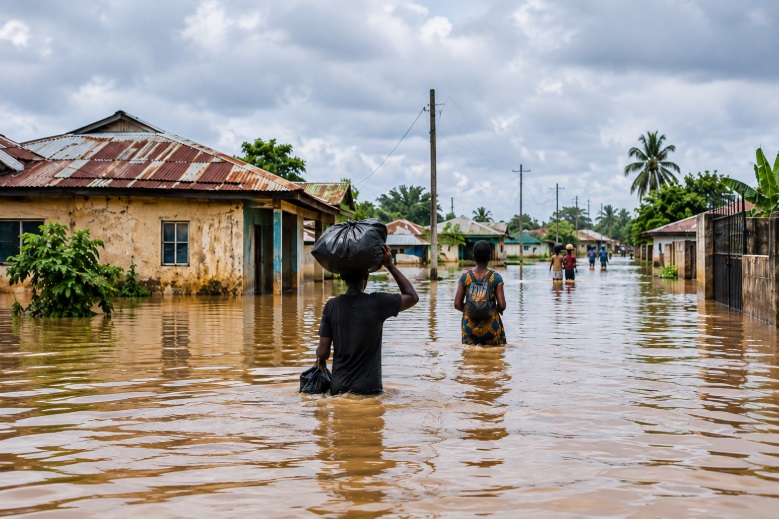
An image showing a flooded African community with residents carrying their belongings on their head while navigating muddy floodwater channels. Image credit: ChatGPT. Click image to enlarge.
In early 2026, severe flooding swept across parts of Southern Africa after intense rainfall and cyclones. Around 1.3 million people were affected, with Mozambique accounting for about half of those affected. Homes and critical infrastructure were damaged, while access to health services and safe water was disrupted.
But the danger did not end with the destruction caused by the floodwaters.
In the weeks that followed, cholera became an increasing concern. Between January 1 and February 15, 2026, five Southern African countries reported 4,320 cholera cases and 56 deaths, compared with 586 cases and 11 deaths during the same period in 2025. WHO associated the increase with severe flooding, infrastructure damage, displacement, and inadequate water and sanitation conditions.
This illustrates an important public-health reality: a flood can create the conditions for a disease outbreak long after the initial disaster has occurred. When water and sanitation systems are damaged or contaminated, communities may face increased exposure to disease-causing organisms through drinking water, food and the surrounding environment.
And that is where our article begins: how does flooding turn into a waterborne disease threat?
Flooding does more than submerge homes, roads and other infrastructure. It can also disrupt the systems that keep drinking water and sanitation services safe. When floodwater comes into contact with sewage, human and agricultural waste or damaged sanitation facilities, contaminants can be carried into wells, surface water and other sources used by communities.
This becomes particularly concerning when people are displaced or when normal water systems are damaged. Communities may have limited access to safe water and sanitation, increasing their exposure to contaminated water and food. The World Health Organization (WHO) identified inadequate safe water, hygiene and sanitation as important factors increasing the risk of acute watery diarrhoea and cholera among people affected by the severe Southern African floods in 2026.
The problem can continue even after floodwaters begin to recede. Water sources and sanitation infrastructure may remain contaminated or damaged, meaning that returning to normal water use without adequate testing, treatment or monitoring can continue to expose communities to disease-causing organisms. WHO's response in Mozambique, for example, included water-quality testing, treatment and monitoring in flood-affected areas because of the increased risk of waterborne diseases such as cholera.
One of the most serious health concerns following flooding is the increased risk of cholera and other acute diarrhoeal diseases. Cholera is caused by the bacterium Vibrio cholerae and is primarily transmitted when people consume food or water contaminated with the bacteria.
Flooding can make this transmission easier by disrupting water and sanitation systems. When sewage or human waste enters water sources, contaminated water can be used for drinking, cooking or washing. Displacement can further increase the risk when large numbers of people have limited access to safe water and sanitation. WHO notes that floods and other extreme climate events can reduce access to clean water and create conditions that favor cholera transmission.
The health consequences can develop quickly. Cholera may cause severe acute watery diarrhoea and dehydration, and symptoms can appear as soon as 12 hours to five days after exposure. While many infections are mild or produce no symptoms, severe cases can become life-threatening without prompt treatment.
Cholera is not the only concern. Contaminated water can transmit several organisms like:
Bacterial Infections:
Viral Infections:
Parasitic Infections:
The majority of these organisms are primarily responsible for acute diarrhoeal disease with the exception of Hepatitis A and E, making outbreaks particularly difficult for communities already dealing with damaged infrastructure and limited healthcare access.
This is why flood response is also disease prevention. Restoring safe water, sanitation and hygiene services is not simply about returning communities to normal—it is an important part of reducing the conditions that allow outbreaks to spread.
The relationship between flooding and disease outbreaks is not limited to Southern Africa. Across the continent, heavy rainfall, flooding, population displacement and weaknesses in water and sanitation systems can combine to increase the risk of cholera and other waterborne diseases.
In Nigeria, for example, WHO reported 26,848 cholera cases and 181 deaths between January 1 and June 28, 2026. The increase occurred alongside challenges including rainfall, inadequate sanitation and population displacement.
Other parts of Africa have faced similar challenges. In Southern Africa, severe flooding beginning in late 2025 affected around 1.3 million people and disrupted critical infrastructure and access to health services. During the first six weeks of 2026, five countries in the region recorded 4,320 cholera cases and 56 deaths, substantially higher than during the same period in 2025. WHO linked the increase to severe flooding, infrastructure damage, displacement and inadequate water and sanitation.
These examples show that flooding does not operate in isolation. Its health impact depends partly on the conditions that exist before and during the disaster. Where communities already face limited access to safe water, sanitation and healthcare, flooding can make those weaknesses more severe and create additional opportunities for disease transmission.
The health risks associated with flooding do not necessarily disappear when floodwaters recede. In some communities, the period after a flood can create a new set of challenges as people return home and attempt to restore their normal sources of water and sanitation.
Flooding can leave wells, boreholes and other water sources contaminated, while damaged toilets, sewage systems and drainage infrastructure may continue to expose communities to human waste. WHO identifies contamination of drinking-water facilities as one of the major health risks associated with flooding and emphasizes the importance of maintaining safe drinking water after floods.
Displacement can make the situation more difficult. People who have lost their homes may temporarily live in crowded shelters or settlements where access to clean water and adequate sanitation is limited. There is also the challenge of delayed disease detection. After a major flood, healthcare facilities may be damaged or difficult to reach, while health workers may be focused on immediate emergency needs. Strong surveillance is therefore important for detecting outbreaks early and guiding a rapid response.
For this reason, the recovery period should not be treated as the end of the public-health response. Testing water sources, restoring sanitation systems, monitoring for new infections and providing communities with reliable information are essential even after floodwaters have receded.
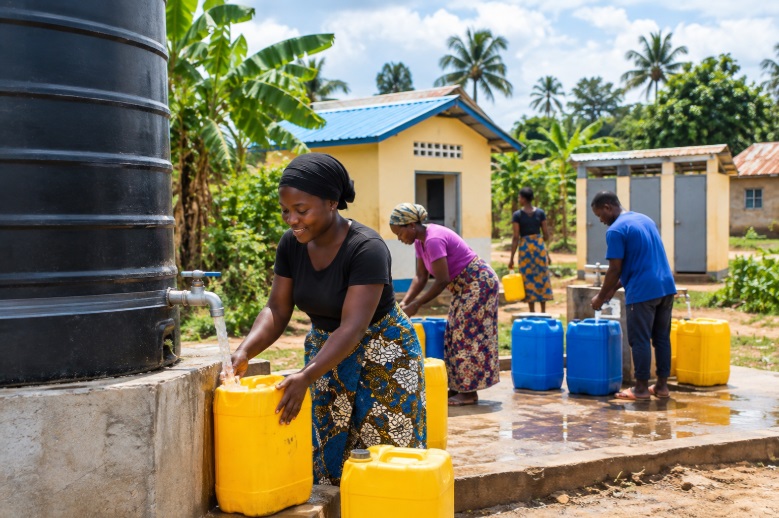
An image showing a community collecting clean water from a water station after flooding. Image credit: ChatGPT. Click image to enlarge.
Preventing disease after flooding requires more than providing emergency shelter and food. Restoring access to safe water, sanitation and hygiene is a critical part of protecting communities from outbreaks. One of the first priorities is ensuring that people have access to safe drinking water. Where existing water sources may have been contaminated, authorities and response organizations can provide treated water and support appropriate water treatment and safe storage. Water sources also need to be tested and monitored before communities return to using them.
Sanitation is equally important. Damaged toilets, sewage systems and drainage infrastructure need to be repaired or managed safely to prevent human waste from contaminating water and the surrounding environment.
Good hygiene practices can also reduce exposure to pathogens. Handwashing with soap, safe food preparation and proper disposal of human waste become particularly important when normal sanitation systems have been disrupted.
However, prevention also depends on early disease detection. Health authorities need effective surveillance systems that can identify unusual increases in diarrhoeal diseases and cholera cases quickly. Rapid reporting allows health teams to investigate potential sources of contamination and respond before an outbreak grows.
Finally, communities need clear and timely public-health information. During a flood or its aftermath, people may not know whether their usual water source is safe. Providing simple guidance about drinking water, hygiene, sanitation and when to seek medical care can help people make safer decisions.
Ultimately, effective flood response should continue beyond rescuing people from floodwaters. Protecting water supplies, restoring sanitation and detecting disease early are also essential parts of protecting lives.
Flood-related waterborne diseases can place a financial burden on individuals.
When waterborne diseases spread after flooding, the economic effects can extend beyond individual households.
When floodwaters rise, attention naturally turns to finding shelter, protecting homes and helping those in immediate danger. But once the water begins to recede, another responsibility begins: protecting communities from the health risks left behind.
A contaminated well, damaged toilet or broken water system may not look as urgent as rising floodwater, but these problems can determine whether a community experiences recovery or a preventable disease outbreak.
That is why preparation cannot begin after the next flood arrives. Governments, health authorities and communities must act before disaster strikes by strengthening water and sanitation systems, improving disease surveillance and ensuring that people know how to protect themselves when flooding occurs.
For individuals and communities, simple actions also matter: follow public-health warnings, avoid potentially contaminated water, practice good hygiene and seek medical care when symptoms of serious illness appear.
Africa cannot always prevent the rain from falling or the rivers from rising. But we can prepare for what comes next. The time to protect water, strengthen sanitation and build healthier communities is before the next flood—not after it.
1. World Health Organization (WHO). Around 1.3 million people affected by severe flooding in Southern Africa. [Internet]. 2026. [Cited September 20, 2026]. Available from here.
2. World Health Organization (WHO). Southern Africa faces acute surge in cholera due to floods, displacement. [Internet]. 2026. [Cited September 20, 2026]. Available from here.
3. World Health Organization (WHO). Strengthened access and monitoring of clean water in Gaza Province following floods. [Internet]. 2026. [Cited September 20, 2026]. Available from here.
4. World Health Organization (WHO). Cholera. [Internet]. 2026. [Cited September 20, 2026]. Available from here.
5. World Health Organization (WHO). Cholera upsurge. [Internet]. 2026. [Cited September 20, 2026]. Available from here.
6. World Health Organization (WHO). Weekly Epidemiological Record: WER101-31. [Internet]. 2026. [Cited September 20, 2026]. Available from here.
7. World Health Organization (WHO). How do I protect my health in a flood? [Internet]. 2026. [Cited September 20, 2026]. Available from here.
Related: Info-poster: Health-Related Risks of Floodwater
Published: October 9, 2026
© 2026. Datelinehealth Africa Inc. All rights reserved.
Permission is given to copy, use and share content freely for non-commercial purposes without alteration or modification and subject to source attribution.
DATELINEHEALTH AFRICA INC., is a digital publisher for informational and educational purposes and does not offer personal medical care and advice. If you have a medical problem needing routine or emergency attention, call your doctor or local emergency services immediately, or visit the nearest emergency room or the nearest hospital. You should consult your professional healthcare provider before starting any nutrition, diet, exercise, fitness, medical or wellness program mentioned or referenced in the DatelinehealthAfrica website. Click here for more disclaimer notice.