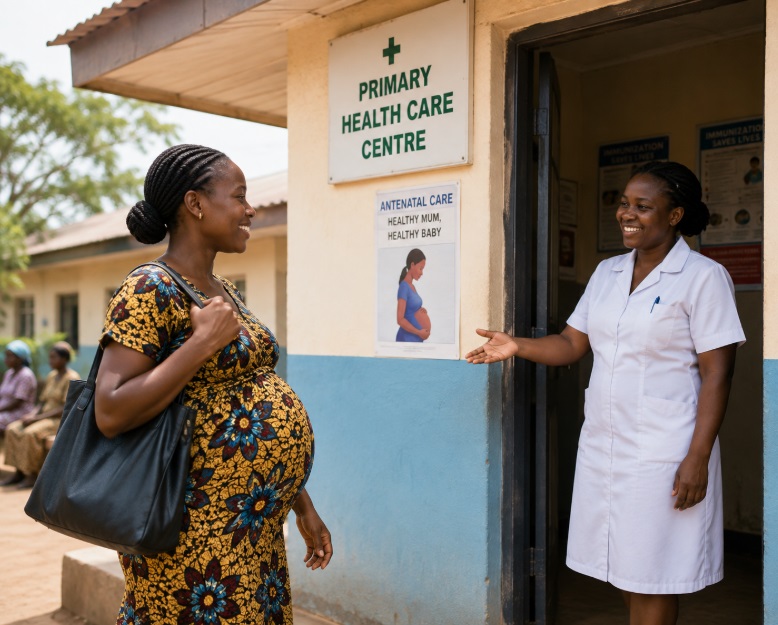
A pregnant African woman arrives at a primary healthcare centre for antenatal care, where a healthcare worker welcomes her at the entrance. Image credit: ChatGPT
By: Temitayo Adeola, RN, RM, RPHN Freelance health writer and DLHA Volunteer. Medically reviewed by: E. Odekina. MB.BS
August 11, 2026
Pregnancy is an exciting journey, but it also comes with important health decisions. One of the best decisions you can make is to book for antenatal care early. Early care helps monitor your health, supports your baby's development, and identifies any problems before they become serious.
In this slideshow, you'll learn:
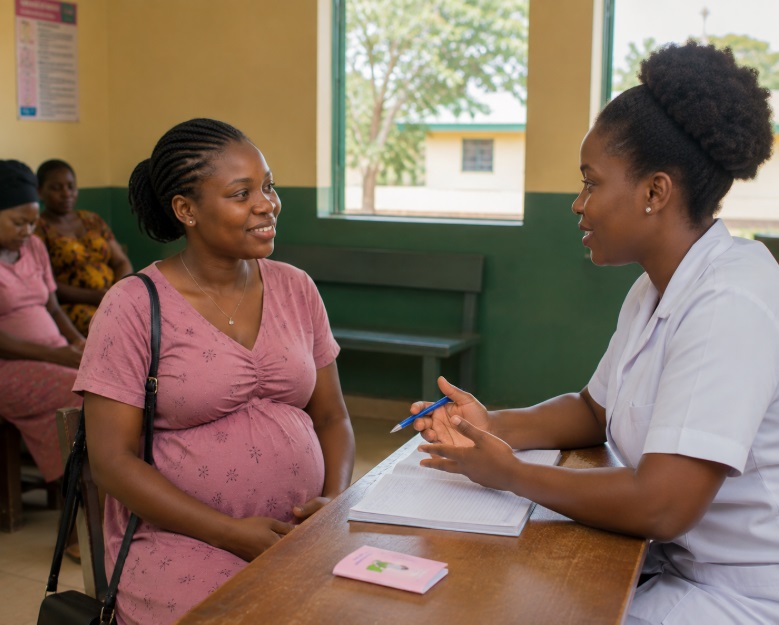
A pregnant African woman receives guidance from a healthcare provider during an antenatal consultation in a bright, open clinic. Other pregnant women wait in the background. Image credit: ChatGPT .
Antenatal care matters because it turns pregnancy from a period of uncertainty into an opportunity for preparation, prevention, and early action.
It is not merely about checking your baby’s heartbeat or recording your weight. Each visit is an opportunity to identify risks early, prevent or manage illness, support the mother’s physical and emotional wellbeing, and connect both mother and baby to the care they may need. In other words, antenatal care is not only preparation for childbirth, it is an investment in a safer pregnancy, a healthier newborn, and a more informed and empowered family.
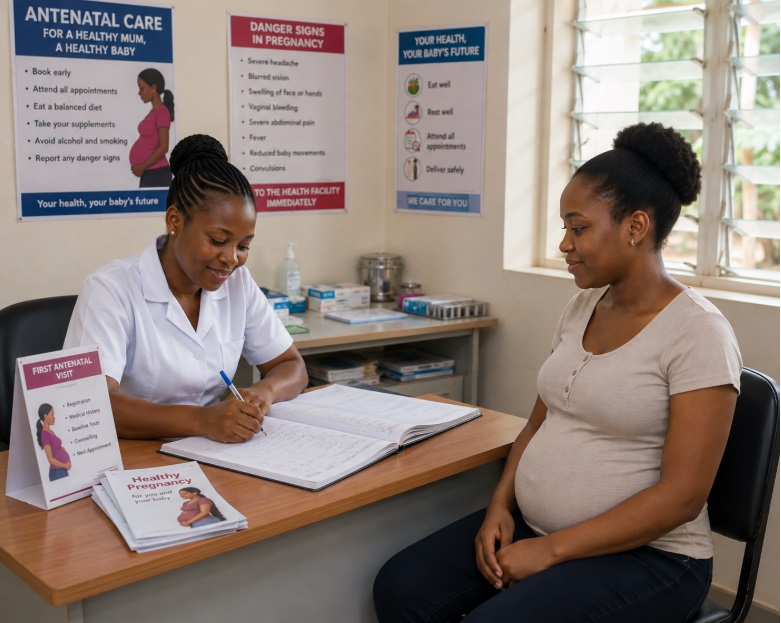
A pregnant African woman in a simple, modest outfit sits across from a healthcare provider at a clinic desk while her antenatal information is being recorded. Image credit: ChatGPT.
Antenatal care should begin early and continue throughout your pregnancy. Your first antenatal visit should take place before 12 weeks of pregnancy. This allows your healthcare provider to assess your health and begin routine pregnancy care.
As your pregnancy progresses, you will have more antenatal visits. These appointments become more frequent in the later months because they help monitor your baby's growth, check your wellbeing, identify any concerns early, and prepare you for labour and birth.
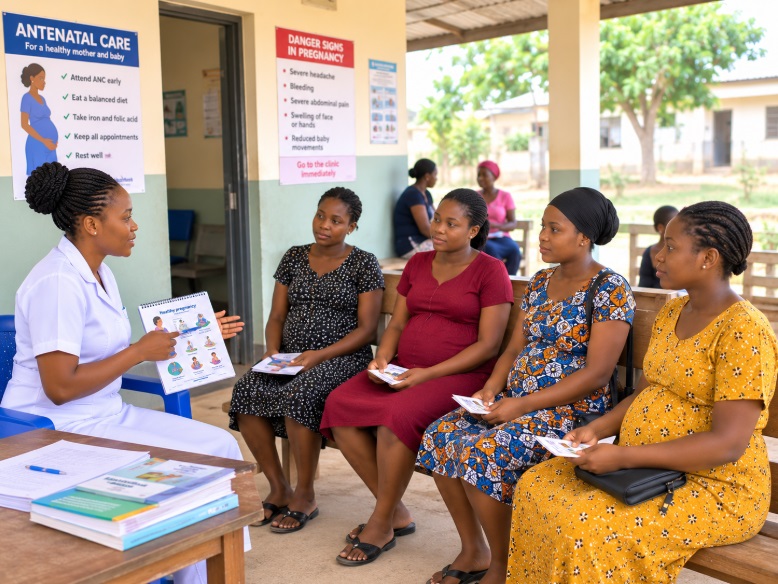
A nurser counsels a group of pregnant women during an antenatal session in an open clinic space. Image credit: ChatGPT.
Benefits for the mother include:
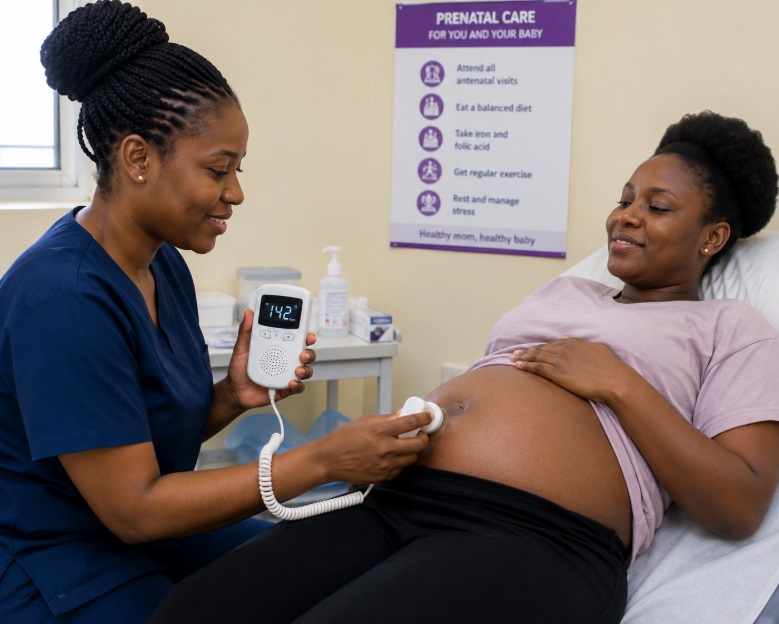
A nurse uses a handheld Doppler to check a pregnant woman’s baby’s heartbeat during an antenatal visit in a clinic. Image credit: ChatGPT
Benefits for the baby include:
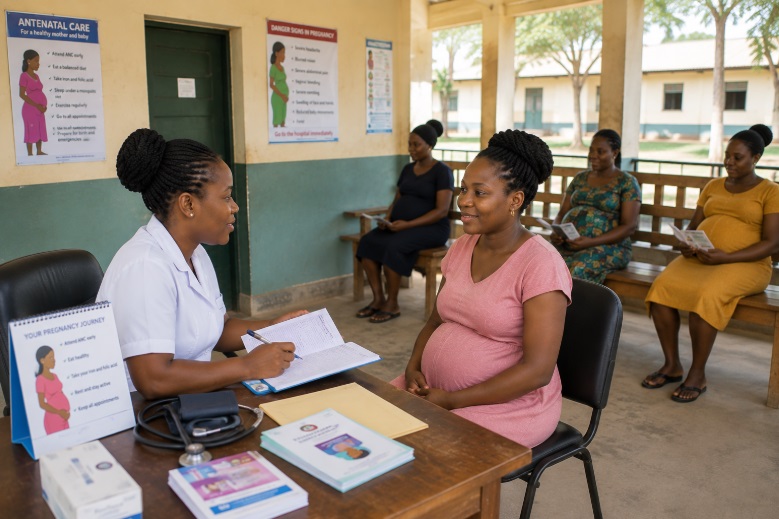
A nurse asks a pregnant woman questions during her first antenatal visit, while other pregnant women wait in the clinic. Image credit: ChatGPT/
Your first antenatal visit lays the foundation for the care you will receive throughout your pregnancy. During this visit, your healthcare provider will assess your health, answer your questions, and develop a care plan that supports both you and your baby.
You can expect:
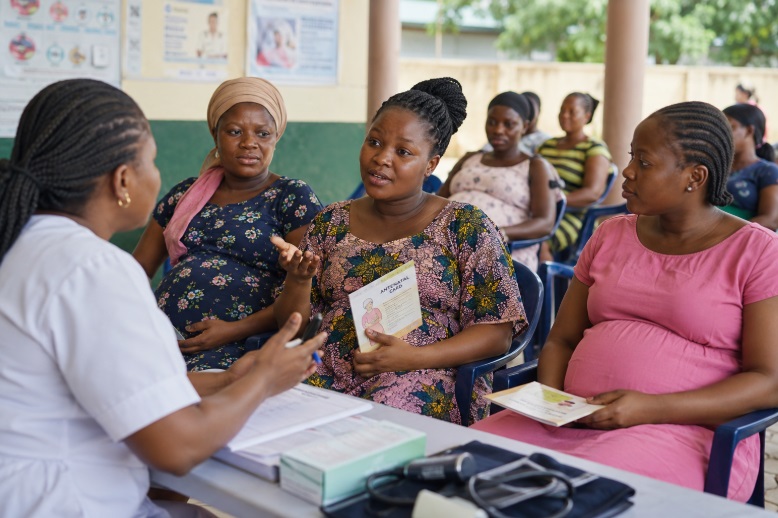
A pregnant African woman holds her antenatal card while sitting across a table with two others and asking questions from a nurse during an antenatal clinic visit. Other pregnant women are seated in the open clinic space. Image credit: ChatGPT .
To get the most from every antenatal visit:

A smiling pregnant African woman leaves an antenatal clinic holding her small antenatal registration card in her right hand. Another woman is seen in the background sitting in the ANC waiting room. Image credit: ChatGPT.
Your pregnancy journey starts with one important step: booking your antenatal care early. Do not delay your first visit, attend every scheduled appointment, and seek medical advice promptly if you notice any warning signs. Taking these steps early can help protect your health and give your baby the best possible start in life.
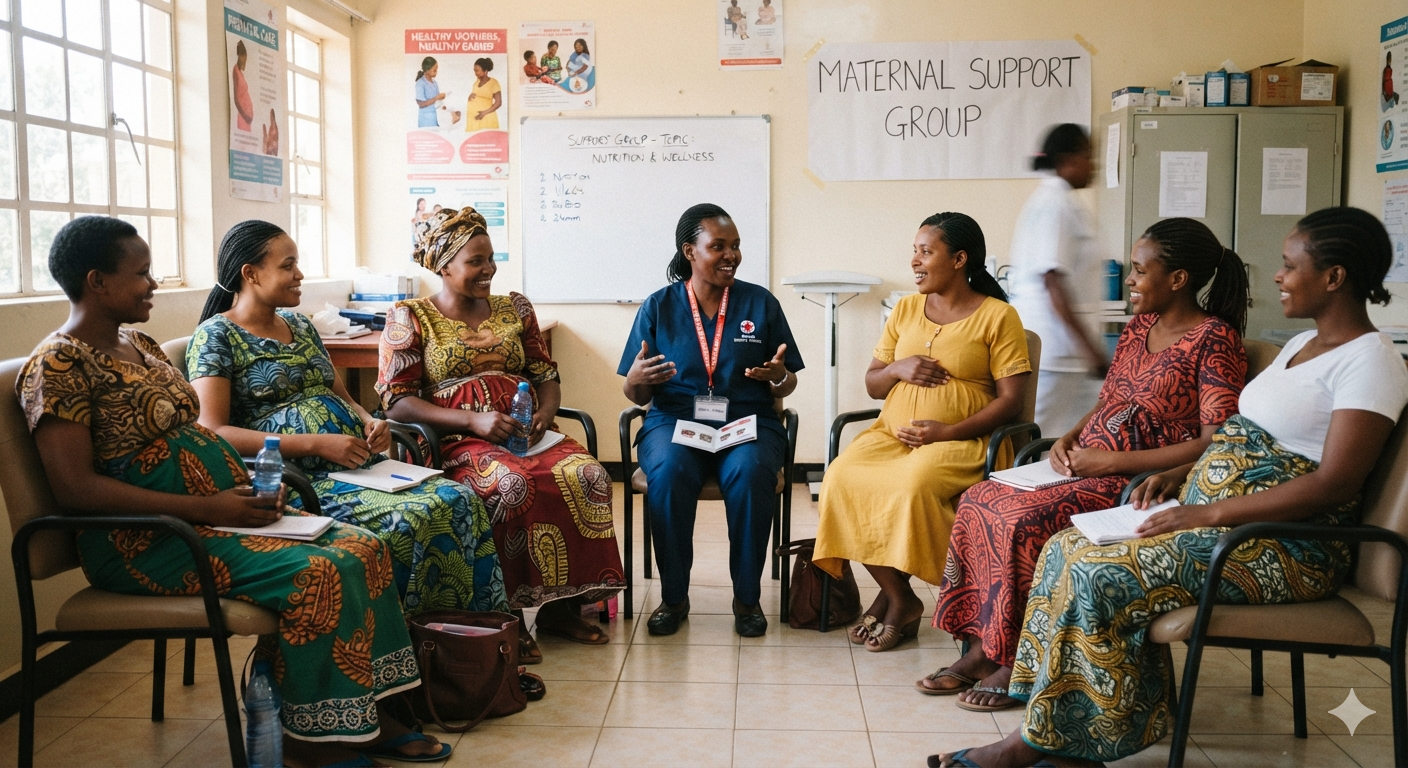
A support group of pregnant African women sitting in a semi-circle and in discussion at a maternity clinic.
Antenatal care helps monitor your health and your baby's wellbeing, identify potential concerns early, provide preventive care and guidance, and prepare you for childbirth and parenthood.
The WHO recommends a minimum of eight antenatal contacts during pregnancy, starting in the first 12 weeks and continuing at regular intervals throughout pregnancy
Yes. Late booking does not mean you cannot have a healthy pregnancy. However, booking early gives you and your healthcare provider more time to identify and manage health conditions, monitor your baby's growth, receive important vaccinations and supplements, and get advice that can help prevent complications.

Image captioned Resources
1. World Health Organization. Introduction [Internet]. WHO Recommendations on Antenatal Care for a Positive Pregnancy Experience - NCBI Bookshelf. 2016 [Cited 2026 Aug 7]. Available from here.
2. Tunçalp O, Pena-Rosas J, Lawrie T, Bucagu M, Oladapo O, Portela A, et al. WHO recommendations on antenatal care for a positive pregnancy experience—going beyond survival. BJOG an International Journal of Obstetrics & Gynaecology. 2017 Feb 12;124(6):860–862. Available from here.
Related:
What Africans Need to Know About Antenatal Care
Men’s Participation in Maternal Healthcare in Africa is a Win-Win for All
How to Boost Positive Childbirth Experience in African Women
How Telemedicine Can Boost Antenatal Care in Africa
Published: August 11, 2026.
© 2026. Datelinehealth Africa Inc. All rights reserved.
Permission is given to copy, use and share content for non-commercial purposes without alterations or modifications and subject to source attribution.
Disclaimer
DATELINEHEALTH AFRICA INC., is a digital publisher for informational and educational purposes and does not offer personal medical care and advice. If you have a medical problem needing routine or emergency attention, call your doctor or local emergency services immediately, or visit the nearest emergency room or the nearest hospital. You should consult your professional healthcare provider before starting any nutrition, diet, exercise, fitness, medical or wellness program mentioned or referenced in the Datelinehealth Africa website. Click here for more disclaimer notice.