Understanding Lactose Intolerance among Nigerians
By: Zikra Akram, Final Year Medical Student, Freelance Health Writer and DLHA Volunteer. Medically reviewed by: A, Odutola, MBBS, PhD.
August 15, 2026

A Nigerian woman holding a glass of milk while touching her stomach and looking uncomfortable. Image Credit: Chat GPT. Click on image to enlarge.
Have you ever eaten a bowl of cereal or a glass of milk and then had to deal with bloating, gas, or an upset stomach? If you have, lactose intolerance might be the reason.
Lactose intolerance is common among many Nigerians and is a frequent cause of bloating, gas and diarrhea after eating dairy products. It happens when your body does not produce enough of an enzyme called lactase to digest a sugar called lactose, found in milk and other dairy products.
This article aims to provides you with basic information on how lactose intolerance happens, why it's so common among Nigerians, and what you can do about it.
Lactose is a natural sugar found in milk and other dairy products such as butter, fresh cheeses, ice creams, and frozen desserts. It can also show up in some processed foods, including certain baked goods, sauces, salad dressings, cereals and diet and protein shakes (1).
To digest lactose, your body relies on an enzyme called lactase produced in your small intestine. It breaks down lactose into simpler sugars that are absorbed into your blood stream and, later, used by your body (2).
But if your body doesn't produce enough lactase, lactose remains undigested as it moves down through your gut. This can lead to bloating, gas, an uncomfortable stomach and diarrhea. That’s lactose intolerance.
The most common form is called primary lactose intolerance or lactase non-persistence. Here, what happens is you naturally stop making lactase after childhood.
Research indicates that about two-thirds of people worldwide experience this decline to some degree, which means lactose intolerance is much more common than most people realize (3).
It’s worth noting here that you may also develop lactose intolerance following an injury or infection of your small intestine. In that case, it would be secondary lactose intolerance. Congenital and developmental forms also exist but they are not very common.
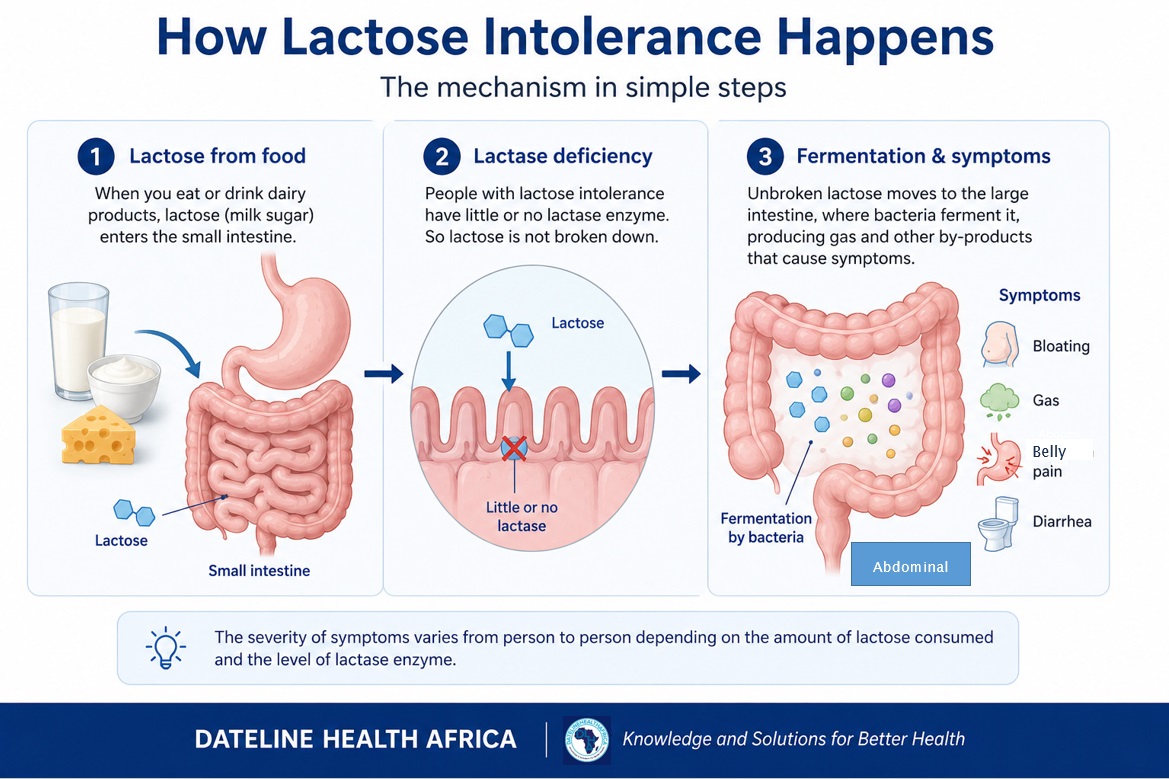
Info-poster showing how undigested lactose is fermented by gut bacteria, leading to bloating, gas, and diarrhea. Image Credit: Chat GPT. Click on image to enlarge.
Normally, if your intestines make enough lactase, it breaks down lactose into two simpler sugars, glucose and galactose, which are then absorbed into your bloodstream. But with lactose intolerance, lactose goes further down into your large intestine.
There the bacteria that normally live in your gut (gut flora) begin to ferment the undigested lactose. This fermentation releases gases that may cause bloating, gas, noisy stomach and abdominal (belly) pain. Undigested lactose also draws more water into your intestines, which explains why some people get diarrhea after eating dairy (2, 3).
Lactose intolerance is common in many parts of the world, but it seems to be particularly common in many African populations.
A systematic review of 28 studies on lactose digestion in African populations found that in many groups across West, North, and Southern Africa, more than 70% of people naturally produce less lactase after childhood. Meaning they have primary lactose intolerance and are lactase non-persistent (3).
The same review also found about 65 to 68 percent (i.e., 2 out of 3 cases) of secondary lactose intolerance in Africa. This is especially true for children, who suffer from malnutrition or gut infections like giardiasis. These can temporarily damage their gut, lower their production of lactase, and make it harder for them to digest lactose (3).
An interesting thing to note here is that not all Nigerians have the same levels of lactose intolerance. Pastoral groups like Fulani have, traditionally, relied on milk as a major part of their diet. After lots of generations drinking milk, they ended up keeping their ability to produce lactase as adults. That’s why, if you’re from these communities, you might notice you handle milk better than people who didn’t have much fresh milk after childhood (3, 4).
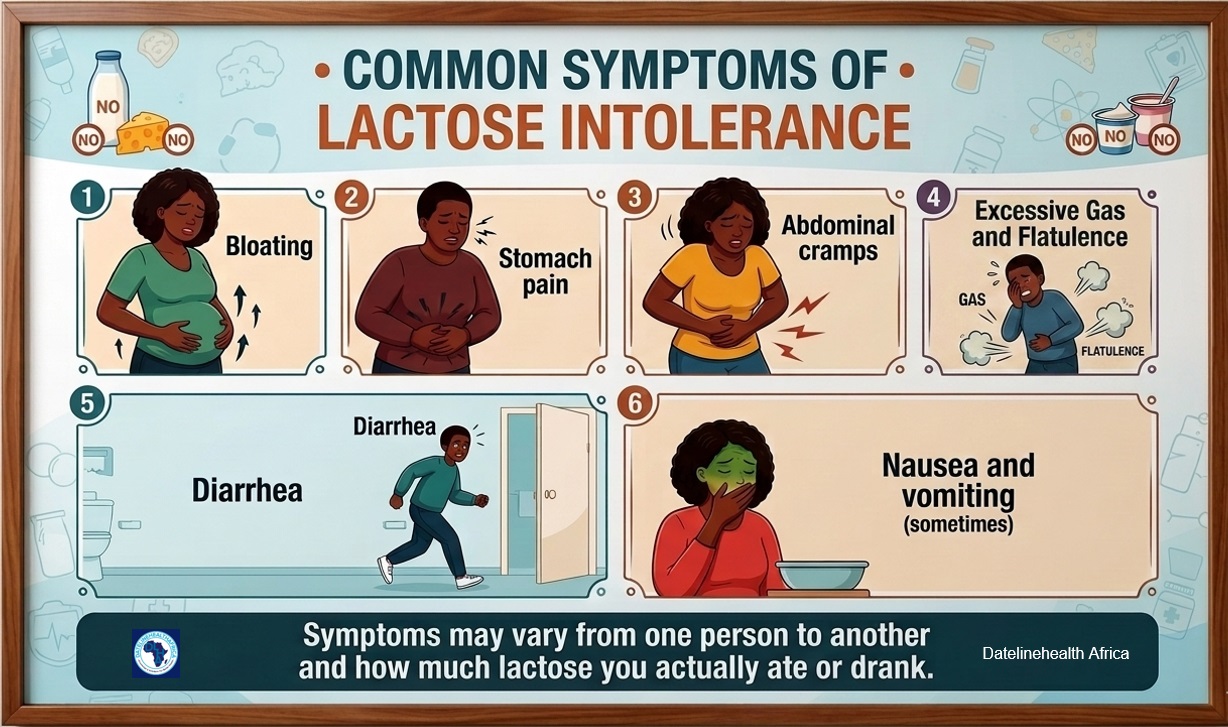
Info-poster illustrating common symptoms of lactose intolerance. AI image generated from Gemini Nano Banana Lite. Click on image to enlarge.
If you are lactose intolerant, you may notice the following symptoms after you’ve had milk or other dairy products. But they don’t always show up right away since your body needs time to digest.
Here’re what to look out for:
But, how bad these symptoms get usually varies from one person to another and how much lactose you actually ate or drank.
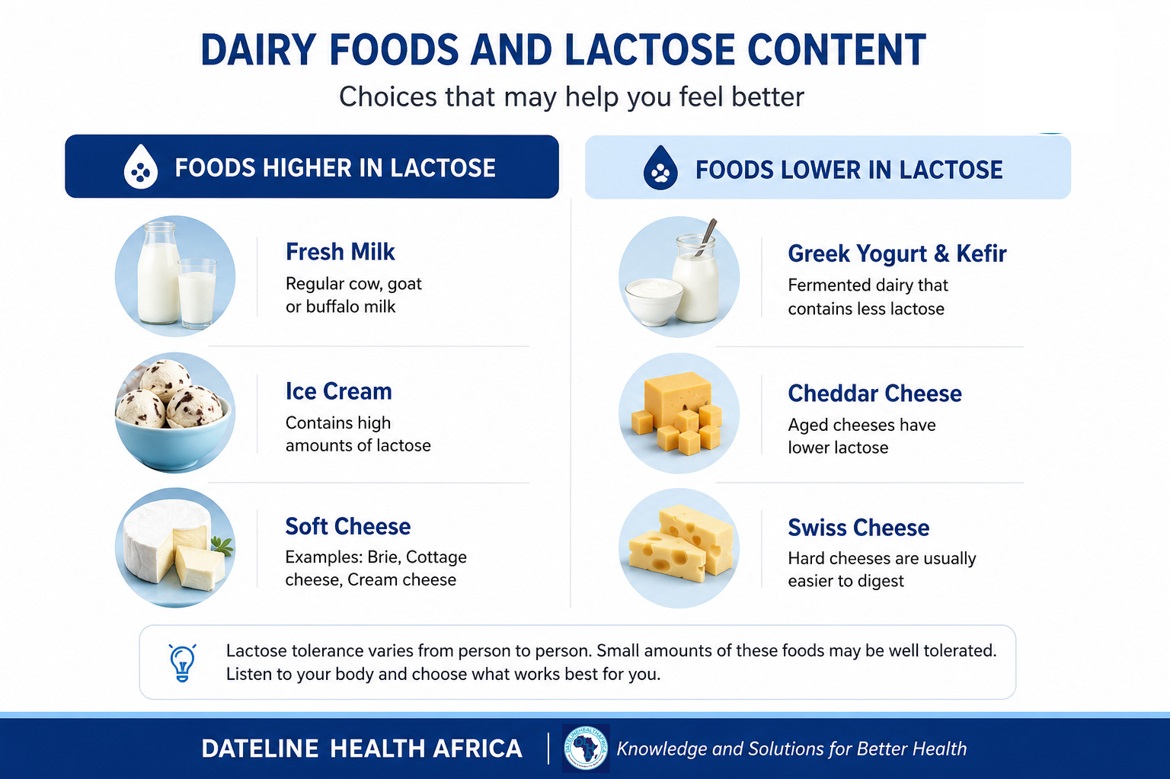
Infographic comparing high and low-lactose foods for lactose intolerance. Image Credit: Chat GPT, Click on image to enlarge.
Not always. You may think that if you’re lactose intolerant, you have to keep off dairy for good. But that’s not really the case. Most people can actually handle a bit of lactose without any major issues.
Studies show that many people with lactose intolerance can handle about 12 to 15 grams of lactose per day, that’s about what you’d get from a cup of milk (5).
But everyone’s different. Some people might be able to take more, some less. That’s why it might be helpful to experiment on your own and see how much you can take easily. Maybe small amounts of dairy don’t bother you at all, but a big glass of milk does.
Eating dairy with other foods, especially ones with fat, may help with symptoms for some people. Fatty foods slow down digestion, so lactose reaches your gut more slowly and you might feel better (5).
The good news is you usually don’t have to cut out dairy completely if you’re lactose intolerant.
You can try out a few things to manage your symptoms:
If your symptoms don’t get better, or if you suddenly lose weight, have diarrhea that won’t go away, or get really bad stomach pain, talk to your doctor. There might be something else going on.
If you feel bloated or uncomfortable every time you have milk, lactose intolerance might be the one to blame. It’s common among many Nigerians, but it’s usually manageable without completely removing dairy from your diet. By finding out your tolerance levels to lactose and making a few adjustments to your diet, you may be able to manage your symptoms. But if they still do not go away, you might want to see a doctor to make sure there is nothing else going on with your digestion.
1. NHS.UK. Lactose intolerance. [Internet]. 2018 [Cited 2026 July 8]. Available from here.
2. Catanzaro R, Sciuto M, Marotta F. Lactose intolerance: An update on its pathogenesis, diagnosis, and treatment. Nutrition Research, 2021; 89,23–34. Available from here.
3. Hakizimana JC, Alagbonsi AI. Genetic and environmental factors associated with lactose digestion in African populations. Physiological Genomics. 2026; 58(1):32–41. Available from here.
4. Anguita-Ruiz A, Aguilera CM, Gil Á. Genetics of Lactose Intolerance: An Updated Review and Online Interactive World Maps of Phenotype and Genotype Frequencies. Nutrients. 2020;12(9):2689. Available from here.
5. Szilagyi A, Ishayek N. Lactose Intolerance, Dairy Avoidance, and Treatment Options. Nutrients 2018;10(12):1994. Available from here.
Related:
10 Calcium-Rich Foods: Dairy and Non-Dairy
Info-poster: 10 Calcium Rich Foods for People with Lactose Intolerance
Published: August 15, 2026.
© 2026. Datelinehealth Africa Inc. All rights reserved.
Permission is given to copy, use and share content for non-commercial purposes without alteration or modification and subject to attribution as to source.
DATELINEHEALTH AFRICA INC., is a digital publisher for informational and educational purposes and does not offer personal medical care and advice. If you have a medical problem needing routine or emergency attention, call your doctor or local emergency services immediately, or visit the nearest emergency room or the nearest hospital. You should consult your professional healthcare provider before starting any nutrition, diet, exercise, fitness, medical or wellness program mentioned or referenced in the DatelinehealthAfrica website. Click here for more disclaimer notice.