Cancer Screening in Sub-Saharan Africa: When to Start
By: Foluke Akinwalere, Health & Medical Writer. DLHA Fellow. Medically reviewed by: ‘Kunle Soyemi. MBBS, FWACS; FRCOG. Consultant Obstetrician & Gynaecologist.
September 16, 2026
Image captioned Cancer Screening in sub-Saharan Africa: When to Start. It shows an African lady in cancer screening talk with her doctor at a clinic. Image created from ChatGPT. Click on image to enlarge.
As an African, if you’ve ever searched online for cancer screening advice, you’ve probably come across guidelines built for women and men in the United States or the United Kingdom — “start your mammogram at 50,” “begin PSA testing at 55.” These numbers aren’t wrong. They’re just not always written with sub-Saharan Africa in mind.
This article uses Africa-centred evidence-based information to inform on when you should realistically start screening for some common cancers as an African, and what to do if formal screening is not easily available where you are.
Across sub-Saharan Africa (SSA), research shows that several cancers are being diagnosed at more advanced stages than the Western guidelines assume [1]. That gap between “when the guideline says to start” and “when the disease actually shows up” is costing lives, not because people don’t care about their health, but because the advice they’re getting doesn’t quite fit their reality.
Most of the widely shared screening ages, such as 40 for mammograms, 50 for PSA tests, and 45 for colonoscopies, were derived from data on populations in the West. Those numbers reflect the age patterns, genetics, healthcare systems, and life expectancies of those populations, not necessarily the ones found across African countries. When a Nigerian woman in her late 30s or a Ghanaian man in his early 40s reads that screening “starts at 50”, it can create a false sense of security during the very years when they may already be at risk.
This mismatch matters for a second reason too: healthcare systems across the region are simply not built to run population-level screening programmes the way wealthier countries can. That means the “default” age on the international website was never designed with African infrastructure, cost, or disease pattern in mind; it’s a borrowed number, not a locally calculated one. Add to this the fact that many people across the region only seek care once symptoms appear, and the result is a pattern seen again and again in clinics and hospital wards: cancers being caught later than they need to be, in patients younger than guidelines expect.
Getting the starting age right is not just a medical detail; it’s often the difference between catching a cancer while it’s still treatable and catching it once it has already spread.
Three things make the African screening picture different from what you’ll read in a typical international health blog:
Across the region, most cancer patients are diagnosed only once symptoms are advanced. Studies consistently find that the majority of cervical and breast cancer patients present at a later stage in Africa, and low awareness of both symptoms and screening plays a major role in that delay [2, 3].
Very few countries in sub-Saharan Africa run a fully organised, national, population-wide mammography or colonoscopy screening programme; most existing efforts are pilot projects, hospital-based, or limited to major cities [4]. Where screening exists, it is often concentrated in teaching hospitals or private clinics in major cities, which puts it out of reach for many rural and lower-income households.
Breast cancer patients in the region are, on average, younger than breast cancer patients in Europe or the United States. Prostate cancer is both more common and more aggressive in men of African ancestry. Colorectal cancer, once considered an “older person’s disease,” is rising sharply among adults under 50 across the continent.
Put together, this means the honest answer to “when should I start screening” is often earlier than the number you will find on an international health website, and it depends heavily on your personal and family risk factors.
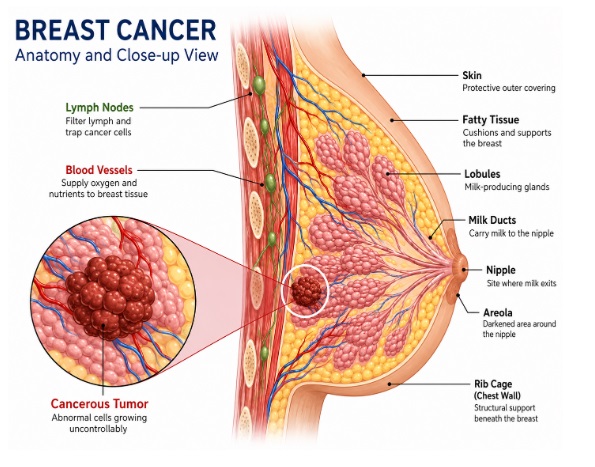
Illustration showing breast anatomy with a close view of a cancerous tumor. Click on image to enlarge.
Breast cancer is a major health issue among women across most of sub-Saharan Africa, and research shows it tends to affect African women at a younger average age than women in Europe or the United States.
A simple, at-home check where you look at and feel your own breasts monthly to notice any new lumps, changes in shape, or skin changes. It doesn’t detect cancer directly but helps you know what’s normal for you.
A physical exam performed by a trained health worker or doctor, using touch to check for lumps, thickening, or other unusual changes. It’s a practical option where mammography isn’t easily accessible.
A low-dose X-ray of the breast that can detect tumours too small to feel by hand. It remains the most reliable method for catching breast cancer early, especially from age 40 onward.
Imaging tests typically used alongside or after a mammogram, especially for younger women, denser breast tissue, or those at higher genetic risk. They help doctors get a clearer picture when a mammogram result is unclear or when closer monitoring is needed.
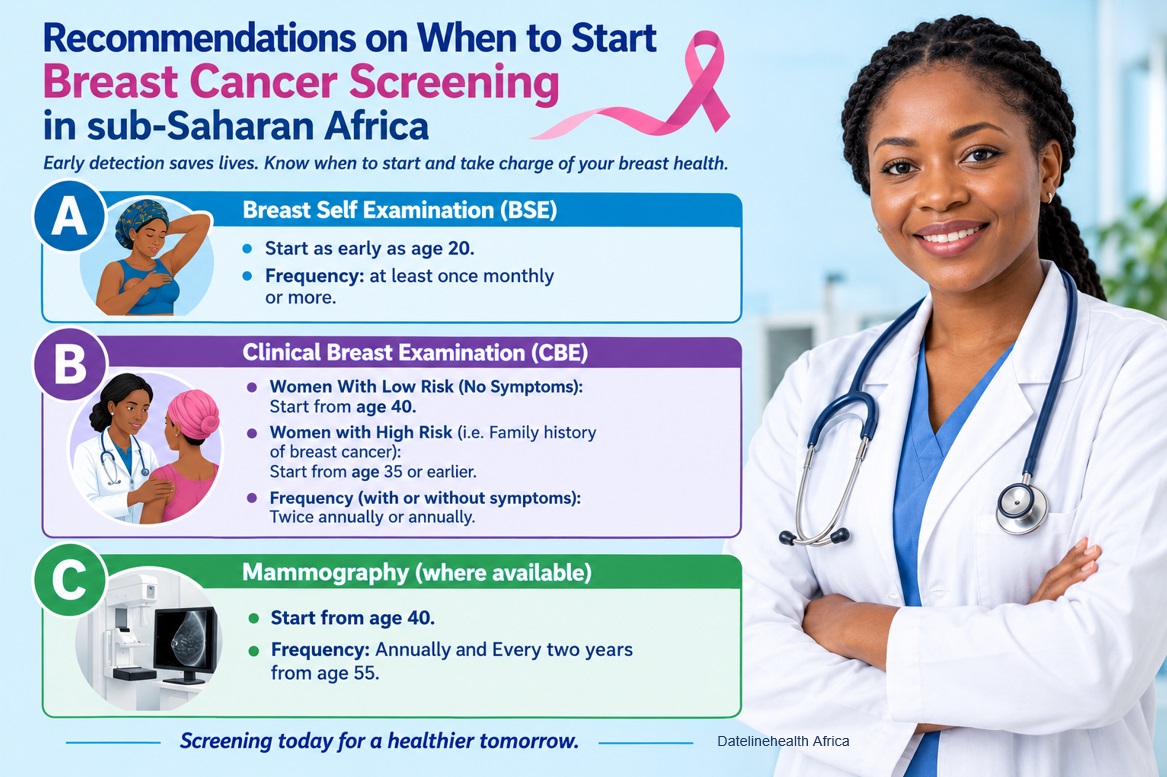
Infographic illustrating when to start different categories of breast cancer screening tests with frequency of the screening methods. Image created from ChatGPT. Click on image to enlarge.
For breast self-awareness and self-exams, there is no need to wait for a “start age”. From your 20s, it’s worth simply getting familiar with how your breasts normally look and feel, so you notice if something changes: a new lump, dimpling, nipple discharge, or persistent pain.
A clinical breast exam (CBE) is done by a trained health worker or doctor, and is a realistic starting point given the limited access to mammography in much of the region. Given that a large share of breast cancer cases in sub-Saharan Africa (SSA) occur in women under 50, it is reasonable to begin CBE from age 40 in women with low risk, with no symptoms and as early as age 35 in high risk women (e.g., those with a family history of breast cancer). The frequency of CBE is advisedly twice yearly to annually for low risk women with no symptoms from age 40 through to 69 [4].
Where mammography is available, most regional guidance, including South Africa’s national cancer body (CANSA), recommends starting annual mammograms at age 40, moving to every two years from around 55. This is earlier than the WHO’s general 50-to-69 recommendation for population screening in well-resourced settings, and it reflects the pattern of earlier disease onset seen across African data.
If your mother, sister, or aunt had breast cancer, particularly before menopause, talk to a doctor about starting mammograms or MRI screening 10 years before the age your relative was diagnosed. Genetic risk doesn’t wait for the “standard” age, and neither should your screening plan.
Related: Breast cancer in Africa: What you need to know
.jpg)
Diagram of the human female reproductive system, highlighting the location of the cervix. Click on image to enlarge.
Cervical cancer remains one of the leading causes of cancer death among women in sub-Saharan Africa, and it's also one of the most preventable cancers, because it's caused almost entirely by the human papillomavirus (HPV), a common sexually transmitted virus that can cause cell changes leading to cervical cancer over time. Effective screening tests exist [5].
Known as VIA (Visual Inspection with Acetic Acid). It’s a low-cost, same-day method where a health worker applies a vinegar-like solution (acetic acid) to the cervix and looks for colour changes that signal abnormal cells, often with immediate treatment if needed. It’s widely used in public health settings where lab-based testing isn’t available.
A test where cells are gently collected from the cervix and examined under a microscope for abnormal changes that could develop into cancer. It’s been the traditional screening method for decades and remains available in many clinics.
A lab test that checks directly for the presence of high-risk HPV strains, the virus responsible for most cervical cancers. The WHO recommends this as the preferred first-choice method, since it’s more accurate at flagging risk than a Pap smear alone.
Also called co-testing, this approach runs both tests together for a more complete picture, catching both the virus itself and any cell changes it may have already caused. It’s typically used in settings where both tests are available.
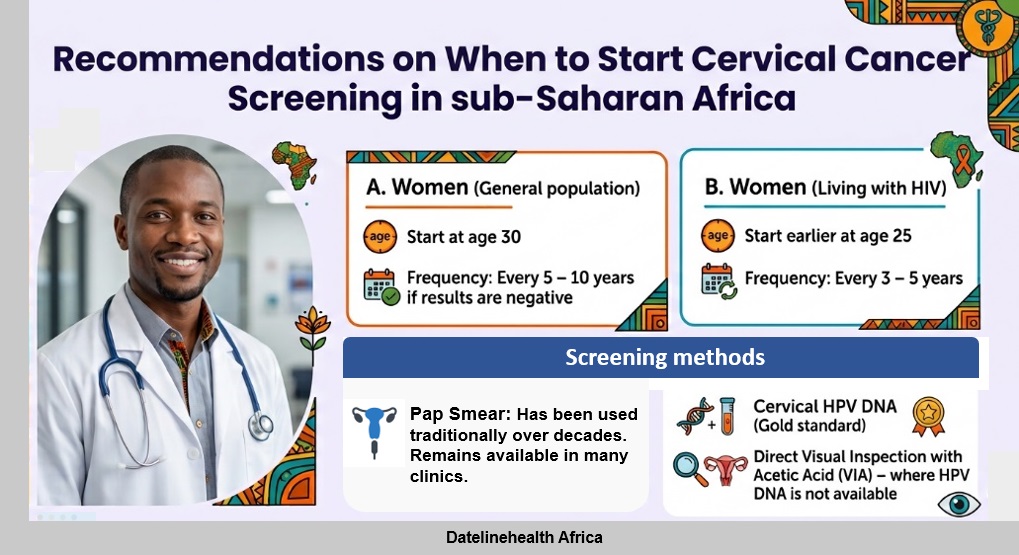
Infographic illustrating when to start different cervical cancer screening methods. Image created with Nano Banana. Click on image to enlarge.
For women in the general population, screening is recommended from age 30. For women living with HIV, who face a higher risk of developing cervical cancer at a younger age, the WHO recommends starting HPV DNA testing at age 25 [6].
For most women, HPV DNA testing every 5 to 10 years is sufficient if results are negative. Women living with HIV are advised to screen more frequently, roughly every 3 to 5 years, given their elevated risk.
Where HPV DNA testing is not available, many public health facilities across the region use Visual Inspection with Acetic Acid (VIA), a low-cost “screen-and-treat” method that a nurse or midwife can perform in a single visit, often followed by same-day treatment if abnormal cells are found. If you’re unsure what’s available near you, your local primary health centre is a good place to start asking.
Learn more: Cervical Cancer Screening Information for African women
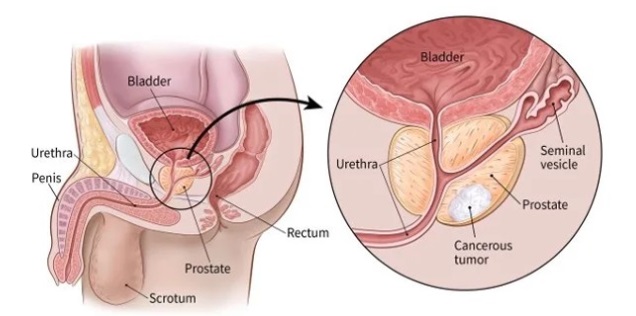
Illustration showing the location of the prostate gland below the bladder with a cancer growth shown. Click on image to enlarge.
Prostate cancer carries a particular weight in this conversation, because research consistently shows that men of African ancestry, whether in Africa itself or in the diaspora, face both a higher risk of developing prostate cancer and a younger average age of onset compared to men of other backgrounds.
Learn more about Prostate cancer: Prostate Cancer in African Men: Symptoms, Causes, and Risk Factors:
A brief physical exam where a doctor checks the prostate gland by hand for any unusual size, shape, or texture. It’s simple to perform and doesn’t require lab equipment, making it accessible in most clinical settings
A blood test that measures prostate-specific antigen (PSA), a protein that can rise when something is wrong with the prostate, including but not limited to cancer. It’s the most common starting point for prostate cancer risk assessment.
Not a routine first step, but used as a follow-up when a DRE or PSA result raises concern, or when available resources allow for closer evaluation. It helps doctors get a clearer picture of the prostate before deciding on further steps like a biopsy.
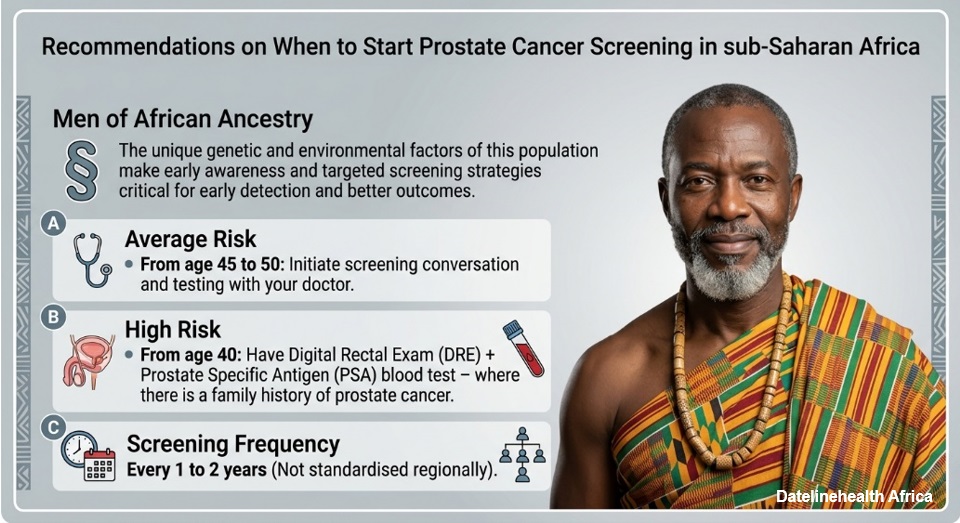
Infographic illustrating when to start prostate cancer screening with frequency of screening. Image created with Nano Banana. Click on image to enlarge.
Several medical bodies now specifically flag African ancestry as a risk factor that should move screening earlier. Where general guidelines suggest starting Digital Rectal Examination (DRE) and PSA (prostate-specific antigen) testing discussions around age 50, men of African descent are frequently advised to start this conversation with a doctor between ages 40 and 45.
If your father or brother was diagnosed with prostate cancer, particularly before age 65, your risk rises further. When combined with African ancestry, this is considered a “higher-risk” profile, and some guidance recommends starting a baseline PSA test as early as age 40 [7].
Learn more: Prostate Cancer Screening: What African Men Need to Know
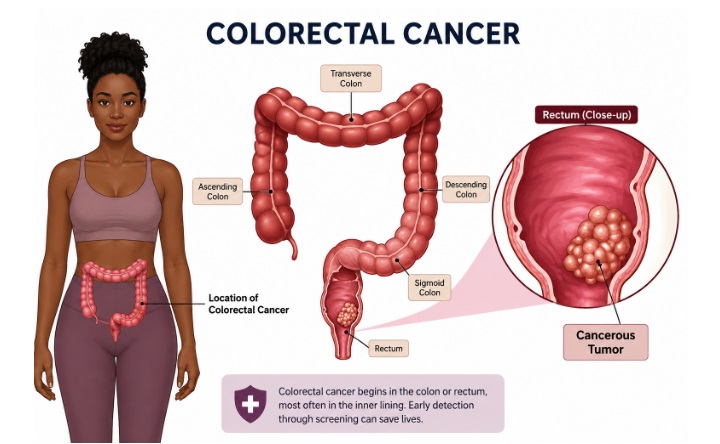
Image showing common location of colorectal cancer in humans. Click on image to enlarge.
Colorectal cancer used to be thought of as a disease of older age and Western diets. That picture is changing fast.
Generally, average-risk adults are advised to start colorectal cancer screening from age 45, with earlier start ages for those with a family history or persistent symptoms.
A thin, flexible tube with a camera examines the lower part of the colon and rectum. It’s less invasive than a full colonoscopy but only checks part of the colon, so it’s typically repeated every 5 years.
A full examination of the entire colon using a flexible camera, with the ability to remove polyps during the same procedure. It’s considered the gold-standard test and, if normal, doesn’t need repeating for about 10 years.
A specialised scan that creates detailed images of the colon without inserting a camera into the body. It’s a good option for people who can’t have a standard colonoscopy, and is usually repeated every 5 years if normal.
A simple, at-home test that checks a small stool sample for hidden blood, a possible early sign of colorectal cancer. It's done annually and doesn't require bowel preparation.
An older stool-based test that also checks for hidden blood, though it requires some dietary restrictions beforehand to avoid false results. Like FIT, it's typically done every year.
This test checks a stool sample for both hidden blood and abnormal DNA markers linked to colorectal cancer or precancerous polyps. It's more sensitive than FIT alone and is usually repeated every 1 to 3 years.
A newer test that checks a standard blood sample for DNA fragments shed by colorectal tumours into the bloodstream. It's a convenient, needle-only option for people who prefer to avoid stool-based or invasive tests, typically repeated every 3 years if normal.
When to Start:
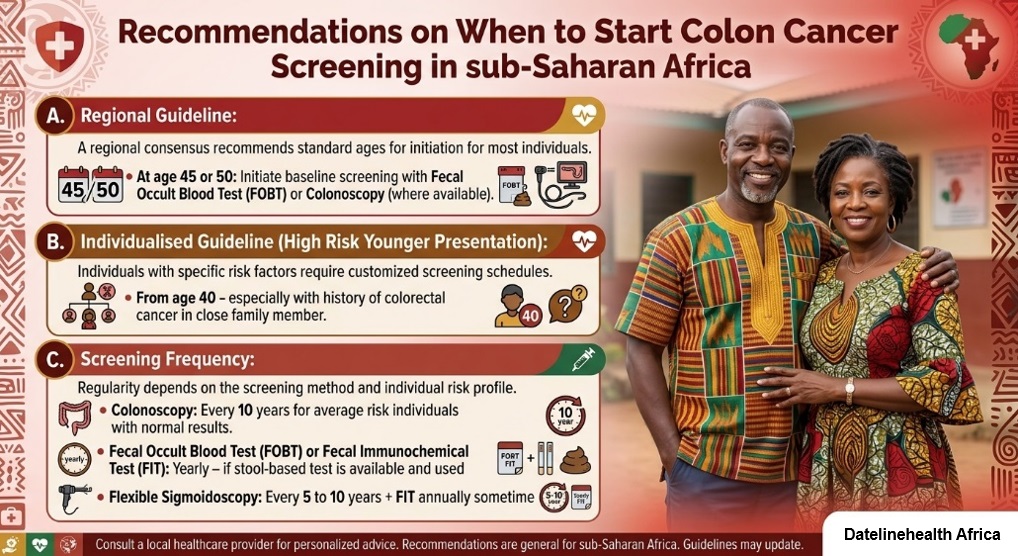
Infographic illustrating when to start colorectal cancer screening with screening frequency. Image created with Nano Banana. Click on image to enlarge.
Studies across the region are recording a steady rise in colorectal cancer cases, including a worrying increase among adults under 50 [8]. Shifts in diet, rising obesity, and lifestyle changes are commonly cited contributors, alongside the reality that many cases across the region are still underdiagnosed and underreported.
In response to similar trends, international bodies have already lowered their average-risk screening start to 45; a shift that mirrors what’s now being observed across African cancer registries. If you have a first-degree relative (parent or sibling) who had colorectal cancer, screening conversations should start even earlier, often a decade before that relative’s age at diagnosis.
Regardless of your age, don’t wait for a screening appointment if you notice:
These symptoms warrant a doctor’s visit immediately, not a scheduled screening slot years down the line.
Learn more here: Colon cancer: Symptoms, Causes, Risk factors, Diagnosis Treatment and Prevention and Colon Cancer Screening Rate Increases When People Are Offered Choices, Study
While breast, cervical, prostate, and colorectal cancers dominate regional cancer statistics, a few others are worth knowing about, given their regional relevance.
Liver cancer is closely linked to chronic hepatitis B infection, which remains common across sub-Saharan Africa. There’s no routine “screening age” for the general population, but adults with unknown hepatitis B vaccination or infection status should get a test, and those confirmed positive are usually advised to begin regular liver ultrasounds and blood tests (often every 6 months) from their diagnosis onward, regardless of age. Hepatitis B vaccination in infancy remains the single most effective preventive step.
This shows a notably high rate in parts of East and Southern Africa, sometimes referred to as part of the “Africa oesophageal cancer corridor.” [9] There’s no standard population screening test, so awareness of risk flags matters:
These should prompt medical evaluation, particularly in adults over 40 or those with a history of heavy alcohol or tobacco use [9].
Leukaemia doesn’t have a population screening age either, but it deserves awareness because it’s commonly under-diagnosed across the region/ Limited access to bone marrow testing and blood work means many cases go unrecognised, especially in children. Its symptoms are also easy to mistake for common illnesses in the region, such as malaria or typhoid: persistent fever, unusual tiredness, unexplained bruising or bleeding, bone pain, or swollen lymph nodes. If a child or adult has these symptoms lingering beyond a normal infection, or they don’t improve with standard treatment, it’s worth asking a doctor for a simple blood test rather than assuming it’s “just an infection.”
Not everyone reading this lives near a hospital with a mammogram machine or a gastroenterologist who can perform a colonoscopy. That’s a real and valid barrier, and it doesn’t mean you’re without options.
Community health workers and primary health centres are often your first and most accessible point of contact. They can perform clinical breast exams, VIA cervical cancer screening, and basic health assessments, and can refer you onward if something needs closer attention.
Many university teaching hospitals across the region run subsidised or free screening days often tied to cancer awareness campaigns (Breast Cancer Awareness Month in October, Cervical Cancer Awareness Month in January). These are worth watching for if cost is a barrier.
Self-awareness costs nothing. Knowing your body’s normal patterns and speaking up quickly when something changes remains one of the most powerful tools available, particularly in settings where formal screening infrastructure is still catching up.
The starting ages in this article are a foundation, not a finish line. Two things matter more than any single number: knowing your personal and family risk factors, and not waiting for symptoms to become severe before seeking care. If there’s one thing the data on cancer in sub-Saharan Africa makes clear, it’s that earlier conversations, with yourself, your family, and your doctor, save lives.
No. Traditional remedies may offer comfort or symptom relief for some conditions, but they cannot detect cancer at an early, treatable stage the way clinical screening tests can. Delaying screening in favor of herbal treatment is one of the most common reasons cancers are diagnosed late across the region.
Yes. A single negative result reflects your health at that moment, not a lifetime guarantee. Each cancer type has its own recommended re-screening interval (for example, HPV testing every 5–10 years, mammograms annually or every 2 years, etc.), and skipping future rounds defeats the purpose of early detection.
Start with a conversation, not a decision to skip it entirely. Public primary health centres often offer lower-cost or subsidised options (like VIA for cervical screening or clinical breast exams), and teaching hospitals frequently run free screening campaigns during awareness months. Ask what’s available before assuming screening is out of reach.
No. Most cancers, including breast, cervical, and colorectal cancer, occur in people with no known family history. Family history simply moves your starting age earlier; it doesn’t determine whether you need screening in the first place. Average-risk screening guidelines exist precisely because most cases happen without a hereditary pattern.
Not necessarily. Many screening tests, including mammograms, Pap smears, and PSA tests, can return abnormal results caused by things other than cancer, such as infections, cysts, or benign growths. A positive or abnormal screening result is a signal for further testing (like a biopsy), not a diagnosis on its own.
Related:
4 Cancer Screening Tests You Need to Do
Cancer Rates Are Rising in Young Adults; Are You at Risk?
Aggressive Advanced Cancer Treatment is Useless Near End of Life, Study finds
Published: September 16, 2026.
© 2026. Datelinehealth Africa Inc. All rights reserved.
Permission is given to copy, use, and share content freely for non-commercial purposes without alteration or modification and subject to source attribution.
DATELINEHEALTH AFRICA INC., is a digital publisher for informational and educational purposes and does not offer personal medical care and advice. If you have a medical problem needing routine or emergency attention, call your doctor or local emergency services immediately, or visit the nearest emergency room or the nearest hospital. You should consult your professional healthcare provider before starting any nutrition, diet, exercise, fitness, medical or wellness program mentioned or referenced in the DatelinehealthAfrica website. Click here for more disclaimer notice.