Coeliac Disease Explained for Africans
By: Elizabeth Obigwe, B.Sc. Anatomy. Freelance Health Writer. Medically reviewed by: A. Odutola, MB.BS., PhD, FRCSEd.
May 20, 2026

An African woman holds on to her abdomen in apparent pain while rejecting a plate of bread offered by another a hand. Image credit: ChatGPT. Click on image to enlarge.
Gluten is a water-insoluble protein present in wheat, barley, and rye, which, when taken into the body, is broken down, safely processed and excreted.
The body doesn’t completely digest gluten, so a large portion of it is passed out of the body without causing any damage.
In people with coeliac disease, the story is different. The gluten fragments do not leave the body safely; rather, they trigger an immune reaction in the small intestine. This reaction leads to inflammation and damage to the intestinal lining, particularly the tiny finger-like structures (villi) that are responsible for absorbing nutrients.
This article will discuss and help you to know what coeliac disease is, what causes it, how to know if you or someone you know has the condition, and how to get help.
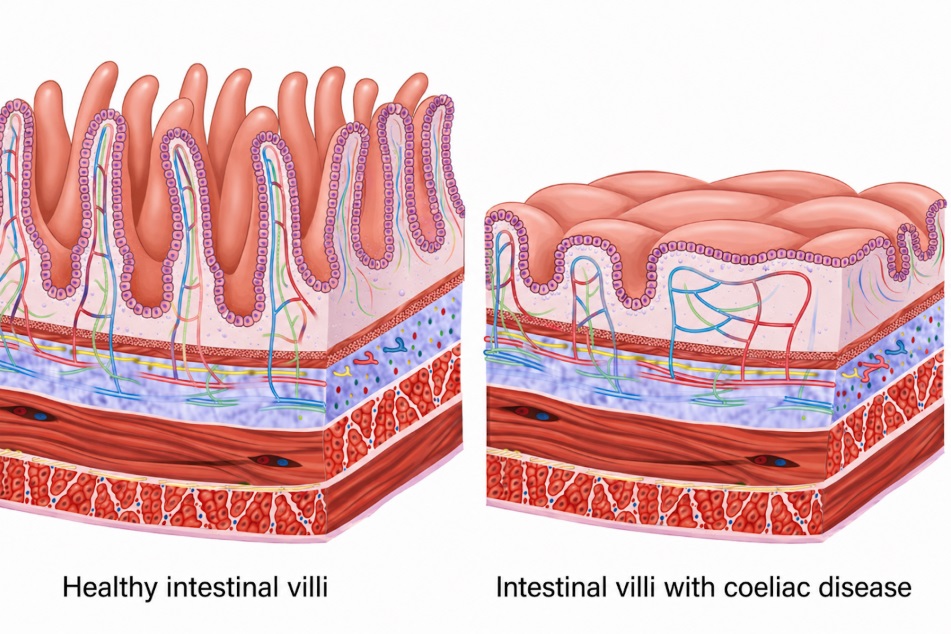
Comparison of healthy intestinal villi and flattened villi in coeliac disease, showing structural damage. Image credit: ChatGPT. Click on image to enlarge.
Coeliac disease is a chronic autoimmune disorder in which the body reacts abnormally to gluten, a protein found in foods like wheat, barley, and rye.
In people with this condition, eating gluten causes the immune system to attack the lining of the small intestine, which can result in inflammation and interfere with how the body absorbs nutrients from food.
Coeliac disease is distinct from gluten intolerance.
Coeliac disease is a medically diagnosable condition, typically confirmed through blood tests and an intestinal biopsy. Because of the intestinal damage and potential complications, coeliac disease requires strict, lifelong avoidance of gluten, even in very small amounts.
Gluten intolerance, also known as non-coeliac gluten sensitivity, is a different and less clearly defined condition. It is not autoimmune (that is, the immune system does not attack the body) and does not cause damage to the small intestine.
People with gluten intolerance may experience symptoms such as bloating, abdominal discomfort, or fatigue after eating gluten, but standard tests for coeliac disease come back normal. The diagnosis is usually made by ruling out coeliac disease and wheat allergy, then observing whether symptoms improve when gluten is removed from the diet.
Coeliac disease was once thought to be a condition seen mainly in populations of European (Caucasian) origin. However, growing research has shown that this is no longer the case. The condition is now recognised as a global health issue, affecting people across different regions of the world, including Africa.
Globally, the pooled prevalence of coeliac disease is estimated to be about 1.4%. Within Africa, the prevalence is estimated at around 0.5%, which is comparable to figures reported in other regions. For example, prevalence is about 0.4% in South America, 0.5% in North America, 0.6% in Asia, and approximately 0.8% in Europe and Oceania [1]. These figures highlight that coeliac disease occurs in Africa at a rate similar to other continents.
Despite this, awareness and diagnosis remain limited in many African settings. As a result, the true burden of the disease may be higher than current estimates suggest, with many cases likely going unrecognised.
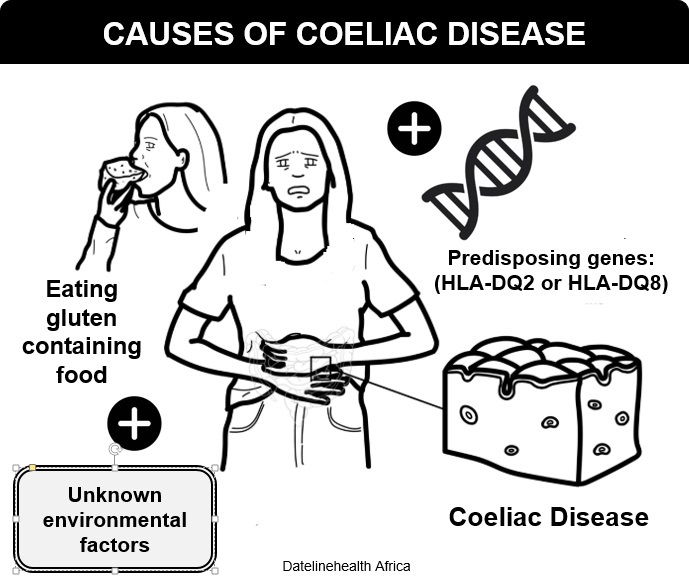
Info poster showing the causes of coeliac disease. Image credit: ChatGPT. Click on image to enlarge.
Coeliac disease is caused by a combination of some key factors working together: eating gluten, having certain genes, an abnormal immune response, and certain environmental exposures [2].
The process starts when a person eats foods that contain gluten.
Inside the small intestine, gluten is broken down into smaller pieces. The body then modifies these gluten particles into a form that the immune system can recognise.
In people who have certain predisposing genes (HLA-DQ2 or HLA-DQ8), the immune system mistakes these particles for a threat and begins to attack the lining of the small intestine, leading to inflammation and damage. Over time, this damages the tiny finger-like structures (villi) that help absorb nutrients [2].
Note that while genetics play an important role in this disease, genetics alone does not cause it. Many people carry the genes linked to coeliac disease but never develop it. Other environmental factors are also needed to trigger the condition, but scientists do not fully understand these factors [2].
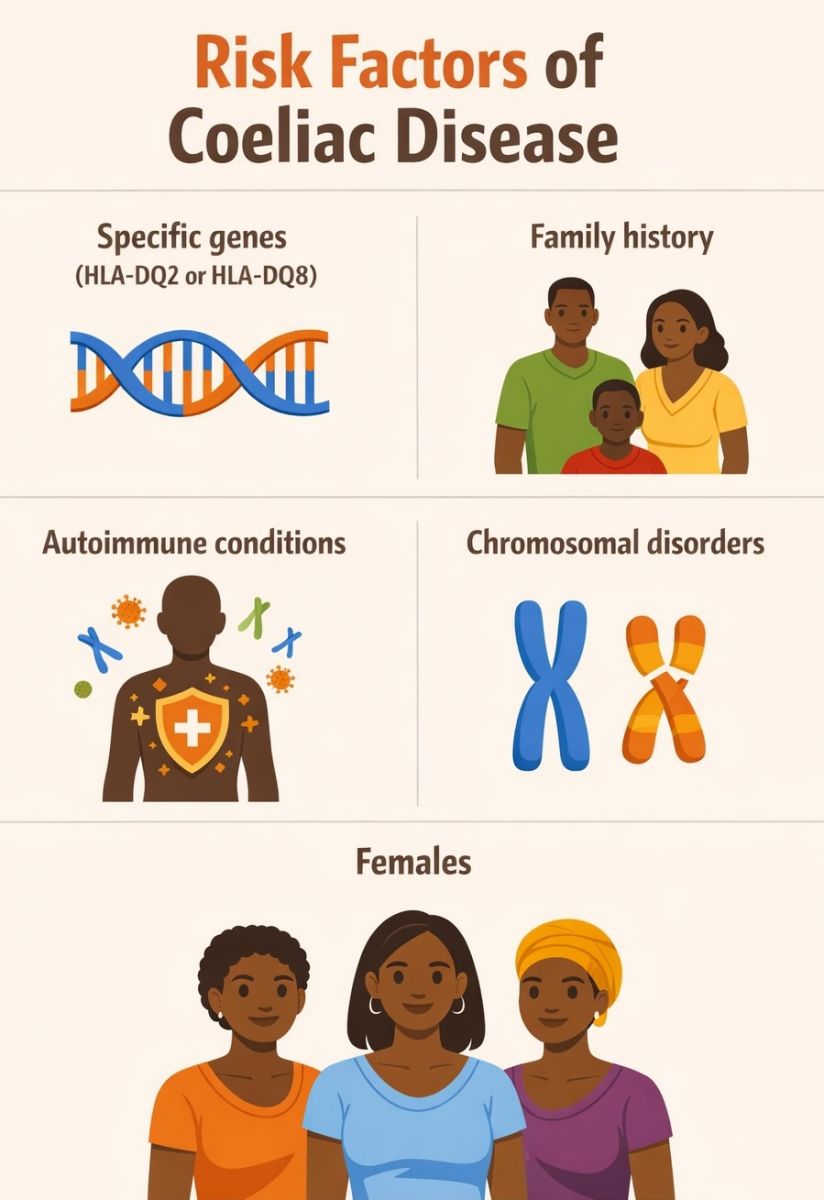
Info poster showing five coeliac disease risk factors. Image credit: ChatGPT. Click on image to enlarge.
Although coeliac disease can occur at any age, it does not develop randomly. Certain factors make some people more likely to develop it than others. These are called risk factors. They don’t directly cause the disease, but they increase the chances that it may occur.
People with the following are at a higher risk of developing coeliac disease:
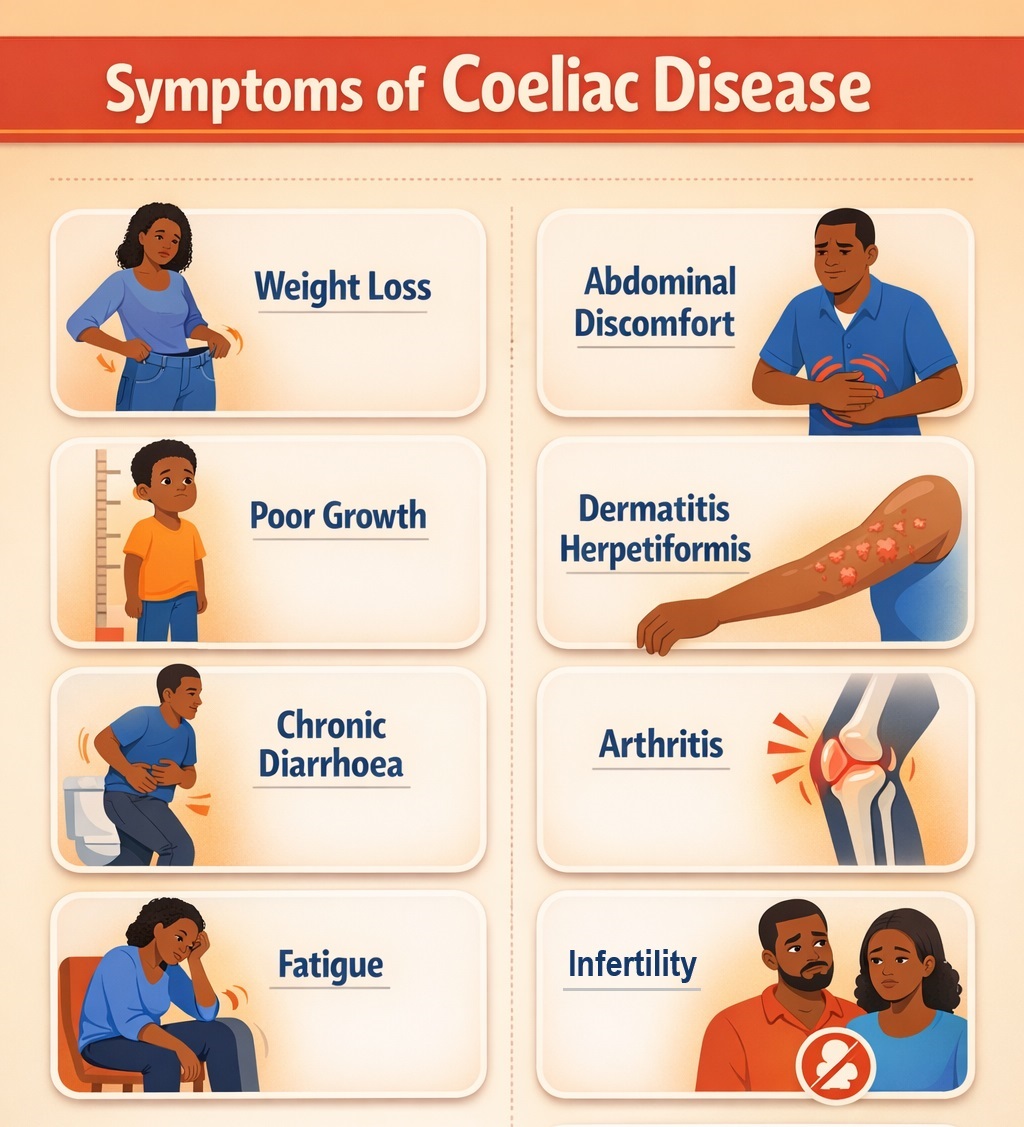
Info poster showing some common symptoms of coeliac disease. Image credit:ChatGPT. Click on image to enlarge.
The key symptoms of coeliac disease may differ a little for adults and children [2].
These are shown in Table 1
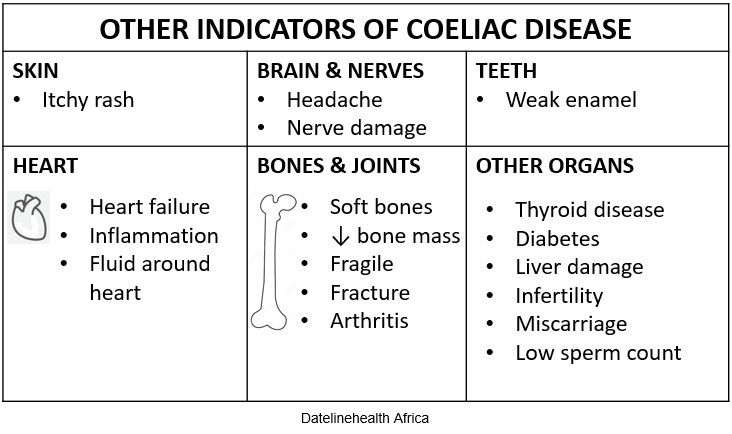
Table 1: Showing other indicators of coeliac disease. Click on image to enlarge.
You should consider seeing a doctor if you experience persistent or unexplained symptoms, particularly those affecting your digestion. Ongoing issues like bloating, diarrhoea, abdominal pain, or constipation that do not improve with usual treatment should be properly evaluated.
It is equally important to pay attention to less obvious signs, such as persistent fatigue, unexplained anaemia, weight loss, or recurring nutrient deficiencies.
For children, poor growth, delayed puberty, or frequent digestive complaints should not be ignored, as early diagnosis is important for proper development.
One important point to keep in mind is that you should not remove gluten from your diet before seeing a doctor. Doing so can affect test results and make it harder to reach an accurate diagnosis.
Diagnosing coeliac disease usually involves a combination of physical assessment, blood tests, and confirmation with an endoscopy [4, 5]. Each step helps the doctor build a clearer picture of what is happening in the body.
The process often begins with a physical examination. Your doctor will look for signs that may suggest coeliac disease, especially those related to poor nutrient absorption. These may include pale skin, weight loss, muscle wasting, swelling (oedema), and brittle nails. They may also check for skin conditions such as dermatitis herpetiformis, a rash linked to gluten sensitivity, as well as examine the abdomen for any abnormalities.
In children, your doctor may regularly measure height and weight over time to monitor growth and detect any delays. In adults, these measurements can help identify unexplained weight loss or changes in weight.
If coeliac disease is suspected, the next step is usually a blood test. This test looks for specific antibodies that the body produces when it reacts abnormally to gluten. High levels of these antibodies suggest that the immune system may be responding in a way consistent with coeliac disease.
If the blood test results are positive, an endoscopy is typically done to confirm the diagnosis. This involves passing a thin, flexible tube with a camera through the mouth into the small intestine. During the procedure, the doctor takes small tissue samples (biopsies) from the intestine.
These samples are examined to see if there is inflammation or damage to the intestinal lining. In coeliac disease, the structures responsible for absorbing nutrients become flattened, which confirms the diagnosis.
Coeliac disease has no cure or medication yet, but a strict, lifelong gluten-free diet can give positive outcomes when followed properly. This means completely cutting out wheat, rye, barley, and any foods or drinks containing gluten, for life, because even small amounts of gluten can trigger an immune reaction and continue damaging the intestine.
When a person with coeliac disease stops eating gluten:
However, many gluten-free processed foods can be pricey, less nutritious, and even lead to weight gain or nutrient gaps if you are not careful. Hence, treatment is not just about removing gluten. It also involves ongoing medical care and monitoring.
Doctors usually recommend regular follow-up visits to:
Because many people with coeliac disease develop nutrient deficiencies, they may also need vitamin and mineral supplements (such as iron, calcium, vitamin D, or B12) as well as guidance from a dietitian to ensure they are eating a balanced gluten-free diet [4].
These foods are naturally gluten-free. However, if care is not taken, gluten can still get into them through the method of preparation, like adding thickeners or seasonings that contain gluten. They may also get mixed with wheat or other gluten-containing foods.
All are naturally gluten-free
Gluten is mainly found in wheat, barley, and rye, with wheat being the most common of the three among Africans. Hence, gluten-containing foods in Africa are mostly those made from wheat flour or processed products. Some of these foods have gluten-free alternatives.
When left untreated, coeliac disease can lead to several complications that affect different parts of the body. These complications largely arise because the damaged intestine can no longer absorb nutrients properly, and due to continued immune system reaction.
One of the most common coeliac disease complications is malabsorption, where the body cannot properly absorb nutrients from food. This happens because the lining of the small intestine becomes damaged.
As a result, individuals may develop:
When calcium and vitamin D are not properly absorbed, bone health is affected. Over time, this can lead to low bone density, making bones weaker and more prone to fractures [6].
Coeliac disease is an autoimmune condition, and it is often associated with other autoimmune or systemic disorders. This means it can affect multiple organs beyond the intestine [5].
In some rare cases, symptoms continue even after strict adherence to a gluten-free diet. This is known as refractory (unresolved) coeliac disease. It is a serious complication because the intestine does not heal as expected, and patients may require specialised medical care [5].
Long-standing untreated coeliac disease can lead to more severe structural damage in the intestine, including ulcerative conditions (sores or wounds) [2].
Although not common, untreated coeliac disease is associated with an increased risk of certain cancers, particularly:
Coeliac disease can be easy to miss, especially because its symptoms are not always obvious or limited to the digestive system. Many people live with it for years without a diagnosis, often attributing their symptoms to more common conditions.
Even after a diagnosis is made, adjusting to life with coeliac disease can be challenging. The treatment is straightforward in theory—a strict, lifelong gluten-free diet. However, it requires consistent effort and discipline in everyday life. Thankfully, many traditional African foods are naturally gluten-free, which can make these dietary changes more practical and sustainable for people across the continent.
With early diagnosis and guided food decisions, people with coeliac disease can live good, healthy lives.
Yes, people can have what doctors call silent or asymptomatic coeliac disease, where gluten still damages the small intestine despite no obvious issues like diarrhoea or bloating.
Yes, some studies suggest a possible link between untreated coeliac disease and fertility problems, but overall, more research needs to be done on this [7].
Most people with coeliac disease do not have visible blood in their stools, and bleeding is not considered a common direct symptom of the disease. If you notice blood in your stool, it is important to see a doctor.
1. Singh P, Arora A, Strand TA, Leffler DA, Catassi C, Green PH, et al. Global prevalence of celiac disease: systematic review and meta-analysis. Clin Gastroenterol Hepatol. 2018;16(6):823–836.e2. doi:10.1016/j.cgh.2017.06.037. Available from here.
2. Rogalidou M, Christodoulou D. Unraveling the complexity of celiac disease: a narrative review of its multisystem nature. Medicina (Kaunas). 2026;62(1):120. doi:10.3390/medicina62010120. Available from here.
3. Doyle JB, Silvester J, Ludvigsson JF, Lebwohl B. Advances in the pathophysiology, diagnosis, and management of celiac disease. BMJ. 2025;391:e081353. doi:10.1136/bmj-2024-081353. Available from here.
4. Blom JJ, Gidrewicz D, Turner J, Duerksen DR, Pinto-Sánchez MI. Diagnosis and management of celiac disease. CMAJ. 2025;197(38):E1258–E1265. doi:10.1503/cmaj.230091. Available from here.
5. Caio G, Volta U, Sapone A, Leffler DA, De Giorgio R, Catassi C, et al. Celiac disease: a comprehensive current review. BMC Med. 2019;17:142. doi:10.1186/s12916-019-1380-z. Available from here.
6. Daley SF, Haseeb M. Celiac disease. In: StatPearls [Internet]. Treasure Island (FL): StatPearls Publishing; 2026 [updated 2025 Feb 4]. Available from here.
7. Wieser H, Ciacci C, Soldaini C, Gizzi C, Pellegrini L, Santonicola A. Fertility in celiac disease: the impact of gluten on male and female reproductive health. Nutrients. 2025;17(9):1575. doi:10.3390/nu17091575. Available from here.
Related
Published: May 20, 2026
© 2026. Datelinehealth Africa Inc. All rights reserved.
Permission is given to copy, use and share content freely for non-commercial purposes without alteration or modification and subject to attribution as to source.
DATELINEHEALTH AFRICA INC., is a digital publisher for informational and educational purposes and does not offer personal medical care and advice. If you have a medical problem needing routine or emergency attention, call your doctor or local emergency services immediately, or visit the nearest emergency room or the nearest hospital. You should consult your professional healthcare provider before starting any nutrition, diet, exercise, fitness, medical or wellness program mentioned or referenced in the DatelinehealthAfrica website. Click here for more disclaimer notice.