Uganda's Fast Ebola Response: A Success Years in the Making
By Margaret Nagawa, Health and Nutrition Coordinator at Action Against Hunger Uganda.
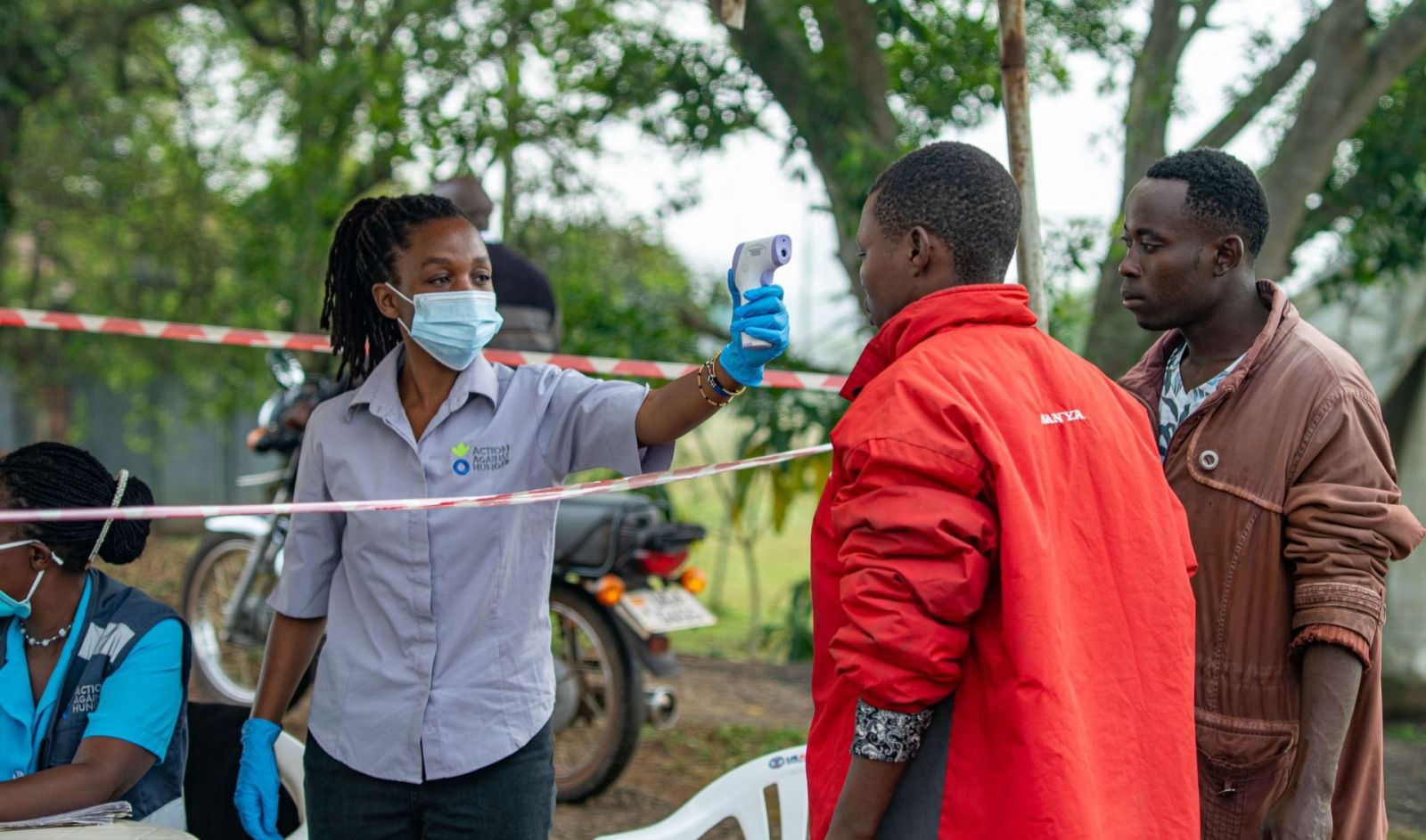
Photo of a Health worker screening for Ebola across the DRC-Uganda border. Credit: Action Against Hunger Uganda. Click on image to enlarge.:
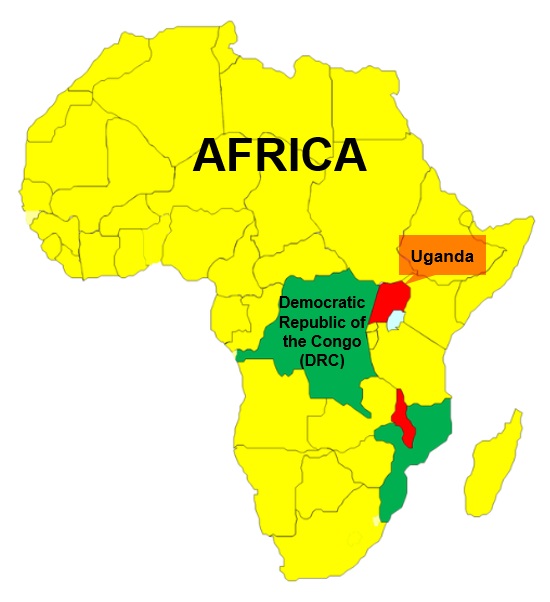
KAMPALA. FRIDAY, AUGUST 28, 2026 — Improved narrative. The latest Ebola outbreak began across Uganda’s border. In May, the World Health Organization declared a public health emergency of international concern as the rare Bundibugyo strain of Ebola, for which there is still no approved vaccine or treatment, spread through Ituri Province in the Democratic Republic of the Congo. Within days, confirmed cases appeared in Uganda.
For anyone familiar with infectious disease, that may not be surprising. What is more remarkable is that Uganda’s response began before the first cases arrived.
Preparation was key. Within 72 hours of the first alert, existing national and subnational coordination structures were activated. Trained health workers were deployed. Surveillance teams already operating in the country were mobilized. A temporary laboratory was established in Bwera to confirm suspected cases on site. And Uganda temporarily closed sections of its border to slow the cross-border movement that was driving early transmission.
None of this was built from scratch.
Uganda had faced Ebola before. And for years, the Ministry of Health, working with Africa CDC and the U.S. CDC’s public health fellowship program, has invested in training epidemiologists who now sit within a standing national task force. These professionals can be deployed for any outbreak — Ebola, COVID-19, cholera and beyond.
Coordination turned that preparedness into action. Local teams worked across sectors alongside partners including WHO, UNICEF, Irish Aid and Africa CDC. Together, they shared information and planned responses to needs ranging from medical supplies to supplemental nutrition.
Daily pillar meetings, sometimes continuing past 10 p.m., tracked caseloads, identified operational gaps and kept a wide range of organizations aligned on what was needed, where and when. The list of needs was long.
Coordinated by the Ministry of Health, organizations across the response came together to fill those gaps. At Action Against Hunger Uganda, we mobilized to support several critical areas:
Because Action Against Hunger works at the intersection of health and nutrition, we also helped prepare for the nutritional needs of Ebola patients. The potential consequences became painfully clear when a new mother had to enter isolation without her young child, who was still breastfeeding.
Working with the Ministry of Health’s Nutrition Technical Working Group and its partners, we quickly assessed the specific needs of children separated from their caregivers, including access to therapeutic formula, which has been in short supply across parts of Africa since the war in Iran began. We also helped ensure that health workers were trained in nutrition protocols designed to protect vulnerable and malnourished children during an outbreak.
So far, Uganda’s worst fears have not been realized. The country’s last confirmed Ebola patient was discharged on July 16.
For those of us who have spent the past several months on the ground working to prevent the worst, however, the bigger story is not simply how the outbreak ended. It is how quickly — and how thoroughly — Uganda moved to contain it before it had the chance to spread widely.
Trust was another critical part of the response. Communities in Kasese and Kikuube had already worked with us through years of nutrition programming. When our teams arrived to talk about Ebola, we were not strangers. That existing relationship made it easier to communicate risks, answer questions and encourage people to take precautions.
The experience of COVID-19 also shaped the response. Communities remembered what an outbreak could mean. Existing stocks of masks and hygiene materials could be put to use, while people who had already lived through a lockdown understood the value of taking action to prevent another one.
The story is different across the border in the Democratic Republic of the Congo, where colleagues are working to contain what has been described as the largest Ebola outbreak on record, spreading across dozens of health zones.
Uganda’s border districts remain on alert. The response plan has been extended through November, and screening continues at points of entry. That caution is well placed.
It is also a reminder of something that is easy to forget when there is no crisis: preparedness is infrastructure.
The pre-trained teams. The standing laboratories. The surveillance systems. The fellowship programs that produce epidemiologists years before anyone needs them. The relationships built between health authorities, communities and humanitarian organizations long before an emergency begins.
These are not costs to be trimmed when budgets tighten. They are investments that determine how quickly a country can act when the warning comes.
Uganda was able to move in 72 hours instead of 72 days because the systems, skills and relationships were already there.
As international donors reassess health and humanitarian budgets in the year ahead, that is the lesson worth carrying forward: the most effective outbreak response often begins long before the first case.
About Action Against Hunger:
Action Against Hunger is a global leader creating a future where every life is well nourished. We innovate to prevent malnutrition and respond to hunger hotspots, working in more than 55 countries and reaching more than 26 million people each year. Together, we are promoting resilience and working to end hunger for everyone, for good. We work to improve lives by preventing hunger and to save lives by treating malnutrition and responding to emergencies. From crisis to sustainability, we tackle the immediate, underlying, and root causes of hunger.
About the Author
.jpg) Margaret Nagawa is a public health, health systems, and nutrition specialist with extensive experience of over 15 years leading integrated health and nutrition programmes in humanitarian, development, and community settings. Her expertise spans Ebola and COVID-19 emergency response, maternal and child health, adolescent health, HIV and TB, prevention and treatment of malnutrition, maternal, infant and young child nutrition (MIYCN), and multiple micronutrient interventions.
Margaret Nagawa is a public health, health systems, and nutrition specialist with extensive experience of over 15 years leading integrated health and nutrition programmes in humanitarian, development, and community settings. Her expertise spans Ebola and COVID-19 emergency response, maternal and child health, adolescent health, HIV and TB, prevention and treatment of malnutrition, maternal, infant and young child nutrition (MIYCN), and multiple micronutrient interventions.
She has strong experience in strengthening health and community health systems, programme leadership and management, policy and guideline development, monitoring and evaluation, research, advocacy, knowledge translation, and strategic communication. Margaret is skilled in translating evidence into practical policies, programmes, and interventions that improve maternal, child, and population health and nutrition outcomes.
Sponsored Content: Action Against Hunger, Uganda
Published: August 28, 2026
© 2026. Datelinehealth Africa Inc. All rights reserved.
Permission is given to copy, use and share content fornon-commercial purposes without alteration or modification and subject to attribution as to source.
DATELINEHEALTH AFRICA INC., is a digital publisher for informational and educational purposes and does not offer personal medical care and advice. If you have a medical problem needing routine or emergency attention, call your doctor or local emergency services immediately, or visit the nearest emergency room or the nearest hospital. You should consult your professional healthcare provider before starting any nutrition, diet, exercise, fitness, medical or wellness program mentioned or referenced in the DatelinehealthAfrica website. Click here for more disclaimer notice.