8 Healthy Ways to Lose Belly Fat Without Giving Up Nigerian Food
By: Temitope Oyetunji, MBBS, FWACP (Family Medicine). Medically reviewed by the DLHA Editorial Team.
October 15, 2026
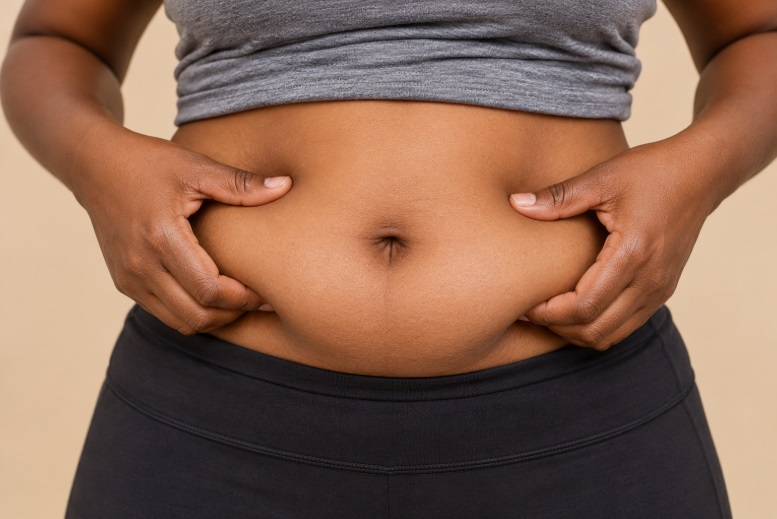
ChatGPT-generated image showing a dark-skinned female adult pinching the excess fat around her abdomen, illustrating belly fat and waistline. Click on the image to enlarge.
In many African communities, having a flat stomach, or at least one that is not noticeably protruding, is not seen as a priority. A growing waistline is often accepted as a normal part of getting older, building a career, having kids, or enjoying life's comforts.
But a protruding belly, known medically as abdominal or central obesity, is more than a matter of appearance. Excess fat around the waist, especially the fat that surrounds the internal organs, increases the risk of high blood pressure, type 2 diabetes, heart disease, stroke, and other serious health conditions. It can also reduce life expectancy and affect your overall quality of life.
If you are looking to lose the fat around your waistline, this article will help you understand why belly fat matters and, more importantly, what really works to get rid of it. Losing belly fat does not require starving yourself, spending hours in the gym, or buying expensive "fat-burning" products. So what actually works?
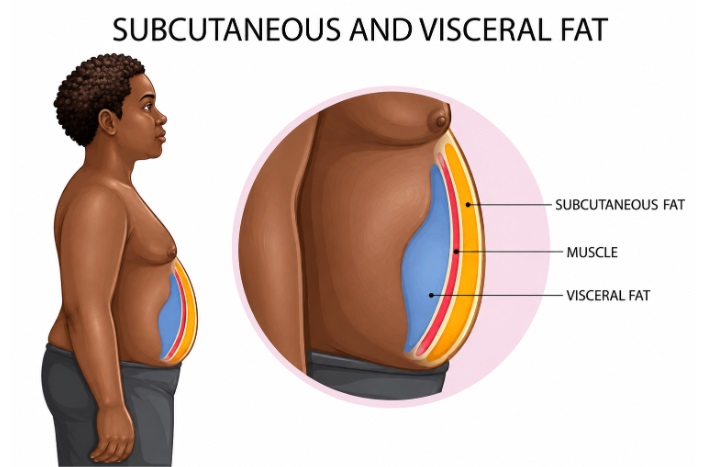
ChatGPT-generated image illustrating the difference between subcutaneous fat beneath the skin and visceral fat surrounding the internal abominal organs. Click on image to enlarge.
The first question to answer when trying to lose belly fat is, what exactly is belly fat, and why should you be concerned about having too much of it?
Belly fat, also called abdominal fat, is the fat stored around your abdomen. Some of this fat sits just underneath the skin. This is called subcutaneous fat. It is the soft fat that you can pinch around your stomach. There is also visceral fat, which is stored deeper inside the abdomen around organs such as the liver and intestines. This type of fat is more closely linked with metabolic problems (i.e., difficulty with changing eaten food into usable energy in the body), and cardiovascular disease. [1]
A second, equally important question is, how much belly fat do you actually have?
You do not need an expensive machine to get an idea of whether you are carrying too much fat around your waist. One of the simplest tools is a tape measure, which you can easily use to measure your waist circumference following some easy steps.
As a general guide, a waist circumference of less than 94 cm (37 inches) in men and less than 80 cm (31.5 inches) in women is considered lower risk for metabolic complications. Once the waist reaches 94 cm or more in men or 80 cm or more in women, the risk of conditions such as type 2 diabetes and cardiovascular disease begins to increase. At 102 cm (40 inches) or above in men and 88 cm (34.5 inches) or above in women, the risk is considered substantially higher.
These numbers are useful guides, but they are not a diagnosis. If your waist is above these levels, rather than becoming fixated on the number, consider it a reason to take a closer look at your overall health and cardiovascular risk.
What you eat can influence your weight and the amount of fat you carry around your waist. But losing belly fat is not about finding one special food or following a highly restrictive diet. It is about improving the overall quality of your diet and making choices you can maintain over time.
There is no single food that will magically melt away belly fat. Instead, evidence from studies suggests that the quality of the overall diet matters more than any single food or diet plan. Diets built around whole or minimally processed, nutrient-dense foods, while limiting ultra-processed foods, added sugars, and excess refined carbohydrates can support healthy weight management and metabolic health. [2, 3]
Examples of these include:
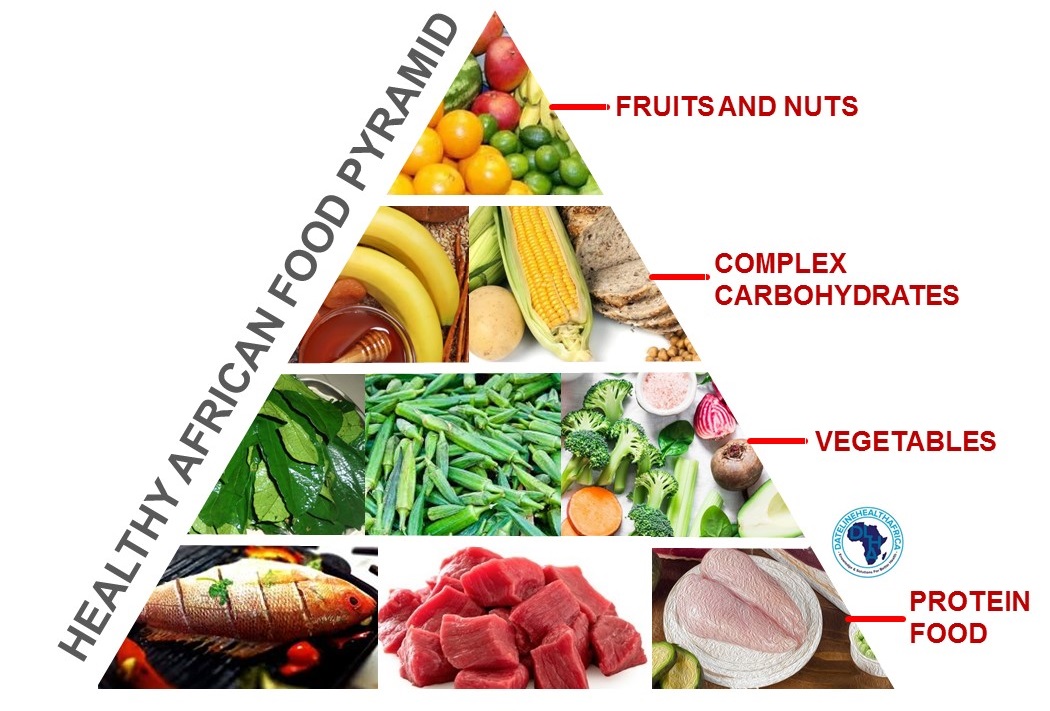
Infographic showing food groups that make a healthy food pyramid for African populations. Click on image to enlarge.
A simple way to build your meals is to make vegetables a significant part of the plate, include a source of protein, and keep your portion of rice, yam, swallow, or other starchy foods reasonable.
Giving up Nigerian staples such as pounded yam, eba, fufu, amala and rice is something many Nigerians would never dream of doing. Fortunately, achieving a healthier waistline does not mean you have to give up these foods entirely.
For example, eating a smaller portion of rice alongside vegetables and a reasonable portion of fish, chicken, beans or another protein source can make the meal more balanced and filling. The same principle applies to swallow. You do not necessarily have to stop eating eba, amala or pounded yam. Paying attention to the portion and choosing a nutritious soup with plenty of vegetables and a reasonable amount of oil can allow you to enjoy these familiar foods while still working towards a healthier waistline.
Rather than trying to eliminate carbohydrates or fats completely, focus on reducing foods that are easy to overconsume and provide a lot of calories with relatively little nutritional value. These include:
It is possible to eat healthy foods and still gain weight if you consistently eat more calories than your body needs. Large plates, second servings, and eating until you are uncomfortably full can all make it easy to take in more food than your body needs.
It is also easy to eat more when you are distracted. Eating while watching television, working, or scrolling through your phone can make you less aware of how much you have eaten. Restaurant meals and large portions served at social gatherings can have the same effect.
A simple starting point is to serve yourself a reasonable portion and eat slowly. Give yourself time to notice when you are comfortably satisfied rather than waiting until you are completely full.
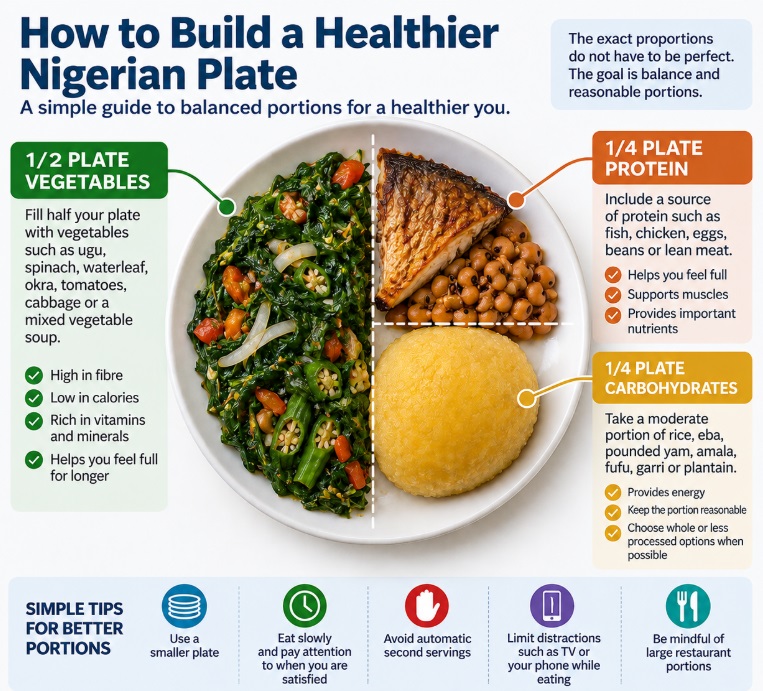
ChatGPT generated Infographic showing the component proportion of a healthier Nigerian plate with vegetables, protein and moderate portions of carbohydrates. Click on image to enlarge.
You can also use these simple strategies:
This does not mean that you have to measure every gram of food or count every calorie for the rest of your life. The aim is simply to become more conscious of your portions.
Many Nigerians become less physically active as they grow older. For some men, work may involve long hours sitting at a desk, driving or spending time in traffic. For many women, work and family responsibilities, including household chores and childcare, can take up much of the day, leaving little time for planned exercise or recreation.
Even when someone is busy throughout the day, this does not necessarily mean they are getting enough physical activity. Over time, spending more time sitting and less time doing activities that raise your heart rate can contribute to weight gain, including around the waist.
If you want to lose belly fat, finding ways to move more and exercise regularly is one of the most important changes you can make. You do not need an expensive gym membership or a complicated exercise programme. Evidence from research carried out in sub-Saharan Africa supports combining different forms of exercise as an important part of managing weight. [4]
Below are simple things to bear in mind about exercise.
These may sound like a lot if you are currently inactive, but you can break them into manageable amounts.

Photo of an older African couple brisk-walking together in a park. Image credit: Magnific.
For example, 30 minutes of brisk walking on five days of the week is a good place to start. You can also look for opportunities to move more during the day: take the stairs, walk short distances instead of driving, stand up regularly if you have a desk job, or take a walk after dinner.
Research suggests that combining diet changes and exercise is more effective in reducing both overall body fat and excess fat around the waist. In other words, sustainable changes to what you eat and how much you move are more likely to improve your body fat composition than short-term diets or intense exercise routines that you cannot maintain [5].
If you regularly drink alcohol, reducing how much you drink can make losing belly fat easier. Alcohol provides a significant amount of calories, and unlike a proper meal, drinks may add plenty of calories without making you feel full.
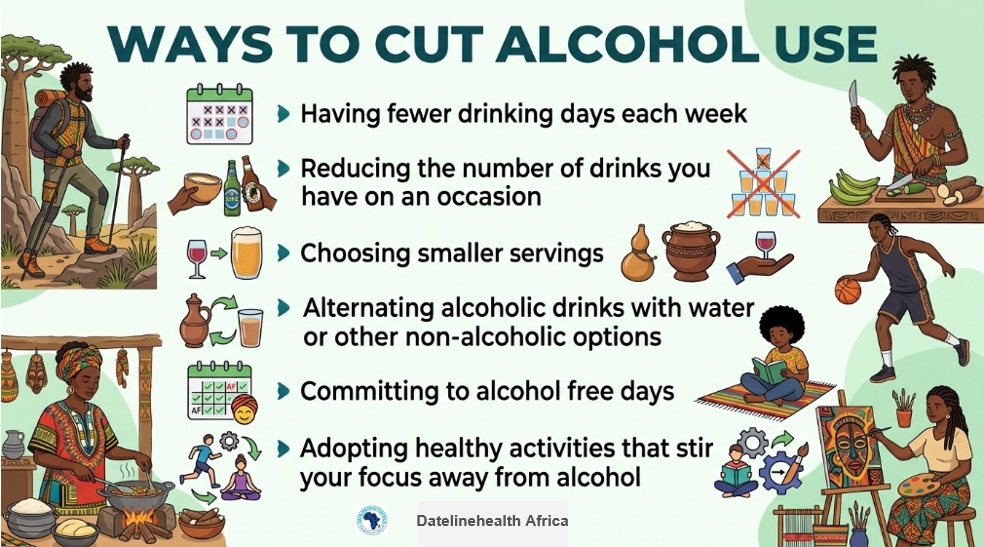
Infographic showing six ways to cut alcohol use. Image created with Gemini AI. Click on image to enlarge.
If you drink regularly, you do not necessarily have to make a dramatic change overnight. You could start by:
Being mindful of the snacks and large meals that often accompany drinking.

African man sleeping on his right side in bed. There is a lighted bedside lamp in the background. Image credit: Magnific. Click on image to enlarge.
Getting too little sleep can make weight management more difficult. Poor sleep can affect the hormones that regulate hunger and fullness, increase cravings for high-calorie foods and leave you feeling too tired to exercise or stay active.
If you regularly sleep poorly, you may therefore find yourself eating more, moving less and struggling to maintain the habits needed for weight loss.
Most adults should aim for at least seven hours of good-quality sleep each night.
Aim to:
Stress does not automatically give you a big belly, but chronic stress can make healthy weight management more difficult.
When you are stressed, your body releases hormones including cortisol. Persistent stress may affect appetite, cravings and eating behaviour, and some people respond to stress by eating more, drinking more alcohol or becoming less physically active. These behaviours can contribute to weight gain over time.
The answer is not to eliminate all stress, which is neither realistic nor necessary. Instead, find healthier ways to cope with it. Regular physical activity, adequate sleep, time with family and friends, relaxation practices, spiritual activities or other meaningful activities can all help.
Losing belly fat takes time, so it is important to set realistic goals. Trying to lose a large amount of weight in a few weeks can be discouraging and may push you towards extreme diets that are difficult to maintain. A gradual, sustainable approach is more likely to give you results that last. And don't judge your progress by the weighing scale alone.
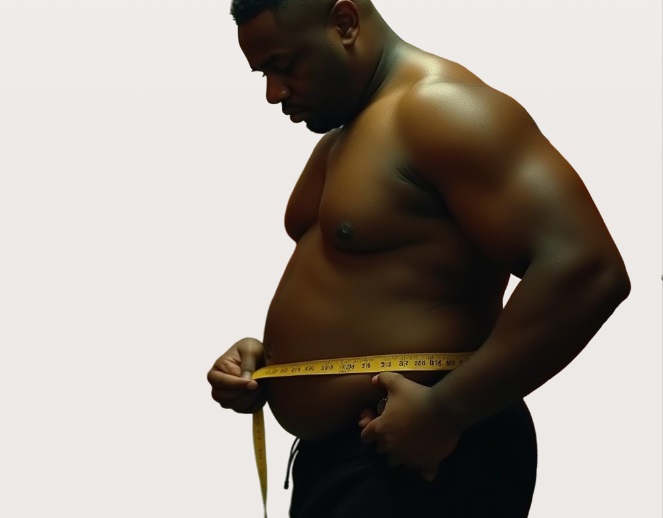
African man standing and checking his waist circumference with a tape. Image credit: Magnific. Click on image to enlarge.
Besides tracking your weight, also track your waist circumference. Measuring it every few weeks can show changes that your weight alone may not reveal.
Also pay attention to:

An African man is talking with a healthcare professional in an office. Image credit: Magnific. Click on image to enlarge.
Losing belly fat is not as simple as drinking a particular tea or taking a supplement, there is no magic solution. Be cautious of products and programmes promising rapid or targeted belly-fat loss.
Here are a few myths to ignore:
A large waist does not mean that you are sick, but it can be a warning sign that your risk of certain health problems is higher. This is especially true when abdominal fat occurs alongside high blood pressure, high blood sugar or diabetes, abnormal cholesterol levels, or other risk factors.
You should consider speaking with a healthcare professional if:
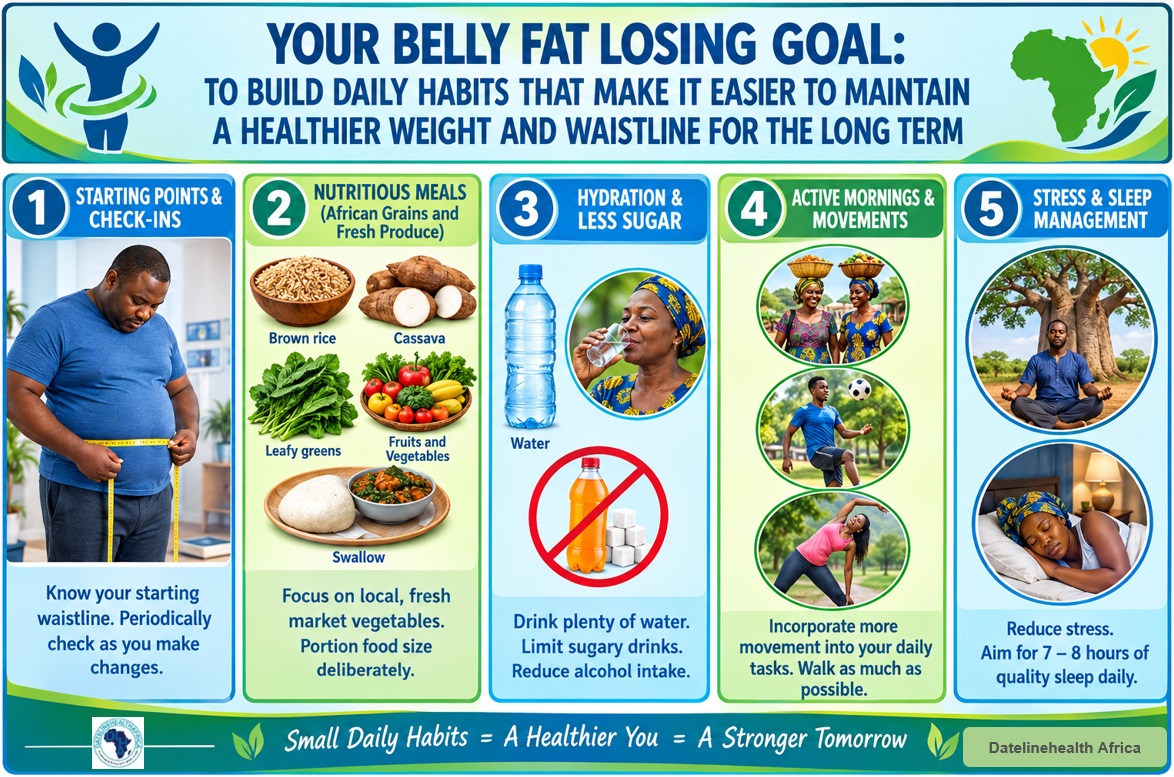
ChatGPT generated AI infographic showing daily habits for a healthier waistline. Click on image to enlarge.
You do not need six-pack abs to be healthy, and losing belly fat does not mean starving yourself or giving up every food you enjoy. What matters is making healthier choices consistently: eating the right foods and reduced portions, staying physically active, cutting back on alcohol, getting enough sleep and taking care of your overall health.
The important thing is to start. Measure your waist, take an honest look at your lifestyle and make the changes you can sustain. If you have other health risks such as high blood pressure, diabetes or high cholesterol, speak with your healthcare provider about your overall cardiovascular and metabolic health.
Losing belly fat is one thing. Keeping it off is another. The goal is not simply to lose your belly fat. It is to build daily habits that make it easier to maintain a healthy weight and waistline for the long term.
1.Chang S, Kovacs P, Guiu-Jurado E. “Genetics of Body Fat Distribution: Comparative Analyses in Populations with European, Asian and African Ancestries.” Genes 12, no. 6 (2021): 841. Available from here.
2. ?urawski T, and Bartosiewicz A. Dietary and Behavioral Strategies for Weight Loss and Weight Loss Maintenance: A Narrative Review. Nutrients 18, no. 1 (2025): 12. Available from here.
3. Aremu SO, Akute B, Aremu DO, et al. Dietary Strategies for Preventing and Managing Obesity through Evidence-Based Nutritional Interventions. Discover Public Health 22, no. 1 (2025): 424. Available from here.
4. Agyemang K, Crankson S, Anokye N. Effectiveness of Obesity Interventions in Sub-Saharan Africa: A Systematic Review and Meta-Analyses. PLOS One 20, no. 5 (2025): e0323717. Available from here.
5. Aryannezhad S, Imamura F, De Lucia Rolfe E, et al. Concurrent Changes in Diet Quality and Physical Activity and Association With Adiposity in Adult. JAMA Network Open 8, no. 11 (2025): e2545232. Available from here.
Related:
Estimating Chronic Health Risks in Africans: Is Waist Circumference Better Than BMI?
What BMI Tells You about Your Health Status as an African
Simple Health Tools for Africans to Check Heart Disease Risk
Published: October 15, 2026
© 2026. Datelinehealth Africa Inc. All rights reserved.
Permission is given to copy, use and share content for non-commercial purposes without alteration or modification and subject to attribution as to source.
DATELINEHEALTH AFRICA INC., is a digital publisher for informational and educational purposes and does not offer personal medical care and advice. If you have a medical problem needing routine or emergency attention, call your doctor or local emergency services immediately, or visit the nearest emergency room or the nearest hospital. You should consult your professional healthcare provider before starting any nutrition, diet, exercise, fitness, medical or wellness program mentioned or referenced in the DatelinehealthAfrica website. Click here for more disclaimer notice.