Nigeria’s Climate-Related Disasters: Health Impacts, Actionable Solutions
By Helen Ohunene Otailku, B.Sc. Health Education. Medically reviewed by the DLHA Editorial Team.
October 14, 2026
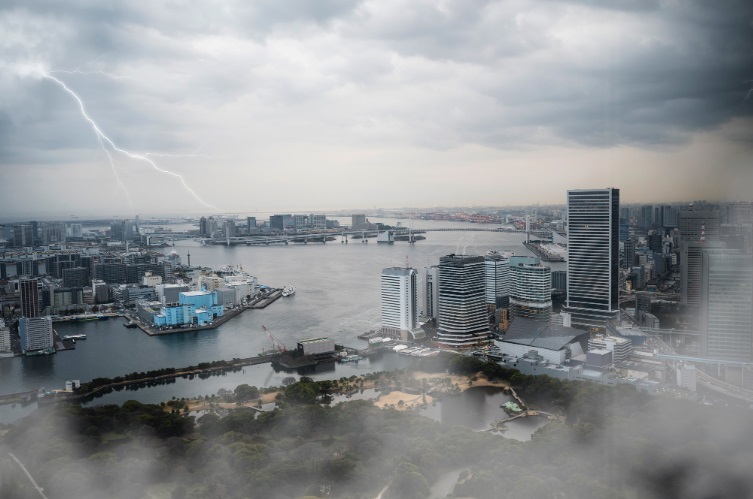
Image collage showing climate change related flooding in an imaginary urban African city. Photo Credit: Magnific
Climate disasters resulting from climate change and its long-term shifts in weather conditions is a growing threat to global health.
Worldwide, extreme weather events and rising temperatures worsen the spread of diseases, threaten food security, and weaken healthcare infrastructure [1].
Locally, climate change related disasters occur in Nigeria, where floods for example do more than destroy homes. They increase the risk of cholera and malaria, disrupt food supplies, and shut down clinics.
This article will explore how climate-related disasters impact health globally, and pays special attention to its impact on public health in Nigeria. It will also provide data with actionable policy interventions and information on where to get help locally.
Climate-related disasters impact health globally through rising and emerging public health threats.
For example, it increases heat-related illnesses and deaths, worsens air quality, spreads infectious diseases, and raises health risks associated with extreme weather such as floods and storms.
Recent research attributes 37% of heat-related deaths to human-induced climate change [2]. Temperature and precipitation changes increase the spread of vector-borne diseases, and without preventive actions, deaths from such diseases, currently over 700 000 yearly, may rise [2].
Climate-related disasters affects food availability, quality and variety, which increases food shortage and malnutrition. It also induces both immediate and long-term mental health issues (anxiety and post-traumatic stress) within communities, due to displacement of people from their homes and other challenges.
Climate-related disasters threaten to undo the last 50 years of progress in development, global health and poverty reduction, and to further widen existing health inequalities between and within populations [2].
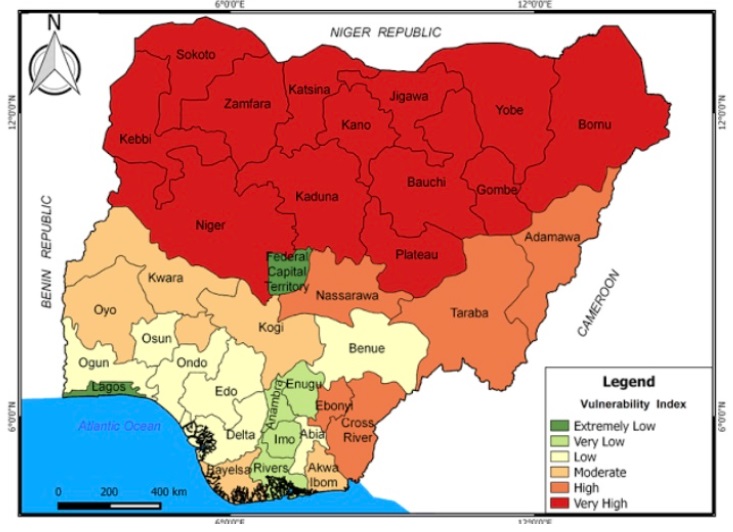
Map of Nigeria showing patterns of climate change vulnerability. Photo Credit: Madu IA (2016). ResearchGate. Click on image to enlarge
Nigeria's disease burden is increasingly affected by climate-related disasters. Because much of Nigeria's agriculture is rain-fed, climate change directly threatens nutrition and public health [3].
Sea-level rise and storm surges worsens coastal flooding, while drought, land degradation, and changing rainfall patterns worsen desertification in vulnerable states. These hazards can contribute to diverse health problems including respiratory illness through dust and poor air quality.
In view of the multiple health risks associated with climate change, Nigeria appears critically challenged due to limited coping capacity. This assertion is confirmed by the 2024 Score of the Notre Dame Global Adaptation Index (ND-GAIN), which ranked Nigeria 157th out of 190 countries. The Index measures a country's vulnerability and readiness to adapt to climate change.
.jpg)
Infographic showing Nigeria’s climate disaster vulnerability and adaptation ranking as determined by the Notre Dame Global Adaptation Index (ND-GAIN) 2024 Score. Click on image to enlarge.
For example, a 2022 flood that involved over 34 out of the 36 states in Nigeria affected 3.2 million people, with over 300,000 homes destroyed or damaged, 600 fatalities and 1.4 million people displaced. It increased the risk of waterborne illnesses such as cholera and put an estimated 4.1.million people in food insecurity due to damage or destruction of 569,000 hectares of farmland [4]. Such levels of impact from flooding demonstrate its immediate danger to public health.
Flooding increases broader health risks through contaminated water sources, mosquito breeding sites, hunger, displacement, and damaged health services [5].
Simultaneously, damaged medical infrastructure and overwhelmed facilities severely disrupt healthcare delivery. It weakens the health system’s capacity to respond when it is needed most.
Climate change harms health through direct and indirect pathways.
Direct effects from climate change are displacement, injury, and death during extreme events such as floods and heatwaves.
For example, the 2022 floods displaced over 1.4 million people, killed over 600 people, and injured more than 2,400 people [4].
Indirect effects of climate change include diseases, hunger, and weakened health services.
When floodwaters contaminate sewage systems, waste sites, and drinking-water sources, they create conditions that can lead to the spread of waterborne diseases.
These diseases are caused by harmful germs found in contaminated water, such as cholera, typhoid, and paratyphoid fever.
Cholera is a bacterial infection (Vibrio cholerae) characterized by severe watery diarrhoea that can lead to profuse fluid loss [6].
The risk of these infections can increase during heavy floods; for instance, cholera cases were reported alongside the 2024 floods.
By October 10, 2024, the World Health Organization (WHO) reported 13,629 suspected cholera cases and 516 cholera-related deaths across 35 states and the Federal Capital Territory [7].
Malaria is a vector-borne disease transmitted through the bite of an infected female Anopheles mosquito.
These mosquitoes and the malaria parasite are affected by temperature, humidity, rainfall, and local ecological conditions.
Rain and stagnant pools of water can create breeding grounds for mosquitoes, although intense rainfall can also wash away larvae and drought can alter breeding patterns.
Climate change may alter these risks by changing the geographic suitability and length of transmission seasons.
The rise in temperatures and change in rainfall patterns can affect the survival, reproduction, and distribution of vectors.
The effects vary by mosquito species, parasite species, location, housing, vector control, immunity, and access to treatment.
According to the World Health Organization (WHO) World Malaria Report, changing weather and climatic conditions can increase exposure to malaria burden across sub-Saharan Africa.
Beyond malaria, climate change may alter the risk of other vector-borne diseases in some locations. Other mosquito-borne diseases include:
C. Hunger and Malnutrition
Most Nigerians depend on farming for food or income. Agriculture is vulnerable to climate change [8].
Changes in rainfall, temperature swings, floods, drought, and desertification can damage crops and reduce yields. The 2024 floods were reported to have destroyed about 115,000 hectares of farmland [9].
When crops fail, families may eat less and consume a less balanced diet. Food insecurity and malnutrition can follow. Malnutrition means that the body lacks the nutrients it needs to grow, function, and fight infection.
Floods damage the places people rely on for care. In Maiduguri, the 2024 flood reportedly cut access to health facilities, schools, and markets, and 14 health facilities were flooded [10]. Almost 90,000 people were reportedly sheltered in temporary camps with limited access to food, clean water, and health services [11]. Overcrowded shelters can also disrupt routine care, such as immunisation and maternal health services.
Reports on the 2024 response in Maiduguri illustrate what health-focused disaster management can look like.
WHO deployed mobile health teams that treated common illnesses, provided routine immunisation, and offered antenatal, postnatal, and mental-health care.
The teams also referred serious cases to larger hospitals.
Volunteers conducted surveillance for waterborne diseases and vaccine-preventable diseases in camps.
Authorities and partners supplied insecticide-treated nets and food assistance to reduce malaria risk and food insecurity.
Strong health-focused disaster management should include [12]:
Measure the impacts of climate change on health systems to drive action and support effective allocation of resources.
Measure the financial burden, premature deaths, years of life lost (YLL), disability, and interruptions to essential health services associated with diseases and injuries.
These indicators provide a strong motivation for prevention and adaptation interventions and can help allocate resources for people most in need.
To manage climate-related disaster risk, integrate health into disaster-risk-management policies.
A multisectoral strategy can prepare health systems to manage emergencies, disease outbreaks, and other risks triggered or worsened by climate change.
Community-led interventions to manage cholera outbreaks and adapt to food insecurity are critical for addressing climate-related disasters.
For example, grassroots flood-resilience and waterborne-disease-control programmes in Delta State mobilised youth councils and women’s cooperatives to take charge of local preparedness instead of waiting for external aid.
These locally led adaptation measures can reduce the risk of cholera and other waterborne diseases and improve food security, but their outcomes should be supported by monitoring and evaluation data.
Interventions must prioritize vulnerable populations (women, children, and the elderly) who face disproportionately severe health consequences during climate-induced disasters such as floods and heatwaves.
These groups experience:
Governments and public health stakeholders must actively include them in disaster management and adaptation policies to lower the long-term health effects of climate change.
Mobile clinics in flood-prone areas, telemedicine services, solar-powered hospitals, and rooftop farms are some climate-resilient health infrastructure that helps to prepare for a climate crisis. Sustainable infrastructure investments support health systems to withstand climate shocks, while providing continuous care to those affected.
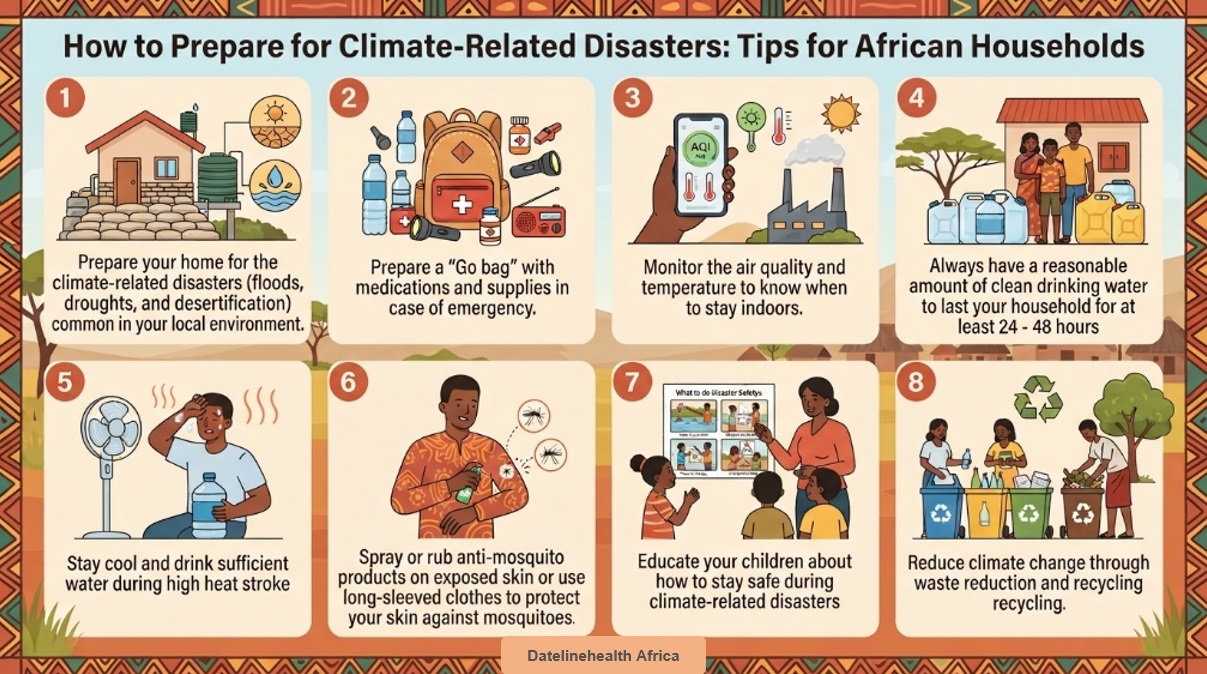
Infographic showing steps households can take to prepare for climate-related disasters. Image generated through Gemini AI. Click on image to enlarge.
Here are what you can do to protect your household [13]:
The table below provides contact information for organizations in Nigeria where you can obtain health and disaster relief information before, during, and after a climate-related event. It is worth printing and keeping it at hand.
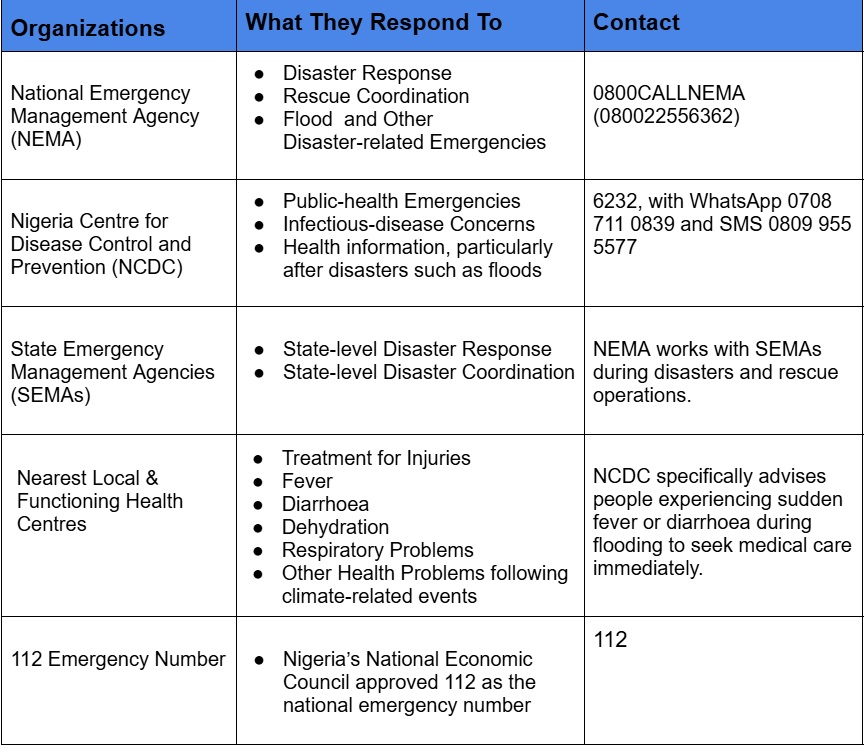
Table showing Nigerian agencies providing emergency disaster response and their contact phone numbers for getting help during and after a climate change crisis. Clickon image to enlarge.
Climate change and disaster management belong together, when health risks are being considered. Floods in Nigeria do not end when the water goes down. Cholera, malaria risk, food insecurity, and disrupted healthcare may continue, and health centers may struggle to cope long after a natural disaster. Stronger early warning, safer water, protected health facilities, and steady funding can prevent much of this harm at scale. There are also ways that households can prepare for coping and staying safe during climate change related natural disasters.
Stay informed, stay aware, and share this article with your family and community.
Preparedness saves lives!
Glossary List
References:
1. Abdulrahim, A., Gulumbe, B. H., & Liman, U. U. (2022). A catastrophic flood in Nigeria, its impact on health facilities and exacerbations of infectious diseases. PAMJ One Health, 9, 21. Available from here.
2. World Health Organization. Climate change. [Internet]. 13 October 2023. [Retrieved 8 October 2026]. Available from here.
3. Madubueze MHC, Mbanefo OD, Anekwe JK , Nwadiogbu NM , Egberi AE. Climate change and emerging microbial infections in Nigerian public health systems. (2026). African Journal of Applied Research & Sustainable Development, 2026;4(1), 120–129. Available from here.
4. World Health Organization, OCHA. Nigeria Situation Report, 1st November 2022. [Internet]. 11 November 2022. [Retrieved 13 October 2026]. Available from here.
5. Elegbede IO, Animashaun M, Lawson E, Ndimele E, Cleenewerck L, Nifemi Precious A, et al. Ocean dynamics and sea level rise: Implications for food security, one health, and climate resilience. In Earth Sciences. IntechOpen. 2025; Available from here.
6. UNDRR. PreventionWeb. Six solutions to address the health impacts of climate change. [Internet]. 27 November 2024. [Retrieved 8 October 2026]. Available from here.
7. Tajudeen TT, Omotayo A, Ogundele FO, Rathbun LC. The effect of climate change on food crop production in Lagos State. Foods, 2024;11(24), 3987. Available from here.
8. Wikimedia Foundation. 2022 Nigeria floods. [Internet]. Last reviewed 15 July 2026]. Wikipedia. [Retrieved 8 October 2026]. Available from here.
9. World Health Organization Regional Office for Africa. Update on floods, cholera and mpox in Nigeria. [Internet]. 1–30 September 2024: Snapshot bulletin no. 04. WHO Nigeria. Available from here. PDF required.
10. World Health Organization Regional Office for Africa. Ramping up flood emergency response in Nigeria. [Internet]. 16 September 2024. [Retrieved 8 October 2026]. Available from here.
11. World Health Organization Regional Office for Africa. Delivering lifesaving health services for flood-displaced families in Nigeria. [Internet]. 18 November 2024. [Retrieved September 21, 2026]. Available from here.
12. World Health Organization Regional Office for Africa. Addressing mental health challenges for Akosombo dam flood victims. [Internet]. 13 January 2025. [Retrieved September 21, 2026]. Available from here.
13. Western States Pediatric Environmental Health Specialty Unit. Prescriptions for prevention: Climate change, extreme weather, and health [Fact sheet]. [Internet, n.d.]. University of California, San Francisco. USA. [Retrieved September 21, 2026]. Available from here.
Related:
Dual Crises: How Flooding and Water-Borne Diseases Drain Sub-Saharan Economies
Info-poster: Health-Related Risks of Floodwater
Published: October 14, 2026
© 2026. Datelinehealth Africa Inc. All rights reserved.
Permission is given to copy, use and share content for non-commercial purposes without alteration or modification and subject to source attribution.
DATELINEHEALTH AFRICA INC., is a digital publisher for informational and educational purposes and does not offer personal medical care and advice. If you have a medical problem needing routine or emergency attention, call your doctor or local emergency services immediately, or visit the nearest emergency room or the nearest hospital. You should consult your professional healthcare provider before starting any nutrition, diet, exercise, fitness, medical or wellness program mentioned or referenced in the DatelinehealthAfrica website. Click here for more disclaimer notice.