5 Essential Food Safety Tips for a Healthy Family
By Helen Ohunene Otailku, B.Sc. Health Education. Medically reviewed by the DLHA Editorial Team
Cotober 18, 2026
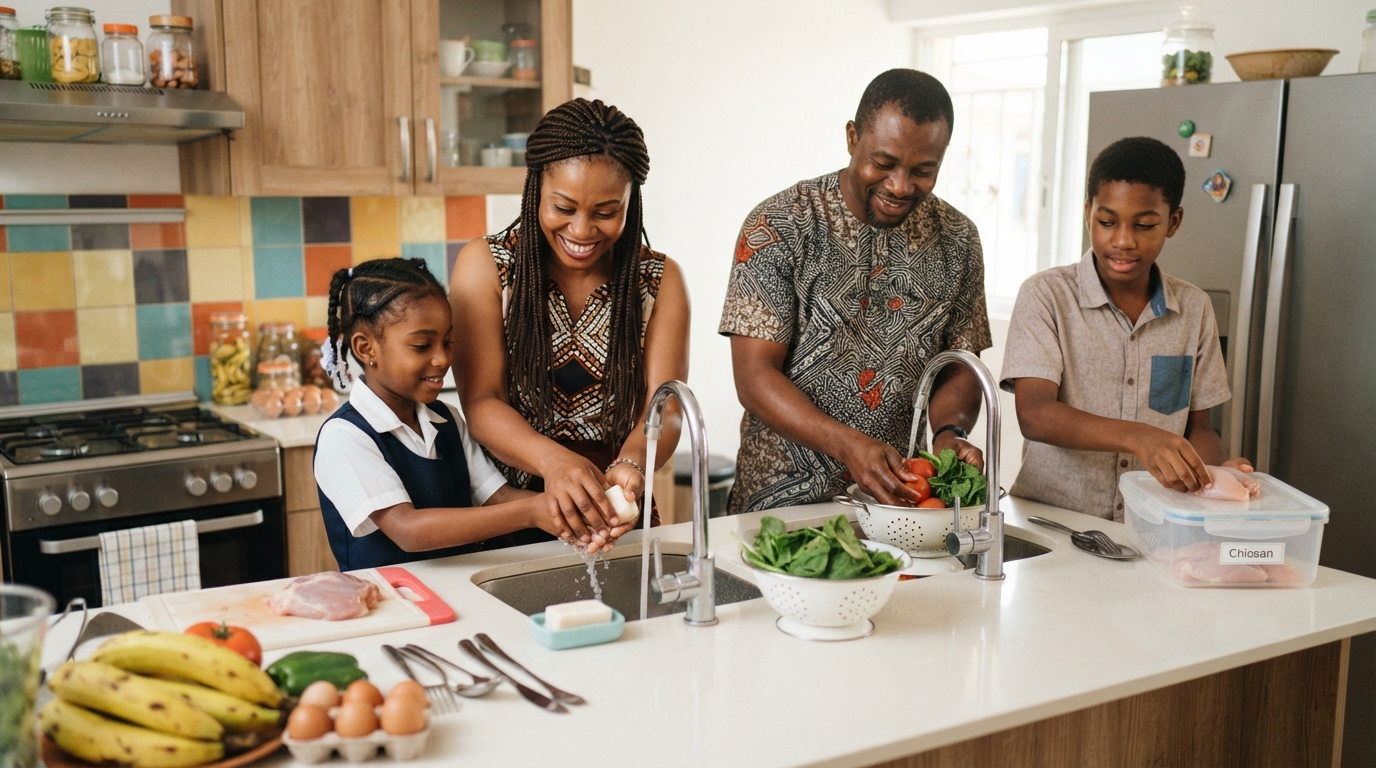
Image of a family of four safely washing raw poultry, vegetables and other foodstuffs from two separate faucets in their kitchen in preparation for cooking. A collection of uncooked plantain, green bell pepper, tomato, a tray of six eggs and few cutlery are placed to the left of the image in the foreground of the kitchen table. Image credit: Gemini AI. Click on image to enlarge.
Food safety in Nigerian homes starts with habits we rarely question. A pot of soup left on the stove overnight feels harmless, yet it is a common route to food poisoning, which is an illness waiting to happen.
The World Health Organization (WHO) estimates that unsafe food causes about 866 million illnesses worldwide every year, and children under 5 are the hardest hit [1]. In Nigeria, typhoid, cholera, salmonellosis and E. coli gastroenteritis (a stomach infection) are among the illnesses linked to contaminated food and water [2, 3].
Here are five vital food safety tips, adapted from the WHO Five Keys to Safer Food [4], that need no special equipment.
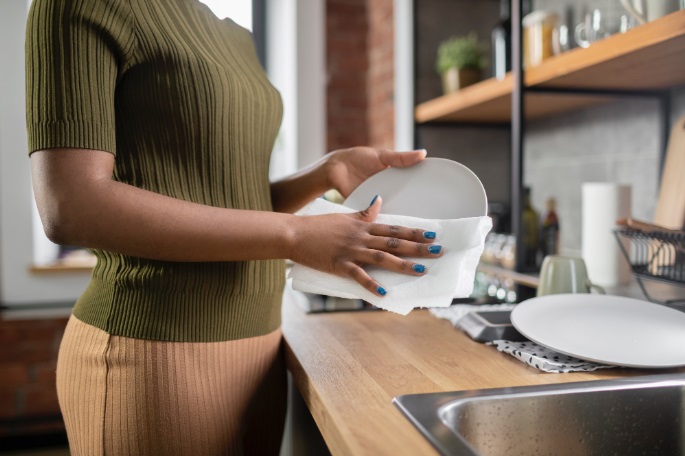 .
Photo of a woman wiping a white plate with a paper towel near her kitchen wash basin. Image Credit: Magnific. Click image to enlarge.
Germs travel on hands, cloths and knives before they reach your plate. Wash your hands with soap and clean water for at least 20 seconds:
Wash and sanitise chopping boards, knives and worktops after each use. A wet rag or sponge is a perfect home for food poisoning, so wash clothes with hot water and soap often, and replace sponges and old rags regularly. Dry them fully in the sun when you can.
Cover cooked soups, rice and pounded yam, and keep your cooking area free of dirt and spills.
Key takeaway: Clean hands and clean surfaces stop germs before they start.
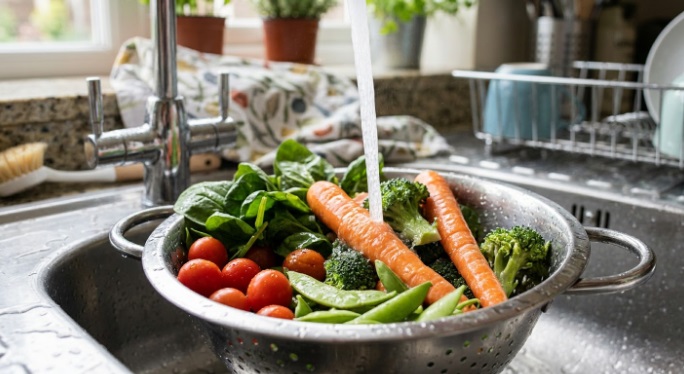
A close-up photograph of a stainless steel colander filled with carrots, broccoli, cherry tomatoes, and spinach resting in a kitchen sink. A stream of water from a chrome faucet falls onto the produce. Image credit: Google Gemini. Click on image to enlarge.
Contaminated water spreads cholera and typhoid [3]. If you are unsure about your borehole, well or other water source, boil it for at least one minute and let it cool in a clean, covered container before drinking or cooking.
Wash fruit and vegetables properly:
Check packaged food for NAFDAC registration numbers and expiry dates, and avoid damaged or bulging packs.
Mould is also a risk. Some moulds growing on maize, groundnuts and other grains produce aflatoxins, poisons that damage the liver and are not destroyed by cooking [5]. Store grains and nuts in a dry, well-ventilated place, and throw away anything mouldy, shrivelled or discoloured.
Key takeaway: Safe water, well-washed produce and dry, mould-free grains protect your whole household.
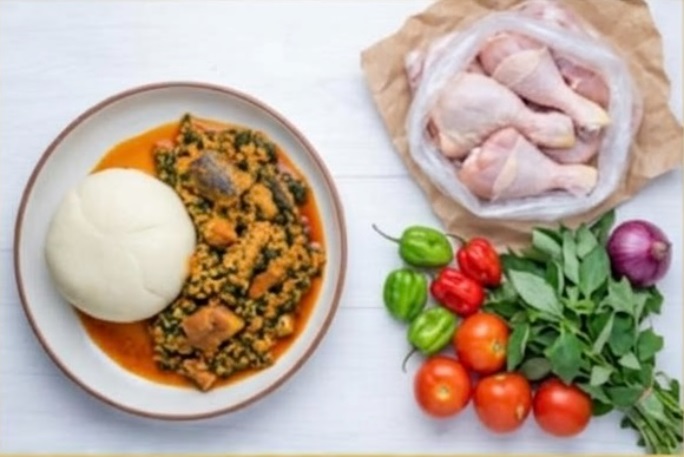
Photo of a top view of fresh vegetables such as pepper, carrot, onions, and chicken on a light desk kept separately from a plate of "swallow" and vegetable stew. Image Credit: Magnific. Click on image to enlarge.
Raw chicken, fish and meat often carry harmful bacteria. If those germs from raw food touch salad, fruit or cooked rice, they can make you sick (cross-contamination).
Use one board and knife for raw meat and fish, and another for ready-to-eat foods. If you have only one board, wash it thoroughly with hot water and soap between uses.
Keep raw meat away from other food in the fridge or cool-box, ideally on the lowest shelf in a covered container.
Never put cooked suya or grilled fish back on the plate that held it raw. Use a clean plate all the time.
Key takeaway: Raw and cooked food should never share a board, knife or plate.
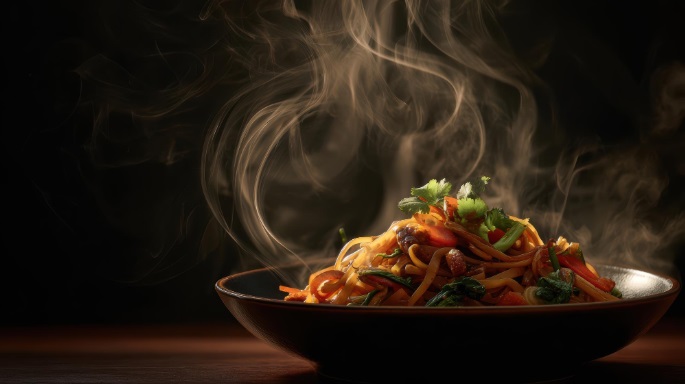
An up-close, high-angle shot of a plate filled with steamy hot spaghetti and vegetables. Image Credit: Magnific. Click on image to enlarge
Proper cooking kills most of the germs that cause food poisoning. The standard temperature is 70°C, which you can check with a food thermometer.
Without a thermometer, look for clear juices and no pink meat. Cook poultry, minced meat, eggs, soups and stews all the way through.
When you reheat leftover soup or stew, bring it to a full, rolling boil and stir well so the heat reaches even the middle of the pot.
Key takeaway: Cook until piping hot all the way through, and reheat only once as frequent warming of soups exposes the food to bacteria.
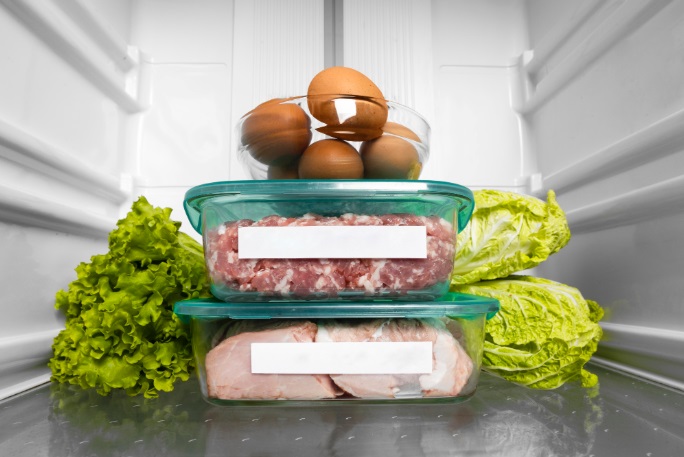
Photo of a variety of healthy raw food stored in refrigerator. Image Credit: Magnific. Click on iamge to enlarge.
Bacteria multiply fastest between 5°C and 60°C. Experts call this the “danger zone”. In a warm Nigerian kitchen, food can enter it within minutes.
Do not leave cooked food out for more than two hours. That includes the pot of soup on the stove overnight and the rice left on the counter after dinner.
Thaw frozen uncooked meat and fish in the fridge, not on the kitchen counter.
Power cuts make this harder, but you still have options for safe food storage without light:
Key takeaway: Chill or eat your cooked food within two hours, and discard doubtful leftovers.
Protect your family, one habit at a time with this quick food safety checklist:
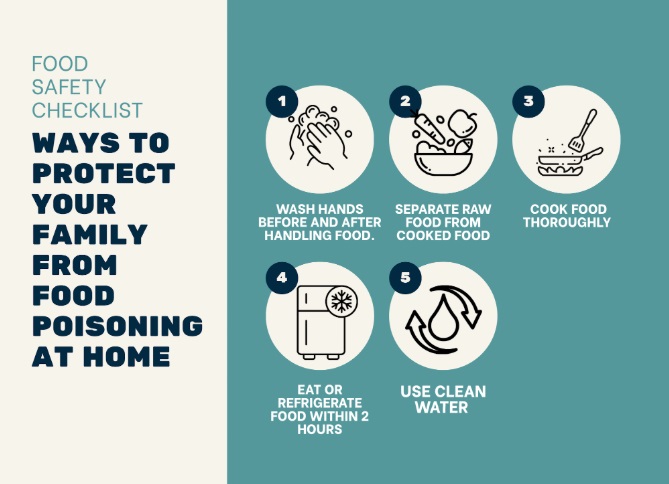
An illustrated food safety checklist graphic titled "Food Safety Checklist: Ways to Protect Your Family From Food Poisoning At Home.” Image Credit: Canva. Click on image to enlarge.
1. Wash hands with soap before cooking and after handling raw meat, using the toilet or taking out the bin.
2. Keep raw and cooked food separate.
3, Cook thoroughly; boil soups and stews when reheating.
4. Refrigerate cooked food within two hours.
5. Use boiled or treated water when quality is uncertain
These five habits take little effort but protect against food poisoning. They matter most for children, pregnant women, older adults and people with weakened immune systems, who can become seriously sick from food poisoning.
See a health worker quickly if you or a family member has any of these signs:
Share this article with your friends. Follow Datelinehealth Africa for more practical health guidance.
1. World Health Organization. Food safety [Internet]. 4 June 2026. Geneva: WHO; [Cited 2026 Oct 11]. Available from here.
2. Datelinehealth Africa. Cholera in the African setting: What is it? Who gets it? How to treat and prevent it. [Internet]. Last updated, July 5, 2026. [Cited 2026 Oct 11]. Available from here.
3. Datelinehealth Africa. Nigeria Cholera Outbreak Is Fueled By Limited Access to Clean Water and Sanitation. [Internet]. October 16, 2022. [Cited 2026 Oct. 11]. Available from here.
4. World Health Organization. Five keys to a safer food manual. [Internet]. 15 May 2006. Geneva: WHO. [Cited 2026 Oct. 11]. Available from here.
5. Otailku H. Aflatoxin in Nigeria Food: Health risks and safety tips. DatelineHealth Africa. 14 August 2026. [Cited 2026 Oct 11]. Available from here.
Related:
Is Your Street Food Safe? How to Spot the Warning Signs
How to Spot Spoiled Food at the Market: A Practical Guide for Nigerian Shoppers
Aflatoxin in Nigerian Food: Health Risks and Safety Tips
Published: October 18, 2026
© 2026. Datelinehealth Africa Inc. All rights reserved.
Permission is given to copy, use, and share content freely for non-commercial purposes without alteration or modification and subject to source attribution.
DATELINEHEALTH AFRICA INC., is a digital publisher for informational and educational purposes and does not offer personal medical care and advice. If you have a medical problem needing routine or emergency attention, call your doctor or local emergency services immediately, or visit the nearest emergency room or the nearest hospital. You should consult your professional healthcare provider before starting any nutrition, diet, exercise, fitness, medical or wellness program mentioned or referenced in the DatelinehealthAfrica website. Click here for more disclaimer notice.