Beyond Meditation: 5 Creative Habits for Daily Calm
By: Rhonda Underhill. Guest writer. Medically reviewed by the DLHA Editorial Team
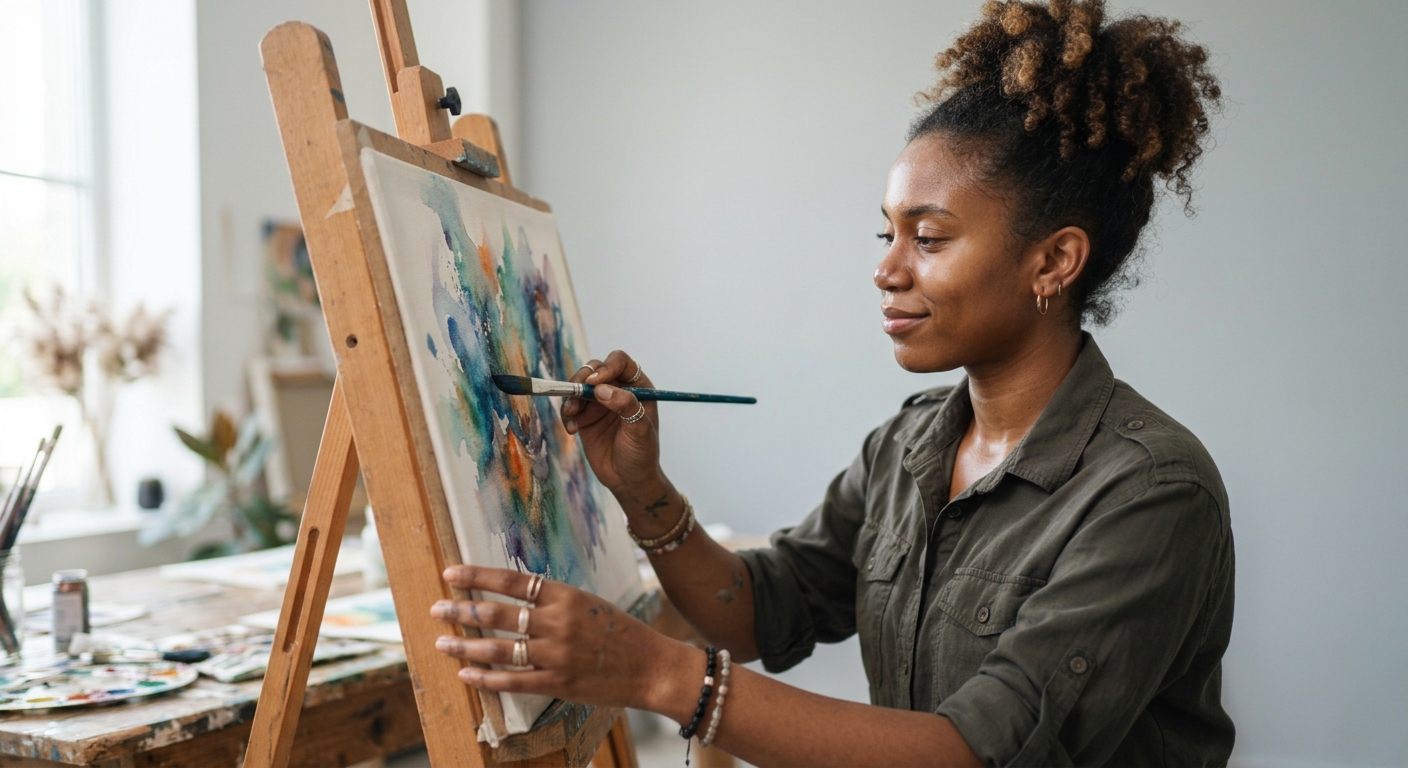
A black African lady in a happy mood working on a water-colour painting on canvas placed on an easel.
For busy parents juggling work, caregiving, and the mental load of daily logistics, stress management can feel like one more task on an already full list.
The core tension is constant pressure with too little time to recover, which can quietly erode focus, sleep, and patience even when life looks “fine” on paper. With stronger mental health awareness, more general readers are looking for stress relief techniques that feel doable and human, not clinical or complicated. This guide shares evidence-informed creative habits that anyone can use to quiet racing thoughts, steady emotions, and feel more in control again.
When you want stress relief that feels instantly rewarding, a quick visual remix can deliver an “I made something” boost fast. No artistic skills needed: if you can upload a photo and type a sentence, you can make something new.
One playful way to do that is experimenting with AI art tools, especially an image-to-image option that transforms a photo or existing artwork into something new. If you’re not sure where to start, try a tool for free AI image transformation: upload an image you already have, then describe how you want it to change. You can keep it simple and specific, shift the style, swap the setting, adjust the color palette, or add or remove visual details, so the creative decision-making stays low-stakes and approachable.
So why does making something feel so calming? Let’s look at how creativity works as a stress reliever.
Creative expression helps with stress because it changes what your brain pays attention to and how your body responds. Instead of “just relaxing,” making something can nudge mood upward, restore mental focus, and quiet stress signals like cortisol, the body’s main stress hormone.
This matters because stress is not only a feeling. It is also a state of high alert that can make you irritable, scattered, or exhausted even on a normal day. Research suggests creative engagement can support measurable gains in mental health and well-being, which makes it a practical lever you can pull.
Picture a tense evening: your thoughts loop, and even scrolling feels draining. Ten minutes of sketching, remixing a photo, or writing a few lines gives your mind a single, absorbable target, and your nervous system starts to downshift. Evidence even shows cortisol levels can drop after time with art.
These habits work because consistency turns “something you try” into something you can rely on when life gets noisy. By pairing creativity with a steady cue, you build a routine that becomes easier to do over time.
When stress keeps cycling back, it’s easy to feel like relief depends on having more time, energy, or willpower than you have. The steadier path is integrating creativity into routines as a low-pressure, repeatable reset, an approach that supports long-term stress management by shifting attention, regulating emotion, and building a sense of agency. Over time, motivation for creative practice grows because the payoff becomes familiar: calmer reactivity, better recovery after hard days, and creative outlets for well-being that fit real life. One small creative habit, repeated, can become your most dependable stress reset.
Ready to try it? Choose one habit from the list, set a timer for ten minutes tonight, and make something, anything. Then save it, share it, or label it “done,” and notice how your mind feels afterward. If this guide helped, pass it along to someone who could use a creative reset.
Published: November 2, 2026.
© 2026. Datelinehealth Africa Inc. All rights reserved.
Permission is given to copy, use and share content for non-commercial purposes without alterations or modifications and subject to source attribution.
DATELINEHEALTH AFRICA INC., is a digital publisher for informational and educational purposes and does not offer personal medical care and advice. If you have a medical problem needing routine or emergency attention, call your doctor or local emergency services immediately, or visit the nearest emergency room or the nearest hospital. You should consult your professional healthcare provider before starting any nutrition, diet, exercise, fitness, medical or wellness program mentioned or referenced in the DatelinehealthAfrica website. Click here for more disclaimer notice.