Safe Water Habits: 10 Practical Ways to Protect Your Home Drinking Water
By: Prudence Chidinma Eze, 6th Year Medical Student, Datelinehealth Africa Volunteer and Freelance Health Writer. Medically reviewed by the Datelinehealth Editorial Team
October 27, 2026
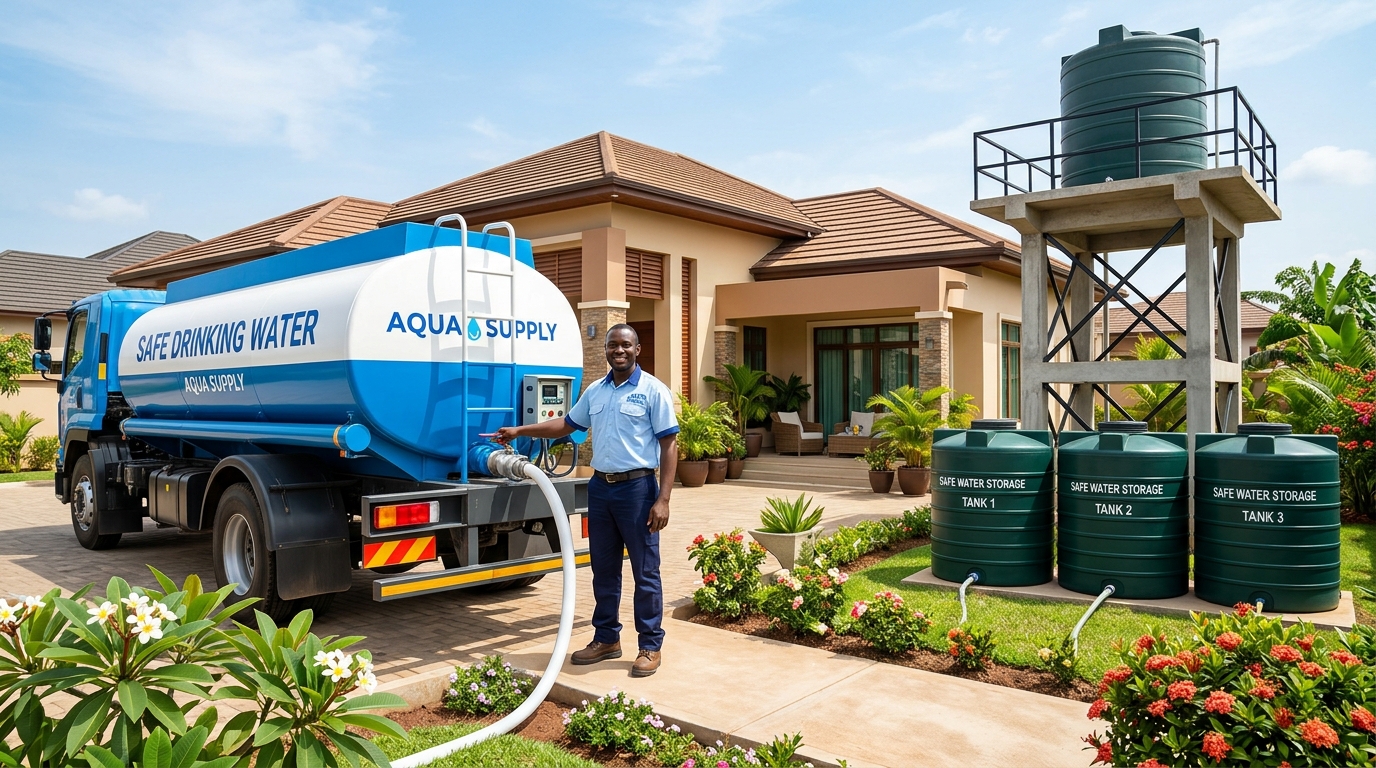
Photo of a typical urban scene where a tanker delivers drinking water into multiple tanks in a middle class household. Image credit. Gemini AI. Click on image to enlarge.
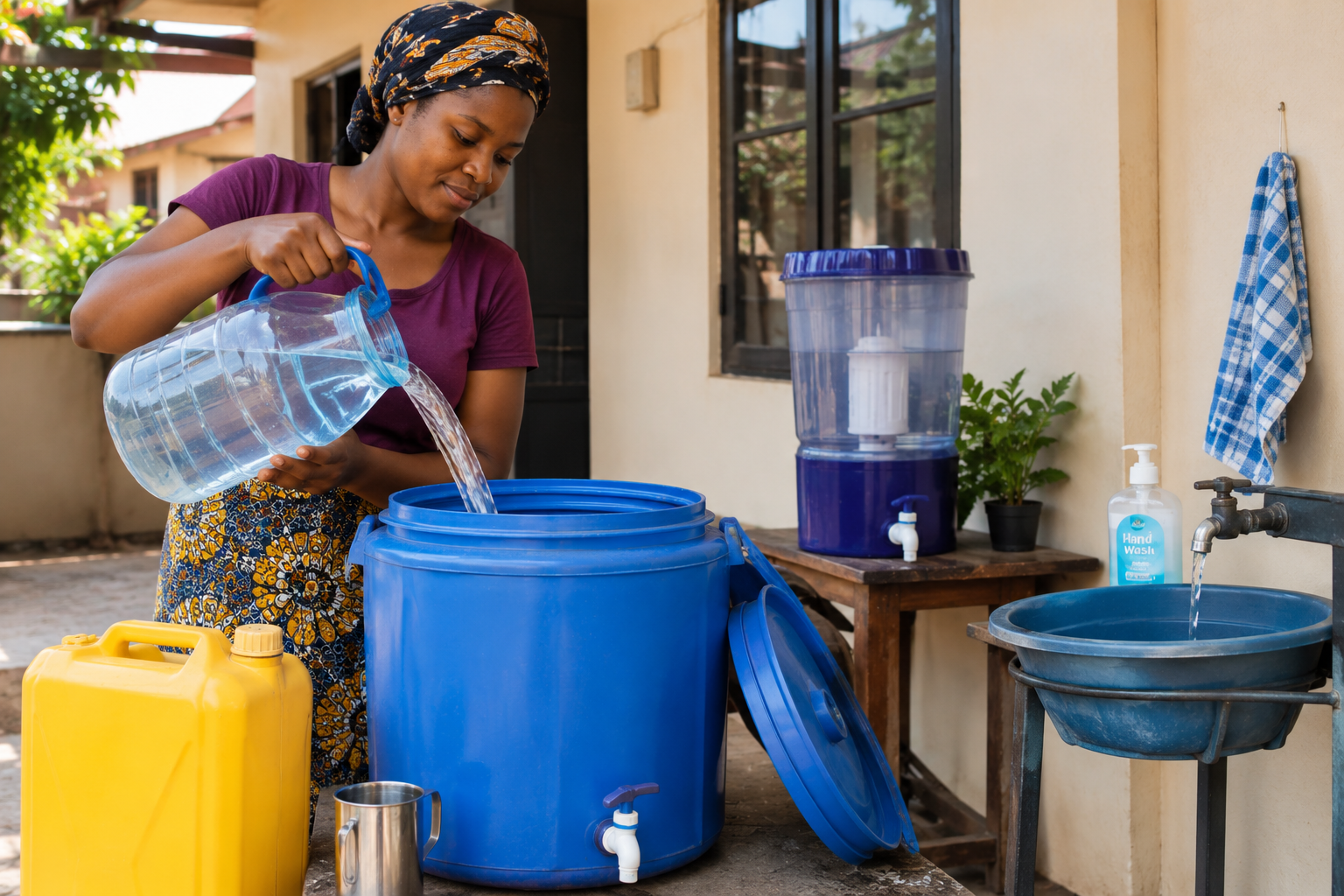
A woman practising safe drinking water storage and handling. Image credit: ChatGPT. Click on image to enlarge.
I remember the last time I travelled to my hometown in the village and found myself thinking more carefully about the quality of the drinking water the community depends on. There was no treatment system in place there, no boiling, no filters, no bottled or sachet water. Every household filled up from the communal well, and everyone assumed the water was safe simply because it looked clean.
That assumption is common. Many African households whether their water comes from a borehole, a well, a tanker, a public tap or any other source judge safety by how the water looks, smells or tastes. But clean-looking water is not the same thing as safe drinking water.
Water can be completely clear and still carry bacteria, parasites, and nitrates from fertiliser run-off, sewage and animal waste, along with chemical contaminants such as fluoride, iron, manganese, lead, arsenic or excess salts [1, 2]. Contamination doesn't only happen at the source, either it can also occur during collection, transportation, storage and handling, long after water leaves the well or tap [1].
This is exactly why the World Health Organization developed its household water treatment and safe storage (HWTS) recommendations, to help families protect their drinking water quality at home.
In this article, you'll learn about ten practical, evidence-based ways to keep your household drinking water safer, from simple treatment methods to smarter storage and handling habits.
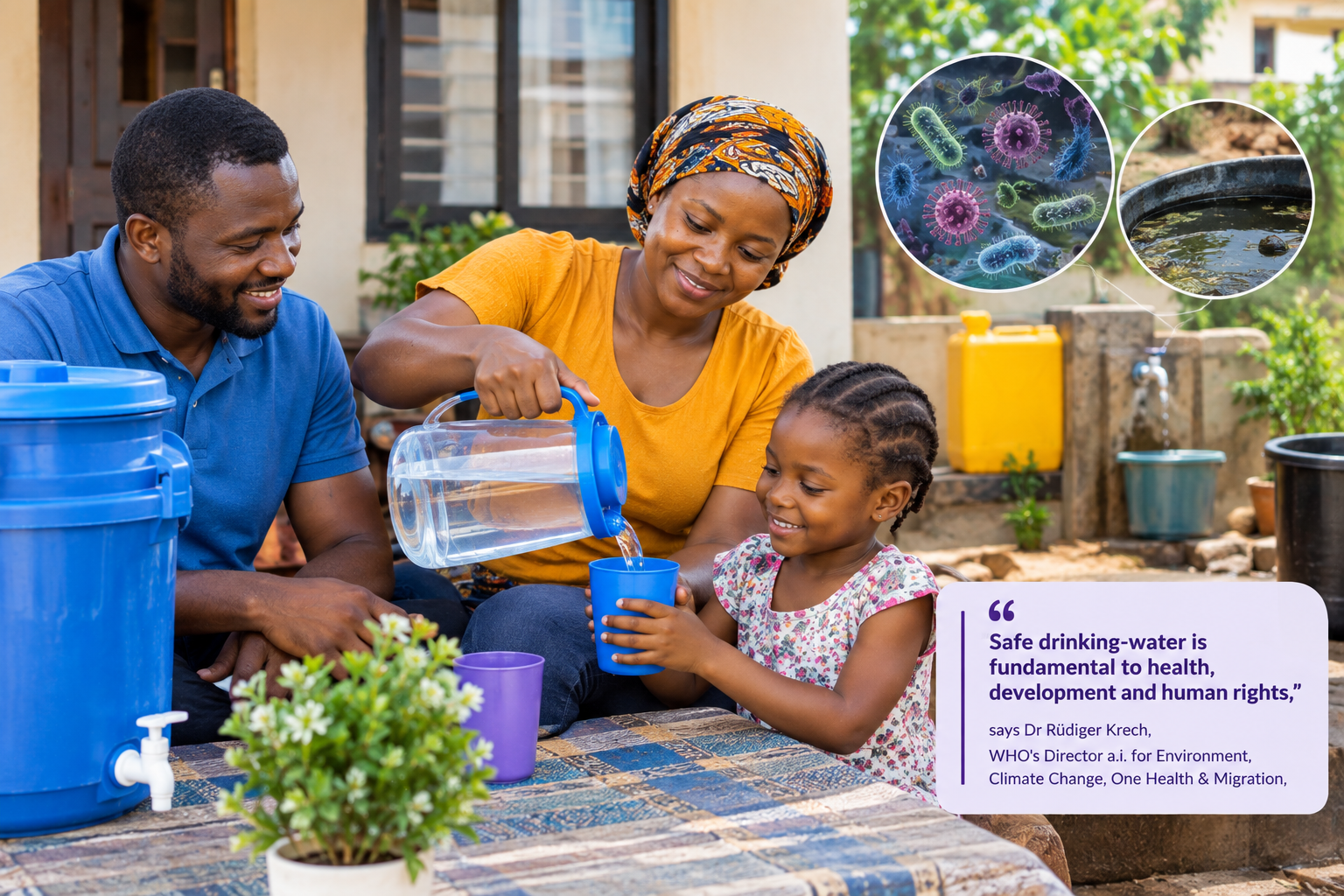
An African family drinking safely stored household water from a jug. Image credit: ChatGPT. Click on image to enlarge.
Globally, 2.1 billion people still lack access to safely managed drinking water, and at least 1.7 billion people rely on a water source contaminated with faeces [3]. According to the World Health Organization, microbial (germ) contamination from faecal matter poses the single greatest risk to drinking-water safety [1, 2].
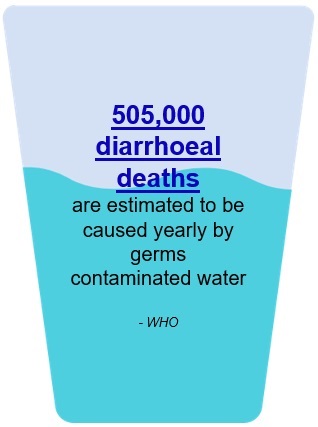 This matters because microbiologically (germs) contaminated water is estimated to cause approximately 505,000 diarrhoeal deaths every year, transmitting waterborne diseases such as diarrhoea, cholera, dysentery, typhoid and polio [1, 4]. Diarrhoeal disease remains among the leading causes of death globally and disproportionately affects young children, WHO estimates that 395,000 deaths of children under five could be avoided each year if these risk factors were addressed [4].
Water can carry other threats too. In 2021 alone, over 251.4 million people needed preventive treatment for schistosomiasis, a parasitic disease contracted through contact with infested water. In many regions, insects that breed in clean, standing water, including inside uncovered household containers — transmit diseases such as dengue fever.
“Safe drinking-water is fundamental to health, development and human rights,” says Dr Rüdiger Krech, WHO's Director for Environment, Climate Change, One Health & Migration, in WHO's 2026 update to its drinking-water guidelines [2]. Protecting it starts at home, with the ten habits below.
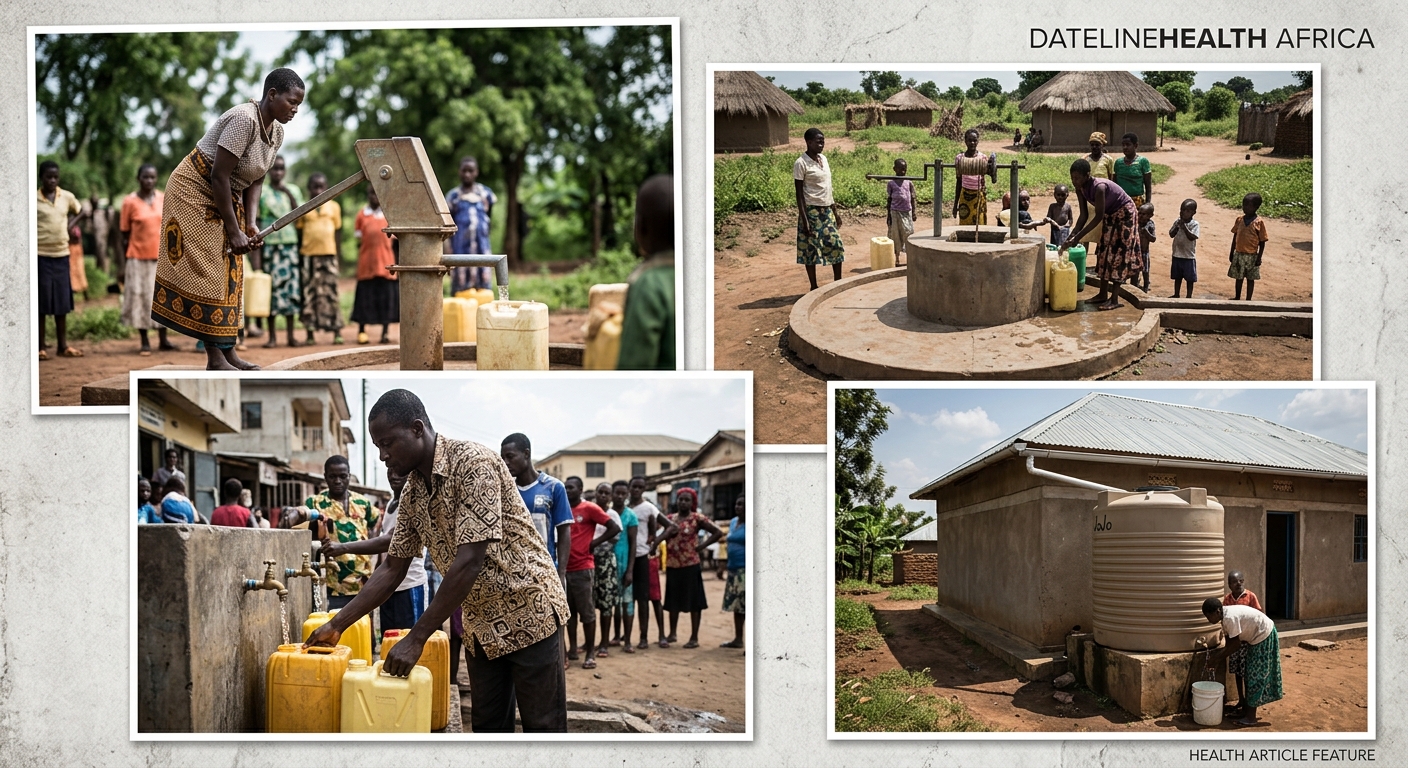
A collage showing images of the common drinking water sources used by rural and semi-rural African households. Image Source: Gemini AI. Click on image to enlarge.
Across African households, drinking water comes from a wide range of sources: boreholes, protected or unprotected wells, piped municipal supply, public standpipes, tanker or vendor-delivered water, sachet or bottled water, harvested rainwater, and, in some communities, surface water from rivers, ponds or streams. Each source carries a different baseline risk — but no source is automatically “safe” simply because it's the one your community has always used.
An unprotected well or spring near a pit latrine, a borehole downstream from farmland treated with fertiliser, or a rainwater tank exposed to bird droppings can all become contaminated. Knowing your source and how well it is protected from run-off, waste and animal contact is the first step in deciding whether your household water needs additional treatment before you drink it [1, 2].
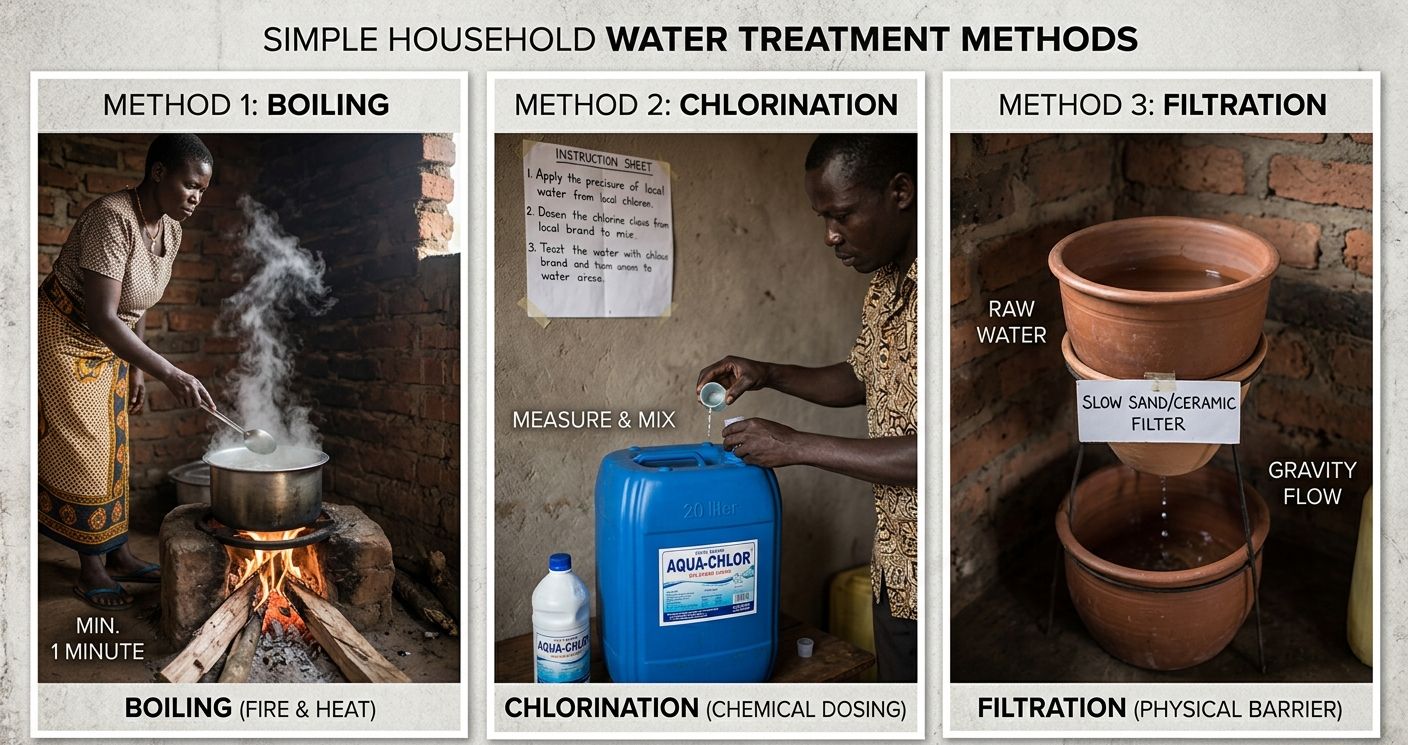
An image showing the different household water treatment methods for safer drinking water. Image credit: Gemini AI. Click on image to enlarge.
If you're unsure whether your water source is safe or you're relying on an emergency supply after flooding, a burst pipe, or a disease outbreak, household water treatment is one of the most effective steps you can take. WHO recognises household water treatment and safe storage as an important intervention for improving drinking-water quality, particularly for households that cannot rely on centrally treated, piped water [5]?
Boiling is one of the most reliable ways to kill the bacteria, viruses and parasites that cause diarrhoeal disease. The US CDC recommends bringing clear water to a rolling boil for at least one minute (three minutes above roughly 2,000 metres / 6,500 feet elevation), then letting it cool before drinking or storing it. If the water looks cloudy, strain it through a clean cloth first [6].
Chlorine-based products, tablets, liquid solutions or household bleach can disinfect water when used correctly. Because concentrations vary by product, always follow the instructions on the label or guidance from your local public health authority rather than guessing a dose: too little won't disinfect the water, and too much can make it unsafe to drink [5, 6].
Filters vary widely in what they remove. Some target sediment and taste, while others are certified to remove bacteria, viruses or protozoa such as Cryptosporidium and Giardia. WHO's International Scheme to Evaluate Household Water Treatment Technologies tests products against health-based performance criteria, so check what a filter is actually rated to remove, and replace cartridges on schedule, an unmaintained filter can become a source of contamination itself [5].
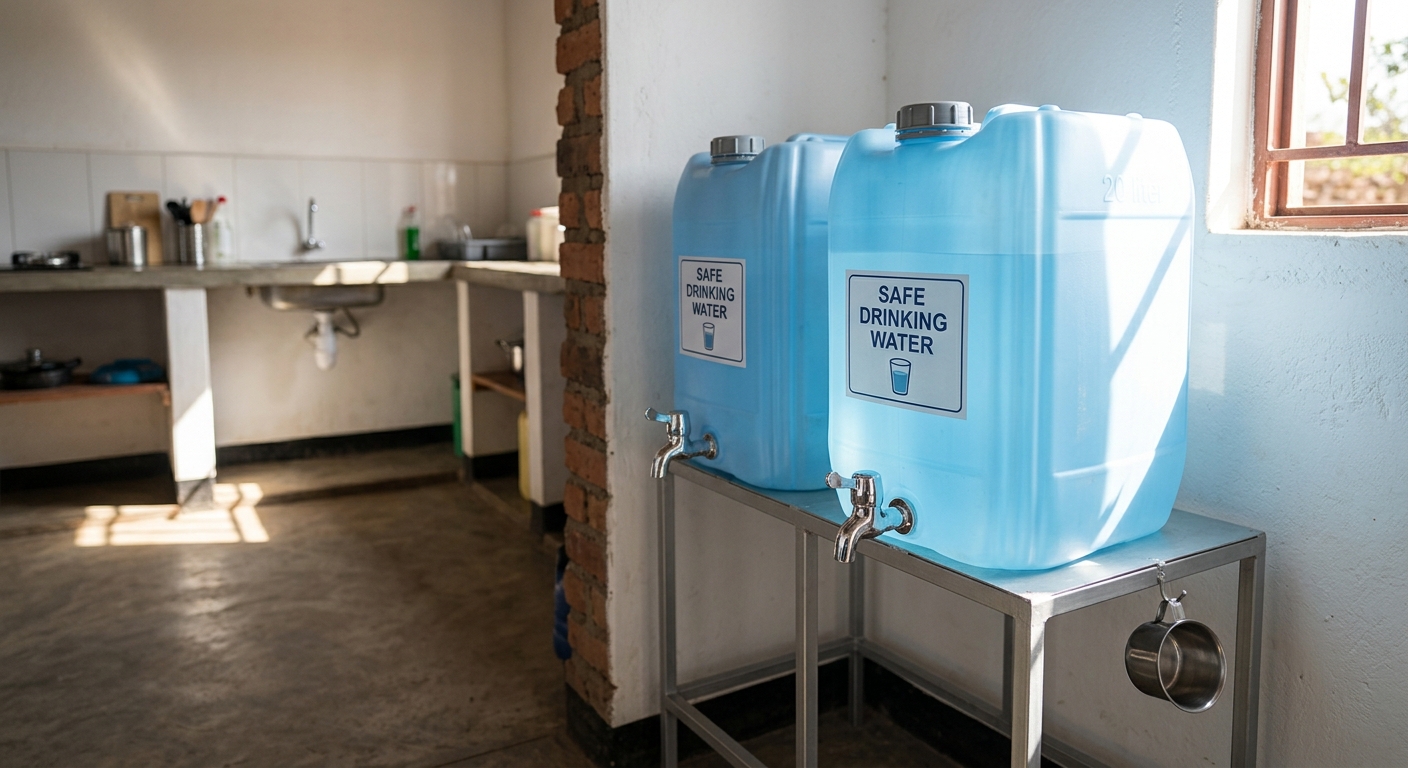
An image showing a clean, covered water storage container with a tap, positioned away from possible contaminants. Image credit: Gemini AI. Click on image to enlarge.
Treating your water doesn't help much if it gets contaminated again before anyone drinks it. Unsafe storage and handling at home is a well-documented cause of recontamination, even when water was clean at the source [5].
Store drinking water in a clean, narrow-necked container with a secure cover ideally one with a tap or spigot, so people don't need to dip cups or hands inside to draw water. Keep containers off the floor, away from animals, waste and chemicals, and wash them out regularly. WHO notes that simply covering water storage containers can reduce faecal contamination at the household level, and also helps reduce mosquito breeding, since some disease-carrying insects lay eggs in clean, standing water, a point worth remembering during cholera-prone periods [5]..
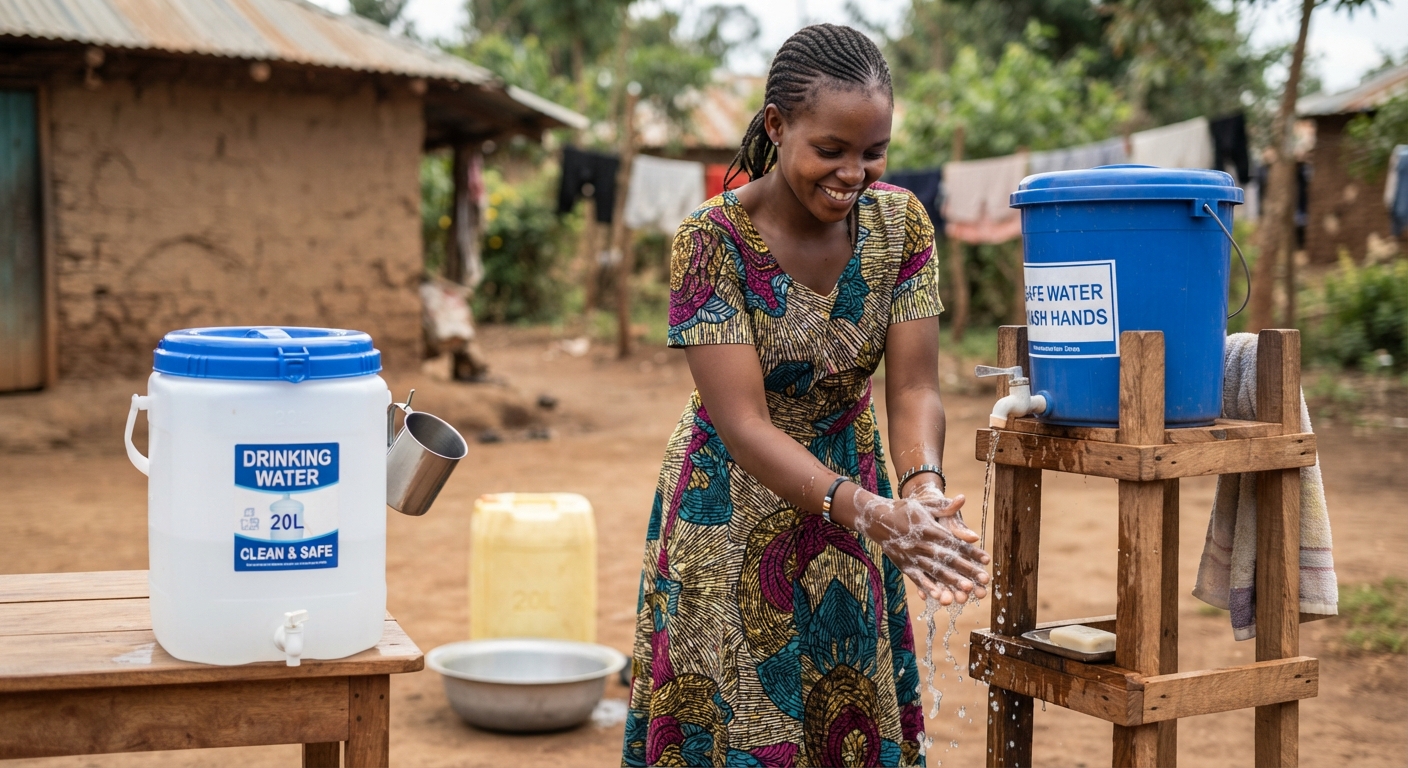
A young lady washes her hands before handling a drinking-water container. Image credit: Gemini AI. Click on image to enlarge.
Hand hygiene and water safety are closely linked. Dirty hands touching a cup, ladle, tap or the inside rim of a storage container can reintroduce the same bacteria that treatment was meant to remove, undoing all the earlier effort [4, 5].
Wash your hands with soap and clean water before collecting, treating or serving drinking water, and especially before feeding children or preparing food. Where soap and water aren't available, an alcohol-based hand rub is a reasonable substitute. This single habit is part of what public health experts call WASH (water, sanitation and hygiene) is one of the cheapest, most effective ways to break the chain of transmission for diarrhoeal and other faecal-oral diseases [4].
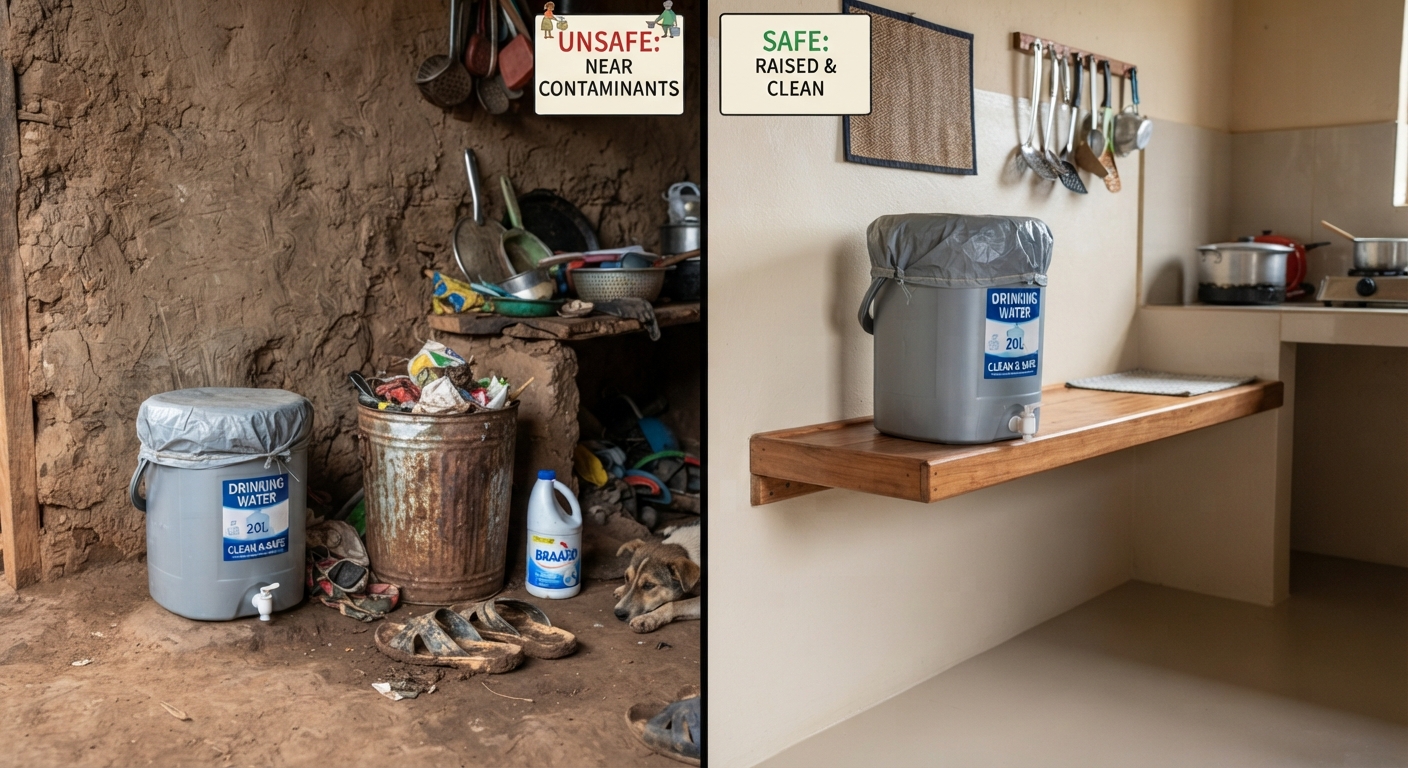
Covered drinking-water container stored safely away from household contaminants. Image credit: Gemini AI. Click on image to enlarge.
Inside the home, contamination risks hide in ordinary places: a storage container placed near a drain or refuse pile, animals with access to the kitchen area, chemicals or fuel stored close to water containers, or a dirty floor where a bucket sits uncovered overnight.
The guiding principle is simple: once water has been collected or treated, protect it from anything that could re-contaminate it. That means storing it away from waste, pests, chemicals and foot traffic, and never reusing a container that previously held fuel, pesticides or cleaning products , residues can be impossible to fully rinse out, and boiling or chlorination won't remove them.
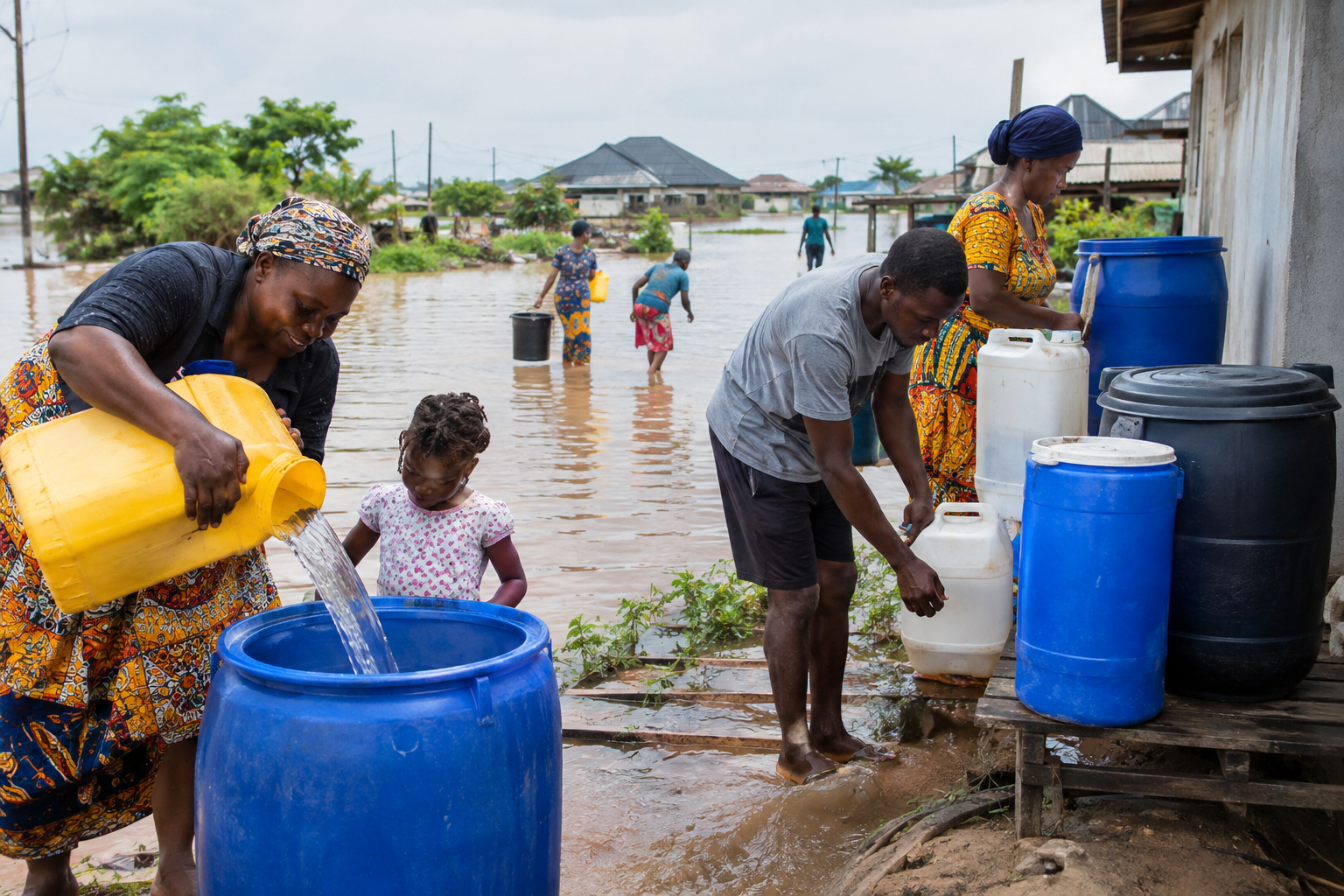
Flooding can increase the risk of drinking water contamination. Image credit: ChatGPT. Click on image to enlarge.
Flooding is one of the highest-risk periods for drinking-water contamination. Rising water can mix with overflowing pit latrines, septic systems and agricultural run-off, and can also damage or submerge wells, boreholes and pipe networks — letting sewage and floodwater into supplies that were previously safe. This is a major driver of cholera outbreaks across the region; Kenya, among other countries, has seen cholera cases rise sharply following flood events.
During floods, disease outbreaks, or any advisory from local health authorities, treat all household water as potentially contaminated boil or chlorinate it before use, even water from a source you'd normally trust and follow official guidance closely, since recommendations can shift quickly as the situation develops [6]. In situations like this knowing how cholera spreads and how it is treated and prevented is important.
7. Don't Assume Clear or Good-Tasting Water Is Safe
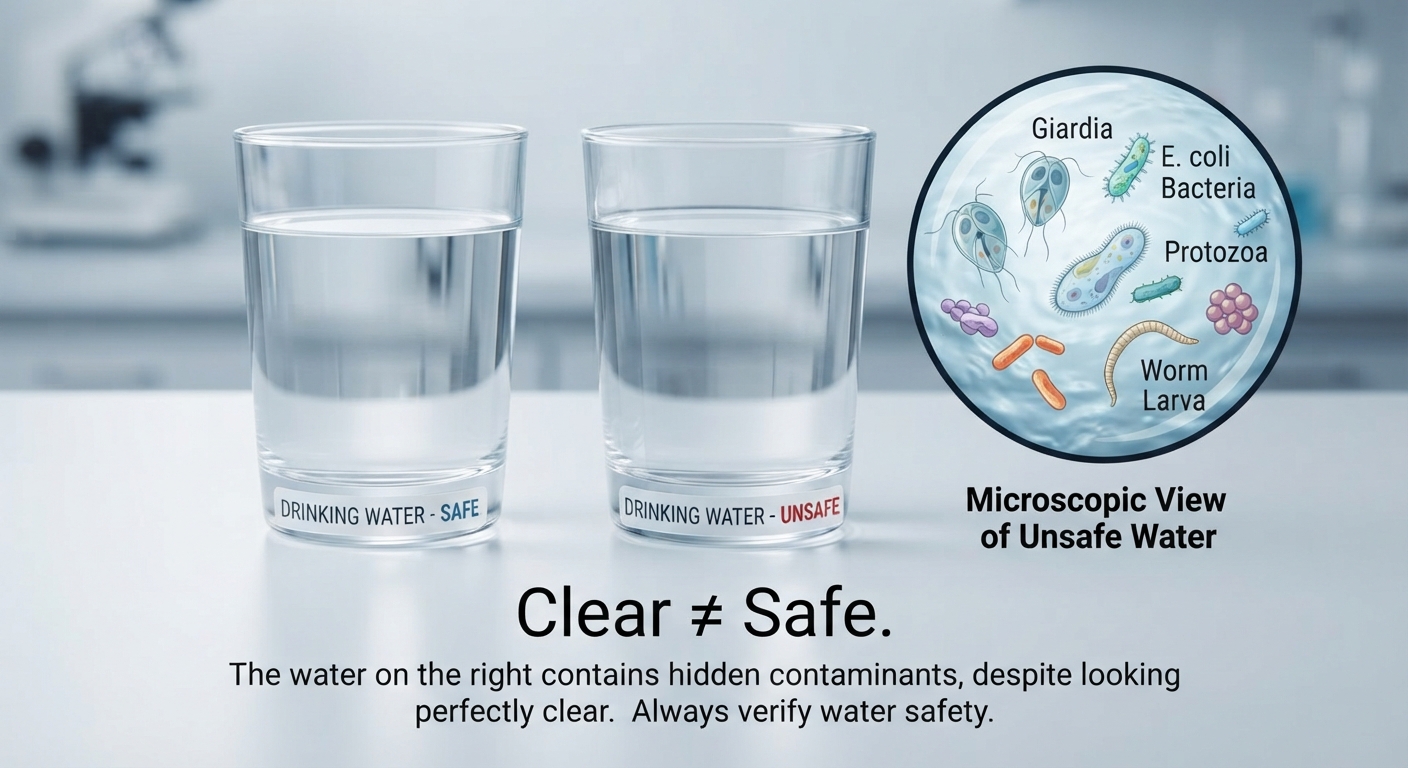
Clear drinking water may contain invisible disease-causing microorganisms. Image credit: Gemini AI. Click on image to enlarge.
This is one of the most important and most commonly ignored facts about drinking water: the microorganisms that cause diseases like cholera, typhoid and dysentery don't reliably change how water looks, smells or tastes. A glass of water can be perfectly clear, odourless and pleasant to drink, and still contain enough pathogens to cause serious illness [1, 2, 4].
Because microbial contamination is invisible to the senses, appearance and taste cannot be used to judge microbiological safety. Visual clarity mainly tells you about sediment and turbidity not about the bacteria, viruses or parasites that pose the greatest health risk, which is precisely why WHO identifies microbial contamination, rather than visible dirt, as the leading threat to drinking-water safety [1, 2].
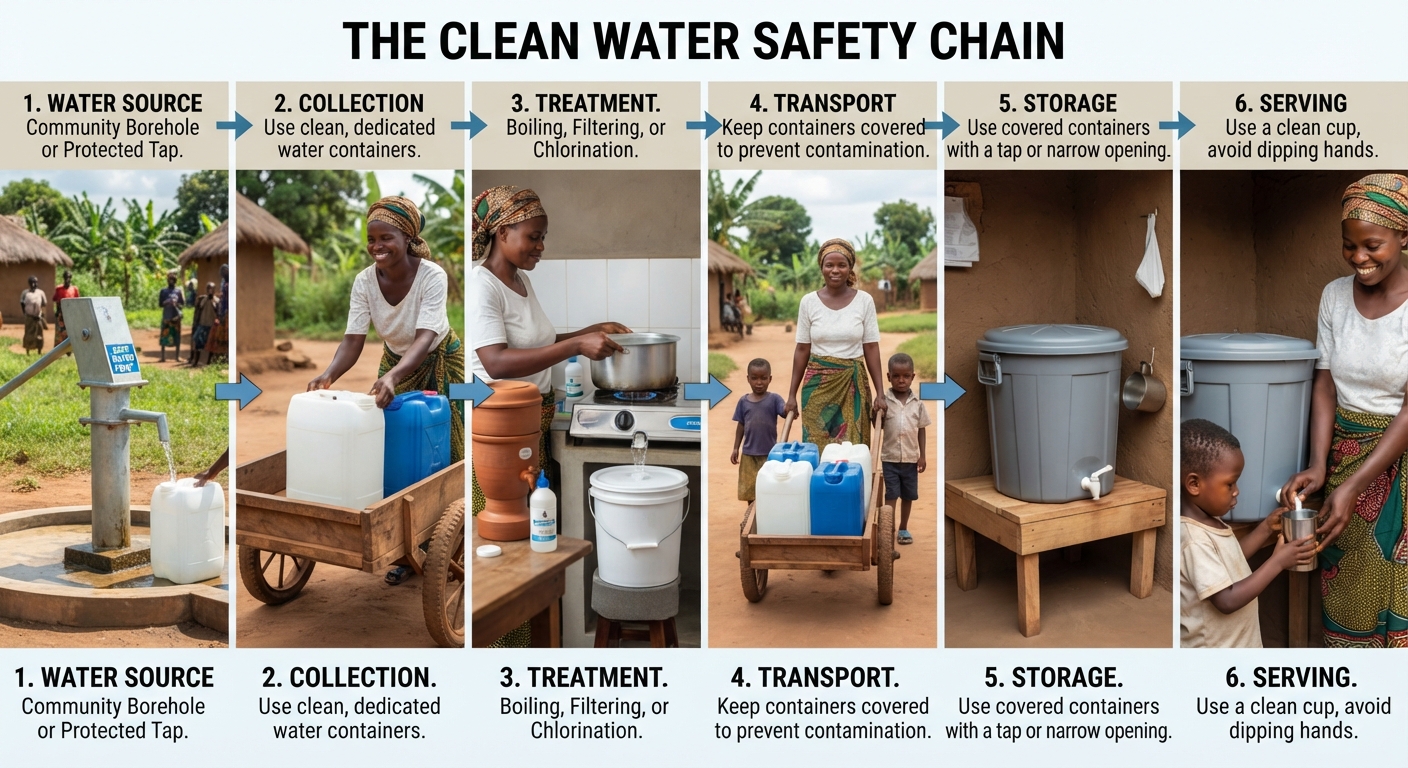
Steps for keeping drinking water safe from collection to storage and use. Image credit: Gemini AI. Click on image to enlarge.
Water safety works as a chain: source, collection, treatment, transportation, storage and handling. A weak link anywhere along that chain can undo everything done well at the other points, carefully boiled water can still become unsafe if it's stored in a dirty, uncovered container, and a well-protected source can still be compromised by contaminated hands at the point of use.
Rather than relying on a single “fix” — just boiling, just filtering, or just trusting an “improved” source, build a routine that covers the whole chain. Consistency across all of these steps, not perfection at any single one, is what actually protects your family [5].
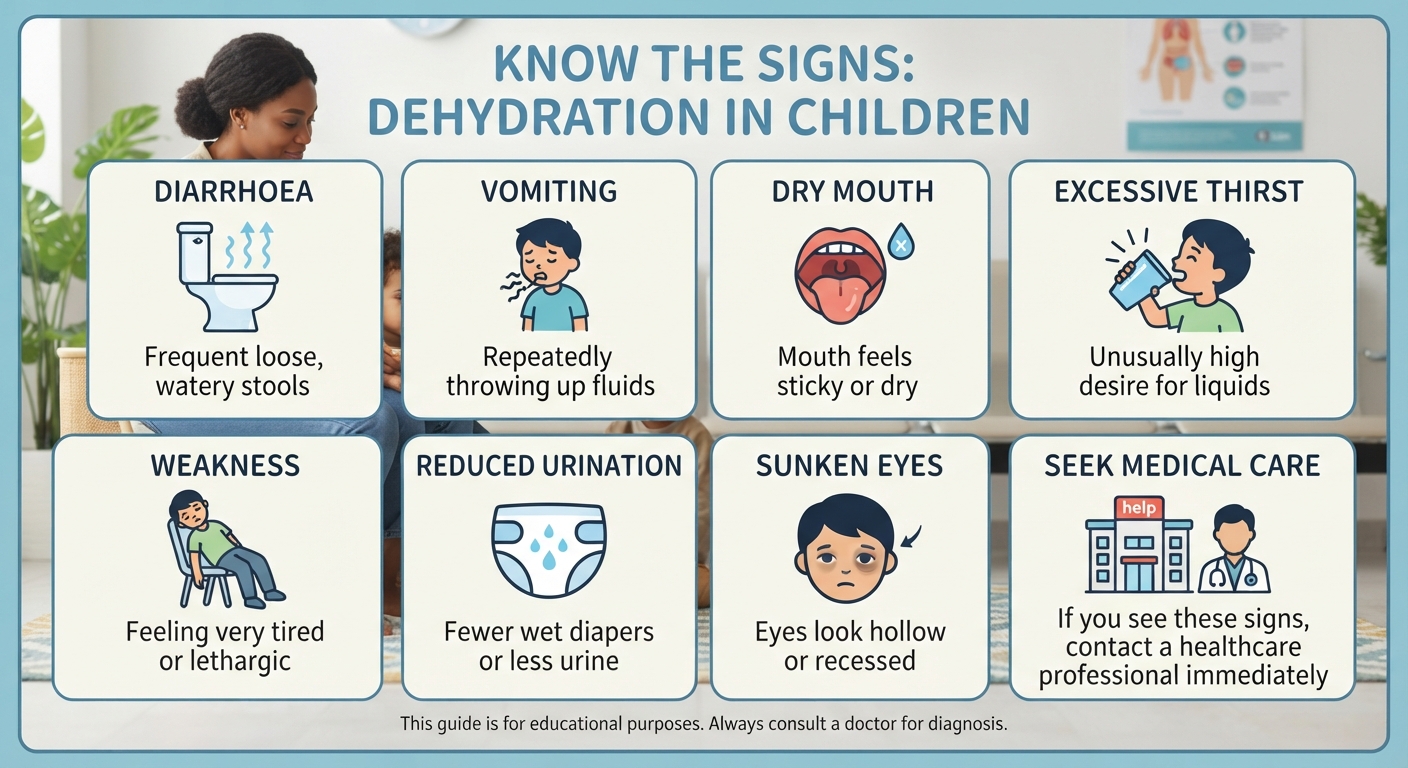
Warning signs of dehydration during diarrhoeal illness in children. Image credit: ChatGPT. Click on image to enlarge.
Waterborne infections most commonly show up as diarrhoea, sometimes with vomiting, stomach cramps, nausea or fever. Most mild episodes can be managed at home with oral rehydration solution and continued fluids, our guide on diagnosing and treating diarrhoea in African children covers this in more detail, but some symptoms need prompt medical attention.
Seek care quickly if you or your child show signs of dehydration (dry mouth, sunken eyes, reduced urination, unusual sleepiness or irritability), blood in the stool, persistent vomiting that prevents rehydration, high fever, or severe weakness [4] . Look out for warning signs in a child's fever they're red flags worth watching for. Not every episode of diarrhoea is caused by drinking water , but when it follows a change in water source, flooding, or a known local outbreak, it's worth mentioning to a health worker.
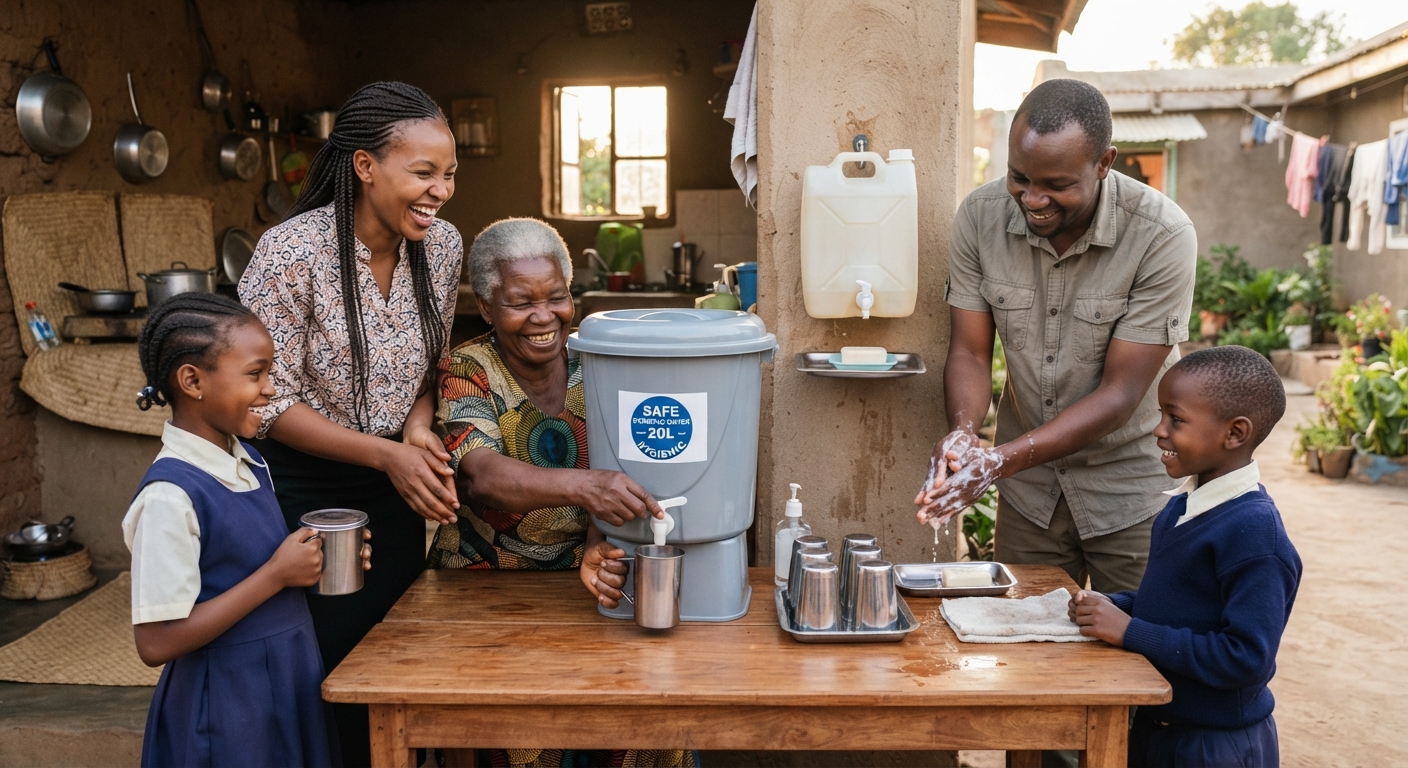
African family practising safe drinking-water habits at home. Image credit: ChatGPT. Click on image to enlarge.
Safe drinking water shouldn't only become a priority once a cholera outbreak is announced or a child falls ill. The habits that protect your family are simple enough to repeat every day:
None of these steps is complicated or expensive on its own. When they're practised together, consistently, they form the strongest protection your household can have against waterborne disease.
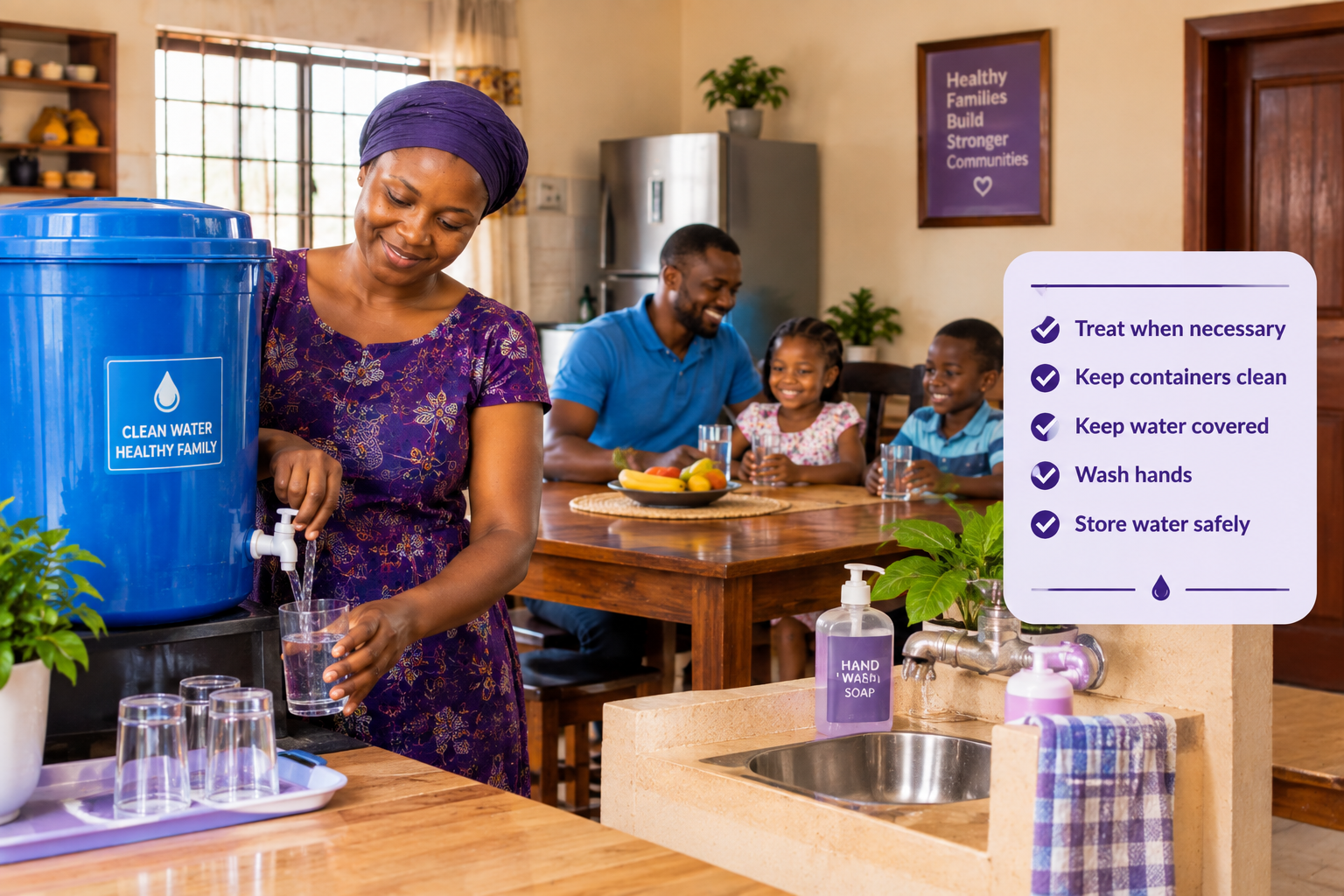
African family practising everyday habits for safe drinking water at home. Image credit: ChatGPT. Click on image to enlarge.
Drinking water can become contaminated at almost any point between its source and your cup which is exactly why household-level habits matter so much, even when the water looks perfectly clean. Treating water when its safety is uncertain, storing it in clean covered containers, keeping hands and containers clean, and staying alert during floods or outbreaks together close most of the gaps where contamination happens.
None of this is about making your family afraid of the water they drink. It's about understanding where contamination can occur, source, collection, treatment, storage, handling and closing those gaps with simple, repeatable habits. Safe drinking water is a right, not a privilege, and much of protecting it is within your control, starting today, in your own home.
1. World Health Organization. Drinking-water [Internet]. Geneva: World Health Organization; 2023 Sep 13 [Cited 2026 Sep 14]. Available from here.
2. World Health Organization. WHO unveils third addendum to Guidelines for drinking-water quality [Internet]. Geneva: World Health Organization; 2026 Jun 18 [Cited 2026 Sep 14]. Available from here.
3. World Health Organization, United Nations Children's Fund. 1 in 4 people globally still lack access to safe drinking water – WHO, UNICEF [Internet]. Geneva: World Health Organization; 2025 Aug 26 [Cited 2026 Sep 14]. Available from here.
4. World Health Organization. Diarrhoeal disease [Internet]. Geneva: World Health Organization; 2024 March 7. [Cited 2026 Sep 14]. Available from here.
5. World Health Organization. International scheme to evaluate household water treatment technologies [Internet, n.d.]. Geneva. [Cited 2026 Sep 14]. Available from here.
6. Centers for Disease Control and Prevention. How to make water safe in an emergency [Internet]. Atlanta (GA): Centers for Disease Control and Prevention; 2024 Sep 19 [Cited 2026 Sep 14]. Available from here.
7. UNICEF USA. 1 in 4 worldwide still lack access to safe drinking water [Internet]. New York: UNICEF USA; 2025 August 27. Cited 2026 Sep 14]. Available from here.
Related: 10 Health Benefits Of Drinking Water
Published: October 27, 2026.
© 2026. Datelinehealth Africa Inc. All rights reserved.
Permission is given to copy, use and share content for non-commercial purposes without alterations or modifications and subject to source attribution.
DATELINEHEALTH AFRICA INC., is a digital publisher for informational and educational purposes and does not offer personal medical care and advice. If you have a medical problem needing routine or emergency attention, call your doctor or local emergency services immediately, or visit the nearest emergency room or the nearest hospital. You should consult your professional healthcare provider before starting any nutrition, diet, exercise, fitness, medical or wellness program mentioned or referenced in the DatelinehealthAfrica website. Click here for more disclaimer notice.