Eliminating Hepatitis B in Africa: Scaling Up Testing and Vaccination
By: Nimotallahi Taiwo Abass. Second Year Medical Student and Freelance Health Writer. Medically reviewed by: O. Olatunbosun, MBBS, M.Sc. Microbiology and Parasitology.
October 27, 2026

Photo of a healthcare worker sharing information with an African mother carrying her newborn baby while a supporting relative also listens. Image vredit> ChatGPT. Click on image to enlarge.
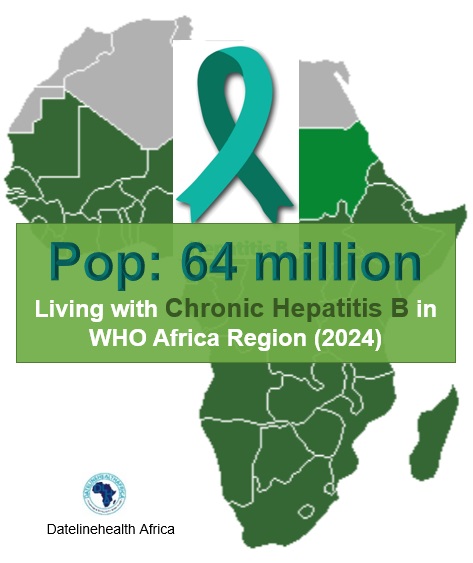 Hepatitis B is a silent public health crisis in Africa. In 2024, around 64 million people in the WHO African Region were living with chronic hepatitis B, a long-term liver infection (1). Many had no symptoms. Acute hepatitis B is a short-term illness after a new infection, and most adults clear it (1). In chronic infection, the virus stays hidden in the liver for years, slowly causing damage until cirrhosis or liver cancer occurs.
The good news is that hepatitis B can be prevented with a vaccine and managed with treatment. The real problem is that too few people get tested or protected. This article looks at how the virus spreads, why the burden is so high in Africa, and how testing and vaccination can make a difference.
What is Hepatitis B?
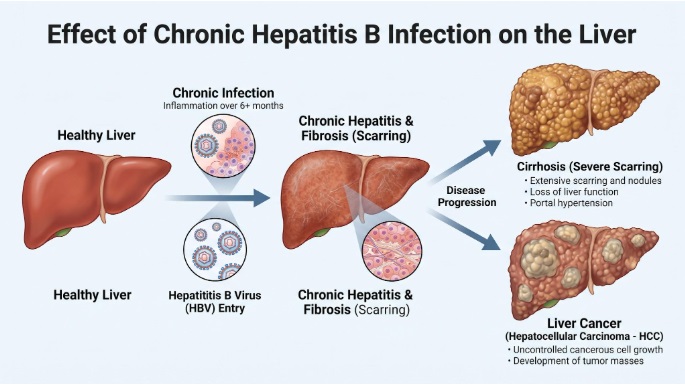
Info-poster illustrating the effects of chronic hepatitis B infection on the liver, from ongoing inflammation to cirrhosis and an increased risk of liver cancer. Image credit: Claue
Hepatitis B occurs when the hepatitis B virus (HBV) invades the body and causes an infection and swelling of the liver. It may occur as a short-term illness, known as acute hepatitis B, or develop into a long-lasting condition called chronic hepatitis B
Acute hepatitis B is an illness that happens in the first six months after getting the virus. Some people don't feel sick at all or only have mild symptoms, but others may become so sick they need to go to the hospital. If the body fails to clear the virus, it becomes chronic. This is a life-time condition that can damage the liver and lead to cirrhosis or cancer if not treated (2).
In sub-Saharan Africa, hepatitis B is the most important cause of liver cancer (3). Many people with hepatitis B may not experience noticeable symptoms, particularly during the early stages
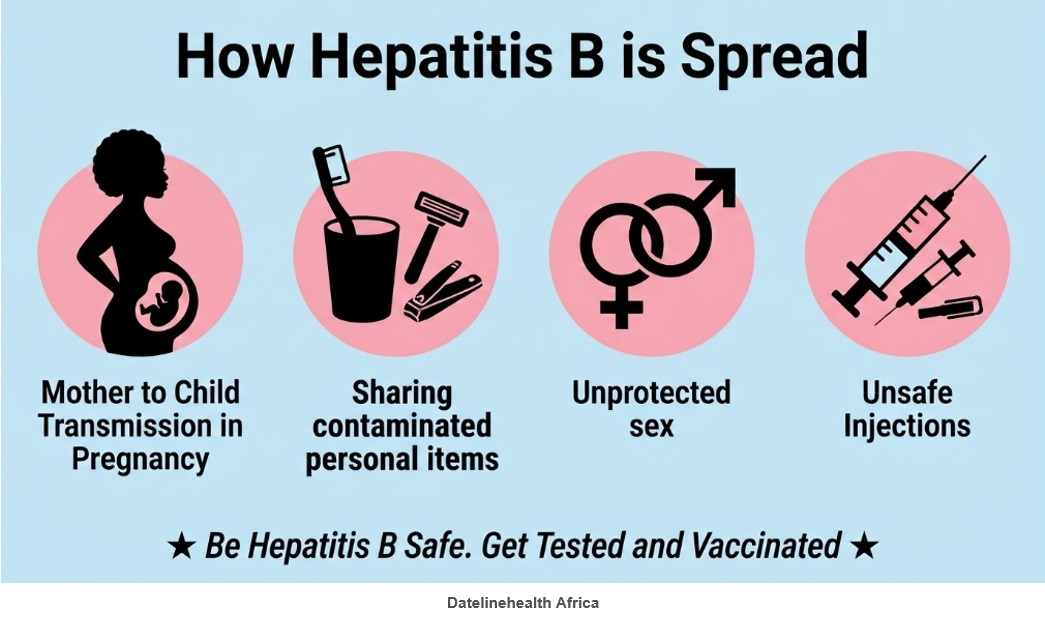
Infographic showing the four main ways that hepatitis B is spread. Created from Gemini AI. Click on image to enlarge
Hepatitis B is mainly spread through contact with infected blood or certain body fluids. Common routes of transmission include:
A pregnant woman living with hepatitis B can pass the virus to her baby, particularly during childbirth (perinatal transmission) (4). Antenatal Care plays an important role in the detection of this condition in pregnancy and taking action to protect the health of pregnant women and their babies.
Children or family members who share the following personal items contaminated with traces of blood or body fluid are also at risk of catching the virus (4)
Hepatitis B can be transmitted through horizontal transmission (exposure to infected blood) (4)
Hepatitis B can be transmitted through sexual contact with an infected person. The risk is higher among people who are not vaccinated, particularly those with multiple sexual partners, including men who have sex with men.
The virus can also spread when people share or reuse needles and syringes that have not been properly sterilized, whether in hospitals or among drug users.
Hepatitis B is not spread through ordinary casual contact. A person living with hepatitis B does not transmit the virus simply by:
• Hugging and kissing
• Coughing or sneezing.
• Breastfeeding
The Statistics
According to WHO, of the 240 million living with hepatitis B in the Africa region in 2024, 64 million are chronically infected with the virus. This shows how serious the problem is in the region (1).
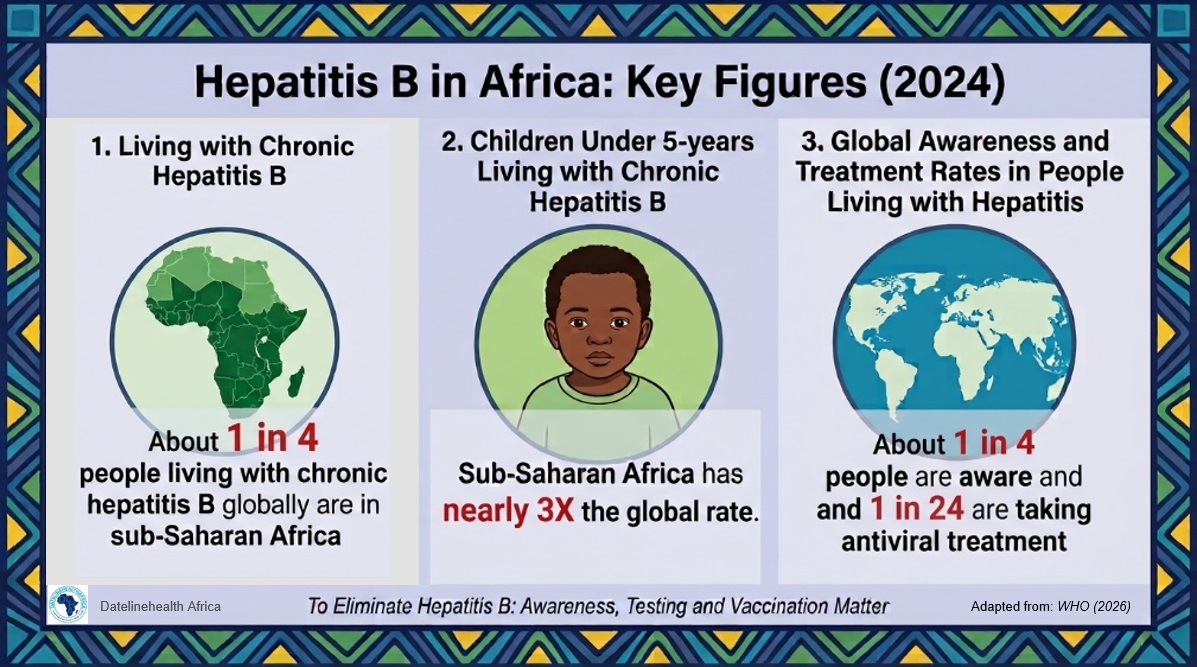
Infographic showing key hepatitis B statistics in sub-Saharan Africa (2024). Adapted from WHO (2026), AI image created from Gemini. Click on image to enlarge.
Also In 2024, while 0.6% of children under five worldwide were living with chronic hepatitis B, in Africa, the figure was 1.6% (1). This is because testing and specialist care are difficult to obtain in many parts of sub-Saharan Africa, which causes frequent delays in diagnosis until the disease is far advanced.
Hepatitis B severely damages the liver. In sub-Saharan Africa, it causes 30% to 50% of deaths from cirrhosis (5). A review of 17 studies showed that 4% to 13% of people with hepatitis B in the region have cirrhosis (5).
WHO links the severity of the impact of hepatitis B on under 5 children in sub-Saharan Africa to three problems: many mothers are infected, not enough children receive their routine vaccines, and many babies do not get their birth dose on time (1).
Even when vaccines are available, factors such as limited access to healthcare, misinformation, safety concerns and low awareness can affect vaccination uptake. Addressing these barriers is essential to improving coverage and protecting more people against preventable infections.
Most people experience no symptoms when newly infected. Chronic hepatitis B is often silent, so many infected persons are unaware of their status. If an acute infection produces symptoms, they usually appear 2 to 5 months after exposure and last several weeks, with some cases lasting half a year (2).
When symptoms appear, they include:
Jaundice, which causes yellowing of the skin and the whites of the eyes, can be a sign of liver problems. However, it can result from several conditions, not just hepatitis B. Understanding the causes and warnings signs of jaundice can help people recognise when they need medical evaluation.
For any illness, diagnosis starts with a conversation with your healthcare provider. The diagnosis of hepatitis B therefore starts with your doctor asking about your symptoms, past health problems, vaccinations and possible exposure, then examining you. Doctors may request for tests to be done if they consider them needed. For hepatitis B, a blood test is a must, because you cannot tell it apart from other types of viral hepatitis by symptoms alone (1).
The WHO recommends screening all pregnant women, all donated blood, and offering tests to all adults in areas with high hepatitis B infection (1).
Testing during pregnancy is particularly important because identifying hepatitis B early allows healthcare providers to plan appropriate measures to reduce the risk of transmission to the baby. Hepatitis B screening may form part of the routine tests conducted during pregnancy, alongside other investigations that help protect the health of both mother and child.
Data from 2024 shows that just 27%, or 65 million, of the estimated global population with hepatitis B were aware they were infected (1).
Testing is a simple blood check. Here is how it usually happens:
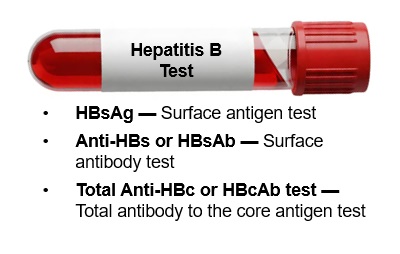
Illustration showing commonly performed Hepatitis B blppd tests. Click on image to enlarge.
The first test often looks for hepatitis B surface antigen (HBsAg), a protein found on the outside of the virus.
Some places do three tests at once (2):
If the result is positive, more checks are done to further check the health of the liver. These may include extra blood tests, an ultrasound, and sometimes a special scan to check how damaged the liver is (1).
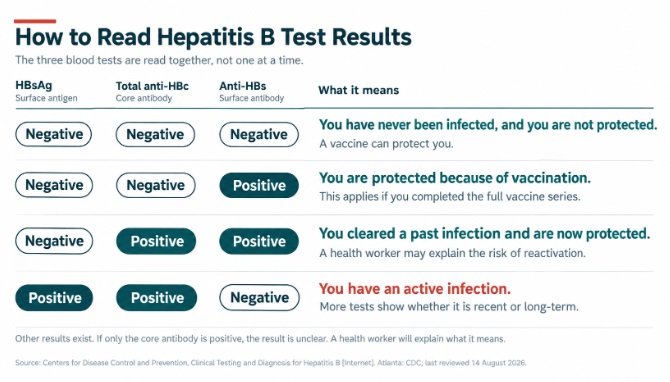
A four-row table showing how three hepatitis B blood tests are read together. Image generated from Claude. Click on image to enlarge.
The results are read together, not by themselves: If the surface antigen test (HBsAg) is positive, it means the virus is in the body and the person can spread it. More tests will show whether the infection is new or has been there for a long time (2).
If only the surface antibody test (Anti-HBs or HBsAb) is positive, it means the person is protected, either through vaccination or from having recovered from a past infection.
If the total antibody to the core antigen (Total Anti-HBc or HBcAb) is positive, it indicates a previous or ongoing infection at some point in the person's life; but not from a vaccine alone.
If all three tests are negative, it means the person has no infection and no protection, so vaccination is advised.
Some results are harder to understand, like when only the total antibody to the core antigen is positive. A doctor can explain what these mean.
There is no specific treatment for acute hepatitis B; care is focused on relieving symptoms, eating well, and drinking enough fluids to prevent dehydration from vomiting and diarrhoea. Chronic hepatitis B, however, can be treated using antiviral medications (1).
According to WHO, the most potent options to control HBV are tenofovir or entecavir. They rarely cause drug resistance, are easy to take (one tablet daily), have few side effects, and need only limited follow-up (6).
These medicines control the virus but are not a cure, and they help only some people with chronic infection (2). Most people who start treatment must continue it for life (1). In 2024, only about 4.3% of people with chronic hepatitis B were on treatment (1).
At a hospital in Addis Ababa, Ethiopia, doctors followed 1,303 adults with chronic hepatitis B for five years. About one in five (291 people) began antiviral treatment, and the study showed that treatment helps in the long term even when resources are limited (7).
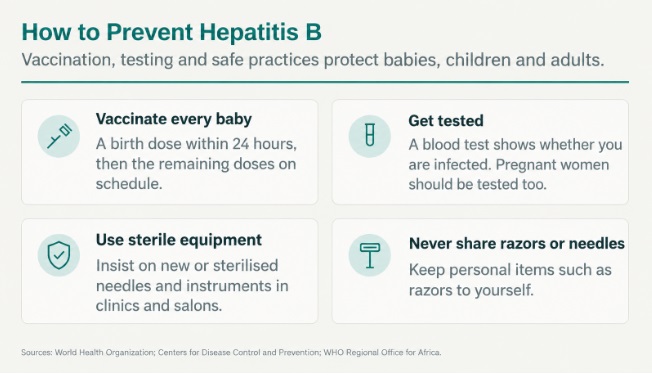
Infographic showing four ways to prevent hepatitis B. Generated from Claude. Click on image to enlarge.
Hepatitis B can be prevented by vaccination (1). Every baby should get the first hepatitis B shot within 24 hours after birth, then 2 or 3 more doses at least 4 weeks apart.
The biggest challenge in the region is the birth dose. By December 2021, just 14 of the 47 countries in the WHO African Region were giving it, and coverage across the region only increased from 10% in 2016 to 17% in 2021 (8).
The hepatitis B birth dose is an important part of newborn protection and should ideally be given within 24 hours of birth. It is one of the life-saving vaccines recommended for Nigerian children, alongside other vaccines that protect against preventable diseases.
To reduce your risk of getting or spreading hepatitis B (1):
WHO aims to eliminate viral hepatitis, including hepatitis B, by year 2030. The Europe and Americas regions have already reduced hepatitis B in children under five to below the 2030 target (1). The African Region has not yet reached this goal, which makes testing and vaccination especially important in the region.
Early testing is critical because hepatitis B can remain without symptoms for years, while an infected person can still transmit the virus (2). A positive test allows for monitoring and treatment that can slow liver damage and reduce the risk of liver cancer. Testing pregnant women also helps protect their infants. In low-income settings, most people with liver cancer are diagnosed late and die within months.
Vaccination prevents infection before it begins. The vaccine is safe and effective, and every newborn should receive the first dose within 24 hours of birth (1).
Living with chronic hepatitis B requires long-term management, and healthy habits help protect the liver over time. It is important to find a doctor experienced in liver disease, as regular visits allow early detection of changes in liver health. Without treatment, chronic infection can lead to severe liver complications, making continuous care essential.
Daily lifestyle choices also matter. Reducing alcohol intake, maintaining a balanced diet, and staying physically active are recommended (2). Before you take any prescription medicines, supplements, herbal products or over-the-counter drugs, you should consult your doctor, as some of these products may further cause liver damage.
Doctors may also recommend hepatitis A vaccination and screening for co-infections such as hepatitis C, hepatitis D, and HIV (2). Close partners and family members should also be tested, as they may be at risk (2).
Hepatitis B is not rare, and it can harm the liver long before symptoms appear. It spreads quietly, often from mother to baby, and can harm the liver long before you feel sick. Resources are readily available to identify and prevent its spread through testing and vaccination.
Whether we can eliminate it depends on whether families can get both. If you have never been tested, or you are not sure if your child is vaccinated, talk to a health worker this week. One test today could protect the next thirty years.
1. World Health Organization. Hepatitis B. [Internet}. 28 July 2026. WHO: Geneva; [Accessed 8 October 2026]. Available from here.
2. Centers for Disease Control and Prevention. Hepatitis B Basics. [Internet}. Last reviewed 29 August 2025. CDC: Atlanta, GA; [Accessed 8 October 2026]. Available from here.
3. Béguelin C, Fall F, Seydi M, Wandeler G. The current situation and challenges of screening for and treating hepatitis B in sub-Saharan Africa. Expert Rev Gastroenterol Hepatol. 2018;12(6):537-46. Available from here.
4. World Health Organization Regional Office for Africa. Hepatitis (modes of transmission section). [Internet. n.d.]. WHO AFRO: Brazzaville; [Accessed 8 October 2026]. Available from here.
5. World Health Organization. Treatment of hepatitis B virus infection. [Internet, n. d.]. WHO: Geneva; [Accessed 12 October 2026]. Available from here.
6. Surial B, Wyser D, Béguelin C, Ramírez-Mena A, Rauch A, Wandeler G. Prevalence of liver cirrhosis in individuals with hepatitis B virus infection in sub-Saharan Africa: systematic review and meta-analysis. Liver Int. 2021;41(4):710-9. Available from here.
7. Desalegn H, Orlien SMS, Aberra H, Mamo E, Grude S, Hommersand K, et al. Five-year results of a treatment program for chronic hepatitis B in Ethiopia. BMC Med. 2023;21(1):373. Available from here.
8. Kabore HJ, Li X, Alleman MM, Manzengo CM, Mumba M, Biey J, et al. Progress toward hepatitis B control and elimination of mother-to-child transmission of hepatitis B virus: World Health Organization African Region, 2016-2021. MMWR Morb Mortal Wkly Rep. 2023;72(29):782-7. Available from here.
Published: October 27, 2026.
© 2026. Datelinehealth Africa Inc. All rights reserved.
Permission is given to copy, use and share content for non-commercial purposes without alterations or modifications and subject to source attribution.
DATELINEHEALTH AFRICA INC., is a digital publisher for informational and educational purposes and does not offer personal medical care and advice. If you have a medical problem needing routine or emergency attention, call your doctor or local emergency services immediately, or visit the nearest emergency room or the nearest hospital. You should consult your professional healthcare provider before starting any nutrition, diet, exercise, fitness, medical or wellness program mentioned or referenced in the DatelinehealthAfrica website. Click here for more disclaimer notice.