How to Become a Wellness Influencer People Actually Trust: A Step-by-Step Guide
By: Rhonda Underhill. Guest writer.
October 2, 2026
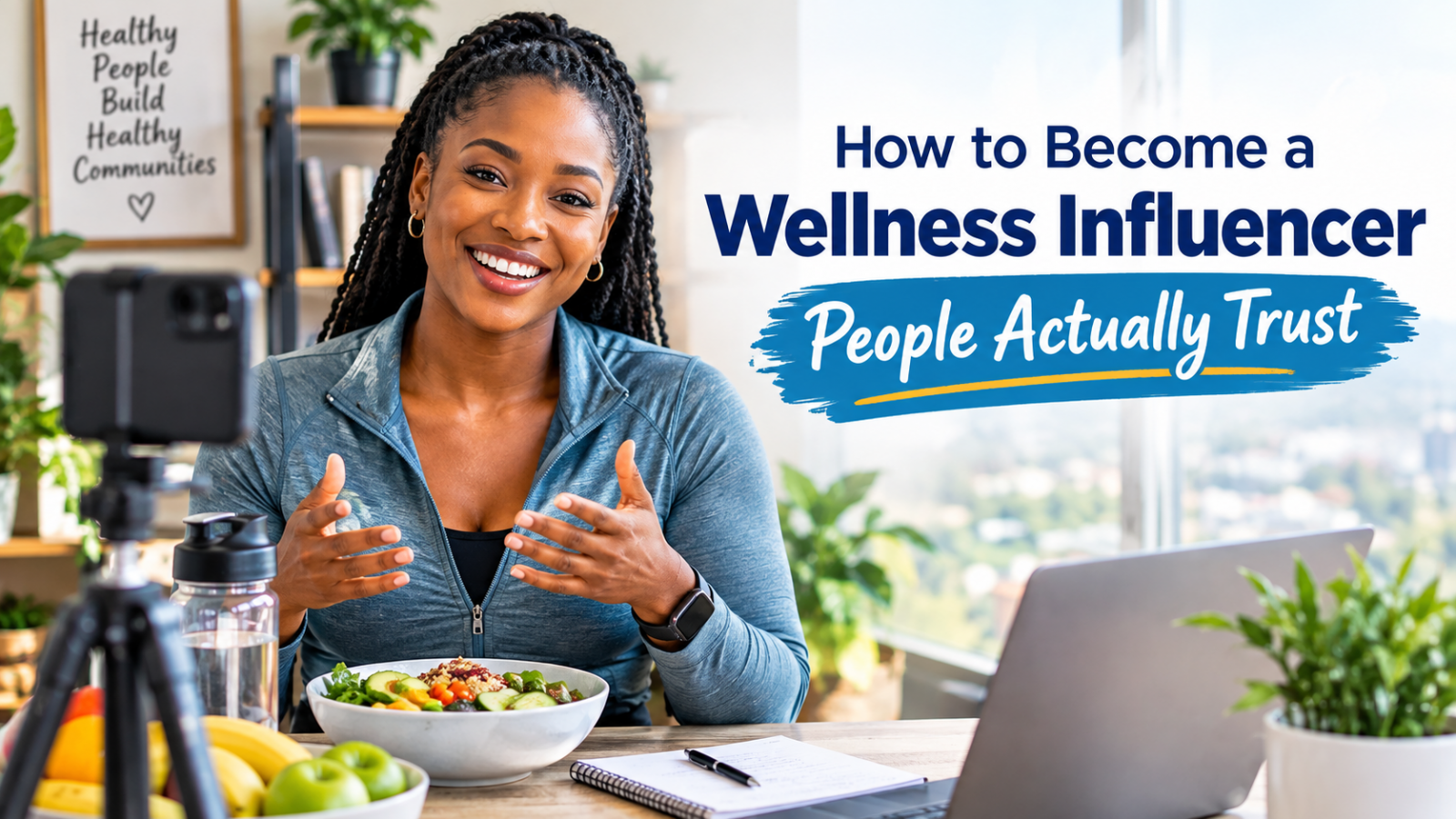
Image of a black woman captioned How to Become a Wellness Influencer People Actually Trust. The woman seats across a table with a variety of fruits, a bottle of water and a salad bowl. A notepad with an ink pen lie besides a laptop, while a smartphone mounted on a short stand faces the woman who appears to be vlogging. The image background is professional with parts of plants showing on the side. Image created with ChatGPT. Click on image to enlarge.
Highlights
To grow and become a wellness influencer people actually trust:
Fitness coaches, yoga teachers, nutrition enthusiasts, and healthcare-adjacent creators are drawn to wellness influencing because it can turn lived experience into real impact, and a real business. The core tension is that wellness content spreads fast, but trust breaks faster, especially when niche selection in wellness is fuzzy or advice outruns expertise.
Building credibility in health content isn't a vibe; it's a set of choices that protect people from misinformation and protect creators from backlash. When audience trust in wellness is earned through clear boundaries and responsible wellness promotion, growth becomes sustainable.
This step-by-step guide is for fitness coaches, yoga teachers, nutrition enthusiasts, and healthcare-adjacent creators who want to build a real audience and a real business, without letting growth outpace the trust that makes either sustainable.
This process helps you choose a clear wellness lane, earn credibility, publish consistently, and grow an engaged audience without sacrificing integrity. For general readers, it keeps your content helpful and safe even as your reach and opportunities expand.
As you build credibility through consistent, responsible content, the clarity of your visuals can make your wellness education easier to trust and act on. AI image optimization tools can help polish photos and visual content by improving lighting, color balance, and overall clarity, while keeping a consistent look across your platforms. That consistency matters in wellness: a recognizable visual style (clean, readable, and cohesive) can strengthen your perceived professionalism, support engagement, and make key details stand out in diagrams, before-and-after comparisons, recipe photos, or movement cues.
When you're working with images that are slightly soft, compressed, or too small for a post format, an AI image upscaler can be especially useful. It enhances resolution and sharpness so you can enlarge photos without losing fine detail or visual quality, helping your content look crisp whether it's viewed in a feed, a carousel, or a thumbnail. If you want a concrete option to explore, the Adobe Firefly AI image upscaler is one tool designed for boosting image resolution while preserving detail.
Growing a wellness platform can feel like a constant tug-of-war between faster growth and staying credible when attention rewards shortcuts. The steadier path is the one built on influencer integrity, sustained audience engagement, and ongoing content responsibility rooted in respect for real people and real outcomes. When that mindset guides your choices, long-term wellness influencer success becomes less about spikes and more about wellness community building that lasts through trend cycles.
Trust is the only growth strategy that compounds in wellness. Every choice covered here, your niche, your sourcing, your cadence, your partnerships, either builds that trust or spends it. The influencers who last are the ones who treat credibility as infrastructure, not an afterthought.
Use this checklist weekly to keep your growth aligned with your credibility, so your audience can trust your guidance and your recommendations, and to spot gaps early, protect your voice, and build momentum without cutting ethical corners:
? Define your lane, audience, and non-negotiables in one sentence
? Disclose paid, gifted, and affiliate relationships at the start of content
? Draft posts using "I" language and avoid promised outcomes
? Verify product claims with written sources before you share
? Publish a simple content creation schedule for the next 7 days
? Track audience engagement metrics and note which topics earn saves
? Review partnerships and decline anything that restricts honesty
Choose one item from this checklist and complete it in full this week, then repeat next week. That consistency protects the health of your community and the resilience of your work over time.
Q: What exactly should I disclose when I'm paid or given a product?
A: Disclose any material connection: paid sponsorships, affiliate links, free products, discounts, or referral codes. Put it where people will actually see it, such as at the start of a caption, in a Story frame, and near the link. Use plain language like "Paid partnership" or "I earn a commission if you buy."
Q: How do I stay authentic when I'm trying to grow fast?
A: Choose one clear "lane" and repeat it consistently: who you help, what problem you solve, and what you won't promote. Share your decision process, not just results, including what didn't work for you. The demand is real, with wellness a top priority for many consumers, so you do not need hype to stand out.
Q: Can I share personal health wins without making medical claims?
A: Yes, but use "I" language and avoid promising outcomes for others. Add context like what you changed, how long you tried it, and what variables could affect results. Encourage people with symptoms or conditions to consult a qualified clinician.
Q: How should I handle brand partnerships without losing audience trust?
A: Set non-negotiables in writing: no exaggerated claims, no pressure tactics, and full creative control over your final wording. Ask for substantiation for any benefit statements, and walk away if they cannot provide it. Promote fewer products more thoughtfully to protect long-term credibility.
Q: When should I say no to a sponsorship offer?
A: Say no when the product conflicts with your values, targets insecurities, or requires you to speak outside your training. Also decline if the contract limits disclosure, restricts honest feedback, or pushes before-and-after content that implies guaranteed change.
Published: October 2, 2026
© 2026. Datelinehealth Africa Inc. All rights reserved.
Permission is given to copy, use and share content for non-commercial purposes without alteration or modification and subject to source attribution.
DATELINEHEALTH AFRICA INC., is a digital publisher for informational and educational purposes and does not offer personal medical care and advice. If you have a medical problem needing routine or emergency attention, call your doctor or local emergency services immediately, or visit the nearest emergency room or the nearest hospital. You should consult your professional healthcare provider before starting any nutrition, diet, exercise, fitness, medical or wellness program mentioned or referenced in the DatelinehealthAfrica website. Click here for more disclaimer notice.