West Africa’s Rain and Drought Cycles Spark Rodent Surges and Lassa Fever Outbreaks
By Chinenye Abel. B.Tech, Information Systems. Dateline Health Africa Volunteer. Medically reviewed by: O. Olatunbosun, MBBS, M.Sc. Microbiology and Parasitology.
November 16, 2026
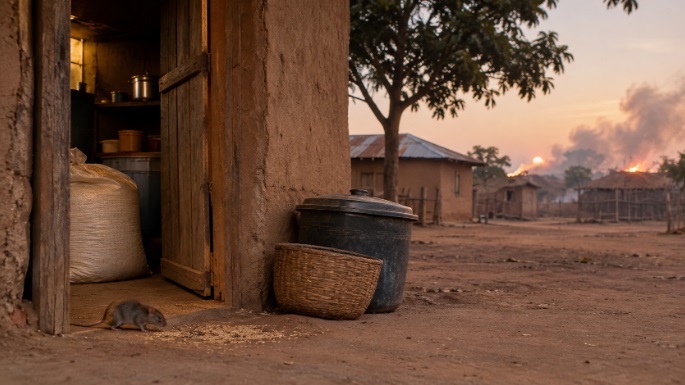
View of a partly open kitchen door of a mud built rural home in a courtyard set against a dusty Harmattan sky. Grain sacks are seen on the kitchen floor, while a large, black and covered plastic container, basket, scattered grains and a small rat are shown just outside the kitchen door. Image credit: ChatGPT. Click image to enlarge.
Consider this scene: It is early December in a village on the edge of the bush. The Harmattan haze has settled, the mornings are cold, and everyone's lips are cracked. In a small compound of rented rooms, a mother packs away the season's foodstuff: a bag of beans, a bucket of garri, a sack of rice tucked in the corner of the kitchen. Outside, the refuse heap by the drain is overflowing, as it has been for weeks.
The nearby farmland has dried up, and the rats that lived there have lost access to some of their usual food and shelter. Now they are looking for new ones. That night, one slips in through a gap under the door, feeds on the spilled grains, and leaves behind droppings and urine that no one notices.
Scenes like this are common every dry season across rural West Africa. According to the Nigeria Centre for Disease Control and Prevention (NCDC), Lassa fever has claimed 229 lives in 2026 as of mid-July, and the share of confirmed patients who have died is higher than in the same period of 2025.
This article explores how seasonal weather changes influence Lassa fever transmission, why cases often rise during the dry season, and how households and health authorities can reduce the risk.
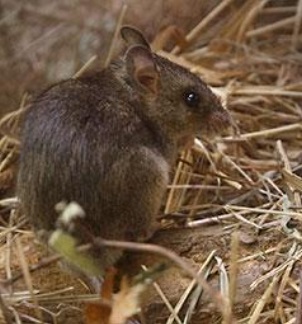
Image of a mastomys natalensis rat, the host of the Lassa fever virus. Image credit: Spangenbergm F.
The rat that slipped into the farmland house in the scene described earlier, is no ordinary house rat. It is the multimammate rat, known to scientists as Mastomys natalensis. Throughout Sub-Saharan Africa, only West African populations of this rat are currently known to carry the Lassa virus, according to the US Centers for Disease Control and Prevention (CDC). It lives in bushes, farmland and around human homes, and breeds quickly. The rat is not sick, and it shows no sign of carrying anything dangerous. Yet it passes the virus out through its urine and droppings.
People catch Lassa fever through contact with rats, their droppings and urine. This can happen when people:
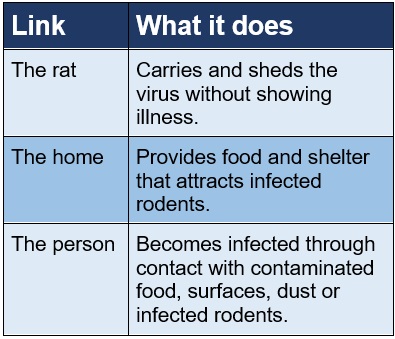
A table illustrating the roles of rodents, household environments and human exposure in Lassa fever transmission.
Notice that the virus needs all three. Break any link, and the chain stops.
A person with Lassa fever may not show any symptoms or symptoms may be missed.
According to the World Health Organization (WHO), about four in five people infected with the virus have no symptoms or experience mild illness.
Early symptoms in those who fall ill include those that resemble other infectious conditions like malaria and typhoid; i.e., fever, headache and weakness.
In severe cases, the illness can worsen and affect several organs, including damage to the liver, spleen and kidneys. Bleeding may also occur, although it is not present in every severe case. Lassa fever can be fatal, but early diagnosis and appropriate supportive care improve the chances of survival.
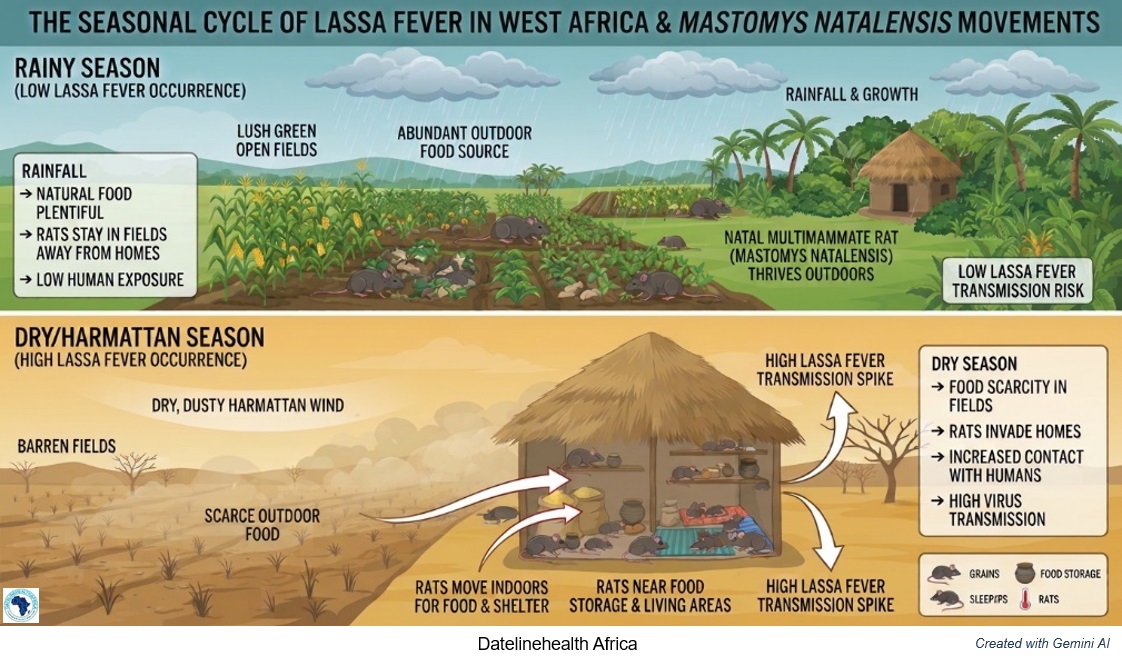
An infographic showing how changing weather patterns and rat movements affect seasonal spikes in Lassa fever. During the rainy season when the fields are lush and food is plentiful outdoors, the multimammate rats stay away from homes and Lassa fever occurrence is low. As drought sets in the dry season and food dries up outdoors, rats move indoors into homes looking for food. This increases the chances of human contact with rat droppings and urine and Lassa fever occurrence spike. Image credit: Gemini AI. Click on image to enlarge.
To understand why the dry season is dangerous, start with the rains.
When the rains arrive, the bush turns green. Seeds, grasses and insects are everywhere, and for a rat, the countryside becomes a well-stocked supermarket with the shelves full and no queue. With so much food available outdoors, the multimammate rat has less reason to visit people's homes and kitchens. Meanwhile, it continues to reproduce, with research showing that breeding activity and reproductive output are generally higher during the rainy season. The population gradually grows, creating a larger number of rodents as the dry season approaches.
This is why the relationship between the rainy season and Lassa fever is more complicated than it first appears.
Although rodent populations can grow during the rainy season, human Lassa fever infections do not necessarily rise at the same time. The availability of food outdoors influences where rodents live and how often they enter human homes.
The danger is not gone, though. It is only changing. As the rains end, food becomes less available in surrounding fields, and rodents will increasingly move towards human settlements in search of food and shelter.
From early December in the West Africa region, the weather turns, and rains stop. The grass dries, and the Harmattan wind sweeps in dust, cold and dry air. The natural supermarket closes. In some communities, farmers burn the bush to clear their land, which can destroy rodents' cover and food sources, bringing them closer to human settlements.
The timing could hardly be worse. The dry season is also a period when harvested food crops are dried, bagged and stored in houses, kitchens and storerooms. These food supplies attract rodents. The dry season is the rats' moving season: they move towards homes and storage places where food and shelter are available thereby increasing the opportunity for increased human contact with rat droppings and urine and consequently a spike in Lassa fever outbreaks.
This seasonal pattern is not limited to Nigeria. Other West African countries, including Guinea, Liberia, Sierra Leone, Benin, Ghana, Mali and Togo, are also affected by Lassa fever. In Liberia, reported Lassa fever cases also show a seasonal peak between January and March. This reflects a wider pattern across parts of West Africa, where transmission tends to increase during the dry season.
The home itself makes a difference. Gaps under doors, holes in walls, cracked floors and open roof edges give rats easy entry. Food left in open containers or stored on the floor makes it easier for rodents to access household supplies. Poor waste disposal can also provide food and shelter for rodents close to people's homes.
When the rains come back, the number of reported Lassa fever cases usually begins to fall. The bush becomes green again, providing seeds, grasses and other food sources for rodents. With more food available outdoors, multimammate rats have less reason to enter or remain in people's homes in search of food. As fewer rodents stay or move into household spaces, opportunities for contact with contaminated food and surfaces may decrease, reducing the risk of infection.
Although Lassa fever infections are commoner during the dry season, transmission can occur throughout the year. Cases are reported throughout the year, and Nigeria was still recording new infections in July, well outside the dry season. Infected rodents do not simply disappear when the weather changes, and people can still come into contact with contaminated food, surfaces and household spaces.
Lassa fever is therefore not only a dry season (Harmattan) problem. So, prevention efforts should not be strictly seasonal. The risk may rise and fall with changing environmental conditions, but it never reaches zero.
The good news is that Lassa fever is preventable, and much of the prevention begins at home. Remember the three links in the chain: the rat, the home and the person. Prevention is about breaking them.
One more step matters as much as any of these: act early when someone develops a fever. Rather than assuming it is malaria, seek medical attention, especially if there has been possible exposure to rodents. Early diagnosis and appropriate treatment can improve the chances of survival.
Return, for a moment, to that compound at the edge of town. It is December again, and the Harmattan haze is back. The cold mornings, the cracked lips and the dust are all the same.
But in the kitchen, the beans, garri and rice now sit in sealed containers. The gap under the door has been patched. The refuse heap by the drain has been cleared, and the drain runs freely. The home is no longer as easy for rodents to enter, and their access to food has been reduced.
Lassa fever is shaped by the world around us: the weather, the bush, the way we build, store food and manage waste. That means the environment can be changed, and when it is, the risk can change too. The Harmattan will blow every year. But with better household practices and community action, we can make our homes less welcoming to the rodents that spread Lassa fever.
1. Nigeria Centre for Disease Control and Prevention. Weekly epidemiological report: Week 28, 6–12 July 2026. Volume 16, No. 28. [Internet]. 2026 Aug 5 [Cited 2026 Nov 9]. Available from here. (Prepare to download).
2. World Health Organization. Lassa fever [Internet]. 2024 Dec 5 [Cited 2026 Nov 9]. Available from here.
3. Nigeria Centre for Disease Control and Prevention. Lassa fever [Internet]. 2019 Apr 9 [Cited 2026 Nov 9]. Available from here.
4. Centers for Disease Control and Prevention. About Lassa fever [Internet]. 2025 Jan 31 [Cited 2026 Nov 9]. Available from here.
5. Davis NA, Kenyon MA, Ghersi BM, Decker Sparks JL, Gass JD Jr. Assessing the environmental drivers of Lassa fever in West Africa: a systematic review. Viruses 2025 Mar 31;17(4):504. Available from here.
Related: Of Mice, Dust, and Danger: An African Guide to Hantavirus
Published: November 16, 2026.
© 2026. Datelinehealth Africa Inc. All rights reserved.
Permission is given to copy, use, and share content freely for non-commercial purposes without alteration or modification and subject to source attribution.
DATELINEHEALTH AFRICA INC., is a digital publisher for informational and educational purposes and does not offer personal medical care and advice. If you have a medical problem needing routine or emergency attention, call your doctor or local emergency services immediately, or visit the nearest emergency room or the nearest hospital. You should consult your professional healthcare provider before starting any nutrition, diet, exercise, fitness, medical or wellness program mentioned or referenced in the DatelinehealthAfrica website. Click here for more disclaimer notice.