Nourishing a Healthy Pregnancy: Sourcing Omega-3 Fatty Acids from Accessible Nigerian Foods
By: Temitayo Adeola, RN, RM, RPHN Freelance health writer and DLHA Volunteer. Medically reviewed by the DLHA Editorial Team
November 19, 2026
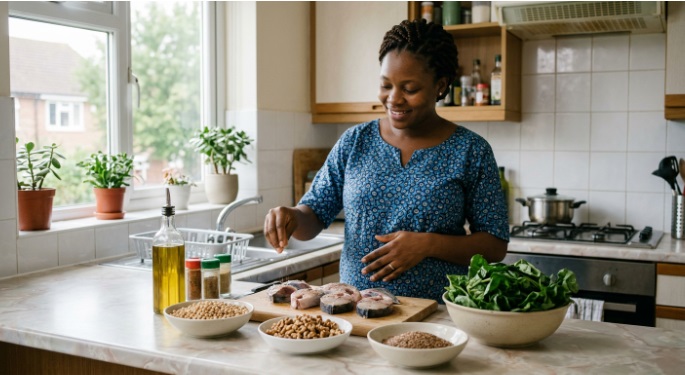
A pregnant woman in a Nigerian home prepares a meal using fish, beans and fresh leafy vegetables, highlighting everyday food choices that can support good nutrition during pregnancy. Image credit: Nano Banana. Click on image to enlarge.
When planning meals during pregnancy, you may think about eating more fruits, vegetables, protein and other nutritious foods. But have you considered the role that healthy fats play in your baby's development?
Omega-3 fatty acids are essential fats that support several functions in the body. One type, called DHA, contributes to the development of your baby's brain and eyes during pregnancy.
This article explores how omega-3 fatty acids support your baby's brain and eye development, the food sources available in Nigeria, and how to include them safely in your diet during pregnancy.
Omega-3 fatty acids are a type of healthy fat that your body needs to function properly. They help form the outer structure of cells and support important functions in the brain, eyes, heart and other parts of the body. Your body cannot produce enough of certain omega-3 fats on its own, so you need to obtain them through food or supplements [1].
During pregnancy, omega-3 fatty acids are important because certain types contribute to the development of your baby's brain and eyes.
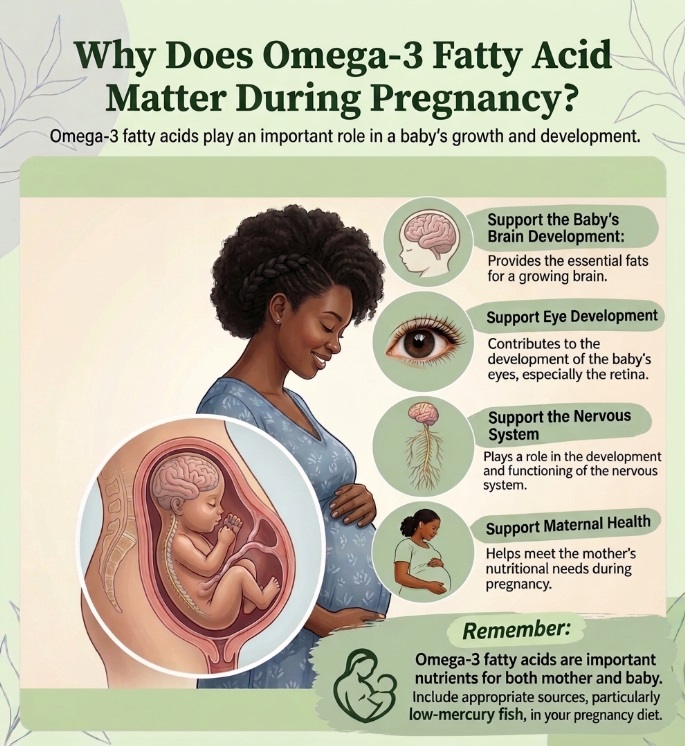
An infographic showing the importance of omega-3 fatty acids for a baby's development and maternal health during pregnancy. Image credit: Nano Banana. Click on imahe to enlarge.
Omega-3 fatty acids play an important role in a baby's growth and development during pregnancy. They support several processes in the body, particularly the development of the brain and eyes.
Here are some of their key benefits:
Omega-3 fatty acids, particularly those found in fish, contribute to the development of the baby's brain. Adequate intake during pregnancy helps provide the essential fats needed as the baby's brain grows [2].
These healthy fats also contribute to the development of the baby's eyes, particularly the retina, which is the light-sensitive part of the eye. [2].
Omega-3 fatty acids are important components of cell membranes and play a role in the development and functioning of the nervous system. Getting enough during pregnancy helps support the baby's developing nervous system [2]..
Omega-3 fatty acids also contribute to normal body functions in the mother. Including sources of these fats in a balanced diet helps meet the body's nutritional needs during pregnancy.
Omega-3 fatty acids are important nutrients for both mother and baby. Including appropriate food sources, particularly low-mercury fish, in the pregnancy diet can help provide these essential fats. [2]
The amount of omega-3 fatty acids needed during pregnancy depends on the type and the foods included in the mother's diet.
According to the US National Institutes of Health (NIH), pregnant women need about 1.4 grams of plant-based omega-3 fatty acids daily. These are found in foods such as flaxseeds, soybeans and certain vegetable oils [2].
Fish and seafood are also important sources of omega-3 fatty acids. The US Food and Drug Administration (FDA) and Environmental Protection Agency (EPA) recommend that pregnant women eat 8–12 ounces of low-mercury seafood weekly.
This provides important nutrients that support the baby's development.
For women who do not eat fish or consume it regularly, it may be worth discussing other ways of meeting their omega-3 needs with a healthcare provider.
Although supplements are available, they should not automatically replace a balanced diet. A healthcare professional can help determine whether supplementation is necessary.
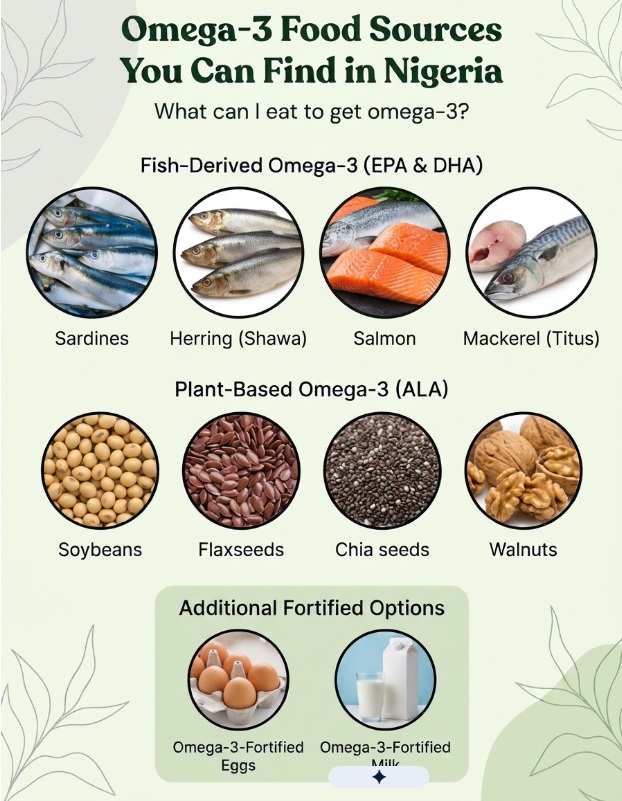
An infographic showing fish, plant-based foods and fortified products that provide omega-3 fatty acids and are available in Nigeria. Image credit: Nano Banana. Click on imahe to enlarge.
Getting omega-3 fatty acids during pregnancy does not have to mean buying expensive imported foods or supplements. Several foods commonly found in Nigerian markets contain omega-3 fatty acids and can be included in everyday meals.
Here are some accessible options to consider [3]:
Fish is one of the best food sources of omega-3 fatty acids. Sardines and certain varieties of mackerel contain omega-3 fats that support the baby's brain and eye development.
Soybeans provide plant-based omega-3 fatty acids. They are also a source of protein, which is important for the growth and development of the baby.
They can be consumed as cooked beans, soy milk or other soybean-based foods. Soybean oil also contains omega-3 fatty acids, although the amount varies.
Flaxseeds are a good plant-based source of omega-3 fatty acids. They may not be a regular ingredient in every Nigerian household, but they are available in some health food stores and supermarkets.
Grounded flaxseeds can be added in small amounts to pap, smoothies, yoghurt or breakfast cereals.
Chia seeds provide plant-based omega-3 fatty acids and fibre.
They can be soaked in water or added to porridge, smoothies and yoghurt.
Walnuts contain plant-based omega-3 fatty acids and can be eaten as a snack or added to meals.
Not all omega-3 sources provide the same type or amount of these fats. Fish and seafood provide types of omega-3 that are directly useful for the baby's developing brain and eyes, while plant foods mainly provide a different type that the body converts only in small amounts.
Therefore, including a variety of these foods can help improve omega-3 intake during pregnancy.
Some everyday foods are enriched with omega-3 fatty acids to improve their nutritional content. These include certain brands of eggs, milk, yoghurt and soy beverages.
They can provide another way to include omega-3 in the diet, particularly for pregnant women who do not regularly eat fish. However, the amount and type of omega-3 differ between products, so checking the nutritional label before purchasing is very important.
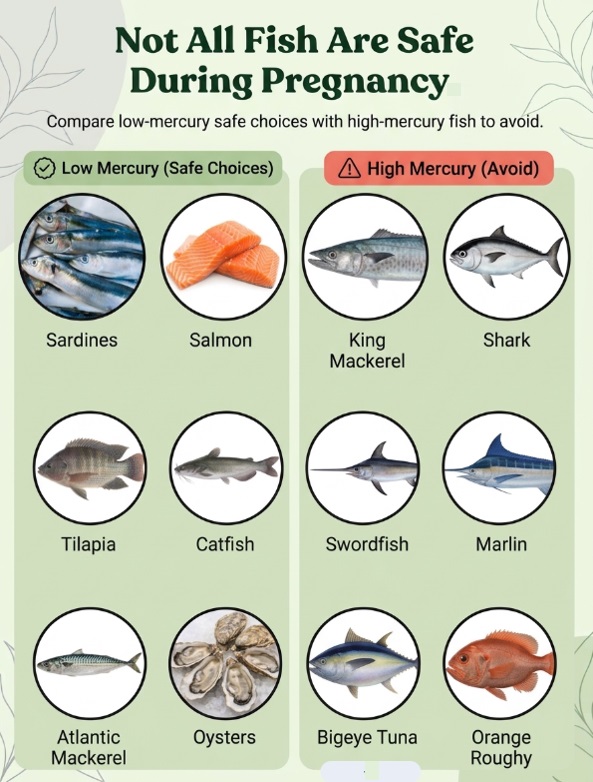
An infographic comparing low-mercury fish suitable for pregnancy with high-mercury fish that should be avoided. Image credit: Nano Banana. Click on imahe to enlarge.
Fish is an important source of omega-3 fatty acids and other nutrients that support a baby's growth and development. However, not all fish are suitable for regular consumption during pregnancy.
Some fish contain high levels of mercury, a metal that can affect the developing baby's brain and nervous system. When a pregnant woman eats contaminated fish, mercury can pass through the placenta to the baby.
This does not mean pregnant women should avoid fish altogether. Instead, they should choose fish that are lower in mercury and avoid varieties known to contain high levels.
Some fish are naturally lower in mercury and can be included in a pregnancy diet. Examples identified by the US Food and Drug Administration (FDA) as lower-mercury choices include:
These fish provide nutrients, including omega-3 fatty acids, protein and other essential nutrients. However, their omega-3 content varies [4].
Pregnant women should avoid fish known to contain high levels of mercury because excessive exposure can harm the developing baby's brain and nervous system. Examples include:
It is important to distinguish king mackerel from other types of mackerel. For example, Atlantic mackerel is classified as a lower-mercury choice, while king mackerel is classified among the fish to avoid [4].
Eating different types of lower-mercury fish helps provide a range of nutrients. The FDA recommends that pregnant women consume 2–3 servings of fish per week, totalling approximately 225–340 grams (8–12 ounces), from its lower-mercury choices.
Be careful with fish from uncertain source
Fish caught from rivers, streams and other local water bodies may contain mercury or other environmental contaminants, depending on where they were caught.
Where possible, buy fish from trusted sellers and avoid fish caught from places known to be polluted. Remember, locally caught fish is not automatically safe [4].
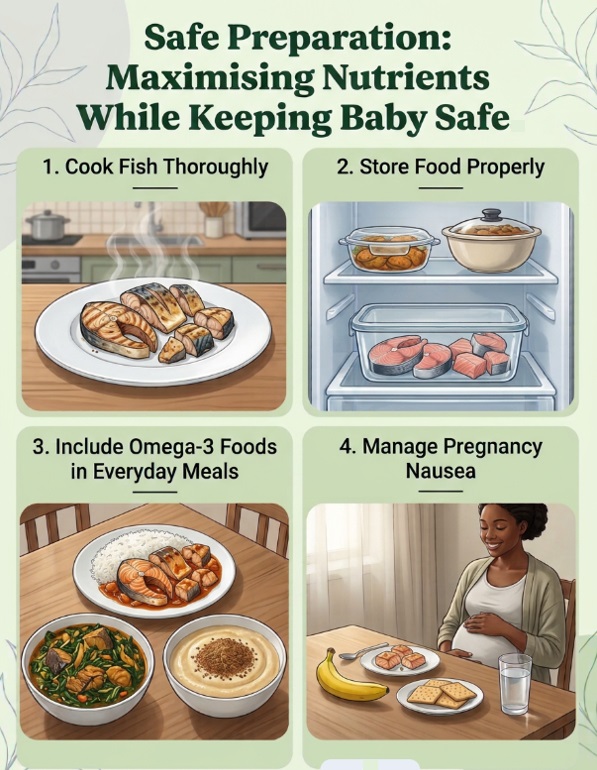
An infographic illustrating four ways to prepare and handle omega-3-rich foods safely during pregnancy. Image credit: Nano Banana. Click on imahe to enlarge.
Fish should be properly cooked before consumption during pregnancy. Avoid raw or undercooked fish and seafood because they may contain harmful bacteria or parasites. You can:
Proper cooking helps destroy harmful microorganisms, although it does not remove mercury. This is why choosing low-mercury fish remains important [5, 6].
Fresh fish can spoil quickly if it is not stored correctly. Poor storage can encourage the growth of harmful microorganisms.
To keep your food safe:
These simple steps help reduce the risk of food contamination [5].
Eating foods rich in omega-3 does not have to be expensive. You can work with foods that are already part of your household diet. For example:
You do not have to buy all these foods at once. Choose what is available and affordable, and include different sources as your budget allows [5].
Pregnancy can change how you respond to certain foods, smells and tastes. A meal you previously enjoyed may suddenly make you feel nauseated, particularly when cooking fish or other foods with strong smells.
If this happens, try the following:
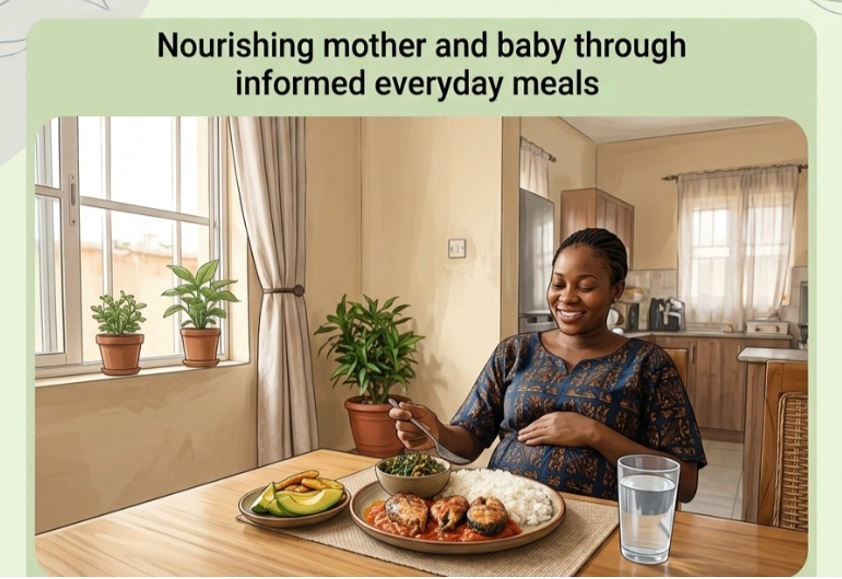
A pregnant woman enjoying a nutritious meal at home, featuring fish, rice, vegetables and avocado. Image credit: Nano Banana. Click on imahe to enlarge.
Omega-3 fatty acids are important during pregnancy because they support the baby's brain and eye development. Including affordable sources in your diet can help you obtain these essential fats.
You do not need expensive foods to nourish yourself and your baby. Focus on making informed food choices, preparing meals safely and speaking with your healthcare provider if you need advice about omega-3 supplements.
Omega-3 fatty acids support the baby's brain, eyes and nervous system development. They also contribute to normal body functions in the mother.
Omega-3 supplements and folic acid serve different nutritional purposes. However, check with your healthcare provider before combining supplements to ensure they are appropriate for you.
Pregnant women should avoid high-mercury fish such as king mackerel, shark, swordfish, marlin and bigeye tuna. Other varieties of mackerel may have lower mercury levels, so identifying the species is important.
Yes. Canned sardines are generally a suitable low-mercury seafood choice during pregnancy. Choose products from reliable sources, check the expiry date and ensure the can is not damaged.
1. Coletta JM, Bell SJ, Roman AS. Omega-3 Fatty acids and pregnancy. Rev Obstet Gynecol. 2010 Fall;3(4):163-71. Available from here.
2. NIH. Office of Dietary Supplements. Dietary Supplements and Life Stages. Factsheet for Professionals. [Internet]. Updated April 3, 2025. [Cited 2026 Nov 12]. Available from here.
3. NIH. Office of Dietary Supplements. Omega 3 Fatty Acids. Factsheet for Consumers. [Internet]. Updated July 18, 2022. [Cited 2026 Nov 12]. Available from here.
4. U.S. Food and Drug Administration. Advice About Eating Fish. [Internet, n.d.]. [Cited 2026 Nov 13]. Available from here.
5. Mayo Clinic. Pregnancy and fish: What’s safe to eat? [Internet]. August 10, 2023. [Cited 2026 Nov 13]. Available from here.
6. Greenberg JA, Bell SJ, Ausdal WV. Omega-3 Fatty Acid supplementation during pregnancy. Rev Obstet Gynecol. 2008;1(4):162-9. Available from here.
Related:
African Foods That Promote Brain Health
African foods that are rich in vitamins
Published: November 19, 2026
© 2024. Datelinehealth Africa Inc. All rights reserved.
Permission is given to copy, use and share content for non-commercial purposes without alteration or modification and subject to source attribution.
DATELINEHEALTH AFRICA INC., is a digital publisher for informational and educational purposes and does not offer personal medical care and advice. If you have a medical problem needing routine or emergency attention, call your doctor or local emergency services immediately, or visit the nearest emergency room or the nearest hospital. You should consult your professional healthcare provider before starting any nutrition, diet, exercise, fitness, medical or wellness program mentioned or referenced in the DatelinehealthAfrica website. Click here for more disclaimer notice.