Hidden Barriers to Wearing Eyeglasses Among Nigerian Schoolchildren and How to Fix Them
By Helen Ohunene Otailku, B.Sc, Health Education, Freelance Health Writer. Medically reviewed by the DLHA Team
November 18, 2026
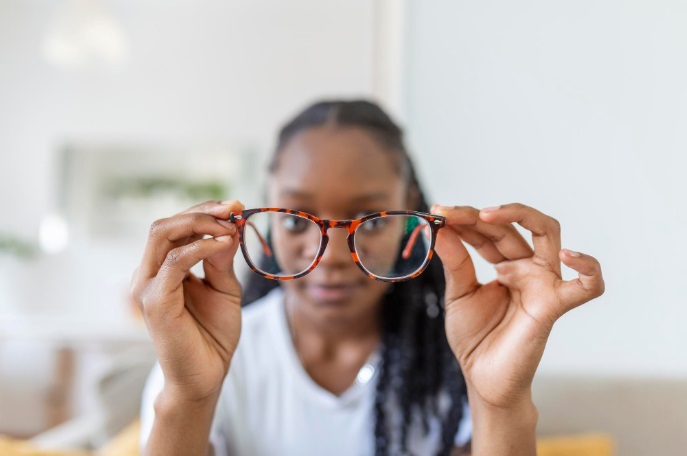
Frontal view photo of an African teenage girl looking through the lenses of a framed eyeglass held in her hands. Image credit: Magnific. Click on image to enlarge.
Introduction
Wearing eyeglasses (also referred to as Spectacles in English speaking sub-Saharan Africa) means using glasses prescribed by an eye doctor or optometrist to correct refractive errors (blurry eye conditions). Strangely, not everyone prescribed eyeglasses wear them. For example, a study among schoolchildren in Calabar, Cross River State, Nigeria estimated that 1 in 4 (25%) do not wear their glasses, even when medically needed [1].
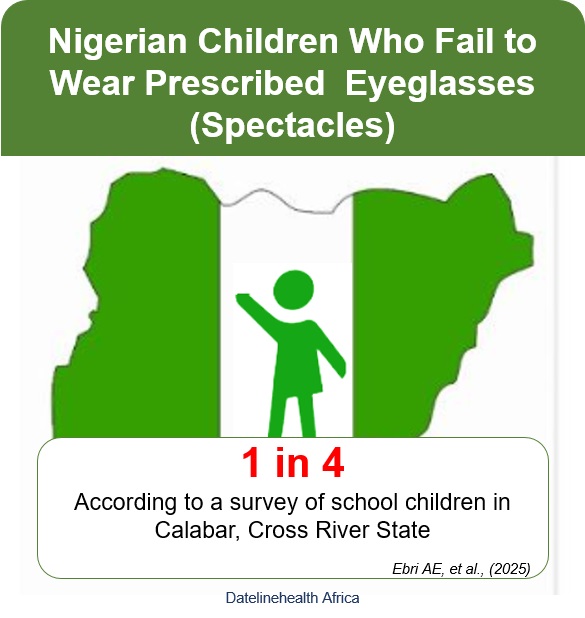
Infographic illustrating the relative number of school children in Calabar, Cross River State, Nigeria who fail to wear their prescribed eye glasses. Click on image to enlarge.
A child is considered to wear medically prescribed glasses if at least two of these three criteria are met: wearing it for 4 hours or more a day at home, wearing them at school, and having them on at the time of inspection. Meeting only one criterion, or none, counts as not wearing glasses [2].
In Nigeria, school-aged children are those aged 5 to 19 from primary to senior secondary school [3]. This article highlights the various barriers that lower eyeglass wear in Nigeria and provides solutions to them.
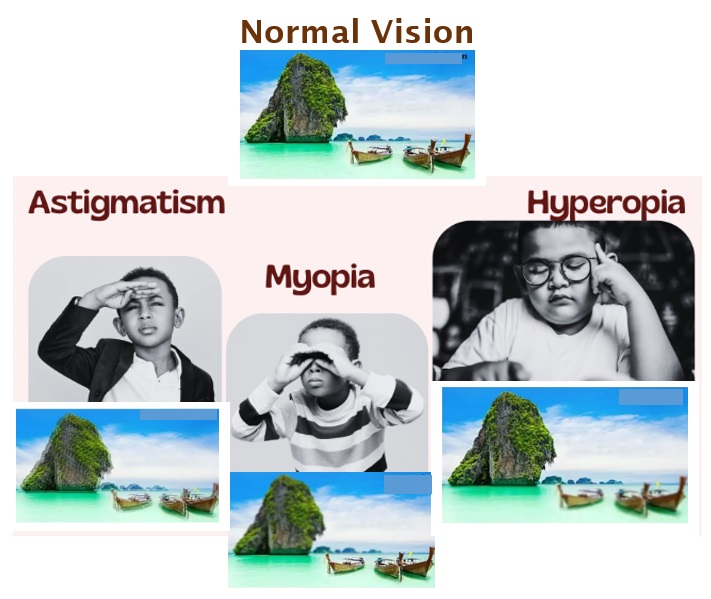
Illustration showing how vision looks like in myopia, astigmatism, and hypermetropia in children. Image credit: Google Gemini. Click on image to enlarge.
Prescribed eyeglasses are lenses fixed in a frame and worn to help a person see well. They correct vision problems (refractive errors). Three main types refractive errors that affect children are [4]:
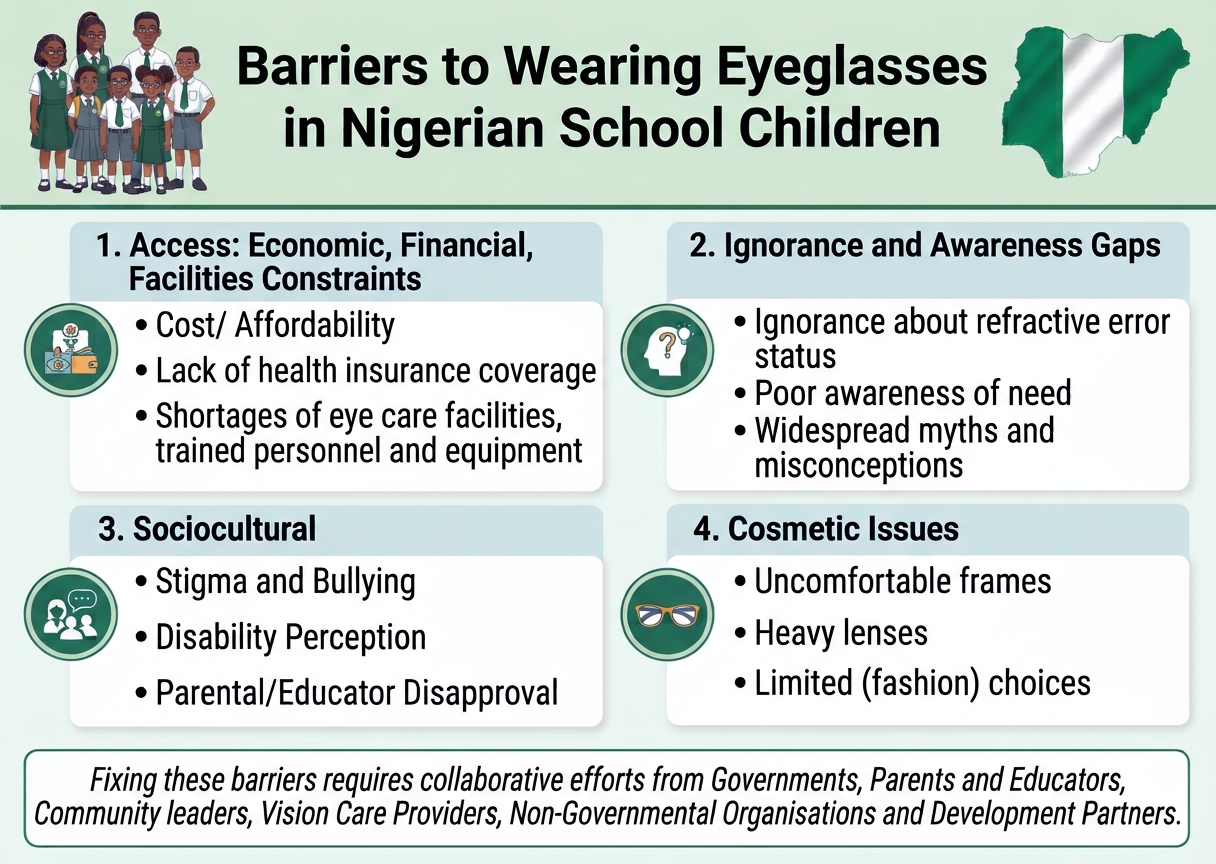
Infographic featuring notable barriers to wearing prescribed eyeglasses in Nigerian school children under four headings; Access, Ignorance and Awareness Gaps, Sociocultural and Cosmetics issues. Image created with Gemini AI. Click on image to enlarge.
Uncorrected vision problems in children are a common cause of preventable eye disorders [5]. These concerns were explored in a study in Calabar, Cross River State, which held group discussions with schoolchildren aged 10 to 18 who had been given free spectacles but refused to wear them. These barriers are therefore not a side issue. They decide whether a free pair of spectacles is worn or left in a school bag.
They include but not limited to the following:
Eyeglasses are the most common way to correct refractive error. About 5.9% of school-aged children in Nigeria have a refractive error [6]. Across sub-Saharan Africa, most of these children cannot get corrective spectacles [7].
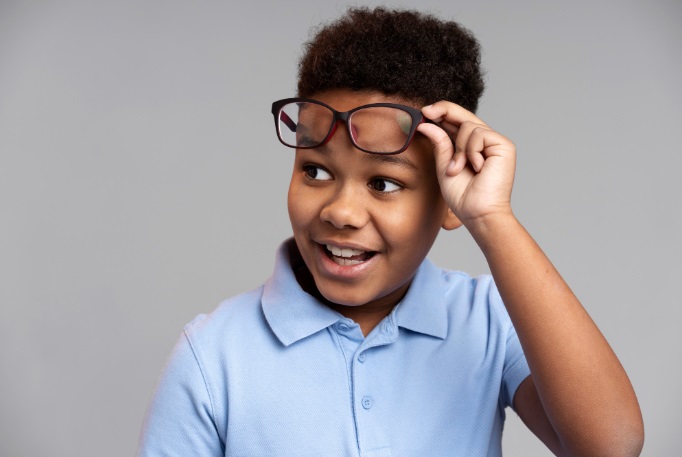
Dandy-looking African boy with glasses displaced on his eyes. Image credit: Magnific. Vlick on image to enlarge.
The major reason behind vision problems in sub-Saharan African countries can be prevented with early diagnosis and the need for intervention, one of which is wearing prescription eyeglasses [7].
If your child has been prescribed eyeglasses, make sure they wear them. Without them, a child may struggle in these ways [12]:
The barriers are many so schools and communities need a combination of measures to improve eyeglass use in Nigeria [8]:
Eyeglass wear in Nigeria depends on more than a prescription. Limited access, social pressure, loss and breakage, poor fit, and unappealing frames all shape whether a child wears them. Each barrier can be addressed. Schools should pair free spectacle programmes with health education. Parents and caregivers should support their children to wear their glasses. Health workers should check fit and explain the benefits clearly. The government should extend affordable eye care to rural communities. When these groups work together, children can see clearly, learn better and stay safe.
1. Ebri AE, Govender P, Naidoo K, Albert F, Shah K, Chan VF. Understanding barriers to spectacle wear compliance among schoolchildren in Calabar Nigeria: A qualitative study. AJO International. 2025;2(3):100160. doi:10.1016/j.ajoint.2025.100160. Available from here.
2. Messer DH, Mitchell GL, Twelker JD, Crescioni M; CLEERE Study Group. Spectacle wear in children given spectacles through a school-based program. Optom Vis Sci. 2012;89(1):19-26. doi:10.1097/OPX.0b013e3182357f8c. Available from here.
3. Education in Nigeria. In: Wikipedia. [Internet]. 39 October 2026. [Accessed November 12, 2026[. Available from here.
4. National Eye Institute. Types of refractive errors. [Internet]. Last updated 4 September 2025. [Accessed November 12, 2026]. Available from here.
5. Németh J, Daiki T, Sándor GL, et al. Uncorrected refractive errors are important causes of avoidable visual impairment in Hungary: re-evaluation of two existing national data sets. Int J Ophthalmol. 2023;16(6):955-961. Available from here.
6. Adebusoye SO, Onovae O, Adebusoye T, & Sotunsa JO. Prevalence of refractive error in Nigerian children. Clinical & Experimental Optometry, 2024;107(4), 374–384. Available from here.
7. Alrasheed SH, Mohamed ZD, Alluwimi MS. Childhood visual impairment causes and barriers to accessing eye care: A suggested approach for Africa. Afr J Prim Health Care Fam Med. 2024;16(1):e1-e7. Available from here.
8. Agwu H, Joshua V. NHIS in Nigeria: what it covers and what you’ll still pay out of pocket(2026 guide). [Internet]. ToolBase. October 9, 2026. Accessed November 14, 2026. Available from here.
9. Olusanya BA, Ugalahi MO, Ogunleye OT, Baiyeroju AM. Refractive errors among children attending a tertiary eye facility in Ibadan, Nigeria: Highlighting the need for school eye health programs. Ann Ib Postgrad Med. 2019;17(1):49-59. Available from here.
10. Ebeigbe JA, Kio F, Okafor LI. Attitude and beliefs of Nigerian undergraduates to spectacle wear. Ghana Med J. 2013;47(2):70-73. Available from here.
11. Irtza M, Mahwish R, Mohamin M, Afzal MS, Ali MQ, Waqa MS. Non-compliance of Spectacle Wear in School-Going Children With Refractive Errors. Cureus, 2024;16(1), e52702. Available from here.
12. Johns Hopkins Medicine. How to know if your child needs glasses [Internet, n.d.]. Baltimore (MD): Johns Hopkins Medicine. [Cited 2026 Nov 14]. Available from here.
Related: Refractive Errors of the Eye in African Adults
Published: November 18, 2026
© 2024. Datelinehealth Africa Inc. All rights reserved.
Permission is given to copy, use and share content for non-commercial purposes without alteration or modification and subject to source attribution.
DATELINEHEALTH AFRICA INC., is a digital publisher for informational and educational purposes and does not offer personal medical care and advice. If you have a medical problem needing routine or emergency attention, call your doctor or local emergency services immediately, or visit the nearest emergency room or the nearest hospital. You should consult your professional healthcare provider before starting any nutrition, diet, exercise, fitness, medical or wellness program mentioned or referenced in the DatelinehealthAfrica website. Click here for more disclaimer notice.